1. Cut Electricity Costs While Keeping Your Home Comfortable
You do not have to live in a dark or chilly house to cut your electricity bills. A few smart habits and low-cost upgrades can keep your family comfortable while reducing what you pay every month.
Use Heating and Cooling More Smartly
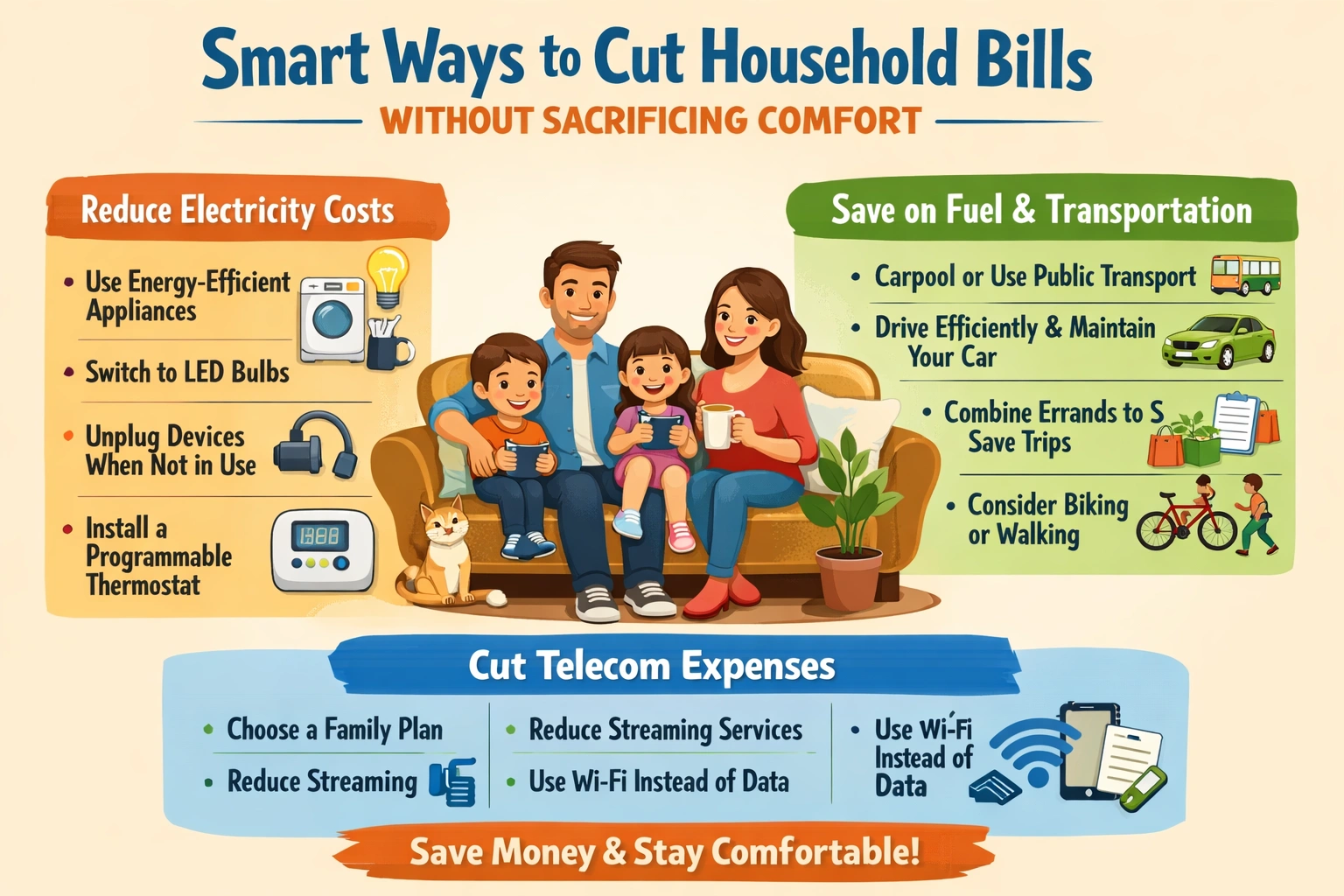
- Dial in the thermostat: Aim for about 20°C (68°F) in winter and 26–26.5°C (78°F) in summer, adjusting a little for your family’s comfort.
- Schedule temperatures: Use a programmable or smart thermostat to automatically turn heating or cooling down when everyone is asleep or out, then back up before you return.
- Run ceiling fans: Fans create a breeze that lets you feel cooler at the same temperature, so you can raise the AC setting by 1–2°C and stay just as comfortable.
- Seal drafts: Weatherstrip doors and windows and close curtains at night in winter and during hot, sunny hours in summer to keep conditioned air inside.
Light and Appliances: Same Comfort, Less Waste
- Switch to LEDs: Replace the bulbs in your most-used rooms with LED bulbs to keep rooms bright while using far less power.
- Use natural light: Open blinds and curtains during the day so you can leave lights off.
- Unplug “vampire” devices: Use power strips for TVs, game consoles, and chargers, and switch them off when not in use.
- Run full loads: Only run the dishwasher and washing machine when full and choose cold-water cycles when possible.
Cutting Telecom Waste Without Cutting Connection
- Right-size your plans: Compare your family’s actual data and call use with the plan; downgrade extras you rarely use.
- Bundle wisely: Combining internet, mobile, and TV with one provider can reduce fees if you truly use all three.
- Use home Wi‑Fi: Keep phones and tablets on home Wi‑Fi to avoid expensive mobile data add‑ons.

2. Save on Heating, Cooling, and Fuel Without Feeling Cold or Hot
Comfort doesn’t have to mean high bills. With a few smart tweaks, families can keep their homes cozy in winter and cool in summer while using far less electricity and fuel.
Smarter Temperature Control
- Use a programmable or smart thermostat. Set it to lower the heat or raise the cooling a bit when everyone is asleep or away, then return to your ideal temperature before you wake up or get home.
- Shift your “normal” by 1–2°C. In winter, set the thermostat slightly lower and wear warm layers; in summer, set it slightly higher and use light clothing and fans. Small changes add up but feel almost the same.
- Heat and cool only lived‑in spaces. Close doors and vents in rarely used rooms so you’re not paying to condition empty areas.
Use Your Home’s Free Comfort
- Let the sun work for you. In cold weather, open curtains on sunny windows during the day to warm rooms naturally; close them at night to keep heat in.
- Block unwanted heat. In hot weather, close blinds and curtains on sun‑facing windows, especially in the afternoon, to keep rooms cooler.
- Circulate air wisely. Ceiling and room fans make people feel cooler so you can run the air conditioner less. In mild weather, open windows in the morning and evening to flush in cool air.
Cut Wasted Energy, Not Comfort
- Maintain your equipment. Replace or clean furnace and AC filters regularly so systems don’t have to work as hard.
- Seal drafts. Simple weatherstripping around doors and windows reduces cold spots and keeps conditioned air where it belongs.
- Use efficient lighting and appliances. LED bulbs and efficient devices produce less waste heat, lowering cooling needs and electric use.
Fuel and Telecom Bonuses
- Plan car trips. Combine errands and avoid unnecessary drives to cut fuel use without changing your lifestyle.
- Right‑size telecom plans. Check your family’s real data and streaming use, then switch to plans that match it instead of overpaying for unused capacity.

3. Trim Phone, Internet, and TV Bills Without Losing What You Need
You can lower phone, internet, and TV costs by removing extras you rarely use, negotiating better rates, and choosing simpler plans that still cover your family’s real needs.
Right-Size Your Plans
- Phone: Check your last 3–6 bills. If you’re not using all your data or minutes, move to a lower tier or a family/shared plan. Turn off paid add‑ons like device protection or premium voicemail unless you truly rely on them.
- Internet: Most families stream comfortably on mid‑tier speeds. If you mainly browse, work from home, and stream a few shows, you likely don’t need the most expensive “gigabit” option.
- TV: List the channels and services you actually watch. Drop duplicate or rarely used streaming services and consider rotating them monthly instead of keeping all year.
Negotiate and Shop Around
- Call your providers once a year and ask about promotions, loyalty discounts, or lower-cost bundles. Be ready to mention competitor offers.
- If your contract is up, get quotes from at least two other providers and use them as leverage or switch if the savings are significant.
- Ask for fees to be waived (equipment, activation, regional sports, “broadcast” fees) or reduced when you renew.
Use Your Own Equipment
- Replace rented modems and routers with your own compatible devices to cut monthly equipment fees.
- Connect TVs with inexpensive streaming devices instead of renting multiple cable boxes.
Bundle Smartly—Or Unbundle
- Bundles only save money if you’d buy all parts anyway. Compare the bundle price to separate services to be sure it’s a real discount.
- Consider internet + 1–2 key streaming services instead of a large cable package.
Set Limits to Avoid Creep
- Schedule a quick review of telecom bills every 6–12 months.
- Track new subscriptions and cancel free trials immediately if you won’t keep them.

4. Make It a Family Habit and Track the Savings Together
The fastest way to cut electricity, fuel, and telecom costs without losing comfort is to turn saving into a shared family project instead of a one‑person chore.
Turn Saving into a Game
- Set 2–3 simple house rules everyone can follow, like “lights off when you leave a room,” “devices off at bedtime,” or “showers under 8 minutes.”
- Give each child an age‑appropriate role: a “light monitor,” “charger checker,” or “thermostat helper.”
- Create a points chart on the fridge or a shared note on your phones; award points for sticking to the rules and offer small rewards (choosing movie night, dessert, or next weekend activity).
Track Bills and Celebrate Wins
- Once a month, sit down as a family, open your electricity, fuel, and telecom bills, and record the totals in a simple table or notebook.
- Compare this month to last month and the same month last year to see real progress, adjusting for seasons.
- Translate the savings into something concrete: “We saved $20 this month—that’s half a family pizza night or one streaming subscription.”
Use Apps and Dashboards
- Most utilities, fuel cards, and telecom providers offer apps or online dashboards showing usage by day or category; check them together once a week.
- Show kids how turning off lights, cutting idle screen time, or reducing car trips changes those graphs over time.
Review, Don’t Restrict
- Every few months, review what worked and what felt annoying or uncomfortable, then adjust rules rather than adding more restrictions.
- Reinvest part of the savings in comfort‑friendly upgrades—like LED bulbs, a smart thermostat, or better home Wi‑Fi—that keep bills low while daily life still feels good.

References
- Rocky Mountain Institute. “Affordability 101: Can We Cut American Energy Bills in Half?” Discusses how upgrading home technologies and improving efficiency can cut household energy bills by 20–50% while maintaining comfort.[1]
- Resources for the Future – Resources Magazine. “A Guide to Improving Electricity Affordability.” Explains how efficiency upgrades, smart thermostats, bill assistance, and levelized billing can reduce electricity costs and smooth bills without large comfort trade‑offs.[2]
- American Council for an Energy-Efficient Economy (ACEEE). “Energy Burden Research.” Summarizes how energy efficiency can reduce residential energy burdens—often by up to 25%—especially for high‑burden households.[4]
- MIT School of Architecture and Planning. “Study Shows How Households Can Cut Energy Costs.” Describes an “energy coaching” program that helped households lower energy costs and alleviate energy poverty while preserving basic comfort.[7]
- Midwest Energy Efficiency Alliance. “Changes Needed to Lower Energy Costs for the Low-Income.” Reviews programs and home repairs that reduce heating costs and improve health and safety, highlighting efficiency and protections that prevent unsafe cutbacks on energy use.[6]