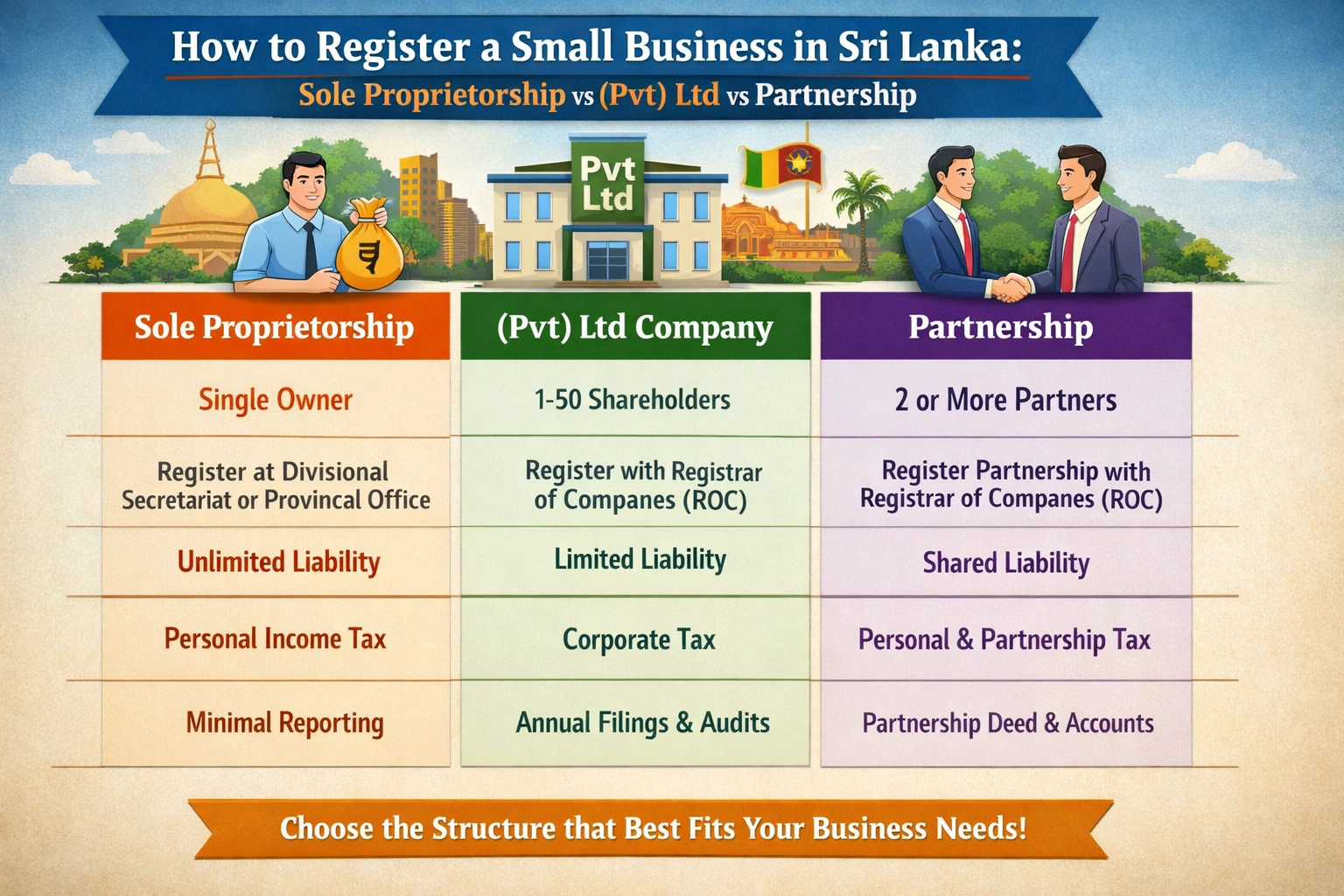
Overview: Choosing the right structure in Sri Lanka
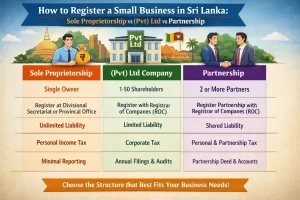
In Sri Lanka, most small businesses are set up as a sole proprietorship, partnership, or private limited company ((Pvt) Ltd). The best option for you depends mainly on your risk tolerance, growth plans, tax and compliance burden, and whether you need investors or partners.
A sole proprietorship is the simplest and cheapest structure. It suits freelancers, traders, and very small operations where one person owns and controls everything. However, the owner has unlimited personal liability for all business debts and obligations, and raising external investment is difficult.
A partnership works when two or more people want to run a business together and share profits. It is relatively easy to register and operate, but in a general partnership all partners typically have joint, unlimited liability. This makes it better for small, trust-based businesses (for example, professionals or family businesses) rather than high‑risk or capital‑intensive ventures.
A (Pvt) Ltd company is more formal and involves higher setup and ongoing compliance (ROC filings, company secretary, statutory records). In return, shareholders benefit from limited liability, making it the preferred structure if you plan to grow, bring in investors, employ staff, or separate your personal and business finances. It is generally seen as more credible by banks, suppliers, and corporate clients.
As a rule of thumb: choose a sole proprietorship for low‑risk, small, owner‑managed businesses; a partnership when combining skills and capital with trusted partners; and a (Pvt) Ltd when you want liability protection, scalability, and a more professional governance framework. The right choice at the start can reduce legal risk, simplify registration, and make future expansion smoother.
How to register a sole proprietorship in Sri Lanka
A sole proprietorship (often called an “individual business”) is the simplest way to register a small business in Sri Lanka. It is owned and controlled by one person, with no separate legal entity and unlimited personal liability.
Step-by-step registration process
-
Check eligibility
Sole proprietorships are generally available to Sri Lankan citizens and permanent residents. Foreigners usually must register a company ((Pvt) Ltd) instead. -
Choose your business name
You may trade under your own full legal name without registering a business name. If you use a different or “brand” name, it must be registered under the Business Names Act with the relevant Provincial Council/Divisional Secretariat within about 14 days of starting the business. -
Prepare required documents
Typical documents include:- Completed business name application form (often BNR-01) from the Divisional Secretariat
- Copy of your NIC or passport
- Proof of business address (utility bill, lease, deed, etc.)
- Grama Niladhari report for the business location
- Affidavit or declaration on business nature and initial capital
- Any special approvals (e.g., health, environmental, professional) for regulated activities
-
Apply at the Divisional Secretariat
Submit the completed forms, supporting documents, and the registration fee at the Divisional Secretariat office (or other relevant local authority) for the area where the business will operate. At present this is an in-person, location-based process. -
Pay fees and obtain your certificate
Pay the prescribed fee (amount varies by province and business type). Once approved, you will receive a Certificate of Registration of Business Name, which must be displayed at your business premises. -
Complete tax and post‑registration tasks
After registration, you should:- Obtain a Taxpayer Identification Number (TIN) from the Inland Revenue Department
- Register for VAT if your turnover exceeds the current VAT threshold
- Open a business bank account (recommended)
- Register with EPF/ETF if you hire employees
- Issue properly formatted invoices and maintain accounting records

How to Register a Private Limited Company ((Pvt) Ltd) in Sri Lanka
A Private Limited Company offers limited liability, easier investor entry and a more professional image than a sole proprietorship or partnership, but involves more formal registration and ongoing compliance.
Key Requirements
- At least 1 director (usually resident in Sri Lanka) and typically 2+ shareholders.
- A Sri Lankan registered office address.
- A qualified, resident company secretary.
- Articles of Association (you may use the standard template or a custom version).
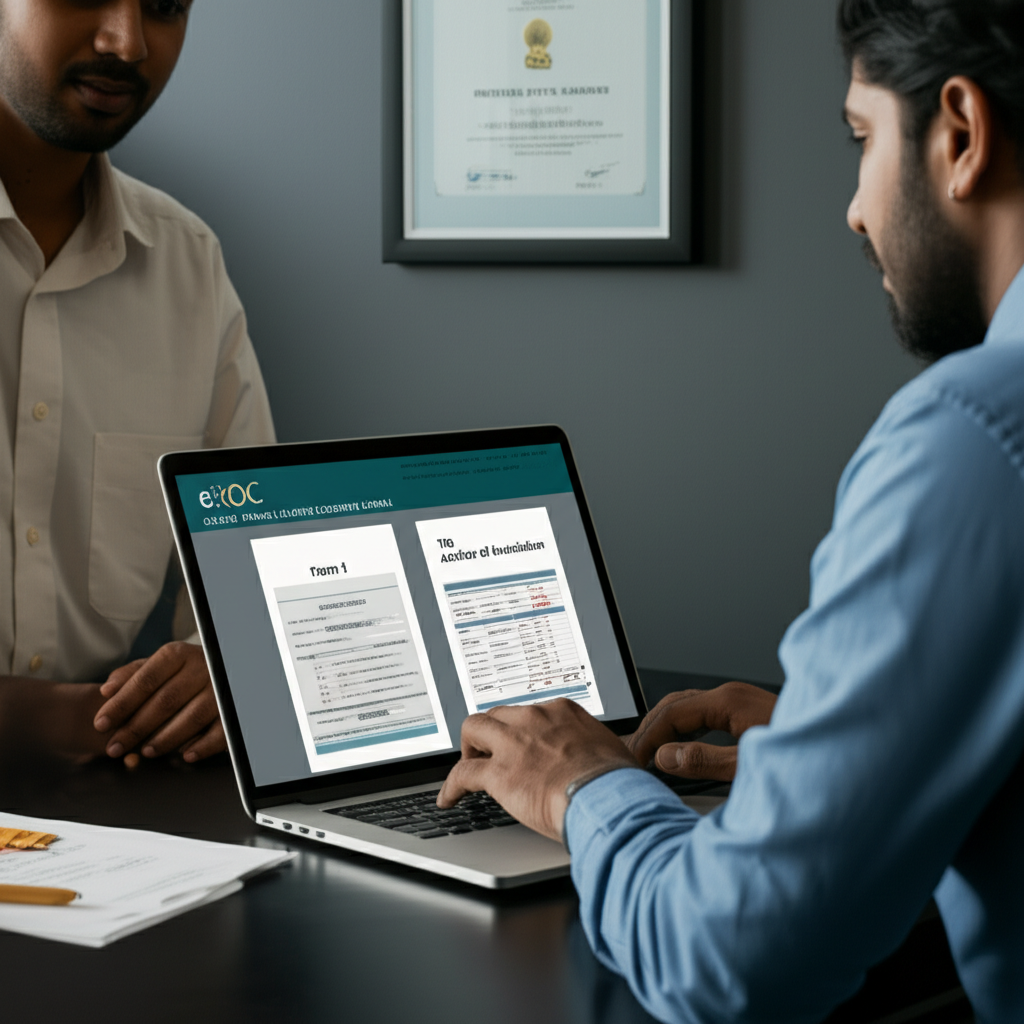
Step-by-Step Registration (eROC)
-
Reserve the company name
Use the government’s online eROC portal to search and apply for name approval. Once approved, the name is reserved for a limited period, during which you must complete incorporation. -
Prepare incorporation documents
Draft and sign:- Articles of Association
- Form 01 – Application for incorporation (details of name, directors, shareholders, secretary)
- Form 18 – Directors’ consent and details
- Form 19 – Company secretary’s consent and details
-
Submit documents and pay fees
Upload all forms and the Articles of Association via eROC and pay the prescribed government fees for incorporation and name approval. -
Obtain Certificate of Incorporation
Once the Registrar of Companies approves your application, you receive a Certificate of Incorporation; your (Pvt) Ltd is now a separate legal entity. -
Post-incorporation registrations
Apply for a Taxpayer Identification Number (TIN), register for VAT if required, obtain local trade/municipal licenses, and open a business bank account using your company documents.
Where a (Pvt) Ltd Fits Among Small Business Options
Compared with a sole proprietorship and partnership, a (Pvt) Ltd is more complex and costlier to set up, but it provides limited liability, easier ownership transfer, and better access to investors and bank finance, making it suitable for growth-oriented small businesses.
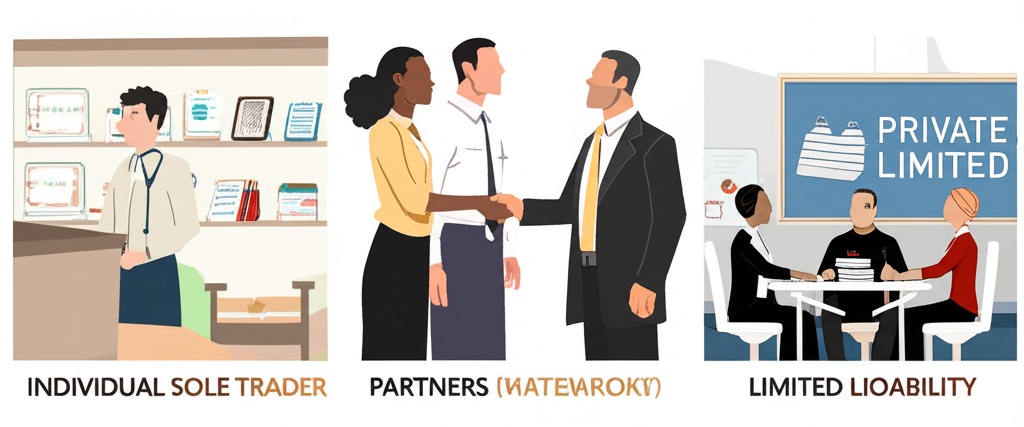
How to register a partnership and compare it with sole proprietorship and (Pvt) Ltd
How to register a partnership in Sri Lanka
A partnership is a business owned by two or more people who share profits and risks. It is usually registered at the relevant Divisional Secretariat / Provincial Council for the business location.
Typical steps:
- Choose a partnership name and business address.
- Draft a simple partnership agreement (partners, capital contributions, profit‑sharing, management, exit/retirement, dispute resolution).
- Collect required forms from the Divisional Secretariat / Provincial Council (similar to sole proprietorship forms).
- Prepare documents: partners’ NIC copies, address proof, Grama Niladhari or local authority letters, and any sector‑specific approvals (e.g., food, pharmacy, guest house).
- Submit forms and pay the registration fee.
- Obtain the Business Registration Certificate (BRC) in the partnership name.
Comparison: Partnership vs Sole Proprietorship vs (Pvt) Ltd
| Aspect | Sole Proprietorship | Partnership | Private Limited Company (Pvt Ltd) |
|---|---|---|---|
| Owners | One individual | Two or more partners | Shareholders and directors |
| Legal status | Not separate from owner | Not separate from partners | Separate legal entity under Companies Act |
| Liability | Unlimited personal liability | Unlimited and usually joint liability | Limited to share capital (except for personal guarantees, misconduct) |
| Registration authority | Divisional Secretariat / Provincial Council | Divisional Secretariat / Provincial Council | Registrar of Companies (eROC) |
| Cost & complexity | Lowest; simple forms | Low; slightly more docs than sole trader | Highest; name reservation, Forms 1/18/19, Articles, secretary |
| Control & decision‑making | Full control by owner | Shared control as per agreement | Board/shareholder decisions, more formal |
| Tax & perception | Taxed in owner’s hands; seen as micro/small | Taxed in partners’ hands; moderate credibility | Corporate tax; strongest credibility with banks & investors |
References
- How to Register a Sole Proprietorship (Individual Business) in Sri Lanka
- How & Why to Register Your Sole Proprietorship – Simplebooks
- How to Register an Individual Business in Sri Lanka | Sole Proprietorship
- Individual Business Registration Sri Lanka – YKG Global
- How to Set Up a Legal Entity for an Independent Consultant in Sri Lanka – Umbrex
- Business Registration – Divisional Secretariat Kotte
- Department of the Registrar of Companies (e-ROC) – Sri Lanka
- Register Your Company – Department of Commerce Sri Lanka