
Introduction: The Dream and the Hurdle
For countless ambitious students in Sri Lanka, the dream of studying in Australia is a powerful one. It’s a vision of world-class universities, vibrant multicultural cities, and a future brimming with global opportunities. This isn’t just about earning a degree; it’s about personal growth, building international networks, and laying the foundation for a successful career. The journey begins with excitement, meticulous planning, and the hope of turning this incredible dream into reality.
However, between this aspiration and stepping onto an Australian campus lies a formidable hurdle: the student visa application. Receiving a visa refusal is more than just a procedural setback; it’s a devastating blow. The disappointment can be overwhelming, leaving you feeling that months of hard work, financial preparation, and emotional investment have been lost. It’s a moment that leaves many asking, “What went wrong?”
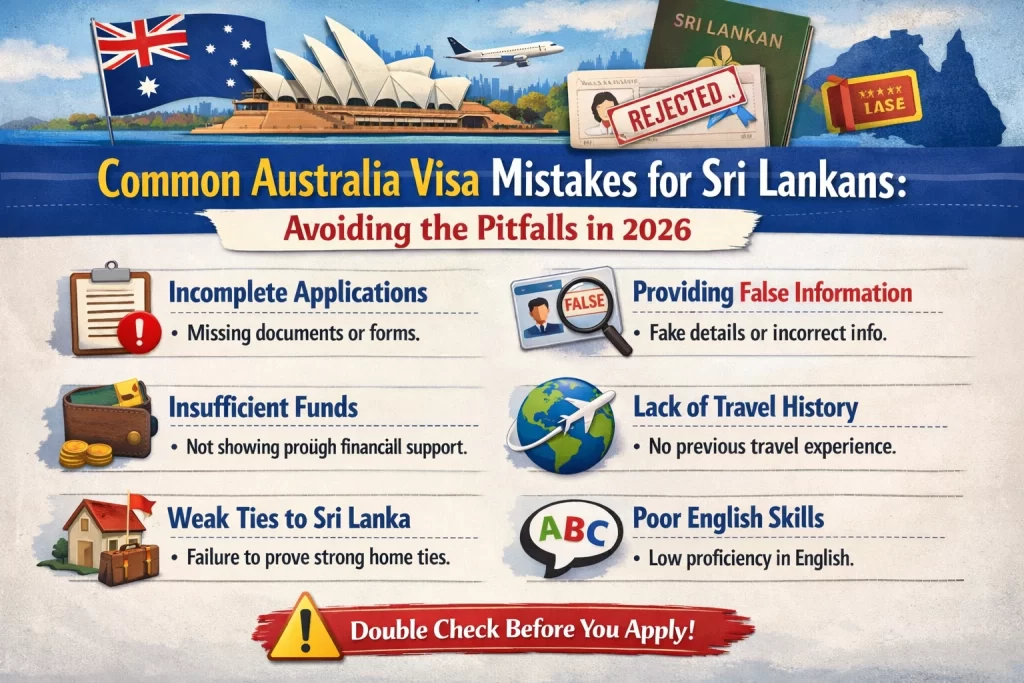
The painful truth is that many visa rejections are not a reflection of your academic ability or your genuine desire to study. Instead, they often stem from common, and most importantly, avoidable mistakes. A poorly written statement, incomplete financial evidence, or a misunderstanding of the Genuine Temporary Entrant (GTE) criteria can be all it takes to derail an otherwise strong application.
This guide is here to help you navigate that hurdle. We will shine a light on the five most frequent mistakes that lead to visa refusals for Sri Lankan students. By understanding these pitfalls, you can build a stronger application from the start. And if you are already facing a refusal, we will explore the critical next steps, including the appeals process. Your dream is worth pursuing, and the first step is arming yourself with the right knowledge.

Mistake #1 & #2: Weak Financials and a Vague GTE Statement
These two issues are often the primary reasons for visa refusal because they strike at the heart of your application: your intention and your ability to be a genuine student. Case officers scrutinize these areas intensely, and weakness in one can cast doubt on the other.
Weak Financials
You must prove you have genuine access to sufficient funds to cover your tuition, travel, and living expenses. A major red flag for officers is “funds parking”—large sums of money suddenly appearing in your or your sponsor’s bank account just before lodging the application. This suggests the money is not genuinely yours and has been borrowed temporarily to meet the requirement.
Your financial history must be consistent and the source of funds must be clear. Relying on sponsors with undocumented income or using last-minute, informal loans will severely undermine your credibility. Ensure every large transaction is explainable and backed by evidence.
A Vague GTE Statement
The Genuine Temporary Entrant (GTE) statement is your most crucial opportunity to convince the case officer that you intend to study temporarily and then return to Sri Lanka. A generic statement copied from the internet is an immediate path to refusal.
Your GTE must be a detailed, personal, and compelling story. Avoid these common pitfalls:
- Failing to clearly link your chosen course to your previous education and, most importantly, to your future career goals in Sri Lanka.
- Not providing strong evidence of financial, family, and social ties that act as powerful incentives for your return home.
- Making vague claims about job opportunities in Sri Lanka without specific research or evidence.
- Simply stating “I will return” without explaining the concrete reasons why returning is a logical and beneficial step for your future.
A strong application demonstrates a clear plan: you have the financial stability to focus on your studies and a well-reasoned plan to use your new qualification back home.

Mistake #3 & #4: Inconsistent Documents and Illogical Course Selection
Mistake #3: Inconsistent Documents
Think of your visa application as a single, cohesive story. Every document, from your passport to your bank statements, must tell the same tale. Case officers are meticulous in their review, and even minor inconsistencies can raise major red flags. Common errors include conflicting employment dates between your CV and reference letters, different name spellings across educational certificates, or financial documents that don’t align with your stated income.
These discrepancies can undermine your credibility and lead the officer to question the authenticity of your application. Before you submit, conduct a thorough audit of all your paperwork. Double-check every date, name, and figure to ensure your story is consistent, accurate, and believable. A clean, consistent application demonstrates professionalism and sincerity.
Mistake #4: Illogical Course Selection
Your choice of study must present a logical career pathway. A visa refusal is highly likely if your intended course has no clear connection to your previous academic or professional background. For instance, an applicant with a degree and career in accounting who applies for a diploma in culinary arts without a very strong justification will face intense scrutiny.
The case officer will question whether you are a genuine student or if the course is simply a means to enter the country. If you are changing career paths, you must provide a compelling and well-reasoned explanation in your Statement of Purpose (SOP). Clearly articulate how the new course aligns with your future career goals and why you are making this transition now. Your justification needs to be convincing and demonstrate a clear, thought-out plan.

Mistake #5 and The Path Forward: Poor Interview & The Appeals Process
Mistake #5: A Poor Interview Performance
The visa interview is your final and most personal opportunity to convince an immigration officer of your genuine intentions. For many Sri Lankan students, this is where a strong application can fall apart. Nerves can lead to inconsistent answers, and a lack of preparation can be disastrous.
Common interview failures include:
- Vaguely explaining why you chose your specific course and institution.
- Being unable to articulate clear career plans upon your return to Sri Lanka.
- Providing information that contradicts your written application.
- Failing to demonstrate sufficient knowledge of your financial arrangements.
The officer is assessing your credibility and whether you are a Genuine Temporary Entrant. A poor interview performance plants a seed of doubt that often leads to a refusal.
The Path Forward: Navigating the Appeals Process
Receiving a refusal notice is disheartening, but it is not necessarily the end of your study abroad dream. Most countries offer an appeals process, allowing you to have your case reviewed by an independent tribunal.
An appeal is your chance to formally challenge the decision. It allows you to address the specific reasons for refusal outlined in your decision letter. You can clarify misunderstandings from the interview, provide new supporting documents, and present a stronger, more detailed argument. This is a formal legal process, and it is crucial to build a compelling case based on evidence.
Successfully navigating an appeal often requires professional guidance from a registered migration agent or lawyer. They can help interpret the refusal grounds, gather the necessary evidence, and structure a powerful submission on your behalf. With a strategic approach, an initial refusal can be overturned, paving the way for your educational journey.