I’ve consulted with hundreds of Sri Lankans who have successfully secured a US visa, and the celebration is always based on the same misunderstanding. They believe the clock on their citizenship journey starts ticking the moment they land at JFK or LAX. This is a costly assumption. Your path to becoming a US citizen is not a passive waiting game that begins with your visa stamp; it’s an active process shaped by choices you make years in advance.
The truth is, your timeline is dictated entirely by the transition from a temporary status to becoming a Lawful Permanent Resident (LPR). For many on an H-1B visa, this means navigating the PERM labor certification and the I-140 petition, a multi-year process where a single Request for Evidence (RFE) or a shifting priority date can add unexpected delays. The five-year residency requirement for naturalization only begins after your green card is approved, not a day sooner.
This article will map out the distinct stages of this journey. We will break down the actual timeline from your initial visa, through the green card application, and all the way to your naturalization interview and oath ceremony. You will understand the key milestones and learn where the common pitfalls lie, giving you the clarity to plan your future effectively.
Step 1: Securing Your Green Card (Lawful Permanent Residence)
Many aspiring citizens mistakenly believe that securing a U.S. visa—like an H-1B for work—is the biggest hurdle. The reality is that a temporary visa is just an entry ticket. Your journey to citizenship truly begins with obtaining Lawful Permanent Residence, the formal status granted by a Green Card. This document is the foundation upon which everything else is built. Without it, the five-year residency clock required for naturalization never even starts ticking.
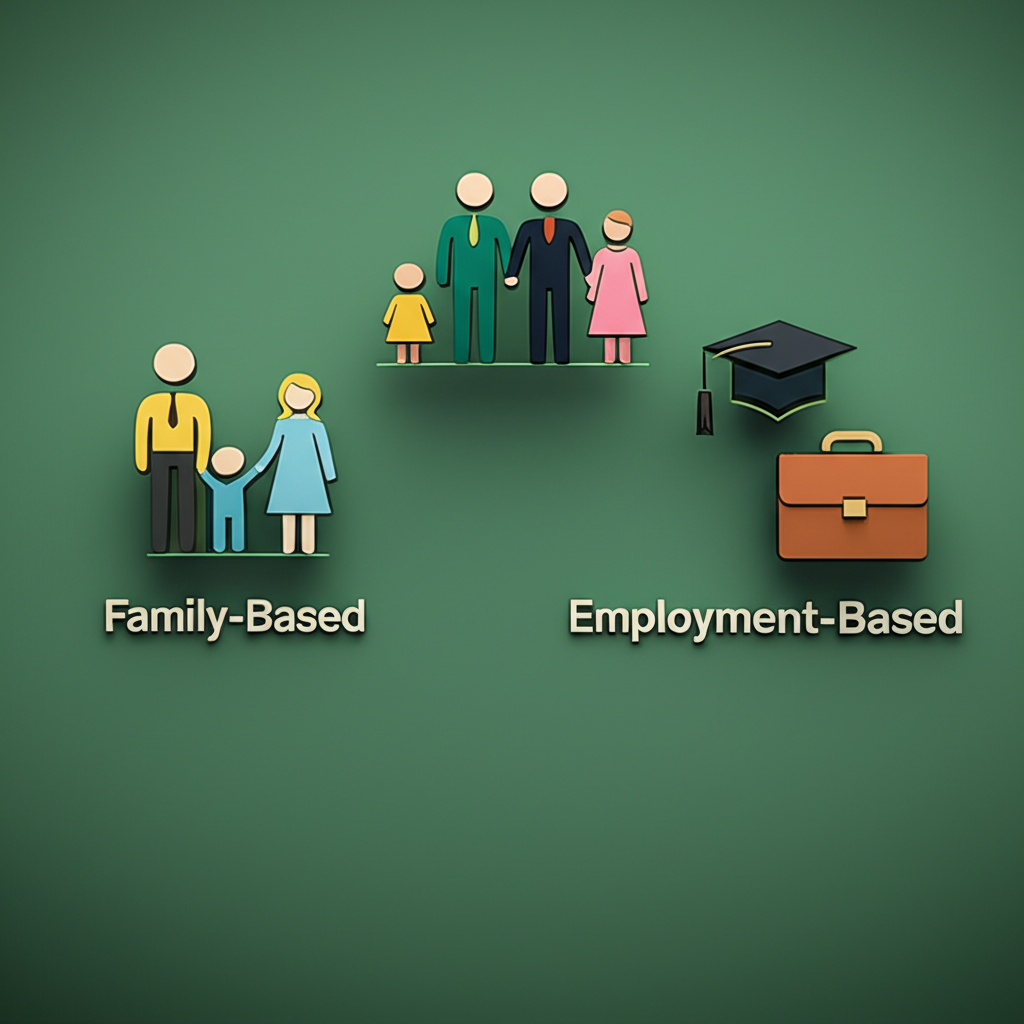
For most Sri Lankans, the path to a Green Card follows one of two main avenues: family or employment. Family-sponsorship is straightforward when a U.S. citizen spouse, parent, or adult child files a petition. The employment-based route, however, is often misunderstood. For example, an IT professional from Colombo on an H-1B visa might assume their Green Card is a simple extension. Instead, their employer must sponsor them through a separate, multi-stage process that includes a labor certification and an I-140 immigrant petition. This is an entirely new case with its own timeline.
How you receive the Green Card depends on your location. If you are in Sri Lanka, you will complete consular processing through the U.S. Embassy in Colombo after your petition is approved. If you are already in the U.S. legally, you may file for an adjustment of status without leaving the country. Both paths are governed by the State Department’s Visa Bulletin, which dictates wait times based on your petition category and “priority date.” For some employment and family-based categories, these waits can stretch for years, often making this the longest phase of your entire immigration process.
From your very first visa application, every statement and document creates your official immigration record. Maintaining a clean, consistent, and truthful history is non-negotiable. Any misrepresentation can surface years later during your naturalization interview and derail your application. Think of this initial stage as pouring the concrete foundation for a house; any cracks here will cause problems for the whole structure later on.
Step 2: Living as a Permanent Resident – The 5-Year Waiting Period
Speaking of which, once you have that Green Card in your hands, the real journey begins. Many people mistakenly view the required five-year residency period as a passive waiting game. It’s not. Think of it less as a waiting room and more as a probationary period where you actively demonstrate your intent to make the United States your permanent home. Every action you take, from where you work to how long you travel, is part of the record.
The clock starts on the “Resident Since” date printed on your Green Card. From that day, you must accumulate five years of continuous residence before you can file Form N-400 for naturalization. If you’re married to and living with a U.S. citizen, this period is reduced to three years. But here’s a distinction that trips up many applicants: continuous residence is not the same as physical presence.
Understanding Your Residency Obligations
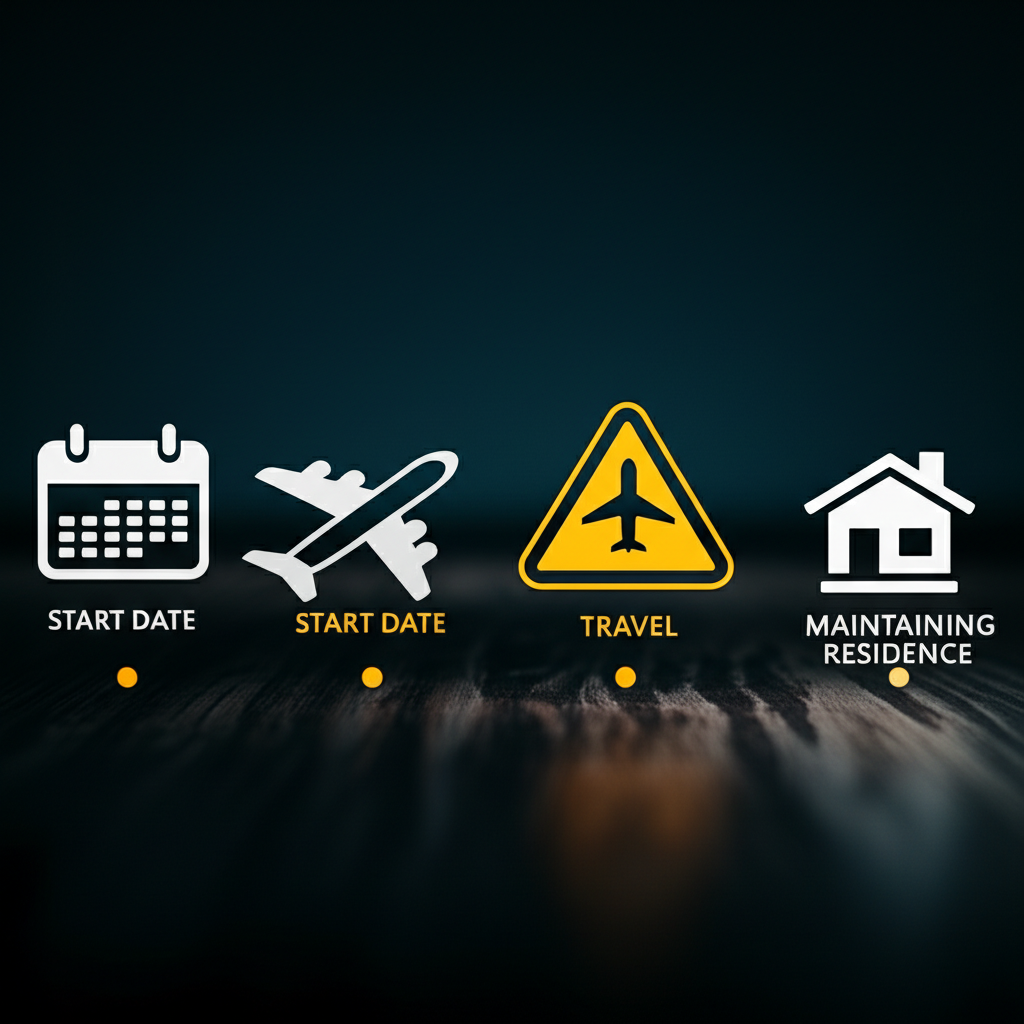
Continuous residence means you have maintained your primary home in the U.S. A trip back to Sri Lanka for a few weeks is perfectly fine. But a trip that lasts more than six months creates a rebuttable presumption that you may have abandoned your U.S. residency. A trip longer than a year almost certainly breaks it. For example, imagine a permanent resident from Colombo returns home for eight months to care for an ailing parent. Even with the best intentions, U.S. Citizenship and Immigration Services (USCIS) may see this as a break in residence, potentially resetting your five-year clock upon your return.
Physical presence, on the other hand, is the cumulative number of days you are physically inside the U.S. For the five-year path, you need to have been physically present in the U.S. for at least 30 months. This is a separate, mathematical requirement.
Beyond travel, maintaining your Lawful Permanent Resident (LPR) status involves clear responsibilities. You must file U.S. tax returns every year, even on income earned abroad. If you move, you are legally required to notify USCIS of your new address within 10 days by filing Form AR-11. And, of course, any criminal convictions can jeopardize not only your future citizenship application but your current permanent resident status as well. This five-year period is your time to build a life and a record that proves you are ready for the final step.
Step 3: Eligibility and Filing the N-400 Application
Many applicants think the naturalization process is a simple waiting game—serve your time as a resident, pass a test, and you’re in. The common wisdom suggests that “good moral character” is a passive requirement, something you have as long as you haven’t committed a major crime. This is a dangerous oversimplification. USCIS actively scrutinizes your entire statutory period (the five or three years before you file) for a pattern of behavior. This isn’t just about felonies; it’s about consistently filing taxes, meeting family support obligations, and being truthful on all applications.
Before you even download Form N-400, Application for Naturalization, measure yourself against the official requirements. You must meet all of them.
Age and Residency: You must be at least 18 years old and have been a lawful permanent resident for five years (or three years if you’re married to and living with a U.S. citizen).
Physical Presence: You must have been physically present in the U.S. for at least half of that five or three-year period.
Continuous Residence: You must have resided continuously in the U.S. from the time of filing until your naturalization. Trips abroad longer than six months can disrupt this.
State Residence: You must have lived in the state or USCIS district where you apply for at least three months.
English and Civics: You must demonstrate an ability to read, write, and speak basic English and pass a U.S. history and government test.
Preparing Your N-400 Package
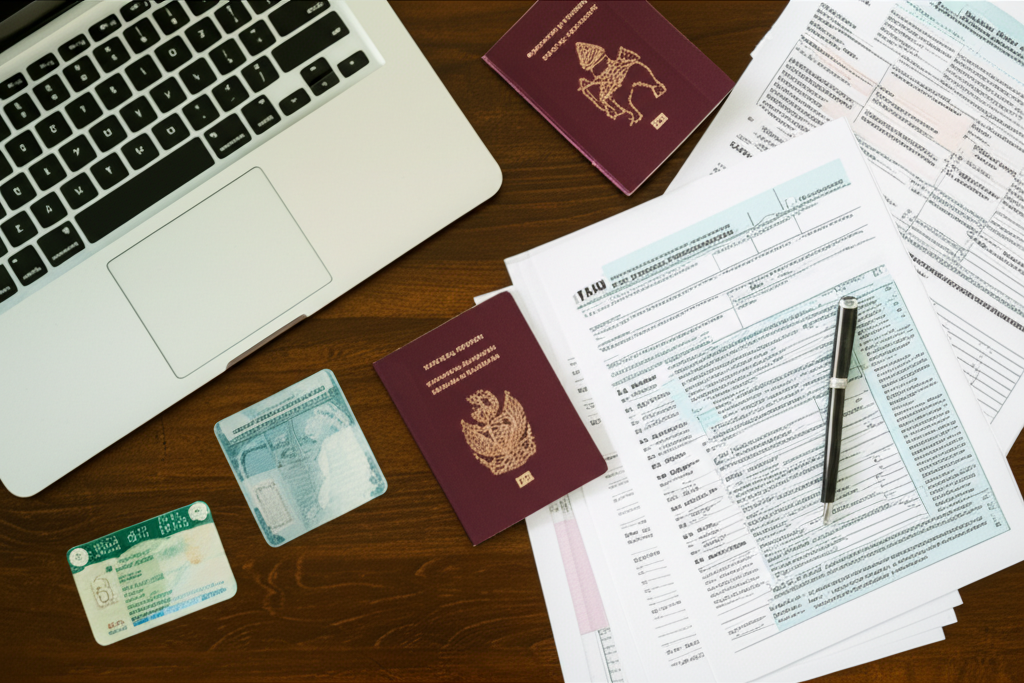
Gathering your documents is where preparation pays off. You will need a copy of your Green Card, passport-style photos, and, if applying based on marriage, your marriage certificate and proof of your spouse’s citizenship. One of the most common stumbling blocks is documenting your travel history. Don’t just rely on memory. For example, if you took a three-week trip to Sri Lanka in 2022, find your flight itineraries and check your passport stamps to confirm the exact dates of departure and return. USCIS will cross-reference this information, and inconsistencies can cause serious delays. Your tax returns for the past five (or three) years serve as powerful evidence of your continuous residence and good moral character.
When filling out the N-400, precision is everything. Answer every question, writing “N/A” for “not applicable” where appropriate. Finally, check the current USCIS filing fees online, as they change periodically. If you face financial hardship, you may qualify for a fee waiver by filing Form I-912. Submitting a well-documented application is your best strategy for a smooth process.
Step 4: The Biometrics Appointment and Citizenship Interview
And this is where things get practical. After USCIS accepts your N-400 application, you’ll receive a notice for a biometrics appointment. This step is straightforward and nothing to worry about. It’s a simple data-collection process where an official will take your fingerprints, photograph, and digital signature for the required FBI background check. You show up with your appointment letter and ID, and you’re typically out in under 30 minutes.
The main event is the naturalization interview. The common misconception is that this is simply a school-style exam to test your English and American history. That’s only a small part of it. The interview’s primary purpose is for a USCIS officer to adjudicate your application and verify, under oath, every single answer you provided on your Form N-400. They are confirming your entire immigration history and eligibility, from the day you first arrived as a visa holder to the present.
Preparing for the Real Test: Your N-400
Your best preparation is to review your own N-400 application. Know it backwards and forwards. The officer will ask you about your employment history, your travel outside the U.S., your marital status, and your residential addresses. Any discrepancy between your answers and the official record can cause delays or denials. For instance, imagine you took a quick trip back to Colombo for a family wedding after you filed your application. You must mention this to the officer if they ask about recent travel, even though it’s not on your original form. Honesty and consistency are everything.
The English and Civics Components
While verifying your application, the officer will also conduct the required tests. They are integrated into the interview itself.
The English Test: Your ability to speak and understand English is assessed throughout the conversation. You will also be asked to read one sentence and write one sentence in English, usually on a digital tablet.
The Civics Test: You will be asked up to 10 questions from a list of 100 official civics questions. You must answer six correctly to pass. USCIS provides all 100 questions and answers on its website—study them directly from the source to be fully prepared.
Step 5: The Oath Ceremony – Becoming a U.S. Citizen
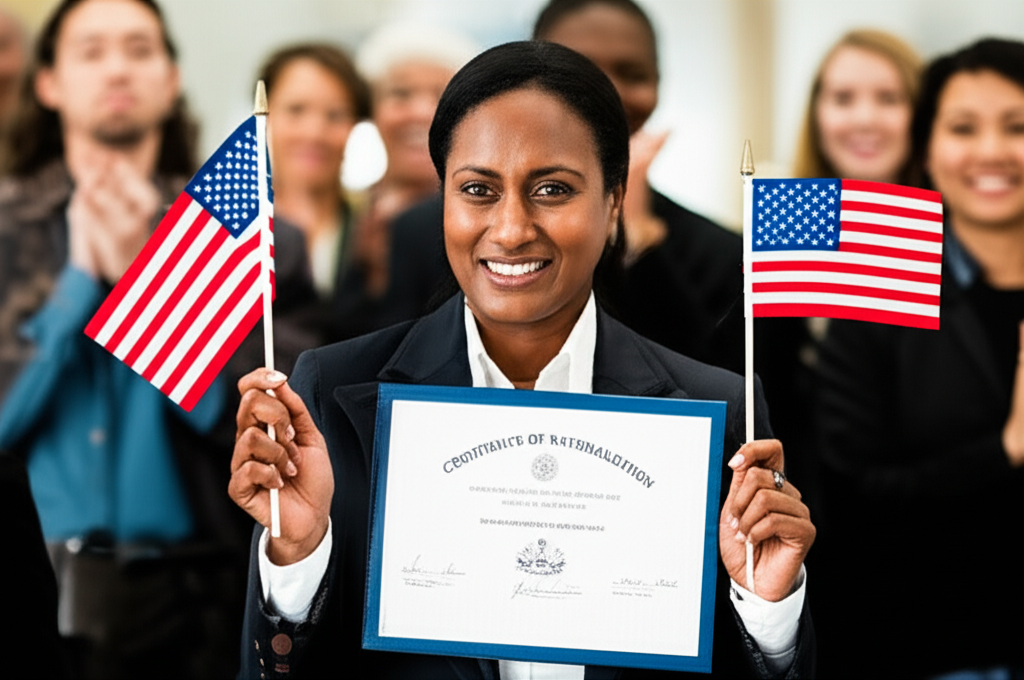
Many believe the Oath of Allegiance ceremony is simply the finish line, a formal conclusion to a long, bureaucratic race. This is a profound misunderstanding. The ceremony isn’t an end; it’s the unlocking of a new set of tools. The most common mistake I see is new citizens treating their Certificate of Naturalization like a diploma to be framed and forgotten. In reality, it is the most powerful document you will now own, and you must put it to work immediately.
After your interview, you will receive Form N-445, the Notice of Naturalization Oath Ceremony. This letter contains the date, time, and location of your ceremony. On the day, you will check in, answer a few final questions, and surrender your Green Card for the last time. This is a significant moment. You are relinquishing your status as a permanent resident to become something entirely new. Then, alongside others who have shared a similar journey, you will raise your right hand and take the Oath of Allegiance.
A New Chapter of Rights and Responsibilities
Once you have your Certificate of Naturalization in hand, don’t just go home and celebrate. Go online and apply for your U.S. passport that same day. This certificate is your proof, and the passport is your key to global mobility as an American. Your new status fundamentally changes your civic relationship with both the U.S. and Sri Lanka. Your new life includes:
The Right to Vote: You can now participate in federal, state, and local elections, shaping the leadership and laws of your new country.
The Power to Sponsor Family: You can petition for certain relatives, like parents or siblings, to immigrate from Sri Lanka, a process with different categories and wait times than those available to Green Card holders.
The Duty of Jury Service: You may be called upon to serve on a jury, a cornerstone of the American justice system.
As you embrace these changes, remember your connection to Sri Lanka. While taking the U.S. oath means you automatically cease to be a Sri Lankan citizen, you can apply to reclaim it. Think ahead: if you plan to pursue dual citizenship, be prepared to meet Sri Lanka’s requirements, such as owning property worth over Rs. 2.5 million or making a significant investment. Becoming a U.S. citizen opens one door while giving you a specific path to reopen another.
Your Timeline is More Than a Calendar
The conventional wisdom suggests the path to citizenship is a simple waiting game after securing a green card. The reality is that your timeline is an active record of your commitment. It is not a passive countdown but a period where every trip abroad, tax filing, and community tie builds your case for naturalization. The most powerful takeaway is this: you are the steward of your own timeline, not just a passenger on it. Your consistent, deliberate actions during your residency are what truly shape your eligibility.
Begin your journey with confidence. If you have questions about your specific situation, consider consulting with an experienced immigration attorney. This proactive approach transforms the waiting period into a purposeful foundation for your future as an American citizen.
Frequently Asked Questions
How long does the entire US citizenship process take for someone from Sri Lanka?
The total timeline can vary significantly. After getting a Green Card, the mandatory waiting period is typically 5 years (or 3 if married to a US citizen). The N-400 processing time itself can take another 8-12 months on average, but this depends on the USCIS field office's caseload.
Can I travel to Sri Lanka while my N-400 application is pending?
Yes, you can travel, but it's crucial to maintain your continuous residence in the U.S. Trips longer than 6 months can disrupt this requirement. Always be sure to attend your scheduled biometrics and interview appointments.
Does Sri Lanka allow dual citizenship with the United States?
Yes, Sri Lanka permits dual citizenship. However, Sri Lankan citizens who acquire citizenship in another country must apply to the Sri Lankan government to retain their Sri Lankan citizenship. It is not automatic.
What happens if I fail the English or civics test?
If you fail any portion of the test during your first interview, USCIS will give you a second opportunity to pass the test, typically scheduled 60 to 90 days after your initial interview.
Facebook
X
LinkedIn
WhatsApp
Daily News Digest
Get the top stories delivered to your inbox every morning. No spam, ever.
Many Sri Lankan artisans believe that getting their products onto global platforms like Amazon and eBay is a logistical nightmare reserved only for large exporters. You might have a stunning
The most expensive myth for foreign investors is that buying a property in a famous US city guarantees Airbnb success. This assumption is a fast track to disappointment. The truth
Most import ventures from Sri Lanka fail before their first container even docks. It’s not a lack of US demand for Ceylon cinnamon or fiery Jaffna curry powder; it’s a
Have you ever had a truly amazing Sri Lankan meal, maybe a lamprais fresh out of the banana leaf, and thought, “Wow, more people in America need to experience this”?