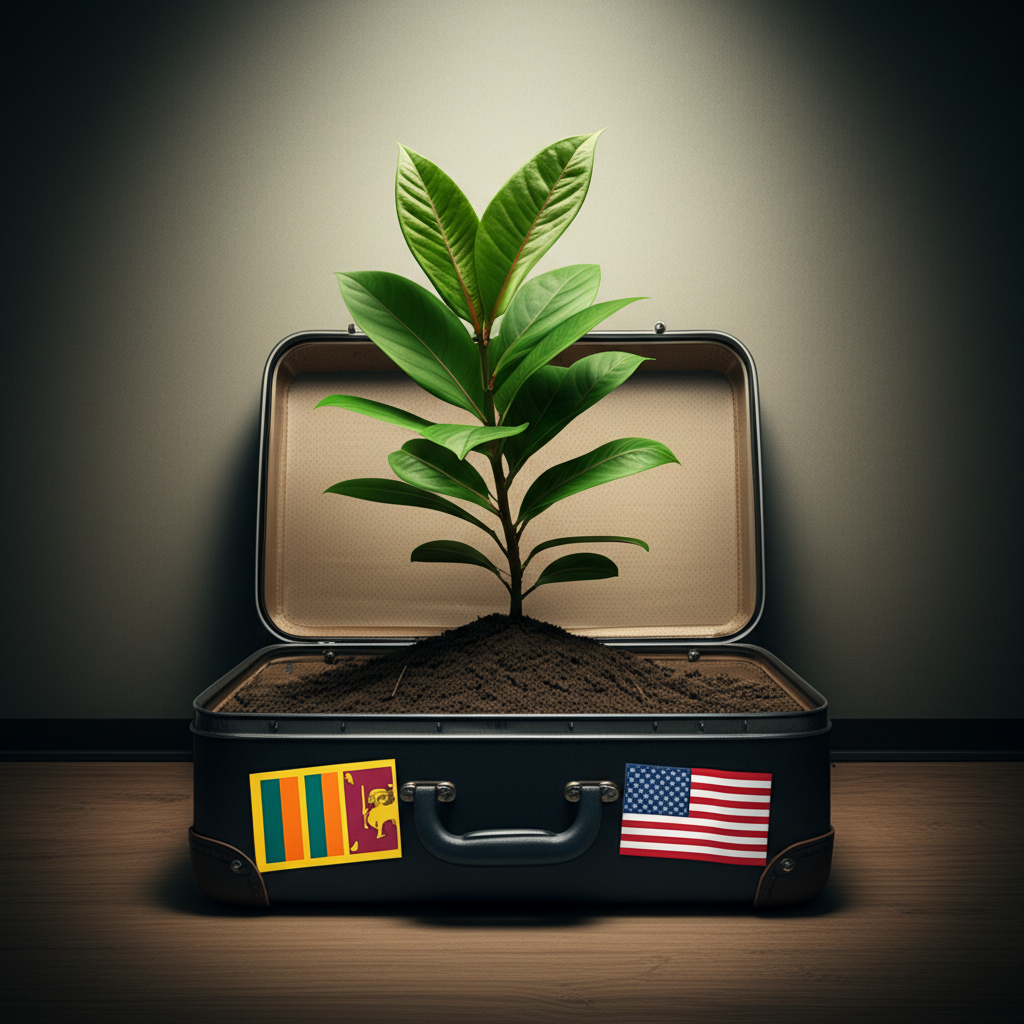
Have you ever found yourself smiling politely while an American colleague gets straight to business, leaving you wondering if you’ve somehow offended them? This jarring shift from the high-context, relationship-focused communication of Sri Lanka to America’s direct, task-oriented style is a classic first hurdle. A common mistake is misinterpreting this efficiency as rudeness, when it’s simply a different cultural operating system at play.
From my experience guiding professionals through this transition, I’ve seen this pattern repeat. It often begins with the “honeymoon” phase, where everything is new and exciting, before sliding into the frustrating “negotiation” stage. This is where small things, like the unspoken rules of small talk or the expectation to self-promote at work, can feel completely alien and draining.
This article moves beyond vague tips. We will break down the specific social codes and workplace dynamics that trip up many newcomers. You’ll get field-tested strategies to decode American directness, build genuine connections, and transform that feeling of being an outsider into a sense of belonging.
The First Wave: Navigating New Social Norms and Pace of Life
The first few weeks in America are less about the big picture and more about a thousand tiny adjustments that can feel overwhelming. Your initial challenge is not the language; it is the unspoken social code and the relentless pace. Think of it as learning a new dance without knowing the steps. It’s fast, sometimes confusing, but you can learn the rhythm.
The ‘Personal Bubble’ and Casual Greetings
One of the first things you will notice is the concept of personal space. While we are used to closer interactions in Sri Lanka, Americans maintain a larger physical distance. Anthropologist Edward T. Hall’s proxemic theory identified this ‘social distance’ as roughly 4 to 12 feet in public settings. Stand closer, and you might make someone uncomfortable. Insider tip: Watch for non-verbal cues. If someone subtly steps back as you talk, they are not rejecting you; they are just adjusting their bubble. This same informality extends to greetings. The respectful ‘Ayubowan’ is replaced by a quick ‘Hey, what’s up?’. This is not a genuine question requiring a full update; a simple ‘Not much, you?’ is the expected reply.
Living by the Clock
The American relationship with time is absolute. Punctuality is not just a virtue; it is a sign of respect and professionalism. A common mistake for newcomers is misinterpreting this. For example, if a work meeting is at 10:00 AM, arriving at 10:05 is considered late. The expectation is to be there a few minutes early. Life here runs on schedules, from work appointments to coffee with a friend. Planning a social catch-up weeks in advance might seem impersonal compared to the spontaneous visits back home, but it is simply how people manage busy lives. Do not take it personally; just get a good calendar app.
Coping with Sensory Overload
Walking into a large supermarket like a Walmart or Costco for the first time can be a full-on sensory assault. The bright lights, the sheer volume of choices, the piped-in music, and the speed at which people move can be jarring. This is not just you being sensitive; it is your brain trying to process a massive influx of unfamiliar stimuli. It is a very real part of the adjustment process. A practical way to manage this is to start small. Visit local grocery stores before tackling the superstores, or go during quieter weekday mornings. Give yourself permission to feel overwhelmed and take breaks.
Communication Breakdown: The Challenge of Directness vs. Indirectness
Here’s what really matters though. More than the food or the weather, the most significant hurdle is often the communication style. In Sri Lanka, we operate in what communication theorists like Edward T. Hall (1976) identified as a high-context culture. Meaning is woven into relationships, non-verbal cues, and what is left unsaid. America, by contrast, is a classic low-context society where clarity is king. As author Erin Meyer (2014) explains, the message is expected to be explicit and carried almost entirely by the words themselves. This fundamental difference is the source of countless misunderstandings.
Consider this common workplace scenario: An American manager asks, “Can you finish this report by five?” A Sri Lankan, wanting to be polite and avoid a direct ‘no’, might reply, “I will try my best, but the other project is also quite urgent.” The intention is to signal that the deadline is impossible. The American manager, however, hears: “It’s difficult, but I’ll get it done.” This disconnect between implied meaning and literal interpretation can lead to frustration on both sides.
The Nuances You Need to Know
American small talk can also feel jarring. A cheerful “How are you?” from a store clerk isn’t an invitation to share your life story; it’s a greeting, a social ritual. A simple “Good, thanks! How are you?” is the expected response. Sarcasm is another minefield. It’s often delivered with a straight face, and the only clue is a slight shift in tone. If a colleague says, “Oh, I love working on a Friday afternoon,” they almost certainly mean the opposite.
Then there are the non-verbal cues. The familiar Sri Lankan head wobble, which can mean anything from “yes” to “maybe” to a simple “I understand” (De Silva, 2012), does not exist here. Americans rely on a clear nod for yes and a shake for no. Direct eye contact is seen as a sign of confidence and honesty, not disrespect.
Insider Tips for Bridging the Gap
Practice verbal mirroring. When you receive instructions, repeat them back in your own words. “Okay, just to confirm, you want me to complete the first two sections by five and send them over for review.” This eliminates ambiguity.
Use “I” statements. Instead of hinting at a problem, state your perspective directly but politely. “I am concerned I won’t meet the deadline because of project X” is much clearer than “Project X is taking a lot of time.”
From Community to Individualism: Redefining Social Connections
Building on that foundation of workplace and communication adjustments, we arrive at the most profound cultural shift: the move from a community-centric to an individual-centric world. In Sri Lanka, life revolves around the group—the extended family, the neighborhood, the lifelong friends. America, by contrast, prioritizes the individual. According to Hofstede Insights, the U.S. scores a 91 on the individualism scale, one of the highest in the world, while Sri Lanka scores a 35, highlighting its collectivist nature. This isn’t just a statistic; it fundamentally changes the rules of social engagement.
The most immediate impact is on friendships. Spontaneous “drop-ins” to a friend’s house, a cornerstone of Sri Lankan social life, are rare here. Time is a managed commodity. A common mistake is misinterpreting American politeness for an immediate invitation. For example, when a colleague says, “We should get coffee sometime!” they are expressing a general desire, not making a firm plan. The responsibility is on you to follow up with a specific date and time. It feels formal, but it’s a system built on respecting individual schedules and independence.
Insider Tips: Rebuilding Your Social World
The feeling of isolation is real when your vast network of aunties, uncles, and cousins is an ocean away. Here, the nuclear family is the primary unit, and self-reliance is deeply ingrained. So, how do you recreate that sense of belonging?
Be the Initiator: Don’t wait for invitations. Suggest a specific activity and time, like “Would you like to try that new coffee shop on Saturday around 10 AM?” It’s direct and effective.
Find Your ‘Third Place’: Sociologist Ray Oldenburg’s concept of a “third place”—somewhere that isn’t home or work—is essential. Join a sports league, a book club, or volunteer. These create structured opportunities for connection.
Seek a Dual Community: Connect with local Sri Lankan associations for a taste of home, but also make a conscious effort to build relationships with American friends. This dual approach provides both comfort and integration, helping you create a new, hybrid support system.
The Everyday Grind: Adjusting to Work, Food, and Consumer Culture
Speaking of which, this difference in communication style extends deeply into the American workplace. The deference to authority common in Sri Lanka can be misinterpreted here. American corporate culture, with its flatter hierarchies, expects you to be assertive and to promote your own accomplishments. It isn’t arrogance; it’s visibility. I once coached a brilliant engineer from Colombo who stayed silent in team meetings, assuming his good work would speak for itself. His manager, however, perceived his quietness as a lack of engagement or new ideas. The lesson? You must learn to comfortably say, “Here is what I contributed, and this was the result.”
From Rice and Curry to Giant Portions
The adjustments continue right at the dinner table. You will encounter food shock, from the sheer size of a restaurant meal (it’s perfectly normal to take half of it home) to a different palate of flavors that can feel bland or overly sweet. Finding authentic spices is a common quest; hunting for a good brand of miris kudu or true Ceylon cinnamon becomes a weekend mission. This new routine is often built around the car. Outside of a few major cities like New York or Chicago, life without a driver’s license is incredibly restrictive. Public transport systems are often limited, making a vehicle essential for everything from grocery runs to social visits.
Decoding Consumerism: Tips, Tax, and Credit
Finally, you’ll need to master a new set of rules for being a consumer. The price you see on a tag is rarely what you pay, as sales tax is added at the register. Understanding the unspoken rules of commerce is key to feeling settled. You have to build a financial identity from scratch, and your credit score—a number that determines your ability to get loans, credit cards, and even rent an apartment—is paramount.
Here are a few insider tips to get you started:
Tipping is not optional: For restaurant service, 18-20% of the pre-tax bill is the standard. Anything less suggests poor service.
Keep your receipts: America has a very liberal return culture. Most stores will take back unused items with a receipt, no questions asked, often for 30-90 days.
Build credit early: Start with a secured credit card from a bank. Using it for small purchases and paying it off in full each month is the fastest way to build a good FICO score.
How to Thrive: Practical Strategies for Overcoming Culture Shock
First, understand that what you’re feeling is completely normal. Over my years of writing about expatriate experiences, I’ve seen that culture shock follows a predictable pattern, often called the four-stage model: the initial honeymoon, the difficult frustration, the slow adjustment, and finally, acceptance. Recognizing this isn’t a personal failure but a standard process is the first step toward managing it. It’s a roadmap, not a dead end.
Stay Connected, But Don’t Retreat
Your connection to home is your anchor. Lean on it. However, a common mistake is turning that anchor into a fortress. While 72% of immigrants find immense support from ethnic community groups (Center for Immigration Studies, 2021), relying on them exclusively can deepen your sense of separation from American society. An insider tip is to follow the “80/20 rule”: spend 80% of your social energy building your new life and 20% reconnecting with your Sri Lankan roots. This balance is key to avoiding the social isolation reported by 54% of immigrants (Pew Research Center, 2023).
Adopt a Mindset of Curiosity
When you encounter a baffling American custom—like small talk with a cashier or the directness in business meetings—your gut reaction might be judgment. Instead, try curiosity. Ask yourself, “Why do they do that?” This simple shift reframes confusing moments as learning opportunities. It turns frustration into fascination. Remember that the language barrier, a challenge for 46% of immigrants (Migration Policy Institute, 2022), can magnify misunderstandings. A little patience and a sense of humor go a long way.
Find Your People Through Your Passions
The fastest way to build genuine connections is through shared interests. Don’t just wait to meet people; go where they are. For example, a software engineer from Colombo, feeling isolated in his quiet suburban office, joined a local amateur cricket league. On the field, he wasn’t just an immigrant; he was the go-to spin bowler. His skills created an instant bond that transcended cultural differences. Look for a hiking club on Meetup, a pottery class at a community center, or a volunteer opportunity. These activities allow you to connect as individuals, building a support system based on who you are, not just where you’re from.
From Surviving to Thriving
The most common misstep is passively waiting for America to feel familiar. Successful integration isn’t about finding similarities; it’s about actively decoding the differences. The professional’s secret is to shift from a mindset of comparison to one of curiosity. Instead of asking, “Why isn’t it like back home?” ask, “What’s the cultural logic here?” This single mental pivot turns bewildering moments into learning opportunities. Embracing this active learning positions you not just to cope, but to truly flourish, blending the richness of your heritage with the possibilities ahead.
What was the biggest culture shock you experienced? Share your story in the comments below to help others on their journey!
Frequently Asked Questions
How long does culture shock typically last for Sri Lankans moving to the US?
There's no set timeline, but many people start moving from the frustration to the adjustment phase after 6 to 12 months. Being aware of the stages of culture shock can help you understand that your feelings are normal and temporary.
What is the biggest cultural difference between Sri Lanka and the USA?
Many Sri Lankans find the shift from a collectivist, community-centered society to America's highly individualistic culture to be the most significant and challenging adjustment. This impacts everything from friendships to workplace expectations.
How can I find the Sri Lankan community in my area of the US?
Search for local Sri Lankan Buddhist temples or cultural centers online. Facebook is also a great resource; look for groups like 'Sri Lankans in [Your City/State]'. Attending events for holidays like Sinhala & Tamil New Year is another excellent way to connect.
Facebook
X
LinkedIn
WhatsApp
Daily News Digest
Get the top stories delivered to your inbox every morning. No spam, ever.
Many Sri Lankan artisans believe that getting their products onto global platforms like Amazon and eBay is a logistical nightmare reserved only for large exporters. You might have a stunning
The most expensive myth for foreign investors is that buying a property in a famous US city guarantees Airbnb success. This assumption is a fast track to disappointment. The truth
Most import ventures from Sri Lanka fail before their first container even docks. It’s not a lack of US demand for Ceylon cinnamon or fiery Jaffna curry powder; it’s a
Have you ever had a truly amazing Sri Lankan meal, maybe a lamprais fresh out of the banana leaf, and thought, “Wow, more people in America need to experience this”?