Have you ever watched your child effortlessly switch to English with their friends, only to stumble over a simple Sinhala or Tamil phrase with their grandparents just moments later? It’s a common, quiet heartache for many families. You see their vocabulary shrink and their confidence waver, despite your best efforts to keep the language alive in your home.
Conventional wisdom tells us that consistent exposure at home is enough. This is a profound oversimplification. This passive approach often fails because it lacks structure and rarely pushes children beyond a basic conversational plateau. It overlooks the critical difference between receptive understanding (what they hear) and productive fluency (what they can actually say and write), especially when dealing with the grammatical nuances and distinct scripts of these languages.
This article moves beyond the “just speak it more” fallacy. We will provide a practical framework for turning your home into an active language workshop, not just a listening station. You will learn how to apply proven principles from second-language acquisition, like scaffolding and task-based learning, to create engaging activities that build real, lasting proficiency for your children within their American school context.
The Cultural Imperative: Why Preserve Heritage Languages?
There’s a persistent, well-meaning piece of advice given to immigrant parents: “Focus on English. That’s the key to your child’s success in America.” This conventional wisdom frames language as a zero-sum game, where embracing English requires shedding Sinhala or Tamil. It’s a fundamental misunderstanding. The goal isn’t replacement; it’s addition. For a child of Sri Lankan descent, fluency in a heritage language isn’t a barrier to success but a powerful amplifier of it, building a foundation that English alone cannot provide.
More Than Just Words: Identity and Family
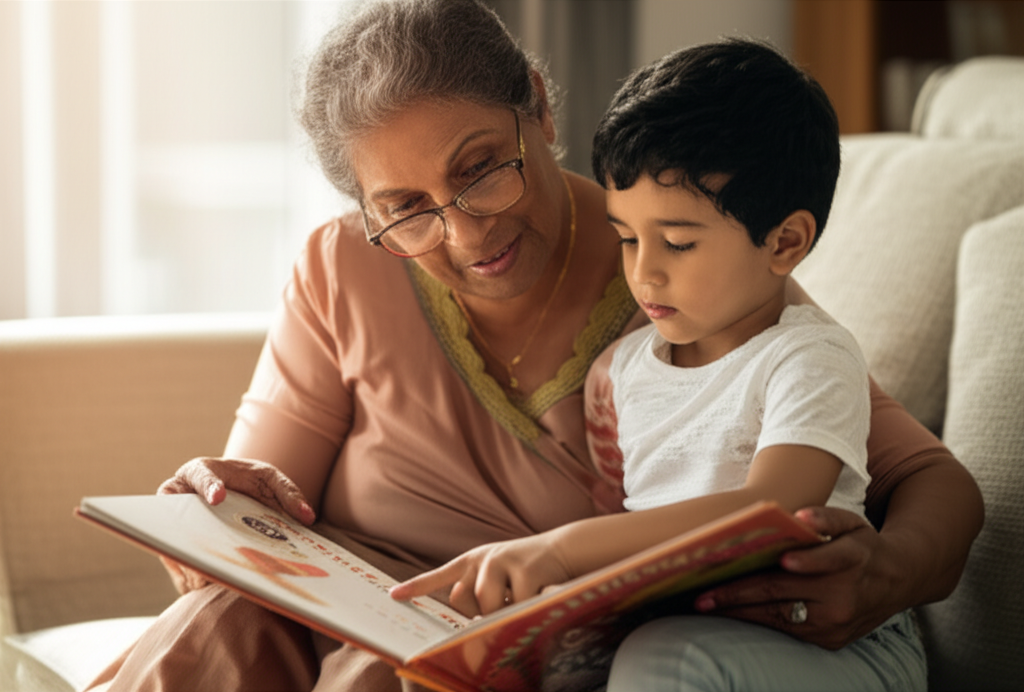
A shared language is the invisible thread connecting generations. It’s the difference between a child nodding along to a grandparent’s story and truly understanding the nuances of a memory from Jaffna or a joke about a festival in Kandy. When a child can ask their Aachi about a family recipe in Tamil, or share a laugh with their Seeya in Sinhala, they are not just communicating; they are inheriting a living culture. This linguistic connection provides a profound sense of belonging and a stable identity for children navigating the complexities of growing up between two worlds. It anchors them in their history, giving them confidence in who they are.
The ‘Bilingual Brain’ Advantage
Beyond the immense cultural benefits, the cognitive science is settled: bilingualism rewires the brain for the better. Children who regularly switch between language systems develop enhanced executive functions—the brain’s air traffic control system for planning, problem-solving, and focusing. This isn’t just theory. It’s a measurable advantage in cognitive flexibility and creative thinking. Yet, our school system has been slow to catch up. While the U.S. Department of State trains diplomats in over 70 languages, including Sinhala and Tamil, our K-12 schools offer scant support. With just 39.60% of public schools offering any world language course, the responsibility falls squarely on families and communities to cultivate these skills.
Preserving these languages is an investment in a child’s entire future. It equips them with a richer sense of self, deeper family bonds, and sharper cognitive tools. As more states adopt frameworks like the Seal of Biliteracy—which recognized proficiency in 143 languages last year—the formal recognition of these skills is growing. Maintaining Sinhala and Tamil is not about clinging to the past. It is about giving the next generation every possible advantage for the future.
Navigating the American School System: Challenges & Opportunities
Many immigrant parents view the American school system as a formidable barrier to heritage language preservation. The conventional wisdom is that schools, with their intense focus on English, will inevitably erode a child’s connection to Sinhala or Tamil. But this perspective misses a critical point: the system isn’t necessarily an adversary; it’s a blank slate. The absence of formal programs creates a unique opportunity for proactive parents to build them from the ground up.
The Reality of an English-Centric Curriculum
Let’s be clear: you will not find Sinhala or Tamil offered alongside Spanish and French. The American Council on the Teaching of Foreign Languages (ACTFL) reports that only 39.60% of all K-12 public schools even offer any world language instruction. For less common languages, the numbers are negligible. The school day is demanding, and the curriculum is designed to ensure English fluency above all else. This reality places the burden of language maintenance squarely on families, turning evenings and weekends into a second shift of cultural and linguistic education. The good news is that students arriving from Sri Lanka often bring a powerful foundation, boasting one of the highest youth literacy rates in South Asia at 98.77%. The goal isn’t starting from scratch; it’s about strategic maintenance.
From Obstacle to Opportunity
Instead of viewing the school as a place where language is lost, consider it a venue for official recognition. The key is to leverage existing, often underutilized, frameworks. Your most powerful tool is the Global Seal of Biliteracy, an official credential that recognizes a student’s proficiency in two or more languages on their high school diploma. In the 2022-2023 school year, it was awarded in 143 different languages. If a district can find a way to assess proficiency in Hmong or American Sign Language, why not Tamil?
Here is how you can transform institutional silence into tangible support:
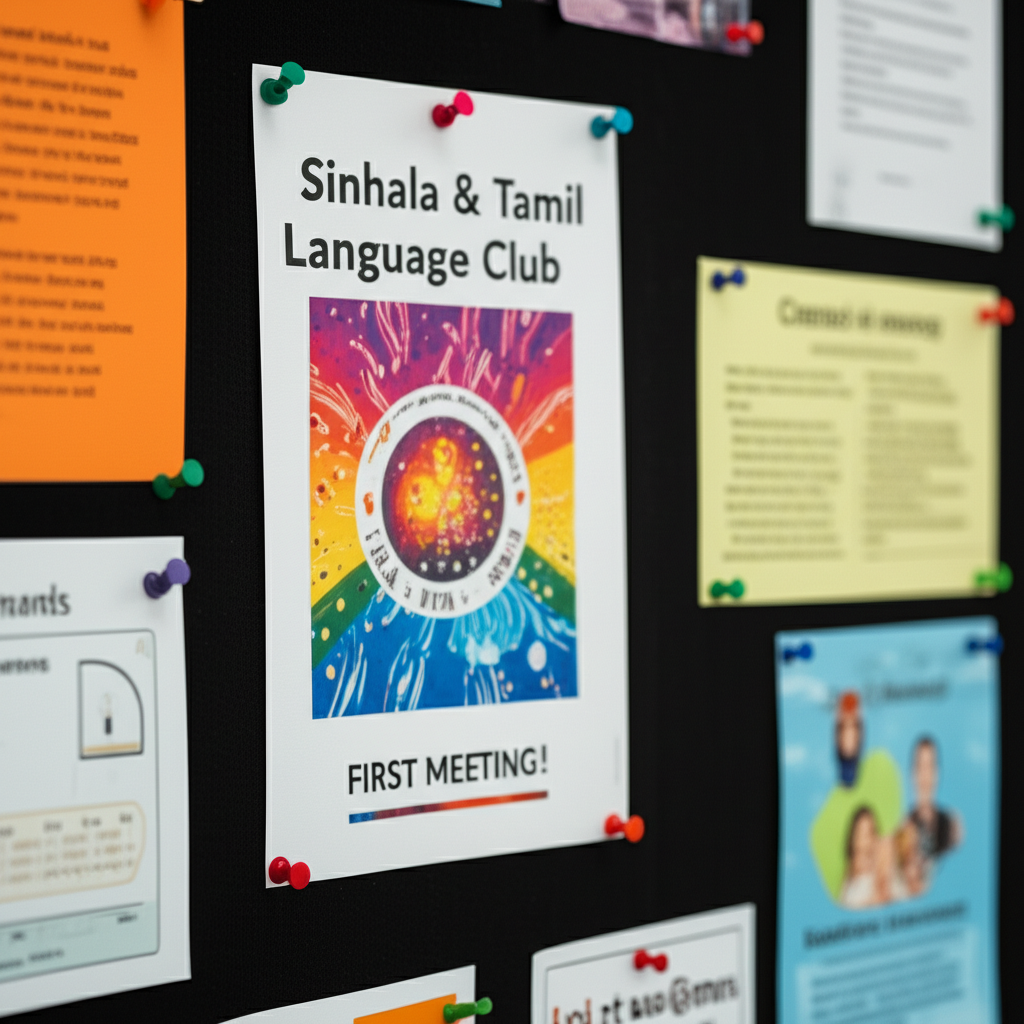
Form a Language Club: Start small. An after-school club is the simplest way to demonstrate interest and build a community of learners. It requires little more than a volunteer parent, a willing teacher to sponsor the room, and a handful of students.
Champion the Seal of Biliteracy: Don’t just ask for a language class; propose that your district adopt the Seal of Biliteracy for Sinhala and Tamil. For example, a group of parents in a New Jersey school district successfully lobbied their board by partnering with other South Asian language communities, presenting a unified front that showed broad demand for multilingual recognition.
Connect Community & School: Many communities already have weekend language classes, often run through local temples or cultural centers. You can propose that the school district partner with these established programs to act as assessors for the Seal, bridging the gap between informal learning and formal academic credit.
The system will not create these pathways on its own. But for parents willing to organize and advocate, it offers the tools to turn a child’s heritage language from a home-based hobby into a recognized academic achievement.
Practical Strategies for Parents: Fostering Language at Home
Many parents believe that maintaining a heritage language requires formal classes, expensive tutors, or a rigid, textbook-driven approach. The thinking goes: if the school won’t teach it, we must replicate school at home. But wait — there’s more to consider. This mindset often turns language into a chore, a subject to be passed or failed. The most effective language acquisition, especially for children, happens organically through lived experience.
Given that a mere 39.60% of all K-12 public schools in the U.S. offer any world language courses, the chances of finding dedicated Sinhala or Tamil programs are almost zero. The home is not a backup plan; it is the primary arena for language preservation. Your goal shouldn’t be to become a formal instructor but a facilitator of a language-rich environment. Here’s how to do it.
Create a ‘Language Zone’
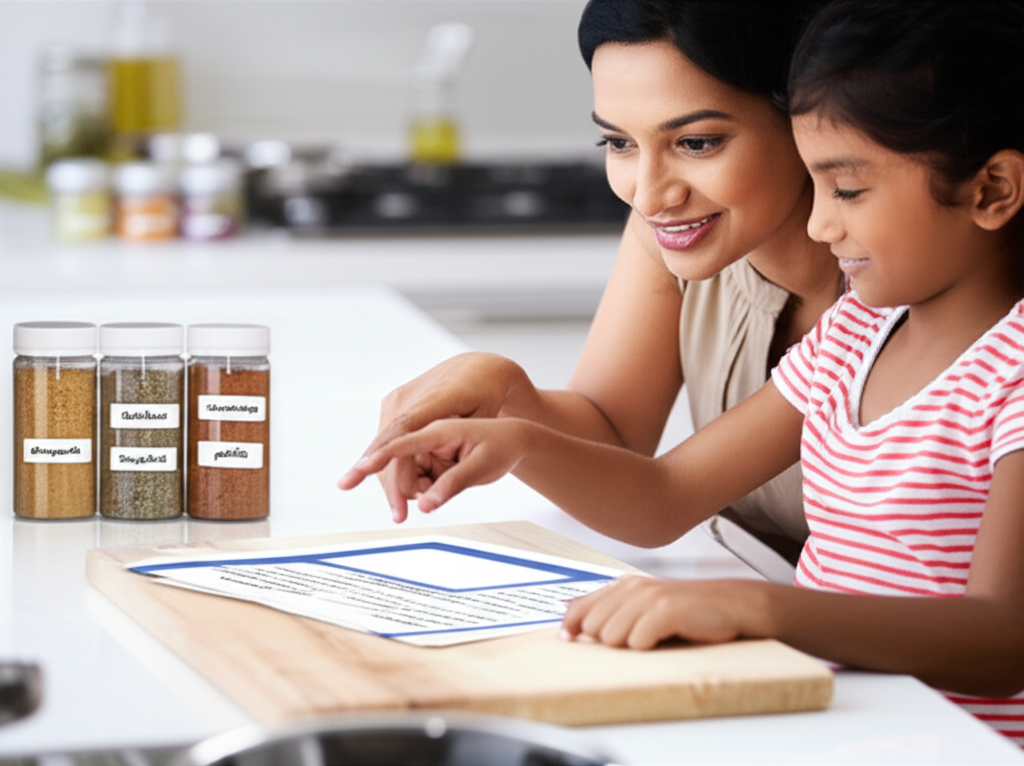
Instead of demanding your child speak Sinhala or Tamil all the time, which can feel overwhelming, designate specific times or physical spaces as “language zones.” This is a technique inspired by immersion methodologies. You could declare that the kitchen is a “Tamil-only Zone” during dinner prep, or that the 30 minutes before bedtime are for “Sinhala Stories.” This frames the practice as a fun, low-stakes game. For example, while making pol sambol, you can ask, “Can you pass me the lunu (salt)?” This attaches the word directly to the object and action, making it memorable.
Curate Your Media Environment
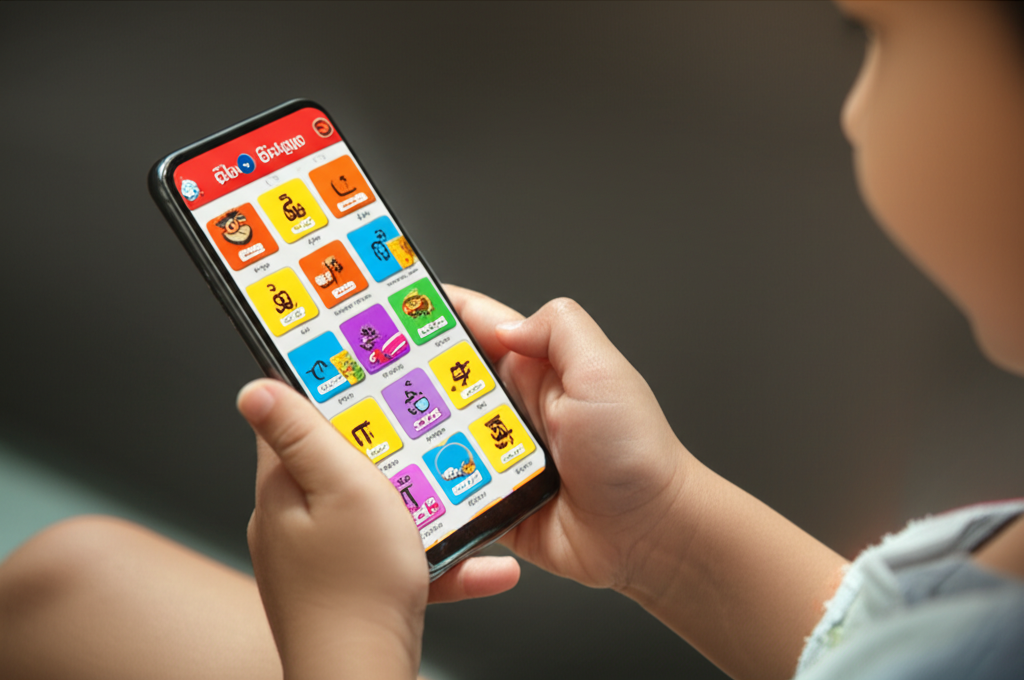
Transform screen time into learning time. Build a digital library of engaging content. You don’t need to reinvent the wheel. Search for popular animated movies dubbed in Tamil or find Sinhala-language children’s storytellers on YouTube. Create a playlist of contemporary Tamil pop music or classic Sinhala baila songs to play in the car. The goal is exposure and normalization. When your child hears their heritage language in modern, fun contexts—not just from their grandparents—it becomes a living, relevant part of their world.
Integrate, Don’t Isolate
Weave the language into the fabric of your daily life. Use sticky notes to label common household items: கதவு (kathavu) on the door, මේසය (mēsaya) on the table. During bath time, name body parts in your language. Count the stairs in Tamil as you walk up to bed. These small, consistent interactions are far more powerful than a single, hour-long lesson each week because they build functional vocabulary tied to everyday actions. It’s about making the language useful, not just ornamental.
Community & Technology: Resources Beyond the Classroom
This brings us to something often overlooked: the assumption that language maintenance must happen within school walls. The reality is, it almost never does for languages like Sinhala and Tamil. With only 39.60% of all K-12 public schools even offering any world language course, according to the American Council on the Teaching of Foreign Languages (ACTFL), waiting for the system to catch up is a losing strategy. The true ecosystem for heritage language learning is outside, built on community and connection.
For generations, the heartbeat of language transmission has been the weekend school at a local Buddhist Vihara or Hindu Kovil. These are not just places of worship; they are immersion zones. Here, children absorb language through stories, songs, and direct instruction, often from elders who are native speakers. It’s a model based on what linguists call “comprehensible input” in a culturally rich context. For example, a child isn’t just memorizing the word for ‘flower’ (mal or poo), they are learning it while making a garland for a ceremony. The goal isn’t just vocabulary; it’s identity.
The Digital Bridge to Heritage
Technology now provides a powerful supplement to these community efforts. While popular apps may have limited offerings, specialized online tutors on various platforms connect students directly with native speakers in Sri Lanka. Yet the most effective tool is often the simplest: a weekly video call. A ten-minute chat with an Aachi in Jaffna or a Seeya in Colombo provides more authentic conversational practice than any software can. It transforms language from an academic subject into a living relationship.
This learning solidifies during cultural celebrations like Thai Pongal or Sinhala and Tamil New Year (Avurudu). Suddenly, the words for sweets, relatives, and blessings are not on a worksheet—they are part of a vibrant, shared experience. This is where motivation is born. And while formal classes are absent, this community-driven learning can still earn formal recognition. The Seal of Biliteracy, awarded in 143 languages in the 2022-2023 school year, offers a pathway for students to validate the skills they’ve built far beyond the classroom.
Advocating for Your Child: How to Approach Your School
Many parents believe that asking an American public school to support a language like Sinhala or Tamil is a lost cause. The conventional wisdom suggests that unless you’re asking for Spanish or French, the system is too rigid. This is a fundamental misunderstanding of how schools can and do evolve. The reality is that administrators respond to well-organized, evidence-based proposals that present heritage languages not as a niche interest, but as an academic asset for the entire community.
Building Your Case, Not Just Making a Request
Your first step isn’t scheduling a meeting; it’s gathering data and allies. Connect with other Sinhala or Tamil-speaking families in your district through community centers or social media. A unified request from ten families carries far more weight than a single voice. Frame your proposal around the cognitive benefits of bilingualism—improved executive function, problem-solving skills, and cultural competency—that enrich all students. Remind the school that with Sri Lanka’s youth literacy rate at a remarkable 98.77% (WENR), your children are bringing a valuable, pre-existing skill to the classroom that is worth preserving.
The Strategic Conversation
When you are ready to approach the school, start with a guidance counselor or a sympathetic teacher. They can become your internal champions before you ever meet the principal. Present your group’s findings and offer solutions, not just problems. For instance, instead of saying, “My son is losing his Tamil,” you could present a collaborative plan: “A group of 15 families has noticed our children’s proficiency in Tamil, a skill that contributes to global competence. We propose starting a pilot after-school club to gauge wider interest, and we have already identified a community member willing to volunteer. Our long-term goal is to help the school offer the Seal of Biliteracy in Tamil, which is already awarded in 143 languages nationwide.” This approach transforms you from a petitioner into a partner. While only 39.60% of K-12 schools currently offer any world language (ACTFL), your proactive effort can be the catalyst that places your school ahead of the curve.
The True Advantage
The conversation around heritage languages often presents a false choice: preserve cultural roots or ensure academic success in America. Yet, the evidence points elsewhere. Bilingualism is a cognitive asset, enhancing executive functions like problem-solving and mental flexibility. The most effective approach, then, is not waiting for the perfect school program, but intentionally weaving Sinhala or Tamil into the fabric of daily family life. This commitment creates a future where our children are not simply bilingual, but bicultural thinkers, equipped with a distinct perspective to lead and innovate.
Share this guide with another parent in your community and start a conversation about preserving our beautiful languages for the next generation.
Frequently Asked Questions
What is the best age to start teaching my child Sinhala or Tamil?
The earlier, the better. Children's brains are incredibly receptive to new languages from birth to around age 5. However, it's never too late to start! Consistency is more important than the starting age.
What if I am not fluent in Sinhala or Tamil myself?
This is a great opportunity to learn alongside your child. Utilize apps, online resources, and community classes. Your effort and enthusiasm will be a powerful motivator for your child, showing them that language learning is a lifelong journey.
Are there any official language proficiency tests for Sinhala or Tamil in the US?
Many states offer a 'Seal of Biliteracy' on high school diplomas for students proficient in English and another language. While standardized tests for Sinhala and Tamil might be less common, you can work with your school district to find ways to assess proficiency and qualify for such awards.
Facebook
X
LinkedIn
WhatsApp
Daily News Digest
Get the top stories delivered to your inbox every morning. No spam, ever.
Many Sri Lankan artisans believe that getting their products onto global platforms like Amazon and eBay is a logistical nightmare reserved only for large exporters. You might have a stunning
The most expensive myth for foreign investors is that buying a property in a famous US city guarantees Airbnb success. This assumption is a fast track to disappointment. The truth
Most import ventures from Sri Lanka fail before their first container even docks. It’s not a lack of US demand for Ceylon cinnamon or fiery Jaffna curry powder; it’s a
Have you ever had a truly amazing Sri Lankan meal, maybe a lamprais fresh out of the banana leaf, and thought, “Wow, more people in America need to experience this”?