Struggling to get a straight answer about using your Sri Lankan license in the United States? You’ve likely been told that an International Driving Permit (IDP) is your golden ticket. This is one of the most common and costly misconceptions. The IDP is not a license; it’s simply a translation, and its legal power is highly dependent on your residency status and the specific state you’re in—a detail that trips up many newcomers.
Relying on your Sri Lankan license and IDP beyond the initial grace period, which can be as short as 10 days in states like Georgia or 30 in others, is often treated the same as driving without any license at all. This has serious consequences for traffic stops and, more critically, for insurance claims. An insurer can deny a claim if they determine you were not legally licensed at the time of an accident.
Forget the confusing advice from friends and forums. This article will give you the clear, state-specific timelines you need to follow based on your visa type. We’ll explain exactly when your status shifts from “visitor” to “resident” in the eyes of the DMV and provide a clear path to getting a US license and affordable insurance, even without a local driving history.
Can You Use Your Sri Lankan License in the US?
Many travelers operate under the assumption that their Sri Lankan driver’s license is essentially useless in the United States. The reality is more nuanced. Yes, you can absolutely drive on US roads with your valid Sri Lankan license, but doing so without the right supporting document is a significant and unnecessary risk.
For short-term visitors like tourists or business professionals, most states recognize a valid foreign license. The permitted duration varies widely, from 30 days in some states to the entirety of your legal stay in others, like California. The core issue isn’t the license’s validity; it’s the language. Since your license is printed in Sinhala or Tamil, a US police officer or a car rental agent cannot verify your details, its class, or its expiration date.
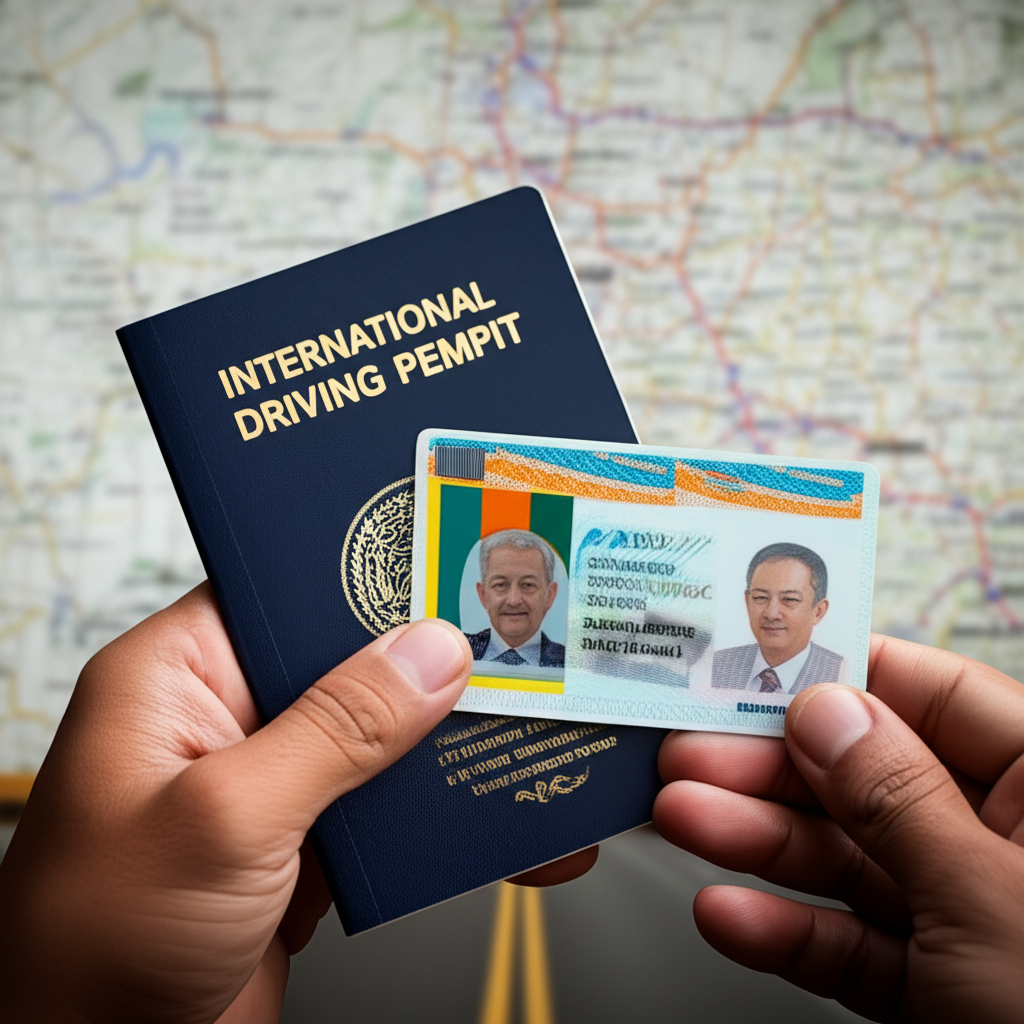
This is precisely why an International Driving Permit (IDP) is so important. It is not a standalone license. Instead, think of it as an official, government-sanctioned booklet that translates your Sri Lankan license details into ten languages, including English. You must obtain your IDP from an authorized body in Sri Lanka before you travel and carry it with your original license at all times. Agencies like the National Highway Traffic Safety Administration (NHTSA) recommend it, and some states, such as Florida, legally mandate an IDP or a certified English translation if the original license is not in English.
Imagine this common scenario: you’re at the rental counter at Dallas Fort Worth Airport. You present your valid Sri Lankan license. The agent, unable to read it, cannot complete the rental agreement. Without an accompanying IDP to verify the information in English, you will likely be denied the keys, disrupting your travel plans from the very start.
The International Driving Permit (IDP): Your Essential Travel Document
This brings us to something often overlooked. Many Sri Lankan travelers operate under a common misconception: “My driver’s license is already in English, so I don’t need an International Driving Permit.” This assumption misunderstands the IDP’s purpose and can lead to significant trouble at a rental car counter or during a traffic stop. The IDP is not a license. It is a United Nations-sanctioned translation of your existing Sri Lankan license into 10 standard languages.
Think of it as a universal decoder for your driving credentials. While your license uses English, its specific format, class codes, and security features are foreign to most US officials and rental agents. The IDP presents your information in a globally recognized booklet format. Imagine you’re trying to rent a car in a small town in Arizona. The agent has never seen a Sri Lankan license and is hesitant. Instead of a long delay while they consult a manager, you present the IDP alongside your license. They immediately recognize the standard format, match your photo and details, and hand over the keys. It removes all ambiguity.
Getting Your IDP in Sri Lanka
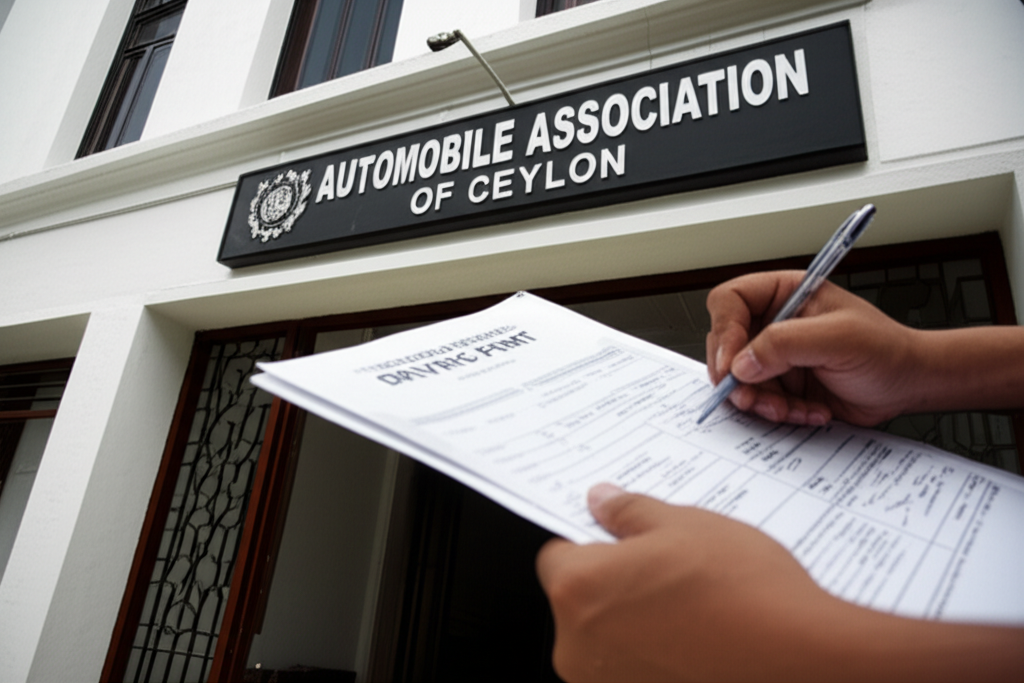
You must secure your IDP before you leave Sri Lanka. The sole authorized issuer is the Automobile Association (AA) of Ceylon. The process is typically quick, often completed the same day. You will need to provide the following:
Your valid Sri Lankan driver’s license and a copy
A copy of your National Identity Card (NIC) or passport
Two recent passport-sized photographs
The completed application form and the processing fee (confirm the current fee directly with the AA).
Your IDP is valid for one year from its issue date. Remember this final, critical point: the IDP is worthless on its own. It is only a supplementary document. You must always carry it with your original, valid Sri Lankan driver’s license when you are behind the wheel in the United States.
For Long-Term Stays: Getting a US State Driver’s License
Now, you might be wondering if you can just keep using your Sri Lankan license with an International Driving Permit (IDP) for your entire stay. It’s a common belief, but it’s a myth that can lead to serious legal and insurance headaches. Once you establish residency in a US state—whether you’re a student setting up an apartment or a professional starting a new job—the clock starts ticking. You are no longer a visitor. You are a resident, and the state requires you to get one of its official driver’s licenses, typically within 30 to 60 days.
The process isn’t uniform across the country; it’s managed at the state level by an agency usually called the Department of Motor Vehicles (DMV), though you might see it as the Bureau of Motor Vehicles (BMV) or Registry of Motor Vehicles (RMV). Think of the United States not as one country for driving rules, but as 50 different ones. For example, the grace period for a new resident in Texas is 90 days, while in California, it’s a swift 10 days. This is not a suggestion; it’s a legal requirement.
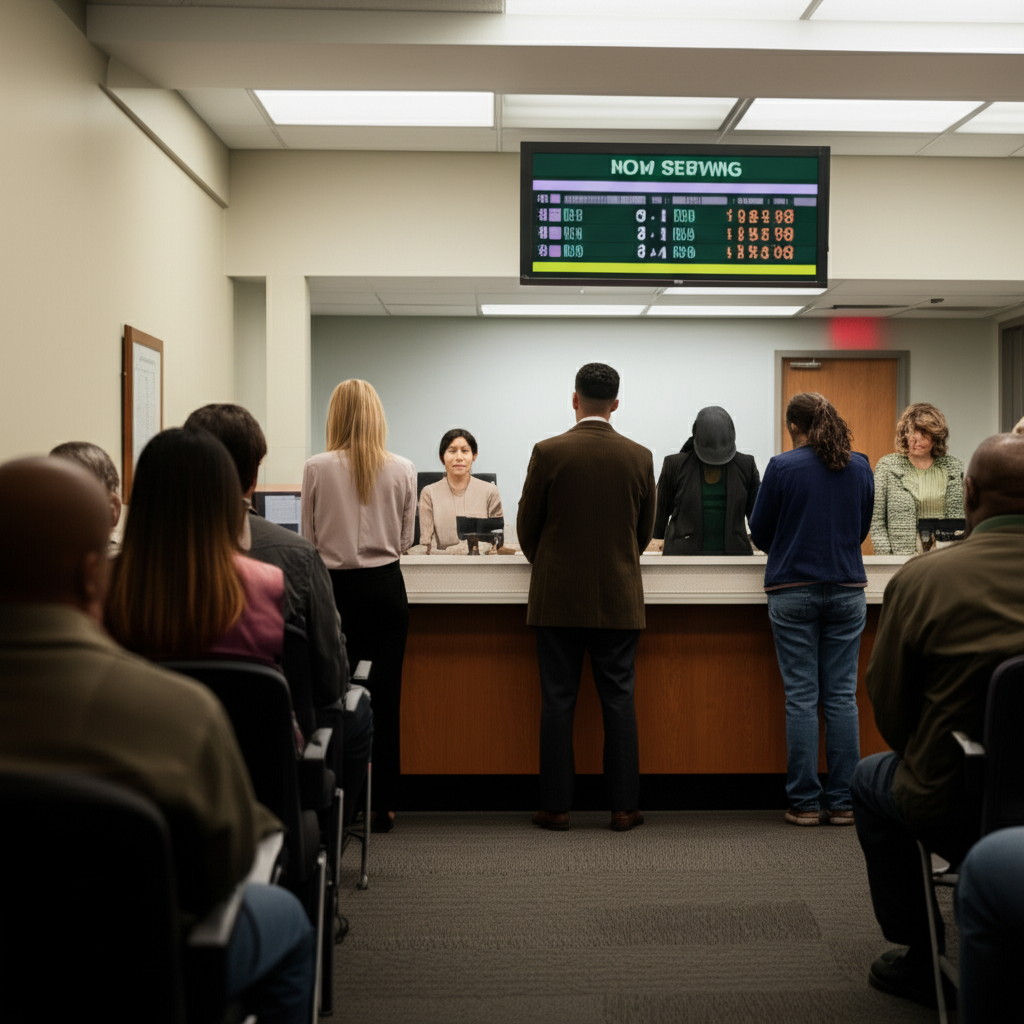
To begin, you’ll need to gather a specific set of documents and visit a local DMV office. While the exact list varies by state, the core requirements are almost always the same:
Your Sri Lankan passport with your valid US visa
Your Form I-94 Arrival/Departure Record
Your Social Security Number (SSN) card. If you are not eligible for an SSN, you must get an official ineligibility letter from the Social Security Administration.
Two documents proving your state residency (e.g., a utility bill, bank statement, or signed lease agreement with your name and address)
Once your documents are accepted, you’ll typically face a three-part test: a basic vision screening, a written knowledge test, and a practical road test. A critical tip: don’t waste time on generic online practice tests. Download the official driver’s handbook from your state’s DMV website. Every single question on the written test comes directly from that book. Mastering it is the only surefire way to pass on your first attempt and get on the road legally and confidently.
Navigating US Car Insurance: A Must-Have for All Drivers
Speaking of which, many newcomers believe that once they have a valid driver’s license, they’ve cleared the final hurdle to getting on the road. This is a costly misunderstanding. In the United States, driving without car insurance isn’t just a bad idea—it’s illegal in 49 out of 50 states. Think of your insurance card as being just as essential as your license. Getting caught without it can lead to hefty fines, license suspension, and serious legal trouble, especially if you’re involved in an accident.
Understanding Your Coverage Options
American car insurance isn’t a one-size-fits-all product. Policies are built from different types of coverage, and you need to understand the basics to make an informed choice. At a minimum, the law requires you to have Liability coverage, which pays for injuries and property damage you cause to others. This is the cheapest option, averaging around $622 annually according to Bankrate research. However, it does nothing to cover your own car. For that, you’ll need:
Collision: Covers damage to your car from an accident, regardless of who is at fault.
Comprehensive: Covers non-accident damage, such as theft, vandalism, fire, or hitting a deer.
A policy with all three is often called “full coverage” and provides much greater peace of mind, though the average cost jumps to $2,014 per year.
The Newcomer’s Premium Problem
Prepare for a bit of sticker shock. You might think your decade of clean driving in Colombo would count for something, but to most US insurance algorithms, a foreign driving history is invisible. Insurers base their prices on risk, calculated using local driving records and, often, a US credit history. Without these, you are an unknown variable, which translates to higher premiums. For instance, a new driver from Sri Lanka might be quoted a rate double that of an American neighbor with the same car and a long-established driving record, simply due to the lack of verifiable data in the insurer’s system.
Finding the Right Policy
Don’t just accept the first quote you receive. The price differences between companies can be staggering. Start by getting quotes from major national providers like Geico, Progressive, and State Farm. At the same time, look into companies that specialize in policies for non-residents or those with international licenses. Your most powerful tool is comparison. Use online quote tools, speak to independent agents, and ask about discounts for things like good grades (if you’re a student) or safety features in your car. A few hours of research can easily save you hundreds of dollars a year.
Key Road Rules & Tips for a Safe Journey
Many visitors believe that once you master staying on the right side of the road, you’ve conquered American driving. This is a dangerous oversimplification. The real challenge isn’t the physical act of steering from a different seat; it’s retraining your instincts for a completely different system of traffic logic where courtesy and rules intersect in unfamiliar ways.
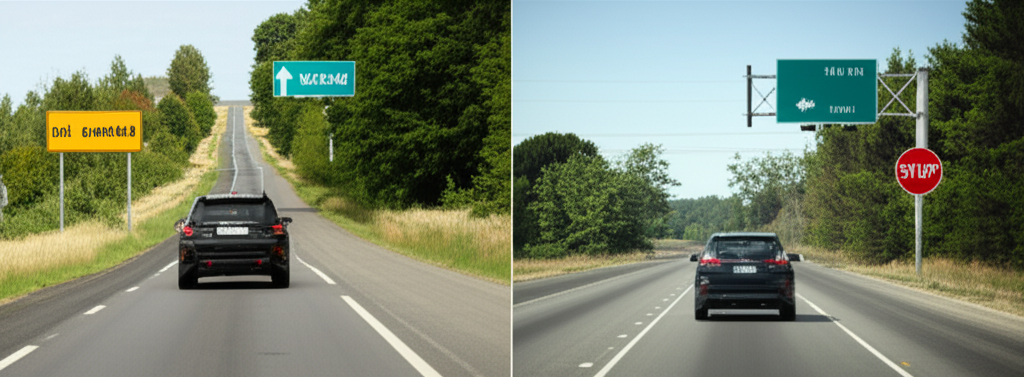
Nowhere is this more apparent than at a stop sign. In the US, a stop sign commands a complete stop—your wheels must cease turning. You will encounter intersections with 4-way stops, a concept rare in Sri Lanka. The rule is simple and strictly followed: first to stop, first to go. If two cars arrive at the same time, the driver on the right has priority. At traffic lights, you can typically turn right on a red light after a full stop, provided the way is clear and no sign prohibits it. Be cautious, as the AAA Foundation for Traffic Safety reports that running red lights causes hundreds of fatalities each year.
Speed limits are posted in Miles Per Hour (MPH) and are rigidly enforced. A 65 MPH highway limit is roughly 105 KPH, and exceeding it, even slightly, can result in a hefty fine. Always wear your seatbelt. It’s not just a suggestion; the National Highway Traffic Safety Administration (NHTSA) confirms it reduces the risk of fatal injury to front-seat passengers by 45%.
Renting Your Vehicle
To rent a car, you’ll need your Sri Lankan license, an International Driving Permit (IDP), your passport, and a credit card in your name. When offered rental insurance, understand your options. The Collision Damage Waiver (CDW) covers damage to the rental car, while Supplemental Liability Insurance (SLI) covers others. Before you purchase their expensive daily packages, check your credit card’s benefits. Many major cards provide primary rental car insurance, which could save you a considerable amount.
Your License to Freedom on US Roads
Many travelers believe an International Driving Permit is the ultimate key to driving in the US. The reality is more nuanced: it’s a translation, not a standalone license. Your true power comes not from a single document, but from understanding that each state sets its own rules. The most impactful takeaway is that mastering the specific requirements of your destination state is what transforms you from a hopeful visitor into a confident, legally compliant driver.
Before you even pack your bags, make your first stop the official DMV website for the state you’ll be visiting. This single action will prepare you for the road ahead more than any other.
Frequently Asked Questions
Can I drive in California with a Sri Lankan license?
Yes, as a visitor, you can drive in California with a valid Sri Lankan license. California does not require an IDP, but it is highly recommended to have one as a translation, especially for car rentals and traffic stops.
How long can I use my Sri Lankan license in the USA as a tourist?
The duration varies by state. Some states allow it for your entire legal stay as a tourist, while others have limits like 30, 60, or 90 days. Always check the specific DMV rules for the states you plan to visit.
Is it expensive to get car insurance in the US with a foreign license?
It can be more expensive initially because you don't have a US driving history. However, some companies specialize in policies for foreign nationals. Shopping around for quotes is the best way to find a reasonable rate.
Do I need to retake a driving test to get a US license?
Yes, in almost all cases. The US does not have a license transfer agreement with Sri Lanka. You will need to pass the vision, written, and practical road tests to get a US state driver's license.
Facebook
X
LinkedIn
WhatsApp
Daily News Digest
Get the top stories delivered to your inbox every morning. No spam, ever.
Many Sri Lankan artisans believe that getting their products onto global platforms like Amazon and eBay is a logistical nightmare reserved only for large exporters. You might have a stunning
The most expensive myth for foreign investors is that buying a property in a famous US city guarantees Airbnb success. This assumption is a fast track to disappointment. The truth
Most import ventures from Sri Lanka fail before their first container even docks. It’s not a lack of US demand for Ceylon cinnamon or fiery Jaffna curry powder; it’s a
Have you ever had a truly amazing Sri Lankan meal, maybe a lamprais fresh out of the banana leaf, and thought, “Wow, more people in America need to experience this”?