You’ve done the hard work, earning your degree from a respected university like Peradeniya or Colombo. Yet, when you present it for a job or graduate school application in the US, you’re often met with confusion. It’s an incredibly frustrating experience that can make your qualifications feel diminished. You might think a simple notarized translation of your diploma is the key to unlocking the door. That is a common and costly mistake.
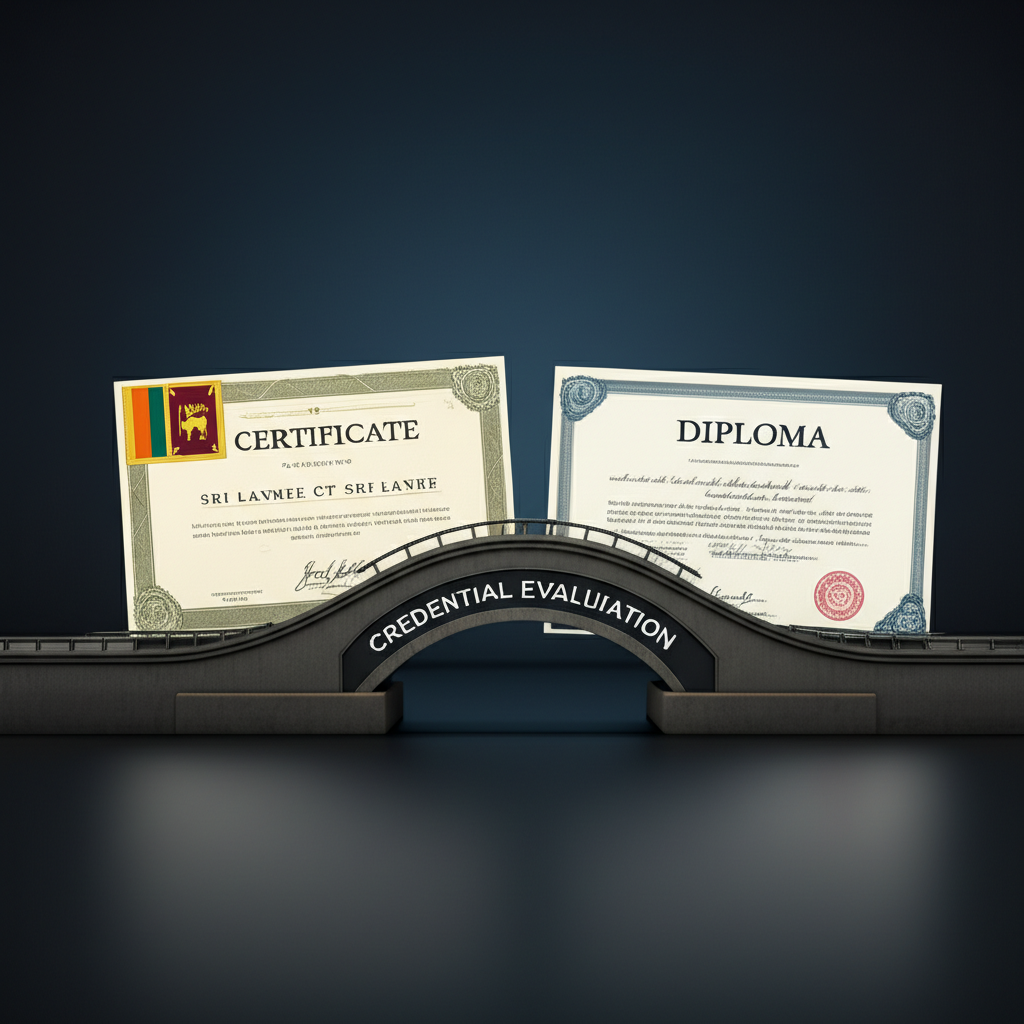
The reality is that US institutions aren’t looking for a translation; they require an equivalency assessment. They need to understand how your three-year Special Degree or four-year Honours degree maps to their standard four-year bachelor’s system. This isn’t a simple document swap. It involves a detailed course-by-course evaluation from a NACES-accredited service that methodically converts your Sri Lankan credits and grades into a US-equivalent GPA.
This process isn’t about questioning the quality of your education. It’s about translating its value into a format the American system understands. We will show you precisely how to navigate this, from selecting the right evaluation service to preparing your documents, ensuring your Sri Lankan qualification is recognized as the powerful asset it truly is.
Why Your Sri Lankan Degree Needs a U.S. Equivalency Report
There’s a common belief that a degree from a respected institution like the University of Colombo or Peradeniya speaks for itself. It’s a fantastic achievement, but in the United States, it doesn’t automatically translate. Your diploma is written in a different academic language. A credential evaluation report is the professional translation that makes it legible to American institutions.
The United States has no central ministry of education that validates foreign degrees. Instead, as the U.S. Department of Education outlines, the responsibility falls to individual universities, employers, and state licensing boards. These bodies are not equipped to interpret the specifics of a Sri Lankan Bachelor of Arts (Special) degree versus a Bachelor of Science. They don’t know the grading scales or credit systems. So, they outsource this task to independent evaluation agencies, most commonly members of the National Association of Credential Evaluation Services (NACES).
Think of it this way: a U.S. university admissions officer looking at your application for a master’s program needs to know if your undergraduate coursework meets their prerequisites. They need a report that deconstructs your transcript from Sri Lanka—including the GCE A/L results, which are typically found equivalent to a U.S. high school diploma—and maps it to their own system. This report becomes the official verification of your academic history.
These evaluations are not one-size-fits-all. You will need a specific type of report based on your goal.
Two Key Types of Evaluation Reports
General (or Document-by-Document) Report: This is the standard for employment or immigration. It verifies your credentials and provides a simple statement of their U.S. equivalency, such as “Bachelor of Science degree from a recognized institution.”
Course-by-Course Report: This is a highly detailed analysis required for university admissions or professional licensing. It lists every subject you took, converts your grades to the U.S. 4.0 GPA scale, and assigns U.S. semester credit hours to each course. This is non-negotiable for academic transfers or graduate school applications.
Securing an evaluation isn’t just bureaucratic box-ticking. It’s the foundational step that gives your Sri Lankan education its proper value and recognition within the American framework.
The Step-by-Step Guide to Evaluating Your Credentials
Many people from Sri Lanka believe that getting their degree “recognized” in the United States is a one-time, official process handled by a central government body. This is a myth. The U.S. Department of Education confirms there is no single authority for this; instead, recognition is granted by the specific university, employer, or state licensing board you’re dealing with. They are the ones who set the standard. Here’s what really matters though. You don’t need to convince the entire U.S. government—you only need to convince the one admissions officer or hiring manager in front of you. And you do that by getting a professional credential evaluation.
Step 1: Select the Right Agency and Evaluation Type
Your first move isn’t just picking any evaluation service. You must choose one that your target institution accepts. Most reputable U.S. universities and employers require an evaluation from a member of the National Association of Credential Evaluation Services (NACES) or the Association of International Credential Evaluators (AICE). Don’t guess. Check the application requirements of your desired university or employer first. You will also need to choose the type of report. A software engineer from the University of Moratuwa applying for a job at a tech company might only need a general “document-by-document” evaluation confirming their degree is equivalent to a U.S. bachelor’s. But if they’re applying for a Ph.D. program, they will need a detailed “course-by-course” report that breaks down their grades and credits.
Step 2: Assemble Your Academic Portfolio
This is where patience is key. You will need to gather several official documents from your home university. Typically, this includes:
Official, sealed academic transcripts (or marksheets) sent directly from your Sri Lankan university to the evaluation agency.
A clear copy of your degree certificate.
Certified, literal English translations of any documents not originally issued in English.
A word of advice: start this process immediately. Contacting your university’s registrar and arranging for international shipping of sealed documents can be the most time-consuming part of the entire journey.
Step 3: Complete the Application and Pay
Once you’ve chosen your agency and have your documents in order, the final step is straightforward. You will complete an online application on the agency’s website, upload digital copies of your documents, and pay the fee. The cost can range from around $100 to over $300, depending on the complexity of the report and whether you request expedited service. After you submit, the agency will wait for the official, sealed transcripts to arrive from your university before finalizing your evaluation report, which will officially state the U.S. equivalency of your hard-earned Sri Lankan credential.
Top Credential Evaluation Services for Sri Lankan Degrees
Many applicants believe that all credential evaluation services are interchangeable, so they simply pick the cheapest or the one with the flashiest website. This is a common and expensive mistake. The reality is that in the U.S., where there is no central government body for recognizing foreign degrees, the reputation of your evaluator is everything. Your goal is to choose a service that universities, employers, and licensing boards already trust without question.
For this reason, you should only consider members of the National Association of Credential Evaluation Services (NACES). This accreditation is the benchmark for quality, so much so that the U.S. Department of State often requires it for federal employment. Think of it as a pre-approved list that removes any doubt about the legitimacy of your evaluation report.
Choosing Your Evaluator
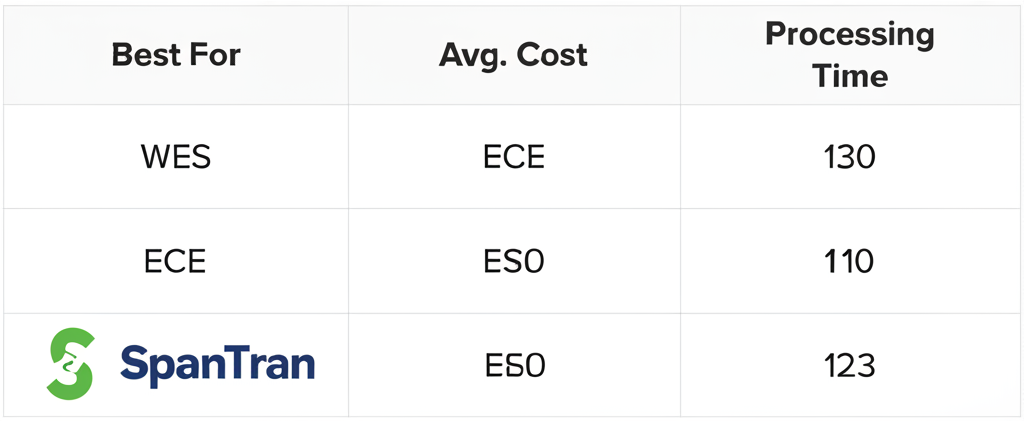
While the NACES roster is long, three providers are consistently used by applicants from Sri Lanka. Your choice depends entirely on your specific needs for speed, cost, and report detail.
World Education Services (WES): The biggest name in the industry. WES is widely accepted and known for its efficient online platform and relatively fast processing times. It’s an excellent default choice for most graduate school applications.
Educational Credential Evaluators (ECE): Renowned for its thorough, detailed reports. ECE is often the preferred service for professional licensing boards (e.g., for engineering, accounting, or healthcare) that need a meticulous breakdown of your coursework.
SpanTran: A strong competitor known for excellent customer service. They offer various evaluation types, including some tailored for specific immigration purposes, and can be very helpful if your situation has unique complexities.
Consider this scenario: an IT graduate from the University of Colombo is applying for a job at a tech firm and a master’s program at a state university. For both, a standard WES course-by-course evaluation would likely be perfect. However, if that same graduate were seeking a professional certification that has strict educational prerequisites, the certification board might specifically request a more detailed report from ECE. Before you spend a single rupee, check the website of your target university or licensing board. They almost always state their preferred evaluation service. A few minutes of research here will save you headaches and hundreds of dollars later.
Navigating Common Hurdles in the Evaluation Process
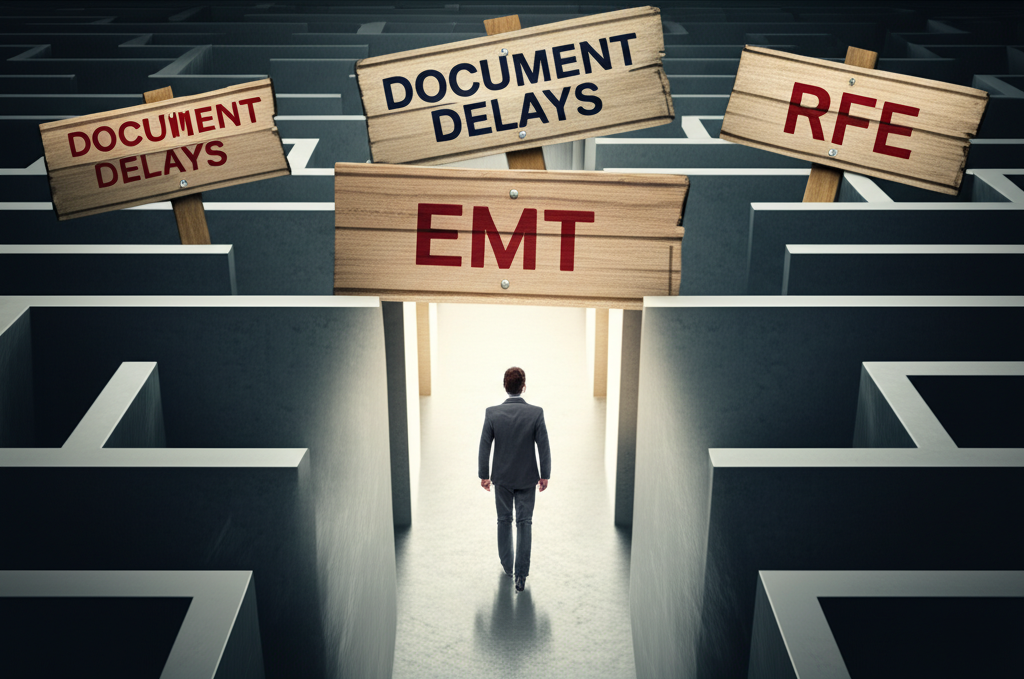
This brings us to something often overlooked: the myth that credential evaluation is a simple, linear process. Many assume that because the U.S. has no central government body for recognizing foreign degrees, the private evaluation agencies all follow an identical, predictable script. The reality is far more nuanced, and knowing where the common pitfalls lie can save you months of frustration.
The Transcript Tango
The first hurdle is often getting official transcripts sent directly from your Sri Lankan university to the evaluation agency. Conventional wisdom suggests this is a routine administrative task. It is not. University registrars in Sri Lanka have specific, sometimes rigid, procedures that don’t always align with the fast-paced demands of U.S. agencies. Start this process months before you need the evaluation. Contact your university’s examinations or registrar’s office directly, confirm the exact procedure and fees for sending sealed transcripts internationally, and follow up persistently. Don’t just assume your initial request was processed.
When the Evaluation Isn’t What You Expect
Another shock can be the final report. For instance, you completed a rigorous four-year B.Sc. (Special) Degree in a specific field, only to have the evaluation equate it to a “U.S. bachelor’s degree in general studies.” This can happen if the agency, a member of an association like NACES or AICE, determines your coursework doesn’t align with a specific U.S. major’s requirements. Don’t despair. Your first step is to request the criteria they used. If you have evidence to the contrary—like detailed course syllabi showing advanced, specialized coursework—you can file an appeal. A well-documented appeal can sometimes lead to a revised evaluation.
Responding to a Request for Evidence (RFE)
Receiving an email requesting more information can feel like a setback, but it’s actually an opportunity. An RFE isn’t a rejection; it’s a checklist. The agency is telling you exactly what they need to complete their work. Often, it’s a simple fix: a clearer copy of your degree certificate, an official English translation of a document, or a missing marksheet from one semester. Read the request carefully, gather only the specific documents mentioned, and submit them promptly. A swift, precise response is the best way to get your file back on track.
How to Use Your Completed Evaluation Report for Success
Many people view their credential evaluation report as the final, bureaucratic hurdle in a long process. The common wisdom is to get the report, check the box, and file it away. This is a missed opportunity. Your evaluation is not just a passive document; it is an active tool that translates your hard-earned Sri Lankan education into the language of American opportunity. Since there is no central U.S. government body that automatically recognizes foreign degrees, this report is your official advocate in conversations with universities, employers, and immigration officials.
For University Admissions
When applying to a U.S. graduate program, you cannot simply forward the PDF copy you received. Instead, you must request that the evaluation agency—ideally a member of NACES or AICE—send an official, sealed copy directly to each institution’s admissions office. Think of it like an official transcript. Furthermore, be sure you ordered a course-by-course evaluation. This detailed report breaks down your coursework and grades to calculate a U.S.-equivalent GPA, a non-negotiable requirement for most academic programs.
For Employment
Your evaluation gives you the confidence and the specific language to present your qualifications on American job applications. On your resume, you can state your degree with an authoritative note. For example:
Bachelor of Commerce, University of Kelaniya, Sri Lanka (Evaluated by [Agency Name] as equivalent to a U.S. Bachelor of Commerce)
This simple line removes any ambiguity for a hiring manager or an automated screening system. It preemptively answers the question, “Is this degree valid?” and shows you have done the necessary due diligence, positioning you as a prepared and serious candidate.
For Immigration
For many employment-based visas, the evaluation is indispensable. Consider the H-1B visa, which typically requires a U.S. bachelor’s degree or its equivalent for the specialty occupation. When your future employer files a petition with U.S. Citizenship and Immigration Services (USCIS), your evaluation report serves as the primary evidence of your educational qualifications. Submitting a petition for an IT analyst role based on your degree from a Colombo university without this report is a near-certain way to receive a Request for Evidence (RFE), significantly delaying your case.
Your Degree’s American Passport
The greatest hurdle in using your Sri Lankan degree in the US isn’t a perceived gap in educational quality, but a gap in official recognition. The evaluation process is not a re-examination of your hard-earned knowledge; it is a standardized translation. It methodically converts your academic achievements into a language that American employers and universities immediately understand, validating the rigor of your education. This isn’t about proving your worth all over again—it’s about presenting it in the correct format.
Take the first step toward your American dream. Choose a NACES-approved agency and start gathering your documents today to unlock the professional future you’ve already worked so hard to build.
Frequently Asked Questions
How long does a credential evaluation for a Sri Lankan degree take?
Standard processing typically takes between 7 to 20 business days after all required documents are received by the agency. Most services offer rush options for an additional fee.
Do I need to get my documents translated for the evaluation?
Yes. If your degree certificate and transcripts are not in English, you must provide a certified, literal (word-for-word) English translation along with the original language documents.
Is WES the only accepted evaluation service?
No. While WES is very popular, most U.S. universities, employers, and immigration services accept evaluations from any member of NACES (National Association of Credential Evaluation Services) or AICE (Association of International Credential Evaluators).
Facebook
X
LinkedIn
WhatsApp
lwsadmin
Daily News Digest
Get the top stories delivered to your inbox every morning. No spam, ever.
Many Sri Lankan artisans believe that getting their products onto global platforms like Amazon and eBay is a logistical nightmare reserved only for large exporters. You might have a stunning
The most expensive myth for foreign investors is that buying a property in a famous US city guarantees Airbnb success. This assumption is a fast track to disappointment. The truth
Most import ventures from Sri Lanka fail before their first container even docks. It’s not a lack of US demand for Ceylon cinnamon or fiery Jaffna curry powder; it’s a
Have you ever had a truly amazing Sri Lankan meal, maybe a lamprais fresh out of the banana leaf, and thought, “Wow, more people in America need to experience this”?