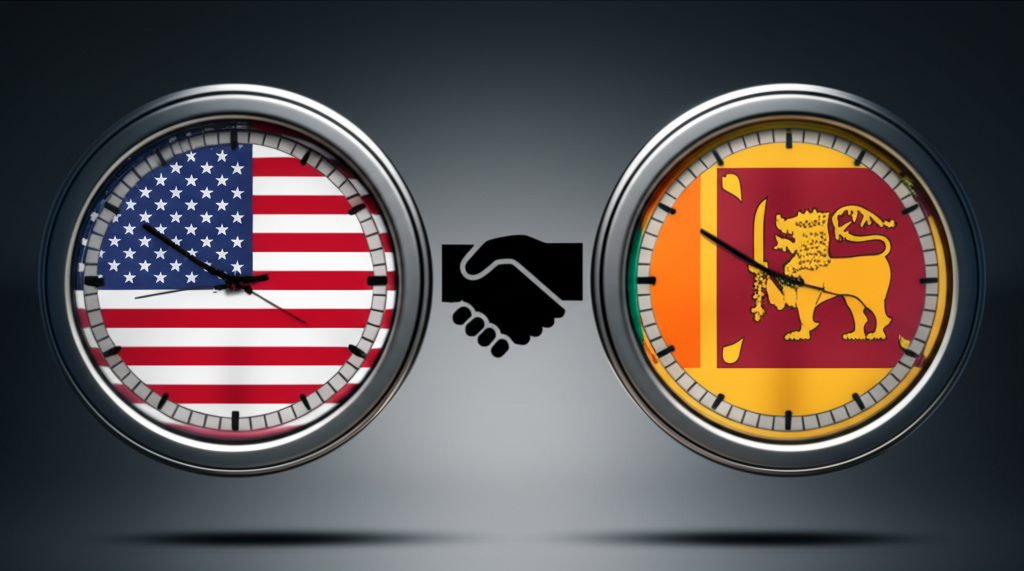
My workday often begins at 7 AM, not with my US colleagues, but by reviewing the completed tasks from my team in Colombo, who are just signing off for their day. The conventional wisdom is that the staggering 10.5-hour time difference is the biggest hurdle to managing a team in Sri Lanka from the US. This is a fundamental misunderstanding of the problem.
The time zone isn’t your enemy; your attachment to a synchronous, meeting-heavy culture is. Forcing your Sri Lankan team into late-night calls to match your afternoon schedule is a recipe for burnout and miscommunication. The most effective cross-continental teams don’t just tolerate the time gap—they weaponize it. They operate on a disciplined, asynchronous-first model that creates a nearly continuous, 24-hour work cycle.
Forget simply finding a better meeting time. I’m going to show you how to build a resilient system based on impeccable documentation, structured daily handoffs, and clear ownership. You will learn the specific communication protocols and project management setups that turn what seems like a logistical nightmare into your most powerful operational advantage.
The Time Zone Tango: Mastering Asynchronous Collaboration
Many managers believe a 10-hour time difference is a death sentence for project velocity. They assume progress requires constant, real-time interaction. That assumption is wrong. The massive gap between the US and Sri Lanka isn’t a bug; it’s a feature that forces operational discipline. It eliminates vague communication and demands a level of clarity that same-time-zone teams often neglect.
Find Your Rhythm: The ‘Golden Hours’
Your day is not about maximizing overlap. You have a brief, precious window—typically your morning and their evening. Protect it fiercely. These one or two “golden hours” are not for status updates. They are for high-bandwidth conversations: strategic alignment, complex problem-solving, and relationship building. Everything else can and should be handled asynchronously. This turns the time constraint from a barrier into a focusing mechanism.
Embrace the Handover
True momentum comes from mastering the daily handover. This creates a near 24-hour work cycle. For example, a marketing director in Chicago can record a 5-minute Loom video at her end-of-day, reviewing campaign drafts. The team in Colombo watches it at their start-of-day, posts revisions, and updates the shared Asana project board before they sign off. The director wakes up to completed work, not a stalled project waiting for her input.
Codify Communication: When to Interrupt Sleep
Establish a strict communication protocol to protect everyone’s sanity, especially when your team has navigated the complexities of Sri Lanka’s Digital Nomad or employment visas. A clear framework prevents burnout and builds trust. Define what warrants a middle-of-the-night phone call versus an email.
Call/Urgent Message: A true emergency, like a critical system failure.
Email/Asana Comment: The default for all project tasks, questions, and feedback.
This isn’t just about being polite; it’s about building a sustainable, high-trust system that respects the significant professional and legal commitments everyone has made.
Bridging Cultures: Communication and Business Etiquette
You’ve sorted the Digital Nomad Visa, you understand the 183-day tax residency rule, and your employer is clear on Permanent Establishment risks. You think the hard part is over. But here’s where it gets interesting. Many US managers assume their direct, task-oriented style is universally efficient. In Sri Lanka, that approach can backfire, creating friction you won’t even see until a deadline is missed.
Respecting the Structure
Sri Lankan business culture is generally hierarchical. This isn’t about bureaucracy; it’s about showing respect. Calling a senior colleague by their first name without an invitation can be jarring. Using titles like “Mr. Perera” or “Miss Fernando” until invited otherwise is a simple, powerful way to build goodwill. Publicly contradicting a senior team lead, even with the best data, is often viewed as a serious breach of professional etiquette. Instead, raise concerns in a private, one-on-one setting to show deference.
The Art of Indirect Feedback
Perhaps the biggest adjustment is moving from low-context to high-context communication. A Sri Lankan team member is unlikely to say, “Your idea won’t work.” Instead, you might hear, “That is an interesting perspective, we will have to study its feasibility.” That gentle pushback is your cue to dig deeper. For example, if you ask for a status update and get the answer, “I am trying my best,” it often means “I am facing a significant obstacle and need help.” Don’t take words at face value. Build enough personal rapport by asking about family or their weekend, so they feel comfortable giving you the real story later.
Your Essential Tech Stack for US-Lanka Management
Now, you might be wondering how to orchestrate a complex project across a dozen time zones without losing your mind or your budget. The common advice is to buy a sprawling suite of enterprise software. This is a mistake. The belief that more tools create more control is a fallacy; they create more noise. A lean, disciplined stack is what separates successful cross-continental teams from the ones drowning in notifications.
Project Management: A Single Pane of Glass
Your goal is asynchronous visibility. Forget endless status meetings. A meticulously maintained Jira or Trello board should tell you everything you need to know at a glance, whether it’s 9 AM in California or 7:30 PM in Colombo. When your Sri Lankan development team moves a ticket from “In Progress” to “Ready for QA,” that action is the update. This is non-negotiable for running effective Agile sprints across continents.
Communication: The Asynchronous Lifeline
Use Slack or Microsoft Teams, but set firm rules. Create dedicated channels for specific topics (e.g., #lanka-standups, #bug-reports, #feature-alpha) to keep conversations focused and searchable. This structure respects everyone’s time, allowing your US-based product managers to leave feedback that engineers in Sri Lanka can address when their workday begins.
Documentation: Your Central Source of Truth
This is your most critical layer. A central wiki in Notion or a shared Google Workspace folder must be the undisputed source for all project information. This isn’t just for technical specs. When you’re managing team members on Digital Nomad Visas requiring a $2,000 monthly income proof or tracking stays to avoid the 183-day tax residency rule, a disorganized system is a serious liability. A new hire in Sri Lanka should be able to find the project roadmap, coding standards, and expense submission process in one place, without a single call.
Navigating Payments, Contracts, and Compliance
This brings us to something often overlooked: the mechanics of the working relationship. Many managers assume hiring a Sri Lankan contractor is just like hiring someone on Upwork stateside. They believe a simple PayPal transfer and a handshake email suffice. This is a costly mistake. The legal and financial plumbing requires more thought to protect both you and your talent.
First, let’s talk about money. Forget wire transfers with their high fees. Platforms like Wise or Payoneer are the industry standard for a reason; they offer transparent, low-cost transfers directly into Sri Lankan bank accounts. But the payment is only the final step. The foundation is your contract. A meticulously detailed Statement of Work (SOW) isn’t just corporate bureaucracy. It defines the scope, deliverables, and payment terms, while clearly establishing an independent contractor relationship. This distinction is what helps you avoid accidentally creating a “Permanent Establishment” for your US company, which could trigger Sri Lankan corporate tax obligations.
Finally, you must build local realities into your project plans. For example, Sri Lanka observes Poya days—a public holiday on every full moon. A US-based manager who schedules a critical deadline on a Poya day will be met with silence. A seasoned leader knows to check the Sri Lankan holiday calendar and plans sprints accordingly. Ignoring this can easily turn a tight two-week deadline into a three-week scramble, frustrating everyone involved. True success means integrating, not just delegating.
Building a Cohesive Team Across Continents
Many managers believe technology alone can bridge the gap between a US-based lead and a development team in Sri Lanka. This is a costly assumption. While you are meticulously tracking your stay to avoid triggering the 183-day tax residency rule (Source: wfa.team), the human connection becomes an afterthought. True cohesion isn’t built on project management software; it’s built on intentional, structured human interaction that overcomes the distance and time zones.
Intentional Connection Over Casual Collision
You can’t replicate the spontaneous office chat. Instead, schedule it. A weekly, non-work-related ‘virtual coffee’ is not a perk; it’s a core operational meeting. This is a protected time for the team in Colombo and you in California to discuss anything but the project sprint. This is how you learn about someone’s family, hobbies, or weekend plans—the very things that build foundational trust between colleagues who have never met in person.
Making Recognition Visible
When a win happens, it cannot be a quiet email. Create a system for public recognition. For example, dedicate the first five minutes of your cross-time-zone sync to “Project Wins,” complete with a specific slide. When the Sri Lankan QA team identifies a show-stopping bug, they don’t just get a thank you. Their names and pictures go on the slide, with a clear explanation of the impact they made. This makes their contribution tangible to everyone and reinforces that you are one team, not two separate entities.
The Power of the One-on-One
Consistent one-on-one meetings are your most powerful tool. Beyond status updates, this is a private channel for individual coaching and genuine listening. Given that your team members secured a formal Residence visa for employment at a cost of USD 200 per year (Source: Remote), they are committed professionals, not temporary contractors. These meetings honor that commitment, providing the individual support that builds loyalty and psychological safety far more effectively than any group event.
Beyond the Time Zone Barrier
Conventional wisdom views the vast time difference with Sri Lanka as a primary obstacle to overcome. This perspective is fundamentally flawed. The reality is that this gap is your greatest asset for continuous productivity, not a liability. True success hinges on mastering the asynchronous handoff, transforming your end-of-day brief into your team’s start-of-day action plan. This intentional structure creates a powerful 24-hour work cycle where progress is made while you sleep, turning a logistical challenge into a strategic advantage for project velocity.
Ready to optimize your global workflow? Start by implementing one clear “end-of-day handover” protocol with your Sri Lankan team this week.
Frequently Asked Questions
What is the best time for a meeting between the US East Coast and Sri Lanka?
The most convenient overlap is typically between 8:30 AM and 10:30 AM EST, which corresponds to 6:00 PM to 8:00 PM in Sri Lanka. This allows for a brief real-time sync without requiring either team to work excessively late or early.
How do I handle payments to contractors in Sri Lanka?
Services like Wise (formerly TransferWise) and Payoneer are highly effective. They offer competitive exchange rates and lower fees than traditional bank wire transfers, with funds often arriving quickly in the recipient's local bank account.
What is a key cultural difference to be aware of in Sri Lankan business?
Building a relationship is often as important as the task itself. Starting meetings with a few minutes of friendly, non-work-related chat can go a long way in building trust and rapport, which is highly valued in Sri Lankan business culture.
Facebook
X
LinkedIn
WhatsApp
lwsadmin
Daily News Digest
Get the top stories delivered to your inbox every morning. No spam, ever.
Many Sri Lankan artisans believe that getting their products onto global platforms like Amazon and eBay is a logistical nightmare reserved only for large exporters. You might have a stunning
The most expensive myth for foreign investors is that buying a property in a famous US city guarantees Airbnb success. This assumption is a fast track to disappointment. The truth
Most import ventures from Sri Lanka fail before their first container even docks. It’s not a lack of US demand for Ceylon cinnamon or fiery Jaffna curry powder; it’s a
Have you ever had a truly amazing Sri Lankan meal, maybe a lamprais fresh out of the banana leaf, and thought, “Wow, more people in America need to experience this”?