The most expensive myth for foreign investors is that buying a property in a famous US city guarantees Airbnb success. This assumption is a fast track to disappointment. The truth is, a carefully vetted home in a less-glamorous Orlando suburb, free from restrictive homeowner association rules, will often outperform a luxury condo in regulation-heavy Miami Beach. Your success isn’t about the zip code’s fame; it’s about micro-market data and local ordinances, details that many overlook from afar.
As a Sri Lankan investor, you’re navigating a complex system from over 9,000 miles away. You need more than generic advice. We’re going to cover the critical, practical details: how to analyze a deal using real metrics like Average Daily Rate (ADR) and projected occupancy, the pros and cons of structuring your purchase through an LLC, and the common operational mistakes that erode your profit margins before you even get your first booking.
This guide is built on direct experience helping investors like you. You will learn how to identify cash-flow positive markets, build a reliable on-the-ground team remotely, and sidestep the specific tax withholding rules under FIRPTA that catch many non-resident owners by surprise. Let’s get your US property working for you, the right way.
The Opportunity: Why US Short-Term Rentals Attract Sri Lankan Investors
For many Sri Lankan investors, the appeal of the US short-term rental (STR) market boils down to one word: stability. Holding a USD-denominated asset that generates US dollars is a powerful hedge against the volatility of the Sri Lankan Rupee. It’s more than just an investment; it’s a strategy for wealth preservation. You are moving a portion of your portfolio into one of the world’s most mature and transparent real estate markets, diversifying away from concentrated local risk.
The financial upside is compelling. While a high-end apartment in Colombo might yield 3-4% annually, a well-managed US vacation rental can target a cash-on-cash return of 8-12% or higher, before considering property appreciation. Consider a three-bedroom home near a major tourist hub like Orlando, Florida. It attracts year-round family tourism, commands strong nightly rates, and benefits from steady, long-term value growth in a globally recognized destination. This combination of strong cash flow and capital appreciation is difficult to replicate in the current Sri Lankan market.
Insider Tip: Regulation Dictates Your Success
A common mistake I see international buyers make is finding a property they love without first investigating local STR laws. A beautiful condo in Los Angeles is worthless as an Airbnb for an overseas investor because the city limits rentals to a host’s primary residence, capped at 120 nights. Instead, focus on STR-friendly states. Florida, for instance, has a state law preventing outright bans, though you must obtain a license from the Department of Business and Professional Regulation. Texas is also popular, but you must verify city-level rules; Houston, for example, will require annual registration and a 13% hotel occupancy tax starting in 2026. Your due diligence on local ordinances is the single most important step you will take.
Navigating the Legal Landscape: Visas, Taxes, and Business Structures
You’ve found a promising market and run the numbers on a potential property. But wait — there’s more to consider than just local rental rules. As a Sri Lankan investor, your personal legal and financial structure is the foundation of a successful US venture. Getting it wrong can lead to serious complications.
First, let’s talk about visas. A common mistake is assuming you can manage a rental business on a B1/B2 tourist visa. While you can certainly purchase property on a B1/B2 visa, you cannot legally perform the day-to-day work of managing it. That activity is considered employment, a violation that could jeopardize your ability to enter the US in the future. Active management requires a different visa status, so most foreign investors hire a US-based property manager to handle operations.
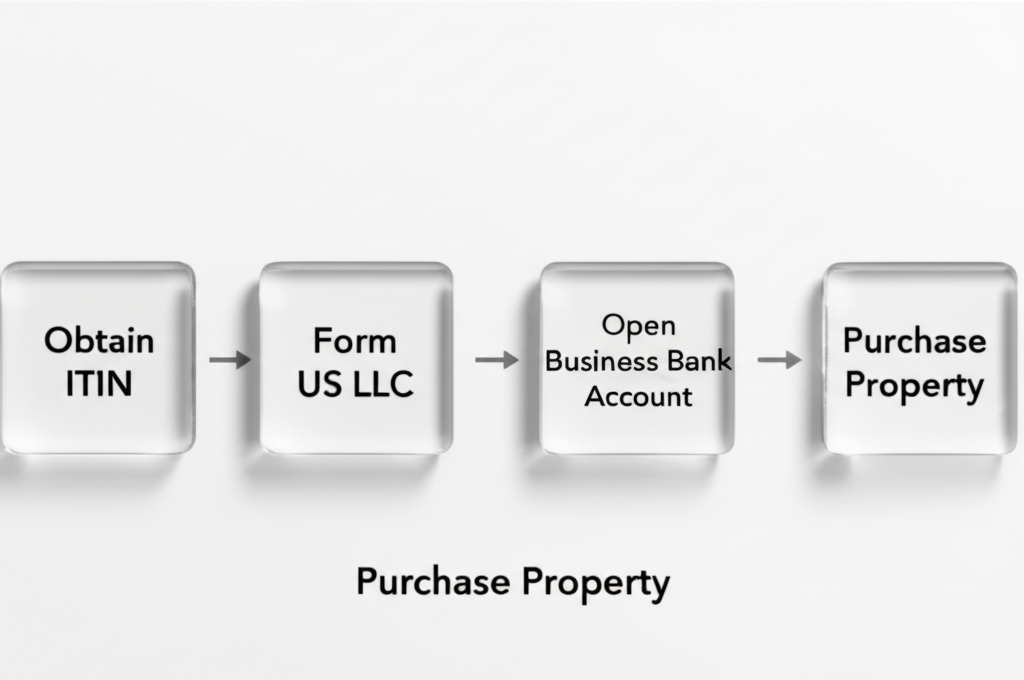
To protect your personal assets, forming a US entity is standard practice. Most non-resident investors use a Limited Liability Company (LLC). Think of it as a protective shield; if a guest is injured and decides to sue, they can typically only pursue the assets owned by the LLC—namely, the property itself. Your personal wealth in Sri Lanka remains separate and secure. An LLC also makes it far easier to open a US bank account, which you will need for collecting rent and paying expenses.
Tackling US Tax Obligations
The US tax system is complex, but for a property investor, there are two main areas of focus. First, you must file a US tax return to report your rental income and expenses. Second, you need to understand the Foreign Investment in Real Property Tax Act (FIRPTA). When you sell the property, the buyer is required by law to withhold a percentage of the gross sales price and send it directly to the Internal Revenue Service (IRS). This is not an extra tax, but a prepayment against any capital gains tax you may owe. Many first-time investors are blindsided by this at the closing table.
This is precisely why you need a professional team on the ground from day one. Engage a US-based attorney to correctly structure your LLC and a Certified Public Accountant (CPA) who specializes in non-resident taxation. Their guidance is not an expense; it’s an investment in compliance and long-term success.
Financing Your Investment: Securing a Foreign National Loan
You’ve identified a promising market, maybe a beachfront condo in Florida where state law protects short-term rentals. You’ve run the numbers and the potential returns look solid. But here’s where it gets interesting for most international investors: how do you actually pay for it without a U.S. credit history? The answer lies in a specialized financial product: the Foreign National Loan.
This isn’t your standard American mortgage. Lenders offering these loans understand you won’t have a Social Security Number or a FICO credit score. Instead of relying on a U.S. credit report, they focus on asset verification and your financial standing in your home country. It’s a portfolio loan, meaning the lender often keeps it on their own books rather than selling it, giving them more flexibility in underwriting.
What to Expect from Lenders
Prepare for a significant down payment. While a U.S. resident might get away with 20% down or less, as a Sri Lankan national, you should expect to put down between 25% and 40%. This larger equity stake reduces the lender’s risk. They will also meticulously verify your ability to pay. For example, a lender might work with a Colombo-based professional by reviewing their Sri Lankan tax filings, an employment letter stating their salary, and several months of bank statements showing consistent income and savings.
The documentation process is thorough. You’ll typically need to provide:
A valid Sri Lankan passport and U.S. visa.
Proof of income and employment from Sri Lanka.
Credit reference letters from your primary bank or financial institutions in Sri Lanka.
Proof of funds for the down payment and closing costs, often requiring funds to be in a U.S. bank account for a set period before closing.
Insider Tip: Don’t just walk into any big U.S. bank. Most retail loan officers have never processed a Foreign National Loan. Your most critical move is to find a mortgage broker who specializes in these products. They have established relationships with the private banks and portfolio lenders who actually offer these loans and can guide you through the specific documentation nuances, saving you weeks of frustration.
Location, Location, Regulation: Choosing the Right US Market
You’ve pinpointed a few buzzing US cities, seen the tourist numbers, and are ready to start searching for properties. But here’s where it gets interesting. The most profitable short-term rental (STR) isn’t always in the most famous location; it’s in the most strategic one. Success hinges on a trifecta of smart analysis: market data, local regulations, and a clear path to return on investment.
The Data-Driven Approach
Forget generic tourism statistics. To operate like a professional, you need to dig into property-level data. The key metrics are occupancy rates (how often is it booked?) and the Average Daily Rate (ADR). Tools like AirDNA or Mashvisor are an excellent starting point for this research. Insider tip: Don’t just accept the platform’s city-wide estimates. Zoom in on a specific neighborhood and analyze the performance of comparable properties—the same number of bedrooms, similar amenities—to get a realistic projection of your potential income.
Decoding the Regulatory Maze
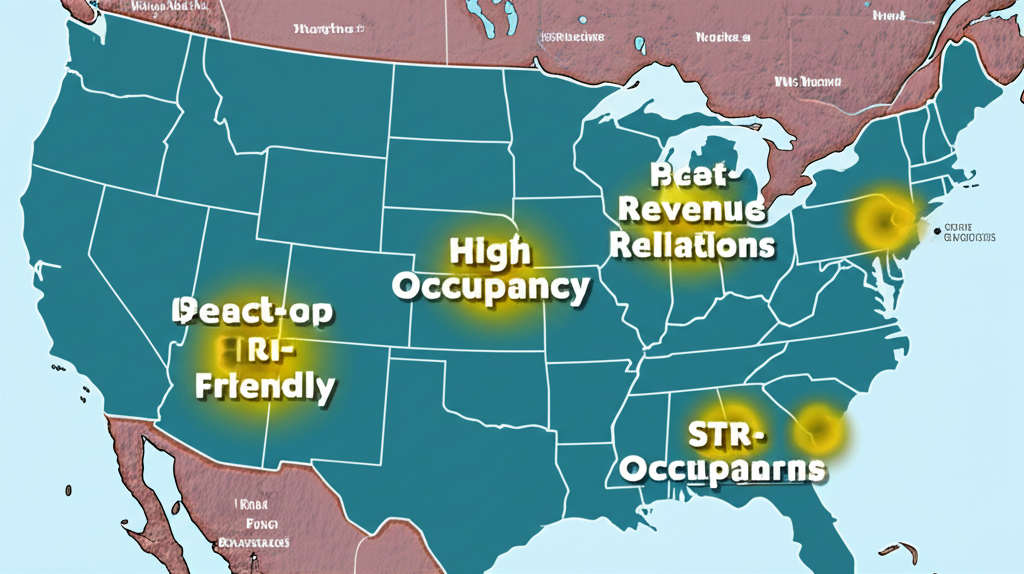
This is where foreign investors either thrive or fail. The US has no federal law governing STRs, which means every state, county, and city creates its own rules. A market that looks golden on paper can be a regulatory nightmare. For instance, Los Angeles is effectively closed to you; STRs are limited to a host’s primary residence with a 120-night annual cap. In stark contrast, Florida state law prevents local governments from banning vacation rentals, making it a far friendlier territory, though you’ll still need a state license. Even in a seemingly open state like Texas, cities are adding their own layers. Houston now requires annual registration and charges a 13% hotel occupancy tax. Your first call shouldn’t be to a real estate agent, but to the local city planning or zoning department.
Finding Your Niche
With regulations confirmed, you can explore high-potential market types. The most common and reliable include:
Classic Vacation Destinations: Think Orlando, Florida, with its constant flow of theme park visitors.
Gateway Towns: Smaller cities like Sevierville, Tennessee, that serve as a base for visitors to national parks.
Business & University Hubs: Cities that attract traveling professionals, academics, and families visiting students.
Ultimately, your best investment isn’t just a great property; it’s a great property in a market that wants you there. Diligent research into local ordinances is just as critical as the property inspection itself.
Seamless Remote Management: Operating Your Airbnb from Sri Lanka
You’ve secured a property in the US, perhaps in a regulation-friendly state like Florida. Now comes the real challenge: running a five-star operation from thousands of miles away. Your success hinges on one initial decision: professional management versus a hands-on approach. A full-service company charges a significant percentage of your revenue, often 20-30%, but they handle everything from guest inquiries to ensuring compliance with local rules, like the mandatory state licensing in Florida. For a truly passive investment, this is often the wisest path.
The Self-Management Route: Your Tech and Team Stack
If you prefer to keep more of your earnings and maintain control, you can absolutely manage the property yourself. But you cannot do it alone. Your strategy must be built on a foundation of smart technology and a reliable local team. First, automate your property’s access with a Wi-Fi-enabled smart lock like a Schlage Encode, which allows you to issue unique, time-sensitive codes for each guest and your cleaning crew. Install a noise monitoring device—not a recording device—like NoiseAware to prevent unauthorized parties. Use dynamic pricing software, such as PriceLabs, which automatically adjusts your nightly rates based on local demand, events, and seasonality that you might otherwise miss.
Your most critical hire is a trustworthy cleaner. This person is more than a cleaner; they are your eyes and ears, reporting on property condition after every checkout. Find them through referrals or platforms like TurnoverBnB. Next, build a list of on-call local contractors: a reliable plumber, an electrician, and a general handyman. A burst pipe at 3 AM in Austin, Texas, is a catastrophe if you don’t have someone to call immediately.
Centralizing Your Operations
Whether you self-manage or hire a co-host, a Property Management System (PMS) like Guesty or Hostfully is non-negotiable. It acts as your command center, unifying your listings across platforms like Airbnb and Vrbo. More importantly, it centralizes all guest communication, automates messages with check-in instructions, and generates the financial reports you’ll need for accounting. This system is what transforms a chaotic, multi-platform headache into a manageable business, allowing you to focus on strategy from your office in Colombo instead of getting lost in day-to-day logistics.
The Insider’s Final Word
Ultimately, your success in the US short-term rental market isn’t defined by the property you buy, but by the local operational strategy you build. A common misstep is underestimating the hyper-local nature of regulations and guest expectations. Your true asset isn’t just the real estate; it’s the reliable, on-the-ground management team that turns a purchase into a profitable, hands-off business. Therefore, your first actionable step isn’t just finding a property—it’s securing a personalized consultation with international investment specialists to map out a strategy for successfully diversifying your portfolio.
Frequently Asked Questions
Can a Sri Lankan citizen buy property in the USA?
Yes, absolutely. The United States government does not restrict foreign nationals from buying property. The process involves securing financing and understanding tax laws like FIRPTA.
What visa do I need to buy an Airbnb property in the US?
You can purchase property while on a tourist visa (B1/B2). However, you cannot actively work to manage it. For this reason, most investors form a US LLC and hire a professional property management company to handle operations legally.
How much down payment is required for a foreign investor?
Down payments for foreign national loans are typically higher than for US residents. You should expect to put down between 25% and 40% of the property's purchase price.
Facebook
X
LinkedIn
WhatsApp
lwsadmin
Daily News Digest
Get the top stories delivered to your inbox every morning. No spam, ever.
Many Sri Lankan artisans believe that getting their products onto global platforms like Amazon and eBay is a logistical nightmare reserved only for large exporters. You might have a stunning
Most import ventures from Sri Lanka fail before their first container even docks. It’s not a lack of US demand for Ceylon cinnamon or fiery Jaffna curry powder; it’s a
Have you ever had a truly amazing Sri Lankan meal, maybe a lamprais fresh out of the banana leaf, and thought, “Wow, more people in America need to experience this”?
You’ve done everything right. You secured the interview, impressed the hiring manager, and now the offer is on the table. But as you look at the number, a familiar anxiety