

You’re not alone in this situation. Many people have found themselves in similar circumstances, struggling to understand their rights and options. As you start to think about your next steps, you’ll want to know what you’re entitled to, from statutory redundancy pay to notice periods.
As you begin your job hunting journey, it’s essential to have a clear understanding of your employment rights. You’ll want to know how to negotiate a fair settlement, how to claim benefits, and how to protect your rights during this challenging time. In the following article, we’ll explore the specifics of employment rights in the UK, providing you with the knowledge and confidence to take control of your situation.
Understanding Redundancy in the UK
Imagine receiving an unexpected letter from your employer, informing you that your role has been made redundant due to company restructuring. This scenario is a harsh reality for many employees in the UK. Redundancy can be a daunting experience, but understanding the process and your rights as an employee can help alleviate some of the uncertainty. So, what exactly is redundancy? In simple terms, redundancy occurs when an employer decides to terminate an employee’s contract due to business needs, such as downsizing, restructuring, or the closure of a particular site.
The redundancy process typically involves a series of steps, including consultation with affected employees, selection for redundancy, and notification of redundancy. Employers are required to follow a fair and transparent process, taking into account factors such as employee performance, length of service, and skills. For instance, a company like British Airways may need to reduce its workforce due to a decline in air travel demand. In this scenario, the company would need to consult with employee representatives and consider factors like voluntary redundancy, early retirement, and retraining programs.
As an employee, you have certain rights that are protected under UK law. These include the right to a minimum notice period, statutory redundancy pay, and the right to be consulted during the redundancy process. You can also expect your employer to provide support and guidance throughout the process, including outplacement services and career counseling. For example, an employee who has been made redundant may be entitled to statutory redundancy pay, which is calculated based on their age, length of service, and weekly pay. To illustrate this, let’s consider an example: an employee aged 35, with 5 years of service, and a weekly pay of £500, may be entitled to around £1,500 in statutory redundancy pay.
Understanding your rights and the redundancy process can help you make informed decisions and take control of your career. You can seek advice from your HR department, a trade union representative, or a career counselor to ensure you receive the support and guidance you need. By being aware of the process and your entitlements, you can better prepare for the transition and increase your chances of finding new employment opportunities.
Employment Rights During Redundancy
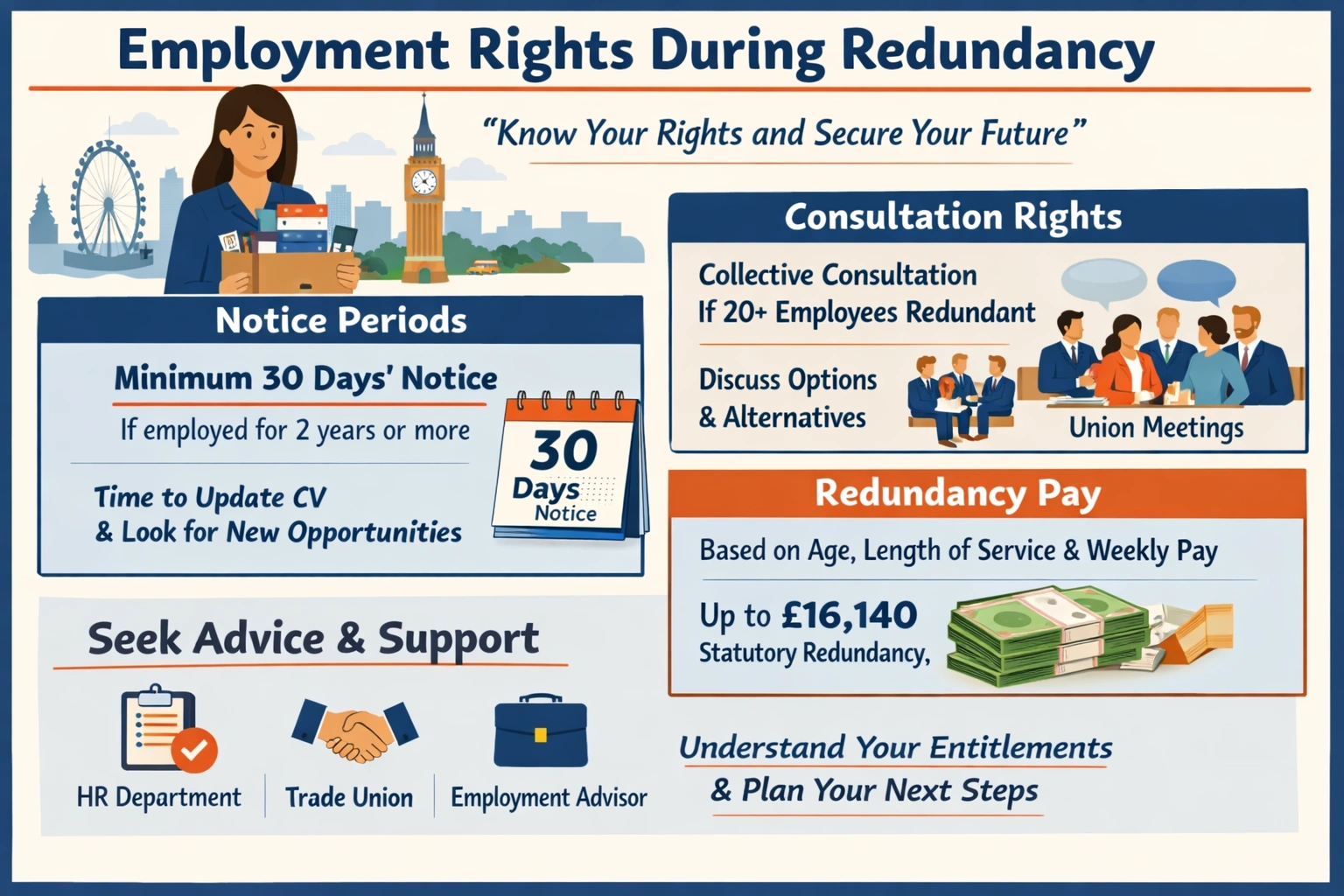
I recall a friend who was made redundant from a marketing firm in London. She was shocked and unsure about her rights, but thankfully, she was aware of the UK’s employment laws. Her story highlights the significance of understanding one’s entitlements during the redundancy process. But here’s where it gets interesting. The UK has a comprehensive framework that protects employees’ rights, ensuring they receive fair treatment and compensation.
When it comes to notice periods, employees are entitled to a minimum of 30 days’ notice if they have been with the company for at least two years. This allows them to prepare for their transition and start exploring new job opportunities. For instance, if an employee has been with a company for five years, they would be entitled to at least 30 days’ notice, during which they would continue to receive their full salary and benefits. You can use this time to update your CV, attend interviews, and make connections in your industry.
Consultation Rights and Redundancy Pay
In addition to notice periods, employees also have consultation rights. If 20 or more employees are being made redundant, the employer must consult with them collectively, usually through a trade union representative. This ensures that employees are informed about the redundancy process and have a chance to discuss alternatives, such as reduced working hours or voluntary redundancy. For example, a company like British Airways would need to consult with its employees if it were planning to make significant redundancies. You can also expect to receive redundancy pay, which is based on your age, length of service, and weekly pay. The maximum amount of statutory redundancy pay is £16,140, although this can vary depending on individual circumstances.
Understanding your employment rights during redundancy can make a significant difference in your transition to a new role. You can seek advice from your HR department, a trade union representative, or a professional employment advisor to ensure you receive the compensation and support you deserve. By being aware of your entitlements, you can focus on finding a new job that suits your skills and experience, rather than worrying about the financial implications of redundancy.
Job Hunting After Redundancy
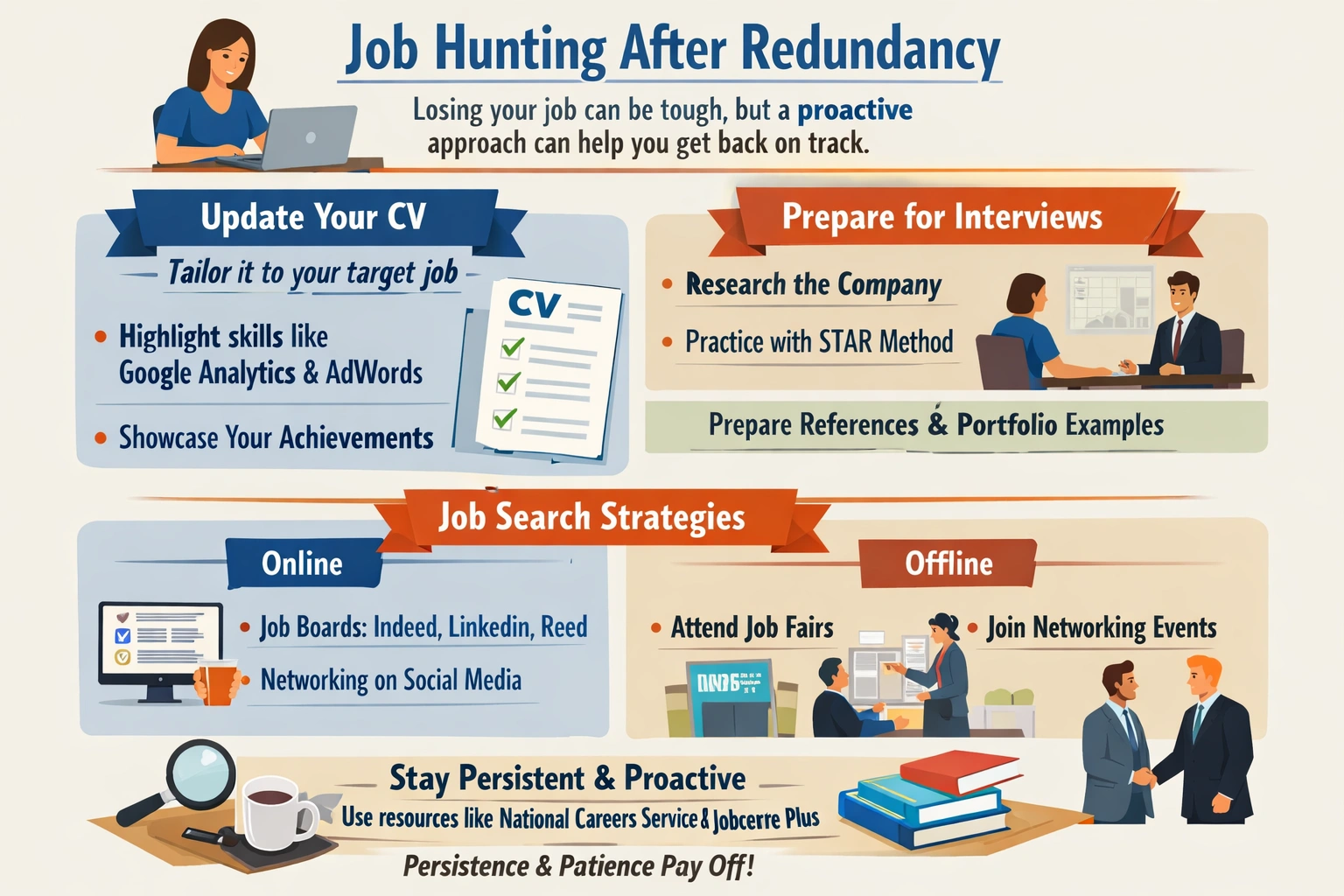
Speaking of which, I recall a friend who was made redundant from her marketing role at a large corporation. She was shocked and upset, but she quickly sprang into action, using her skills to create a standout CV and online profile. This experience taught me that job hunting after redundancy requires a proactive and strategic approach. You can start by updating your CV, tailoring it to your target job and industry. For instance, if you’re applying for a role in digital marketing, you should highlight your experience with tools like Google Analytics and AdWords.
A well-written CV is just the starting point. You should also prepare for interviews by researching the company, practicing your responses to common questions, and preparing any materials you may need, such as references or portfolio examples. I’ve seen many people struggle with the interview process, but with preparation and practice, you can increase your confidence and chances of success. For example, you can use the STAR method to structure your responses to behavioral questions, which can help you provide clear and concise answers.
When it comes to job search strategies, you can use a variety of techniques to find and apply for jobs. You can use online job boards, such as Indeed or LinkedIn, to search for jobs and apply with your CV and cover letter. You can also use social media to network with people in your industry and find job opportunities. Additionally, you can use job search platforms, such as Reed or Monster, to search for jobs and get job alerts. A specific example of a successful job search strategy is to use a combination of online and offline methods, such as attending job fairs and networking events, to increase your visibility and chances of finding a job.
Ultimately, job hunting after redundancy requires persistence, patience, and a willingness to learn and adapt. You can use resources such as the National Careers Service or Jobcentre Plus to get help with your job search, including CV writing, interview preparation, and job search strategies. By taking a proactive and strategic approach, you can increase your chances of finding a new job and getting back on track with your career.
Financial Support During Redundancy
I still remember a friend who lost her job due to company restructuring. She was worried about her financial stability, but fortunately, she was aware of the financial support available to her during redundancy. Here’s the part most people miss: the UK government provides various forms of financial support to help individuals get back on their feet. You can receive redundancy pay from your employer, which is typically based on your length of service and age. For instance, if you’ve been with the company for more than two years, you’re entitled to at least one week’s pay for each full year of service.
Another form of financial support is the Job Seeker’s Allowance (JSA). You can claim JSA if you’re under State Pension age, available for work, and actively seeking employment. The amount you receive depends on your age, income, and savings. My friend, for example, received £73.10 per week as she was under 25 and had limited savings. You can also claim Tax Credits if you’re working but on a low income. Working Tax Credit, for instance, can provide up to £1,960 per year for a single person without children.
To give you a better idea, let’s consider a scenario: John, a 35-year-old father of two, loses his job due to redundancy. He receives £2,000 in redundancy pay and claims JSA, which provides him with £114.85 per week. He also receives Working Tax Credit, which gives him an additional £60 per week. This financial support helps John and his family get by while he looks for a new job. You can use the UK government’s online calculator to estimate your entitlement to these benefits.
When claiming these benefits, you should be aware of the specific eligibility criteria and application processes. You can visit the UK government’s website or consult with a financial advisor to get personalized advice. By understanding the financial support available to you during redundancy, you can better plan your finances and focus on finding a new job that suits your skills and experience.
Navigating the Job Market After Redundancy
I recall a friend who lost her job due to company restructuring, and her first reaction was to frantically update her CV and start applying to every job posting she could find. But as she soon discovered, the job market is highly competitive, and a more strategic approach is often necessary. You can start by researching current job market trends, such as the growth of remote work and the increasing demand for skills like data analysis and digital marketing.
One effective way to stay ahead in the job market is to focus on career development. You can take online courses or attend workshops to enhance your skills and make yourself a more attractive candidate to potential employers. For example, a friend of mine took a course in UX design and was able to transition into a new role with a higher salary and better benefits. You can also consider working with a career coach or mentor who can provide personalized guidance and support.
Another key aspect of job hunting is networking. You can attend industry events, join professional organizations, or connect with people on LinkedIn to build relationships and learn about job opportunities. I’ve seen many people find new jobs through their professional networks, and it’s often a more effective approach than simply applying to job postings online. Consider reaching out to former colleagues or acquaintances in your industry to see if they know of any job openings or can introduce you to someone who can help.
As you explore the job market, you may find that your skills and experience are transferable to different industries or roles. For instance, a former marketing manager might find that their skills are also valuable in a sales or business development role. By being open to new opportunities and willing to learn and adapt, you can increase your chances of finding a fulfilling and challenging new job. You can also use tools like job search platforms and career assessments to help you identify potential career paths and create a personalized job search strategy.
Empowering Your Employment Journey
Imagine receiving an unexpected redundancy notice, feeling lost and uncertain about your future. But what if you were prepared, knowing your employment rights and ready to take control of your job hunting journey? The key to a successful transition lies in understanding your rights and taking proactive steps to secure your next opportunity. By taking the first step today, you can start building a stronger, more resilient career. What will you do with the power to shape your own employment future?
Frequently Asked Questions
What are my rights during redundancy?
You have the right to a fair redundancy process, including notice periods and consultation rights
How do I claim redundancy pay?
You can claim redundancy pay through your employer or the UK government’s redundancy pay scheme