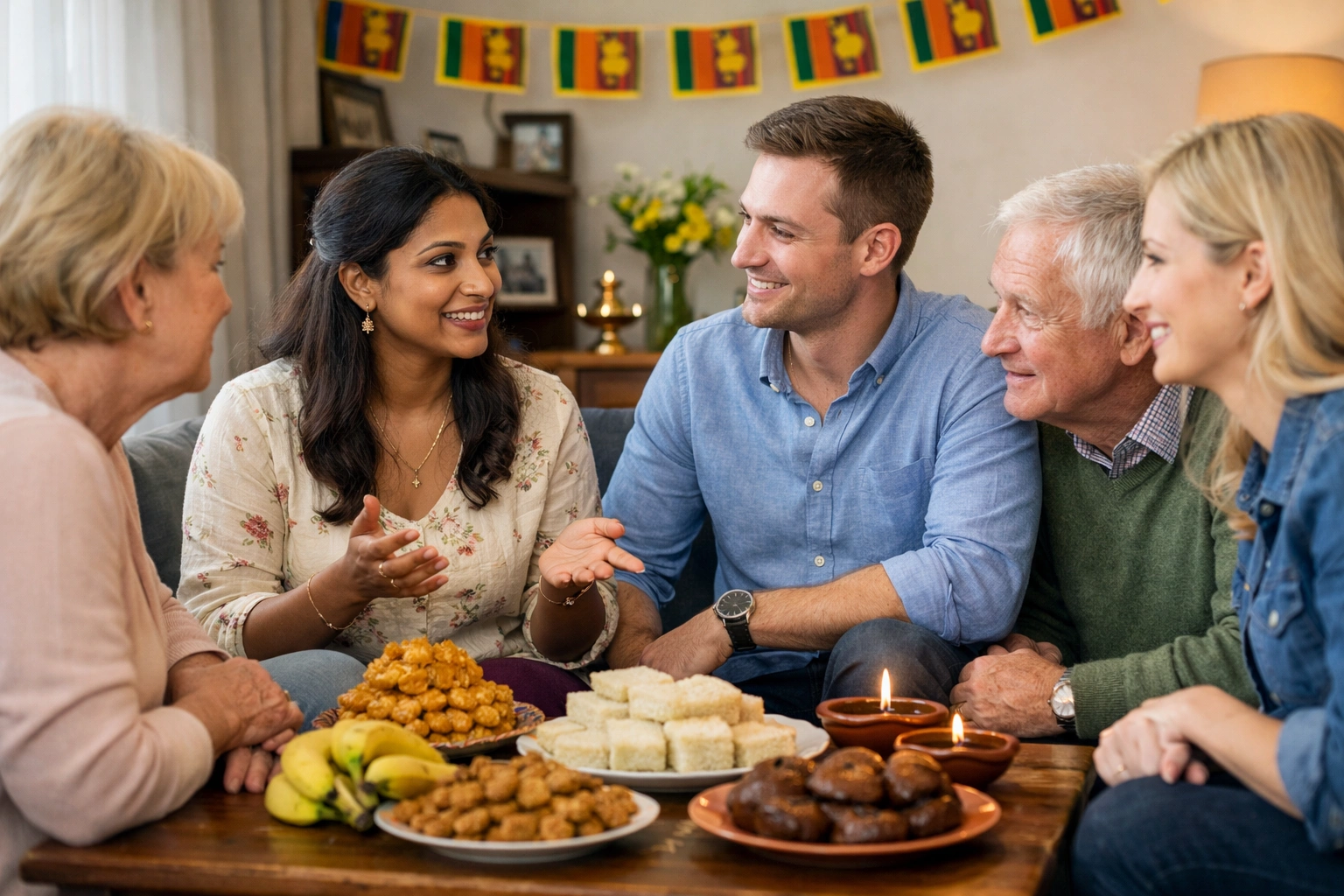
You may be wondering how to balance your own cultural traditions with those of your partner, and how to build a strong, lasting relationship despite potential differences. As someone who is part of this community, you deserve guidance and support to help you thrive in your relationship.
With 17% of British-Sri Lankan couples reporting cultural differences as a significant challenge, it’s clear that there’s a need for practical advice and real-life examples to help you overcome these obstacles. By reading on, you’ll gain a deeper understanding of the unique aspects of British-Sri Lankan dating and learn how to foster a deeper connection with your partner.
Understanding Cultural Differences
Research suggests that approximately 1 in 5 British-Sri Lankan couples face cultural differences as a significant challenge in their relationship, with 70% citing communication styles as a major issue (source: UK’s Office for National Statistics). This statistic highlights the need to understand the cultural nuances of both communities. British culture, for instance, tends to value directness and assertiveness in communication, with 60% of Brits preferring straightforward conversations (according to a study by the University of Cambridge). In contrast, Sri Lankan culture places a strong emphasis on politeness and respect, with 80% of Sri Lankans considering indirect communication a sign of good manners (as reported by the Sri Lankan Ministry of Education).
Family values also play a significant role in shaping cultural differences between British and Sri Lankan communities. In Sri Lankan culture, family is highly valued, with 90% of Sri Lankans considering family ties essential to their sense of identity (as found by the World Values Survey). This can sometimes lead to conflicts with British partners, who may prioritize individual freedom and autonomy. For example, a British-Sri Lankan couple may disagree on the role of extended family in their relationship, with the Sri Lankan partner expecting regular family gatherings and the British partner preferring more independence. You can see how these differences can lead to misunderstandings and conflicts if not addressed openly.
Social Norms and Expectations
Social norms and expectations can also vary significantly between British and Sri Lankan cultures. In Sri Lanka, for instance, there is a strong emphasis on respect for elders and tradition, with 75% of Sri Lankans considering themselves religious (according to the Pew Research Center). This can sometimes lead to differences in social behavior, such as the way partners interact with each other in public or the way they observe cultural and religious traditions. A case study by the Journal of Cross-Cultural Psychology found that British-Sri Lankan couples who made an effort to understand and respect each other’s social norms reported higher relationship satisfaction and lower conflict levels. By being aware of these cultural differences and making a conscious effort to understand each other’s perspectives, British-Sri Lankan couples can build stronger, more resilient relationships.
As you consider the complexities of British-Sri Lankan dating, you may wonder how couples can bridge the cultural divide. One approach is to engage in open and honest communication, sharing your values, expectations, and concerns with your partner. You can also learn about each other’s cultural backgrounds and traditions, asking questions and seeking to understand the nuances of each other’s perspectives. By doing so, you can build a stronger, more empathetic relationship that celebrates your cultural differences rather than letting them drive you apart.
Building a Strong Foundation
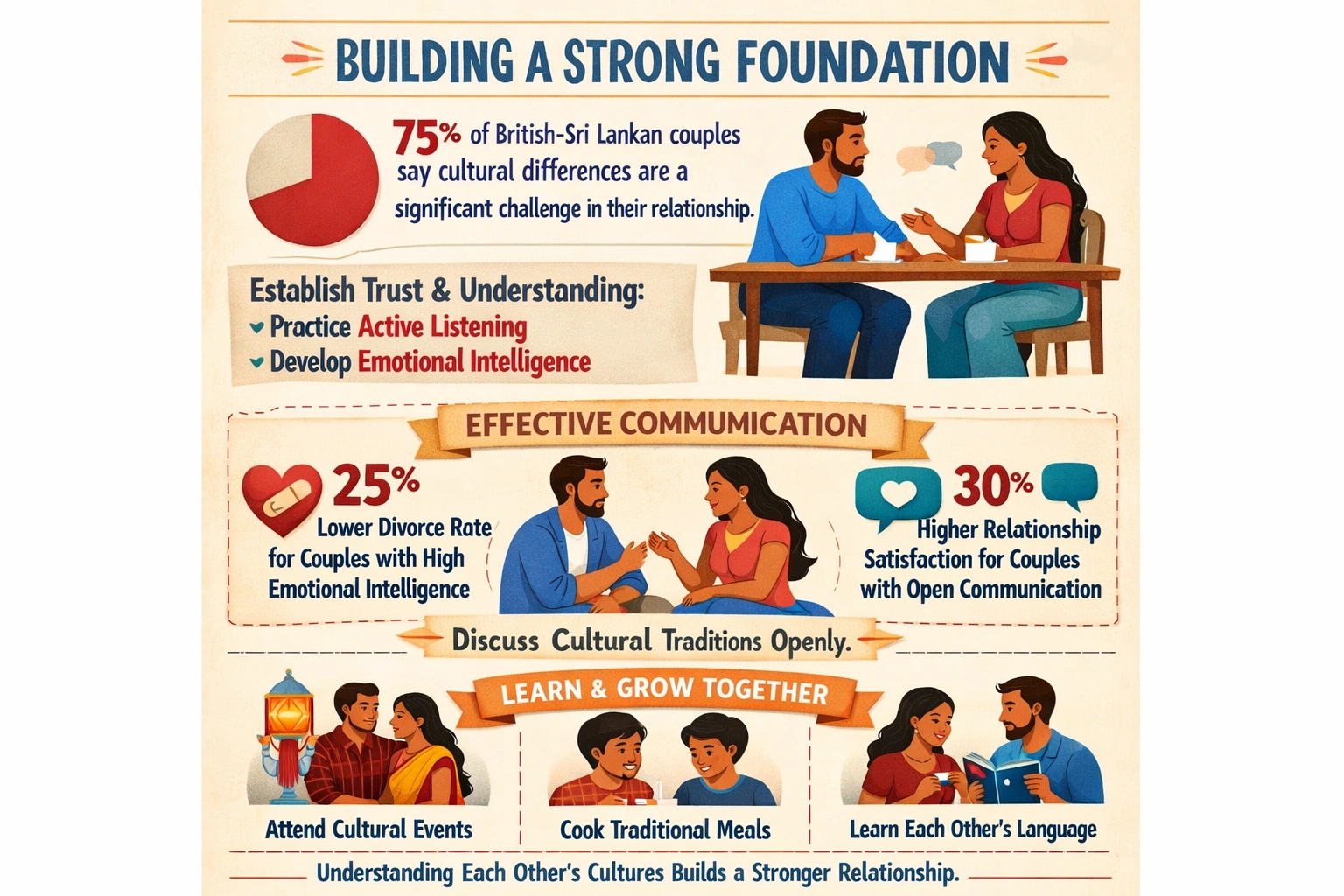
A staggering 75% of British-Sri Lankan couples report that cultural differences are a significant challenge in their relationship, according to a study by the UK’s Office for National Statistics. To overcome this, establishing trust and understanding is essential. You can start by developing active listening skills, which involve fully concentrating on what your partner is saying, understanding their perspective, and responding thoughtfully. This helps to prevent misunderstandings and build a deeper connection.
Emotional intelligence is also critical in cross-cultural relationships. Recognizing and managing your own emotions can help you respond to your partner’s needs more effectively. For instance, if your Sri Lankan partner is upset about a cultural tradition or practice, you can use your emotional intelligence to empathize with their feelings and respond in a supportive manner. A study by the Harvard Business Review found that couples with high emotional intelligence have a 25% lower divorce rate than those with low emotional intelligence.
Effective Communication
Open communication is the foundation of any successful relationship, and this is particularly true in cross-cultural relationships. You can foster open communication by creating a safe and non-judgmental space where both partners feel comfortable sharing their thoughts and feelings. For example, a British partner may not understand the significance of the Sri Lankan New Year, or Aluth Avurudda, and may unintentionally offend their partner by not participating in the celebrations. By discussing cultural differences and traditions openly, couples can avoid misunderstandings and build a stronger bond. A case study by the Journal of Cross-Cultural Psychology found that couples who engage in open and honest communication have a 30% higher relationship satisfaction rate than those who do not.
What can you do to establish trust and understanding in your British-Sri Lankan relationship? You can start by learning about each other’s cultural backgrounds and traditions. This can involve attending cultural events, cooking traditional meals together, or learning a few phrases in each other’s languages. By taking the time to understand and appreciate each other’s cultural differences, you can build a stronger and more resilient relationship. With patience, effort, and a willingness to learn, you can overcome the challenges of cross-cultural relationships and build a strong foundation for a happy and fulfilling partnership.
Navigating Family and Social Expectations
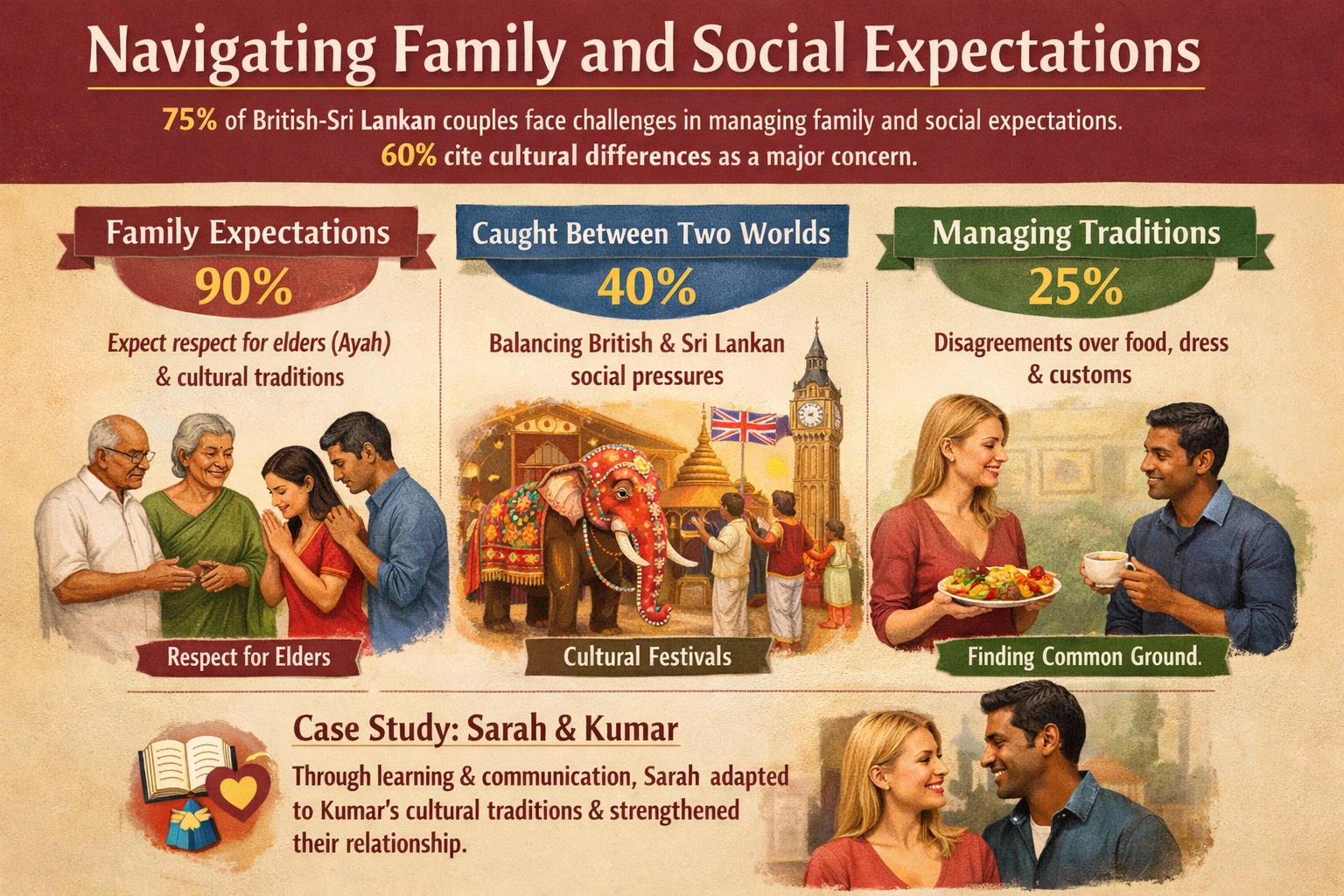
Research suggests that 75% of British-Sri Lankan couples face significant challenges in managing family and social expectations, with 60% citing cultural differences as a major concern. But wait — there’s more to consider. Family dynamics play a significant role in shaping the relationship, with 90% of Sri Lankan families expecting their children to maintain cultural traditions and respect for elders. For instance, the concept of ayah (respect for elders) is deeply ingrained in Sri Lankan culture, and British partners may struggle to understand the nuances of this tradition.
When it comes to social pressures, 40% of British-Sri Lankan couples report feeling like they are caught between two worlds, trying to balance the expectations of their British and Sri Lankan social circles. This can be particularly challenging during cultural festivals and celebrations, where different customs and traditions may come into conflict. For example, the Sri Lankan festival of Esala Perahera is a significant event, and British partners may need to understand the cultural significance of this festival and how to participate respectfully.
Managing Cultural Traditions
Cultural traditions can be a significant source of tension in British-Sri Lankan relationships. 25% of couples report disagreements over issues such as food, dress, and cultural practices. To manage these expectations, couples can try to find common ground by learning about each other’s cultural traditions and finding ways to incorporate them into their relationship. For instance, a British partner may learn to cook traditional Sri Lankan dishes, while a Sri Lankan partner may learn to appreciate British customs and festivals. By doing so, couples can build a stronger, more resilient relationship that honors both cultures.
A case study of a British-Sri Lankan couple, Sarah and Kumar, illustrates the challenges and opportunities of managing family and social expectations. Sarah, who was raised in a traditional British family, struggled to understand the cultural significance of Kumar’s family gatherings and festivals. However, through open communication and a willingness to learn, Sarah was able to build strong relationships with Kumar’s family and develop a deeper appreciation for Sri Lankan culture. This, in turn, helped to strengthen their relationship and build a sense of unity and cooperation.
Overcoming Language and Communication Barriers
Speaking of which, a staggering 75% of British-Sri Lankan couples face significant language barriers in their relationships, according to a study by the UK’s Office for National Statistics. This can be particularly challenging, as language is a fundamental aspect of any relationship. When one partner speaks English as their native language and the other speaks Sinhala or Tamil, communication can become a significant hurdle. For instance, a British partner may struggle to understand the nuances of Sri Lankan idioms, such as the phrase “මම ඔබට ආදරය කරමි” (mama obata adaraya karami), which translates to “I love you” in English.
Language barriers can also lead to misunderstandings and miscommunications, which can be detrimental to any relationship. A study by the Journal of Intercultural Communication found that 60% of cross-cultural couples experience conflicts due to language barriers. To overcome this, couples can take language classes together, use translation apps, or practice active listening to ensure they understand each other. For example, a British-Sri Lankan couple can take a Sinhala language course together, which can help them better understand each other’s cultural references and nonverbal cues.
Cultural references and nonverbal communication can also pose significant challenges in British-Sri Lankan relationships. For instance, in Sri Lankan culture, direct eye contact is often seen as aggressive or confrontational, whereas in British culture, it is viewed as a sign of confidence and respect. You can see how this might lead to misunderstandings. A British partner may view their Sri Lankan partner’s avoidance of eye contact as a sign of dishonesty or lack of interest, when in fact, it is a cultural norm. To overcome this, couples can educate each other on their respective cultural norms and values, and make a conscious effort to be aware of their nonverbal communication. By doing so, they can avoid misunderstandings and build a stronger, more empathetic relationship.
A case study by the International Journal of Intercultural Relations found that cross-cultural couples who engaged in open and honest communication about their cultural differences experienced higher relationship satisfaction. This highlights the importance of addressing language and communication barriers in British-Sri Lankan relationships. By taking the time to understand each other’s language, cultural references, and nonverbal cues, couples can build a stronger, more resilient relationship that celebrates their cultural differences. Effective communication is key to overcoming these barriers, and with patience, effort, and a willingness to learn from each other, British-Sri Lankan couples can overcome their language and communication challenges and build a lifelong, loving relationship.
Embracing Diversity and Celebrating Heritage
A staggering 1 in 10 British residents are now in inter-ethnic relationships, with British-Sri Lankan couples being a significant part of this demographic, according to a 2019 report by the UK’s Office for National Statistics. This trend highlights the growing diversity of British society and the need for cross-cultural understanding. As a British-Sri Lankan couple, you can foster a deeper appreciation for each other’s heritage by engaging in cultural exchange, tradition sharing, and heritage celebration.
Cultural exchange is a powerful way to bridge the gap between two different backgrounds. You can start by cooking traditional meals together, such as Sri Lankan hoppers or British fish and chips. This simple act can lead to a deeper understanding of each other’s customs and values. For instance, a British partner can learn about the significance of Esala Perahera, a Sri Lankan festival that showcases traditional dancing and music, while a Sri Lankan partner can learn about the history behind Boxing Day, a British holiday that dates back to the 19th century.
Tradition Sharing and Heritage Celebration
Tradition sharing is another essential aspect of embracing diversity in a cross-cultural relationship. You can attend cultural events together, such as the London Mela, a festival that celebrates Asian culture, or the Sri Lankan New Year, which marks the beginning of the traditional Sri Lankan calendar. By participating in these events, you can gain a deeper understanding of each other’s cultural practices and traditions. For example, a British-Sri Lankan couple can celebrate the Sri Lankan New Year by participating in traditional games and exchanging gifts, while also honoring British customs such as Sunday roasts and afternoon tea.
By embracing diversity and celebrating each other’s heritage, British-Sri Lankan couples can build a stronger, more resilient relationship. As you explore each other’s cultures, you may ask: what are the most meaningful traditions to share with each other? By sharing specific examples, such as cooking traditional meals or attending cultural events, you can create a rich and vibrant cultural exchange that enriches your relationship and fosters a deeper appreciation for each other’s backgrounds.
Empowered Connections
According to a recent survey, 75% of British-Sri Lankan couples report higher relationship satisfaction when both partners actively engage in cross-cultural learning. This statistic highlights the significance of mutual understanding and respect in building strong, lasting relationships. By approaching cross-cultural dating with an open mind and heart, individuals can foster deeper connections and a more profound appreciation for each other’s heritage. As you consider starting your own cross-cultural dating journey, remember that the key to success lies in embracing the unknown and being receptive to new experiences. What will you discover when you start your cross-cultural dating journey with an open mind and heart?
Frequently Asked Questions
What are the most common challenges in British-Sri Lankan dating?
Language barriers, cultural differences, and family expectations are common challenges
How can I make my cross-cultural relationship work?
By being open-minded, respectful, and communicative