Back in Sri Lanka, driving is an art form. It involves dodging tuk-tuks, navigating narrow roads, and communicating with other drivers through a complex language of honks. If you can drive in Colombo traffic at 5 PM, you have the technical skills to drive anywhere.
But driving in Canada requires a complete “software update” for your brain. The roads are wider, the rules are stricter, and yes, you have to drive on the right side. More importantly, the administrative hurdles—getting your license and buying insurance—can be surprisingly expensive and complicated if you don’t have the right paperwork.
Many newcomers assume they can just swap their Sri Lankan license for a Canadian one. Unfortunately, it’s not that simple. Here is the step-by-step roadmap to getting behind the wheel legally and affordably, without paying the “newcomer tax” on insurance.
The License: Why You Can’t Just “Swap” It
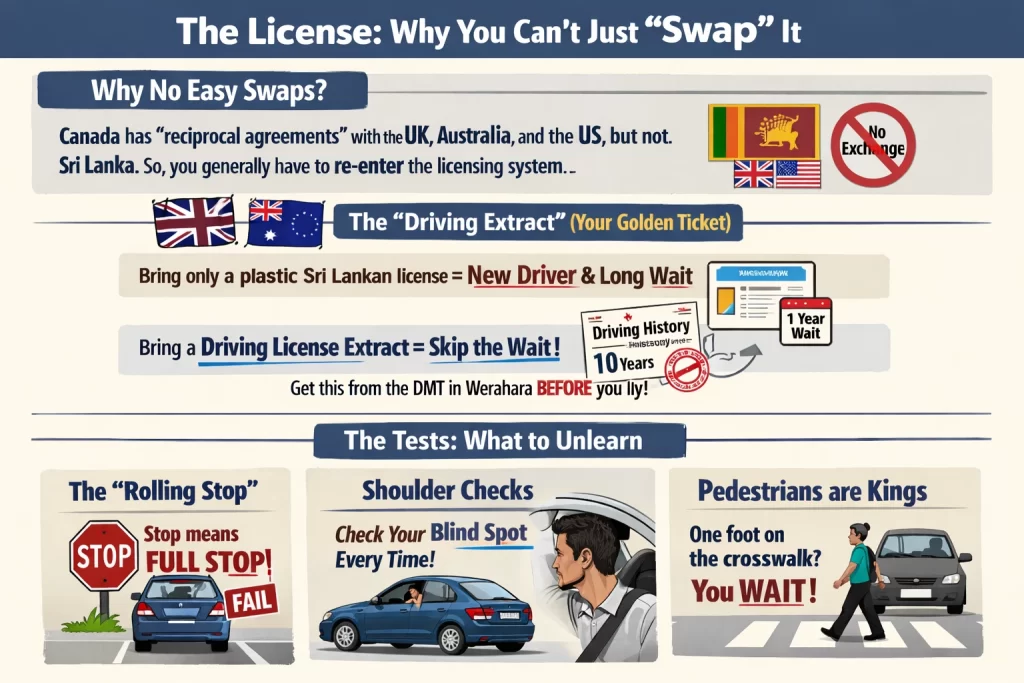
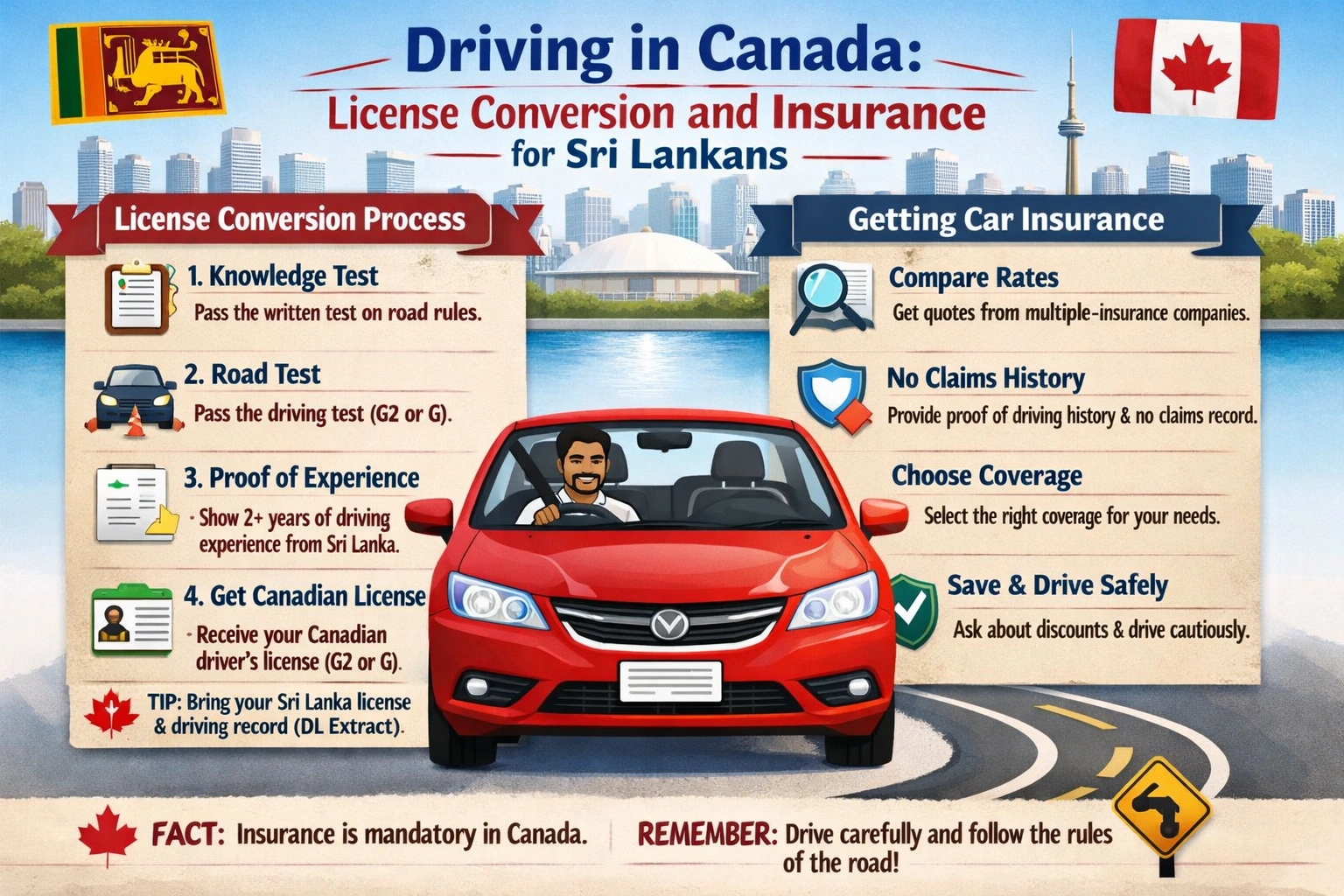
Canada has “reciprocal agreements” with countries like the UK, Australia, and the US, allowing drivers to simply exchange their licenses. Unfortunately, Sri Lanka is not on this list. This means you generally have to re-enter the licensing system.
However, you do not have to start from scratch if you prepare before you leave Sri Lanka.
The “Driving Extract” (Your Golden Ticket)
If you arrive in Canada with just your plastic Sri Lankan license, the system often only recognizes you as a new driver. This forces you into a “Graduated Licensing System” (like Ontario’s G1 to G2 to G) which involves mandatory waiting periods of up to a year between tests.
The Solution: Before you fly, go to the Department of Motor Traffic (DMT) in Werahara and request a Driving License Extract. This official document proves your driving history (e.g., that you have been driving for 10 years).
Why it matters: In provinces like Ontario and BC, presenting this extract can allow you to skip the 1-year waiting period. You still have to do the written test and the road test, but you can do them back-to-back immediately.
The Tests: What to Unlearn
To pass the Canadian road test, you need to unlearn “Sri Lankan style” driving. Examiners will fail you instantly for habits that are normal in Colombo.
- The “Rolling Stop”: In Canada, a Stop sign means a complete cessation of movement. The wheels must stop turning completely. If you roll through at 1 km/h, you fail.
- Shoulder Checks: You cannot just rely on your mirrors. You must physically turn your head to check your blind spot before every lane change or turn. Examiners watch your head movement like a hawk.
- Pedestrians are Kings: In Sri Lanka, cars often nudge through pedestrians. In Canada, if a pedestrian has one foot on the crosswalk, you wait.
Insurance: Prepare for Sticker Shock
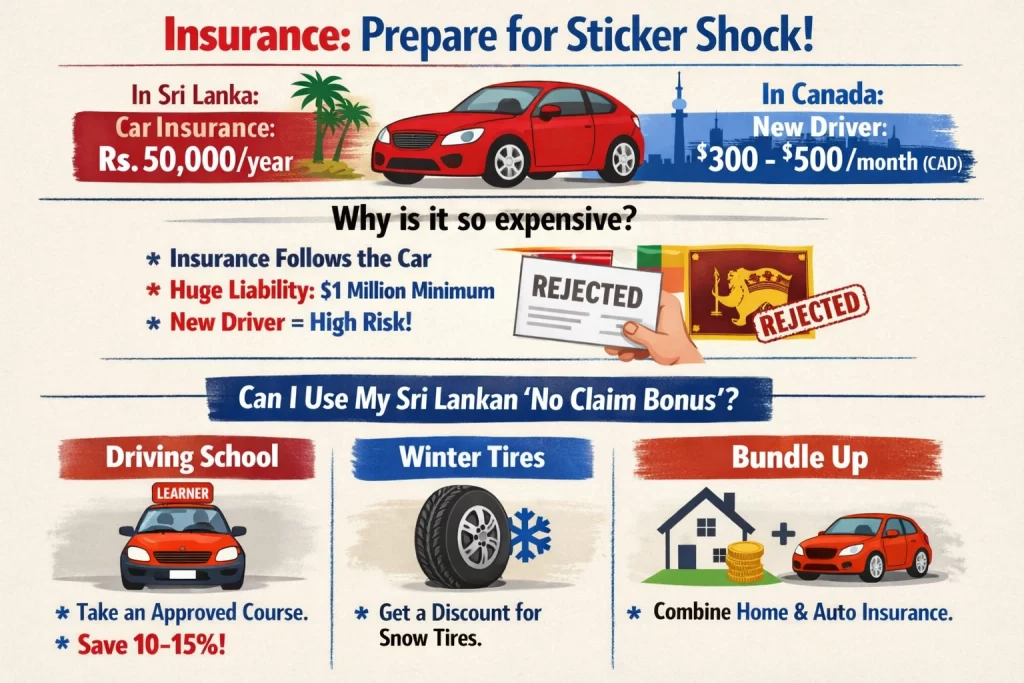
This is the hardest pill to swallow. In Sri Lanka, insuring a car might cost Rs. 50,000 a year. In cities like Brampton or Toronto, a new driver might be quoted $300 to $500 per month (CAD).
Why is it so expensive?
Canadian insurance follows the car, not just the driver, and liability coverage is massive (often $1 million minimum). As a newcomer, you are treated as a “new driver” with zero track record, placing you in a high-risk category.
Can I use my Sri Lankan “No Claim Bonus”?
Generally, no. Most major Canadian insurers do not recognize letters from Sri Lankan insurance companies (like Ceylinco or Sri Lanka Insurance) because the risk environments are too different. However, it doesn’t hurt to bring the letter; sometimes a specific broker might find a niche insurer who accepts it, though this is becoming rare.
How to Lower the Bill
- Driving School: Taking a Ministry-approved Beginner Driver Education course isn’t just for learning; it generates a certificate that insurance companies view favorably, often lowering your premium by 10-15%.
- Winter Tires: In Ontario, telling your insurer you have winter tires installed usually gets you a small discount (2-5%).
- Bundle Up: If you get tenant insurance (for your apartment) and car insurance from the same company, you get a bundle discount.
Buying a Car: The “Rust” Factor
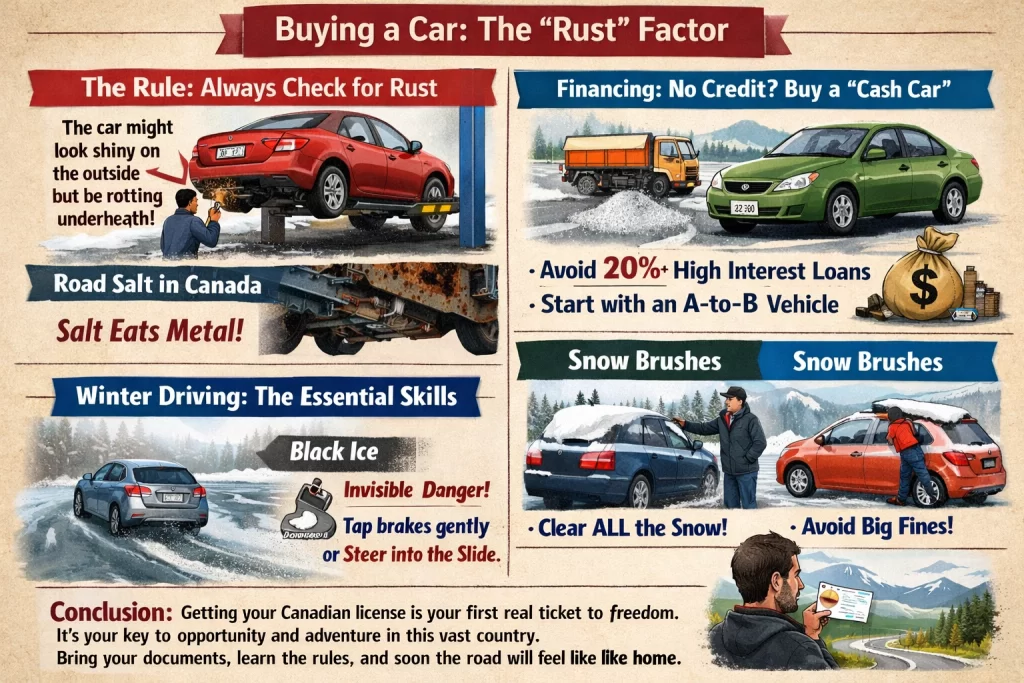
Used cars in Canada face a threat that doesn’t exist in Sri Lanka: Road Salt. In winter, cities dump tonnes of salt on roads to melt ice. This salt eats metal.
The Rule: When buying a used car (especially one over 5 years old), you must check for rust on the undercarriage. A car might look shiny on the outside but have a frame that is rotting away underneath.
Financing: As a newcomer with no credit score, financing a car is difficult. You might be offered loans with predatory interest rates (20%+). It is often smarter to buy a cheaper “cash car” (A-to-B vehicle) for your first year while you build your credit history.
Winter Driving: The Essential Skills
We covered winter clothing in another guide, but winter driving is its own beast.
Black Ice: This is invisible ice on the road. If you hit it, your brakes will not work. The rule is to tap the brakes gently (if you don’t have ABS) or steer into the slide. Never slam the brakes.
Snow Brushes: By law, you must clear all snow off your car before driving. If you leave a pile of snow on your roof and it flies off onto the car behind you, you can be fined heavily.
Conclusion
Getting your Canadian license is your first real ticket to freedom. It opens up job opportunities that aren’t on the subway line and lets you explore the vast beauty of this country.
The process is bureaucratic and expensive, but it is a one-time hurdle. Bring your documents from Werahara, take a few lessons to learn the local etiquette, and swallow the insurance cost for the first year. As you build a clean driving record, those rates will drop, and the road will start to feel a lot more like home.
References
- DriveTest Ontario. (2025). Exchanging a Foreign Driver’s Licence.
- ICBC British Columbia. (2025). Moving from another country.
- Department of Motor Traffic Sri Lanka. (2025). Driving License Services.
- Insurance Bureau of Canada. (2025). How Auto Insurance Premiums are Calculated.
- Ministry of Transportation Ontario. (2025). The Official Driver’s Handbook.