
You land your first job in a Toronto office. On day one, you walk into the manager’s office, stand up straight, and say, “Good morning, Sir.” You expect him to nod and give you instructions. Instead, he looks awkward, laughs nervously, and says, “Please, call me Dave. My dad was ‘Sir’.”
This is the first culture shock for many Sri Lankan professionals. You have the technical skills—your Java code is clean, your financial modeling is sharp—but the invisible rules of the Canadian workplace are completely different. In Colombo, respect is shown through hierarchy and titles. In Canada, respect is shown through equality and collaboration.
It is confusing because it looks like the US system on TV (open offices, casual dress), but it operates differently. Canada sits somewhere between the aggressive hustle of New York and the polite reserve of London. Here is the playbook on how to fit in without losing your mind.
The Hierarchy Trap: “Sir” vs. “Dave”
In Sri Lanka, hierarchy is rigid. You wait for the boss to speak. You don’t challenge a senior in a meeting. In Canada, the structure is incredibly flat.
The Rule: Everyone goes by their first name. The intern calls the CEO “Sarah.”
Why it matters: When you insist on using “Sir” or “Madam,” you aren’t showing respect; you are creating distance. It makes your Canadian colleagues feel old or uncomfortable. They want a colleague they can grab a coffee with, not a subordinate who is afraid of them.
Actionable Tip: Force yourself to use first names. If it feels unnatural, practice in the mirror. “Hi Dave, do you have a minute?” It signals confidence.
The “Feedback Sandwich”: decoding Canadian Politeness
If you have worked with Americans, you know they are direct. “This report is wrong. Fix it.”
If you work with Sri Lankans, feedback might be silent or delivered through a third party to save face.
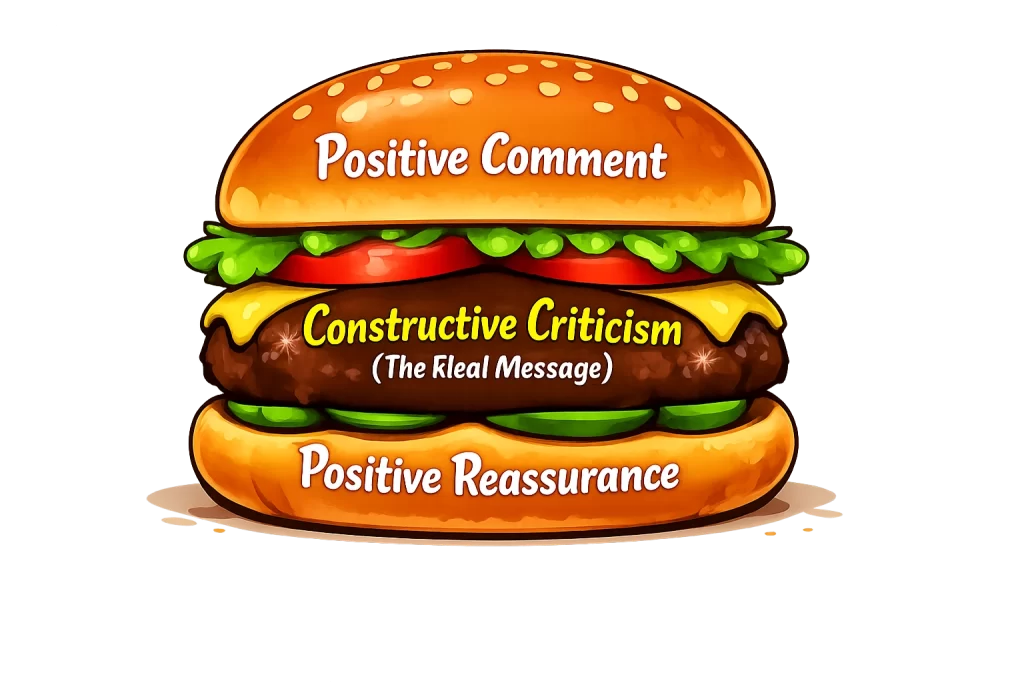
Canadians are unique. We hate confrontation, so we use the Feedback Sandwich.
The Structure:
1. The Top Bun (Compliment): “Hey, great effort on this draft, I love the formatting.”
2. The Meat (The Actual Critique): “However, the data in section 3 seems off, and the tone is a bit too informal.”
3. The Bottom Bun (Reassurance): “But overall, really good start. Keep it up.”
The Trap: Newcomers often hear the “Great effort” and “Good start” and ignore the middle part. You walk away thinking you did a great job, while your boss thinks he just gave you a serious correction. Always focus on the meat.
The “Tall Poppy” Syndrome: Canada vs. The USA
This is where Canada differs sharply from the US.
In the US: You have to sell yourself. “I did this,” “I led that.” It is a culture of individual achievement.
In Canada: We value the team. If you brag too loudly or take all the credit, you become a “Tall Poppy”—and people will want to cut you down. Canadians value humility.
The Balance: Use “We” instead of “I” when talking about team wins, but don’t be so humble that you disappear. “The team delivered the project, and I led the backend integration.”
Small Talk is Not “Time Wasting”

In Colombo, you might get straight to business. “Here is the file.”
In Canada, if you skip the small talk, you are seen as cold or difficult to work with. The first 5 minutes of every meeting are reserved for:
• “How was your weekend?”
• “Did you see the Leafs game?”
• “Can you believe this weather?”
This isn’t idle chatter; it is trust building. Canadians hire people they like. If you sit silently in the lunchroom or decline every invitation to “grab a drink after work,” you will be labeled as “not a culture fit,” even if your work is perfect.
Pro Tip: You don’t need to know about hockey. Just asking, “Did you do anything fun this weekend?” is enough.
The 5 PM Exodus: Work-Life Boundaries
In many Asian cultures, leaving before the boss is a sin. If the manager stays until 8 PM, you stay until 8 PM.
In Canada, “presenteeism” is less valued. If you stay late every night, people don’t think you are hardworking; they think you have time management issues or that you are inefficient.
The Summer Friday Rule:
From June to August, the office will be a ghost town by 2 PM on Fridays. People are heading to “the cottage.” Do not schedule a meeting for 4 PM on a Friday. It is considered deeply rude.
Conclusion
Adapting to the Canadian workplace is about unlearning deference and learning assertiveness. It is about understanding that being “nice” is a professional requirement, not just a personality trait.
So, drop the “Sir,” ask your cubicle neighbor about their dog, and speak up in the meeting even if you are the junior person in the room. In Canada, your voice is expected to be heard.
References
- University of Waterloo. (2025). Understanding Canadian Workplace Culture.
- Settlement.org. (2024). What is Canadian workplace culture?
- Hofstede Insights. (2025). Country Comparison: Canada vs. Sri Lanka (Power Distance).
- Arrive. (2024). Canadian vs. American Workplace Culture: Key Differences.
- Government of Canada. (2025). Prepare to work: Canadian work culture.