
In the world of Australian immigration, “Schedule 3” is a term that strikes fear into the hearts of onshore applicants. For many Sri Lankans who travel to Australia on a student or visitor visa and subsequently fall in love with an Australian citizen or permanent resident, the transition to a Partner Visa seems like a natural next step. However, if your original visa expires before you lodge your partner application, you hit the “Schedule 3 Wall.”
Schedule 3 is a set of strict criteria designed to prevent people from overstaying their visas and then “regularizing” their status through a relationship. In 2026, with the Australian Department of Home Affairs tightening its grip on “non-substantive” visa holders, overcoming Schedule 3 has become one of the most difficult legal battles in migration law. Proving your relationship is genuine is no longer enough; you must now prove that there are “compelling and compassionate” reasons why you should be allowed to stay.
This 1,500-word guide explores the technicalities of Schedule 3, the “28-day rule,” and the high bar for securing a waiver. Whether you are currently on a Bridging Visa or have accidentally overstayed, understanding these rules is critical to protecting your future in Australia.
What Exactly is Schedule 3?
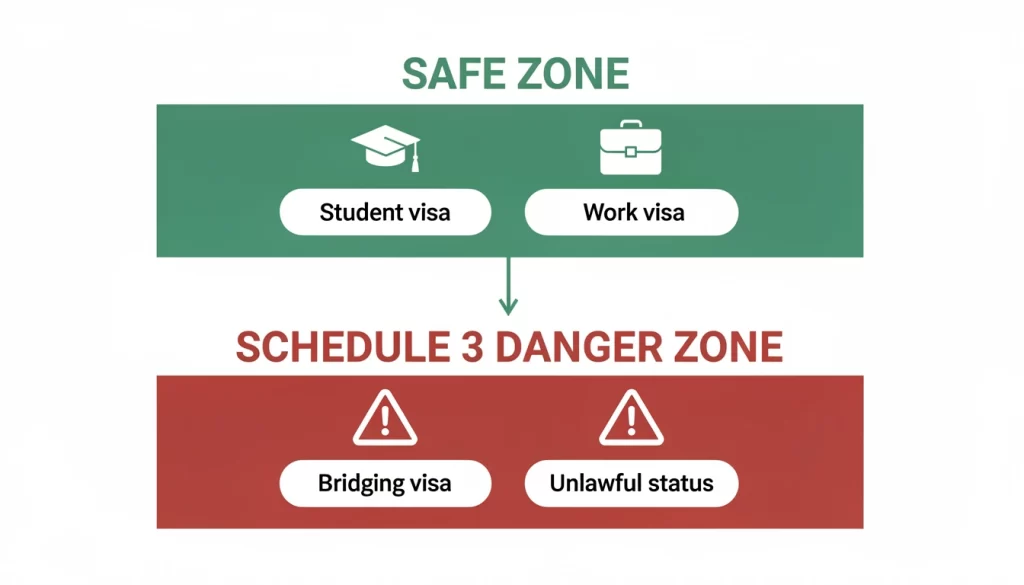
Schedule 3 of the Migration Regulations 1994 applies to people who apply for a substantive visa (like a Partner Visa 820/801) while they are “unlawful” (holding no visa) or while holding only a Bridging Visa. The Core Requirement: To satisfy Schedule 3, you must generally have lodged your new application within 28 days of your last “substantive” visa expiring. If you miss this 28-day window—even by a single day—you fail the criteria automatically unless you get a waiver.
Substantive vs. Non-Substantive Visas
- Substantive Visas: Student (500), Visitor (600), Graduate (485), Work (482).
- Non-Substantive Visas: Bridging Visas (A, B, C, D, E).
If you are on a Bridging Visa because you are appealing a previous refusal (like a failed student visa extension), you do not hold a substantive visa. Therefore, Schedule 3 applies to your partner visa application.
The Waiver: “Compelling and Compassionate” Reasons
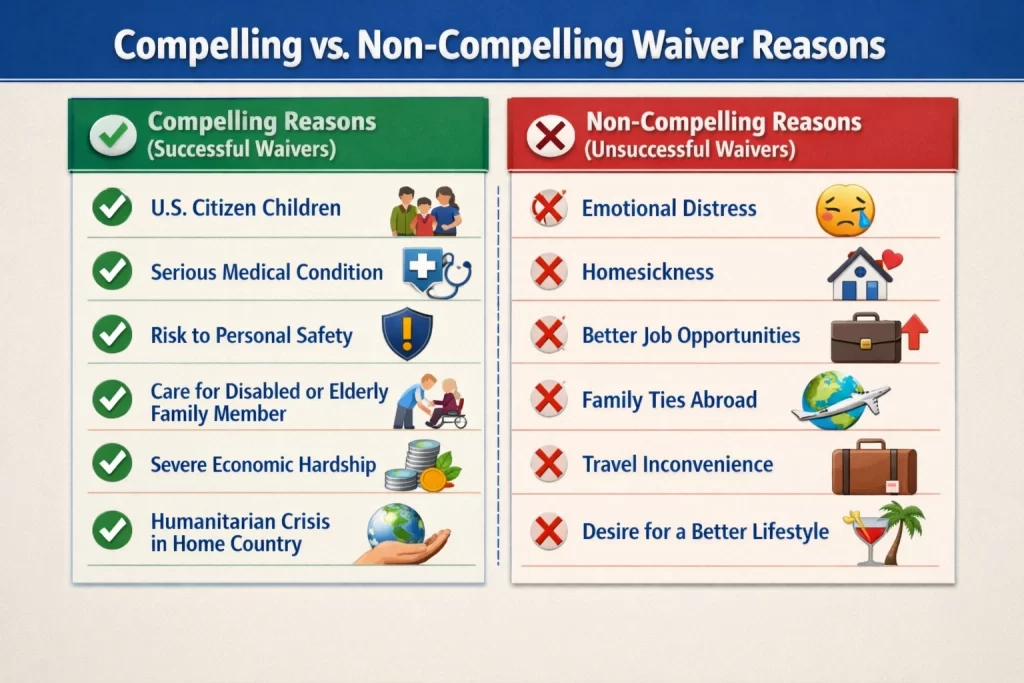
Since most people in this situation have already passed the 28-day mark, the only way to avoid a visa refusal is to request a Schedule 3 Waiver. The Department of Home Affairs has the power to “waive” these requirements, but they only do so in exceptional cases. In 2026, the bar for “compelling” is higher than ever.
What the Department Considers “Compelling”
- Australian Citizen Children: The strongest possible reason. If the couple has a child together who is an Australian citizen, forcing the parent to leave Australia and apply from Sri Lanka is seen as a major hardship for the child.
- Severe Health Issues: If the Australian partner has a serious medical condition or disability and the applicant is their primary caregiver, this may be considered compelling.
- Factors Beyond Your Control: If a serious accident, a natural disaster in Sri Lanka, or a proven “agent error” (where a registered migration agent gave you demonstrably wrong advice) caused you to become unlawful.
What is NOT “Compelling”
- Emotional Hardship: Simply being sad because you have to be apart for 18 months while an offshore visa is processed is not considered compelling. This is seen as a “normal” consequence of migration law.
- Financial Hardship: Having to pay for an extra flight to Colombo or losing a job in Australia is generally not enough on its own.
- Long-term Relationship: Even being together for 10 years does not automatically waive Schedule 3. You must show why you cannot go to Sri Lanka and apply for the Subclass 309 (Offshore) visa.
The 2026 “Warning Letter”
If you lodge an onshore partner visa while Schedule 3 applies, the Department will typically send you a “Schedule 3 Invitation to Comment” letter. The Deadline: You usually have only 28 days to provide a detailed legal submission and evidence for your waiver request. The Danger: If your response is weak, the visa will be refused. Because you are already on a Bridging Visa, you may be subject to a Section 48 bar, which prevents you from applying for almost any other visa while you are in Australia.
Strategic Decisions: Onshore vs. Offshore
For many Sri Lankan couples, the safest strategy in 2026 is to avoid Schedule 3 altogether. Plan A (The Safe Way): Lodge your Partner Visa while your substantive visa (Student/Graduate) is still valid. This bypasses Schedule 3 entirely. Plan B (The Clean Slate): If your visa has already expired or you are on a Bridging Visa with no clear path, it is often better to leave Australia voluntarily and lodge an offshore Subclass 309 application from Sri Lanka. While being apart is hard, an offshore application is much “cleaner” and avoids the high risk of a Schedule 3 refusal and a subsequent 3-year ban.
The Role of Legal Counsel
Schedule 3 cases are “discretionary.” This means a case officer has the power to say yes or no based on how they feel about your evidence. In 2026, drafting a Schedule 3 waiver statement is a task for a specialist immigration lawyer or an experienced MARA-registered agent. A simple letter from the heart is rarely enough to win a legal waiver.
Conclusion
Building a life together in Australia should be a time of joy, not legal terror. If you are a Sri Lankan in Australia whose visa is nearing its end, do not wait. The “28-day rule” is unforgiving, and the “compelling reasons” test is a steep mountain to climb. Protect your status, respect the timelines, and if Schedule 3 does apply to you, prepare your evidence with the same intensity you would for a court case.
Next Step: Check your VEVO (Visa Entitlement Verification Online) status right now. If you are on a Bridging Visa and planning to apply for a Partner Visa, consult with a registered migration agent specifically about a “Schedule 3 Waiver Submission” before you lodge.