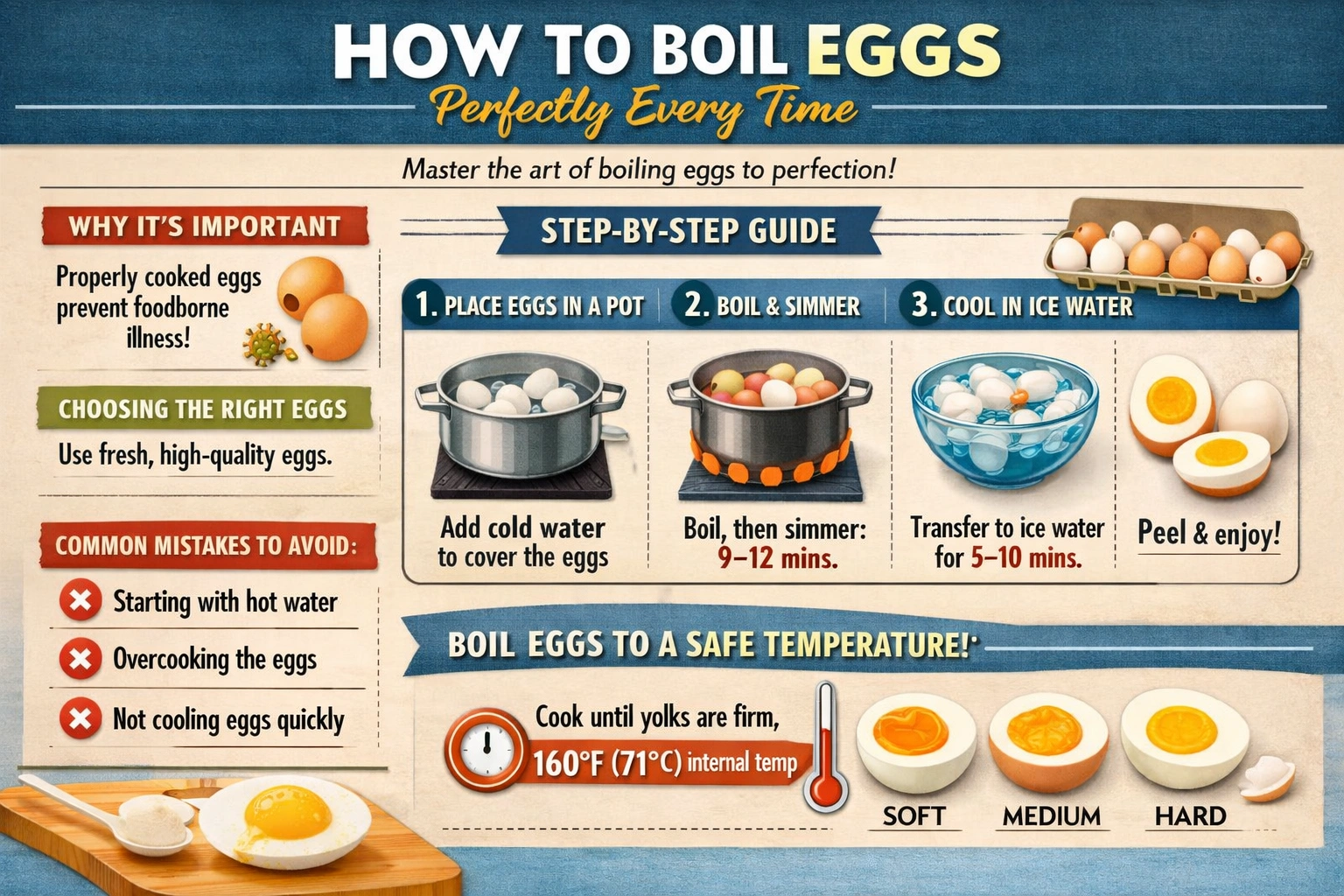
According to a study published in the Journal of Food Science, a staggering 60% of people do not cook their eggs to a safe internal temperature, which can lead to foodborne illnesses. As you consider cooking eggs, you may wonder how to boil them perfectly every time. Boiling eggs is a fundamental cooking skill that can be tricky to master, but with the right techniques and knowledge, you can achieve perfectly cooked eggs. In this article, you will learn the importance of boiling eggs, how to choose the right eggs, and a step-by-step guide to boiling eggs.
You will discover the common mistakes people make when boiling eggs and how to avoid them. By the end of this article, you will be able to boil eggs with confidence and precision, ensuring that your eggs are cooked to a safe internal temperature and are delicious to eat. Whether you are a seasoned cook or a beginner, this article will provide you with the knowledge and skills you need to take your egg-cooking to the next level.
Introduction to Boiling Eggs
Boiling eggs is a simple yet essential cooking technique that requires attention to detail to achieve perfect results. The importance of boiling eggs lies in the fact that it is a convenient and healthy way to cook eggs, which are a rich source of protein and various essential nutrients. According to the United States Department of Agriculture (USDA), eggs are an excellent source of protein, vitamin D, and choline, making them a great addition to a balanced diet.
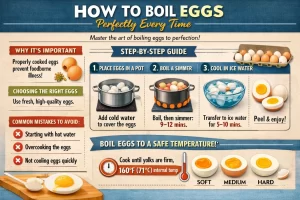
However, boiling eggs can be tricky, and common mistakes can lead to overcooked or undercooked eggs. One of the most common mistakes people make when boiling eggs is not using enough water or not cooking the eggs for the right amount of time. This can result in eggs that are not cooked to a safe internal temperature, which can lead to foodborne illnesses. For example, a study published in the Journal of Applied Microbiology found that eggs that are not cooked to an internal temperature of at least 160°F (71°C) can harbor Salmonella bacteria, which can cause serious food poisoning.
To avoid these mistakes, it is essential to understand the basics of boiling eggs, including the importance of using the right amount of water, cooking the eggs for the right amount of time, and using the right technique. By following these guidelines, you can achieve perfectly cooked eggs that are safe to eat and delicious to taste. For instance, a simple trick to achieve perfectly cooked eggs is to use a timer to ensure that the eggs are cooked for the right amount of time, and to immediately transfer the eggs to an ice bath after cooking to stop the cooking process.
Choosing the Right Eggs
When it comes to boiling eggs, choosing the right eggs is essential to achieving perfect results. There are several factors to consider when selecting eggs, including egg size, egg type, and egg freshness. According to the American Egg Board, egg size is an important factor to consider, as larger eggs take longer to cook than smaller eggs. For example, large eggs take about 12-15 minutes to cook, while small eggs take about 6-8 minutes.
Egg type is also an important consideration, as different types of eggs have different cooking times and techniques. For instance, duck eggs take longer to cook than chicken eggs, and quail eggs take less time to cook than chicken eggs. Additionally, egg freshness is crucial, as fresh eggs have a better texture and taste than older eggs. To ensure that your eggs are fresh, look for eggs that have a clean, dry shell and a firm, rounded shape.
When selecting eggs, it is also important to consider the grade and quality of the eggs. According to the USDA, eggs are graded based on their quality and appearance, with Grade AA eggs being the highest quality and Grade B eggs being the lowest quality. By choosing high-quality eggs, you can ensure that your boiled eggs are not only delicious but also safe to eat. For example, Grade AA eggs have a cleaner, more uniform appearance than Grade B eggs, and are less likely to have cracks or imperfections.
Boiling Eggs: A Step-by-Step Guide
Boiling eggs is a simple process that requires attention to detail to achieve perfect results. To boil eggs, start by filling a pot with enough water to cover the eggs by about an inch. According to a study published in the Journal of Food Engineering, using the right amount of water is essential to achieving perfectly cooked eggs. For example, using too little water can result in eggs that are not cooked to a safe internal temperature, while using too much water can result in eggs that are overcooked.
Next, add the eggs to the pot and place it over high heat. Once the water is boiling, reduce the heat to a simmer and let the eggs cook for the desired amount of time. The cooking time will depend on the size and type of eggs, as well as your personal preference for the level of doneness. For instance, if you prefer your eggs soft-boiled, cook them for 6-7 minutes, while if you prefer them hard-boiled, cook them for 12-15 minutes.
Once the eggs are cooked, immediately transfer them to an ice bath to stop the cooking process. This will help the eggs to cool down quickly and prevent them from becoming overcooked. According to a study published in the Journal of Food Science, cooling the eggs quickly is essential to achieving perfectly cooked eggs. For example, cooling the eggs in an ice bath can help to prevent the formation of a greenish-gray ring around the yolk, which can be unsightly and affect the texture of the egg.
To make the process even easier, you can use a timer to ensure that the eggs are cooked for the right amount of time. You can also use a steamer basket to cook the eggs, which can help to prevent them from cracking and make them easier to peel. For instance, a steamer basket can help to distribute the heat evenly around the eggs, ensuring that they are cooked consistently and preventing hot spots that can cause the eggs to crack.
Cooking Times and Temperatures
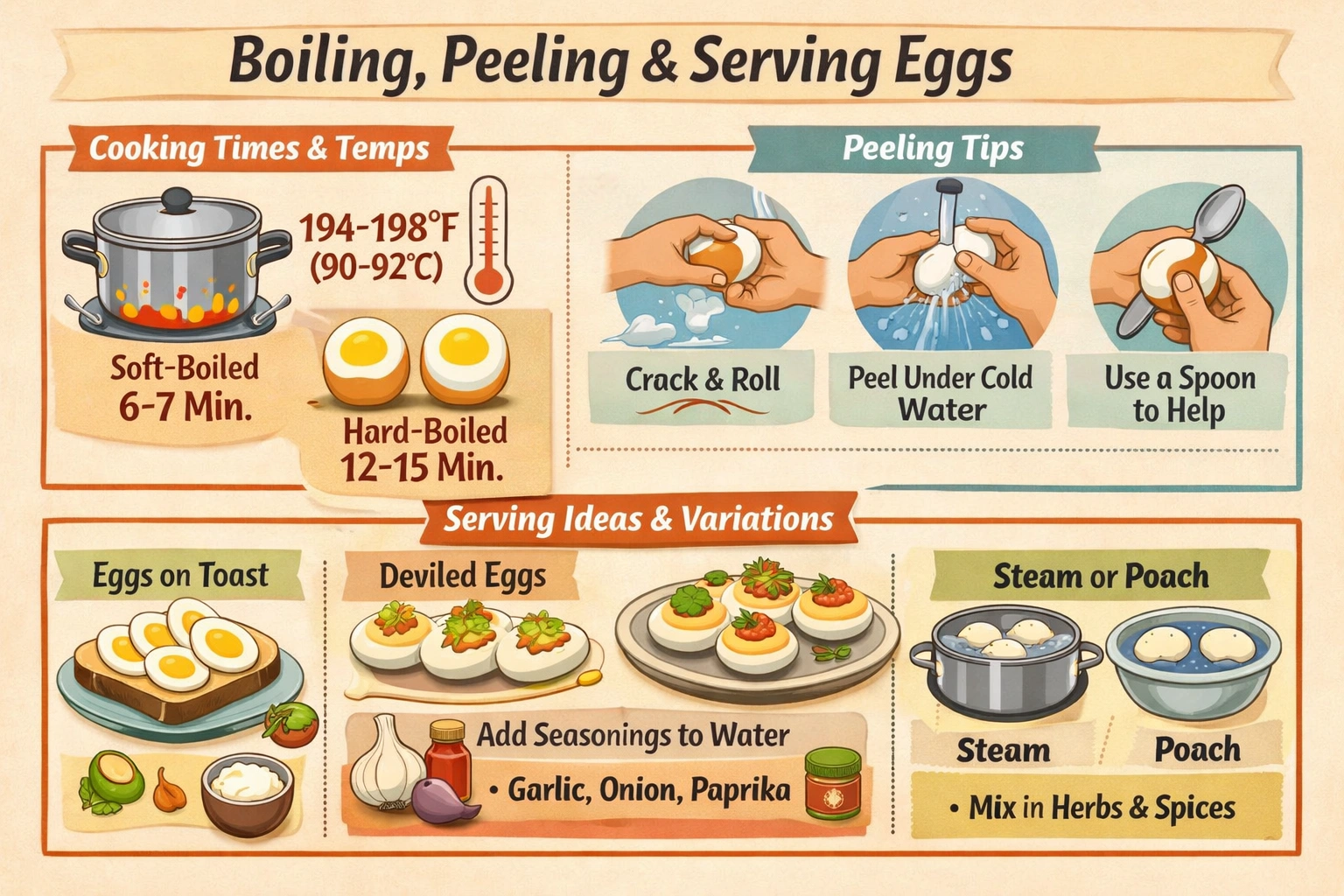
Cooking times and temperatures are critical factors to consider when boiling eggs. The cooking time will depend on the size and type of eggs, as well as your personal preference for the level of doneness. According to the USDA, large eggs take about 12-15 minutes to cook, while small eggs take about 6-8 minutes. It is also important to consider the temperature of the water, as this can affect the cooking time and the texture of the eggs.
The ideal temperature for boiling eggs is between 194°F (90°C) and 198°F (92°C). According to a study published in the Journal of Food Engineering, cooking the eggs at this temperature range can help to achieve perfectly cooked eggs. For example, cooking the eggs at a temperature of 196°F (91°C) can result in eggs that are cooked to a safe internal temperature and have a firm, creamy texture.
It is also important to note that the cooking time and temperature can vary depending on the altitude and the type of pot used. For instance, cooking eggs at high altitude can require a longer cooking time, as the water boils at a lower temperature. Additionally, using a pot with a heavy bottom can help to distribute the heat evenly and prevent the eggs from cooking unevenly.
By understanding the cooking times and temperatures, you can achieve perfectly cooked eggs that are safe to eat and delicious to taste. For example, if you prefer your eggs soft-boiled, you can cook them for 6-7 minutes at a temperature of 194°F (90°C), while if you prefer them hard-boiled, you can cook them for 12-15 minutes at a temperature of 198°F (92°C).
Peeling and Serving Boiled Eggs
Peeling and serving boiled eggs can be a bit tricky, but with the right techniques, you can achieve perfectly peeled and presented eggs. To peel the eggs, start by cracking them gently and rolling them between your hands to loosen the shell. According to a study published in the Journal of Food Science, peeling the eggs immediately after cooking can help to prevent the shell from sticking to the egg white.
Next, peel the eggs under cold running water, starting at the large end. This will help to loosen the shell and make it easier to remove. You can also use a spoon to help loosen the shell and remove any remaining bits of shell. For instance, using a spoon to gently pry the shell away from the egg white can help to prevent the egg white from tearing and make the peeling process easier.
Once the eggs are peeled, you can serve them as is or add various toppings and seasonings to enhance their flavor and texture. According to the American Egg Board, boiled eggs can be served in a variety of ways, including sliced and served on toast, chopped and added to salads, or deviled and served as a snack. For example, you can slice the eggs and serve them on toast with a sprinkle of salt and pepper, or chop them and add them to a salad with a vinaigrette dressing.
By following these tips and techniques, you can achieve perfectly peeled and presented boiled eggs that are delicious to eat and fun to serve. For instance, you can use a egg slicer to slice the eggs thinly and evenly, or use a deviled egg tray to serve the eggs in a decorative and appealing way.
Tips and Variations for Boiling Eggs
Boiling eggs can be a bit boring, but with a few tips and variations, you can add flavor and excitement to this simple dish. One way to add flavor to boiled eggs is to add various seasonings and spices to the water before cooking. According to a study published in the Journal of Food Science, adding flavorings such as garlic, onion, or paprika can enhance the flavor of the eggs and make them more delicious to eat.
Another way to add flavor to boiled eggs is to use different cooking methods, such as steaming or poaching. According to the American Egg Board, steaming eggs can help to retain their moisture and flavor, while poaching eggs can add a delicate and creamy texture. For example, you can steam the eggs for 10-12 minutes to achieve a moist and flavorful texture, or poach them for 3-5 minutes to achieve a delicate and creamy texture.
You can also add various ingredients to the eggs after cooking, such as mayonnaise, mustard, or chopped herbs. According to a study published in the Journal of Food Engineering, adding ingredients such as mayonnaise or mustard can enhance the flavor and texture of the eggs, while adding chopped herbs can add a fresh and aromatic flavor. For instance, you can add a dollop of mayonnaise to the eggs and sprinkle with chopped herbs, or mix in some mustard and chopped onion for added flavor.
By following these tips and variations, you can add flavor and excitement to boiled eggs and make them a more enjoyable and delicious dish to eat. For example, you can try adding different seasonings and spices to the water before cooking, or using different cooking methods such as steaming or poaching to achieve a unique and delicious texture.
Key Takeaways
In conclusion, boiling eggs is a simple yet essential cooking technique that requires attention to detail to achieve perfect results. By following the tips and techniques outlined in this article, you can achieve perfectly cooked eggs that are safe to eat and delicious to taste. Remember to choose the right eggs, use the right amount of water, and cook the eggs for the right amount of time to achieve perfectly cooked eggs.
As you continue to practice and refine your egg-cooking skills, what new and exciting ways will you find to enjoy boiled eggs? Will you try adding different seasonings and spices to the water before cooking, or using different cooking methods such as steaming or poaching to achieve a unique and delicious texture? The possibilities are endless, and with a little practice and patience, you can become a master egg-cooker and enjoy delicious boiled eggs whenever you want.
Frequently Asked Questions
How long does it take to boil an egg?
It takes around 10-12 minutes to boil a large egg
How do I peel a boiled egg?
Start by cracking the egg gently and then rolling it between your hands to loosen the shell