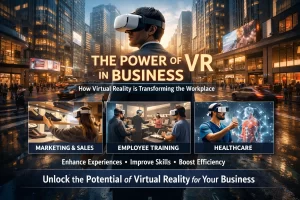
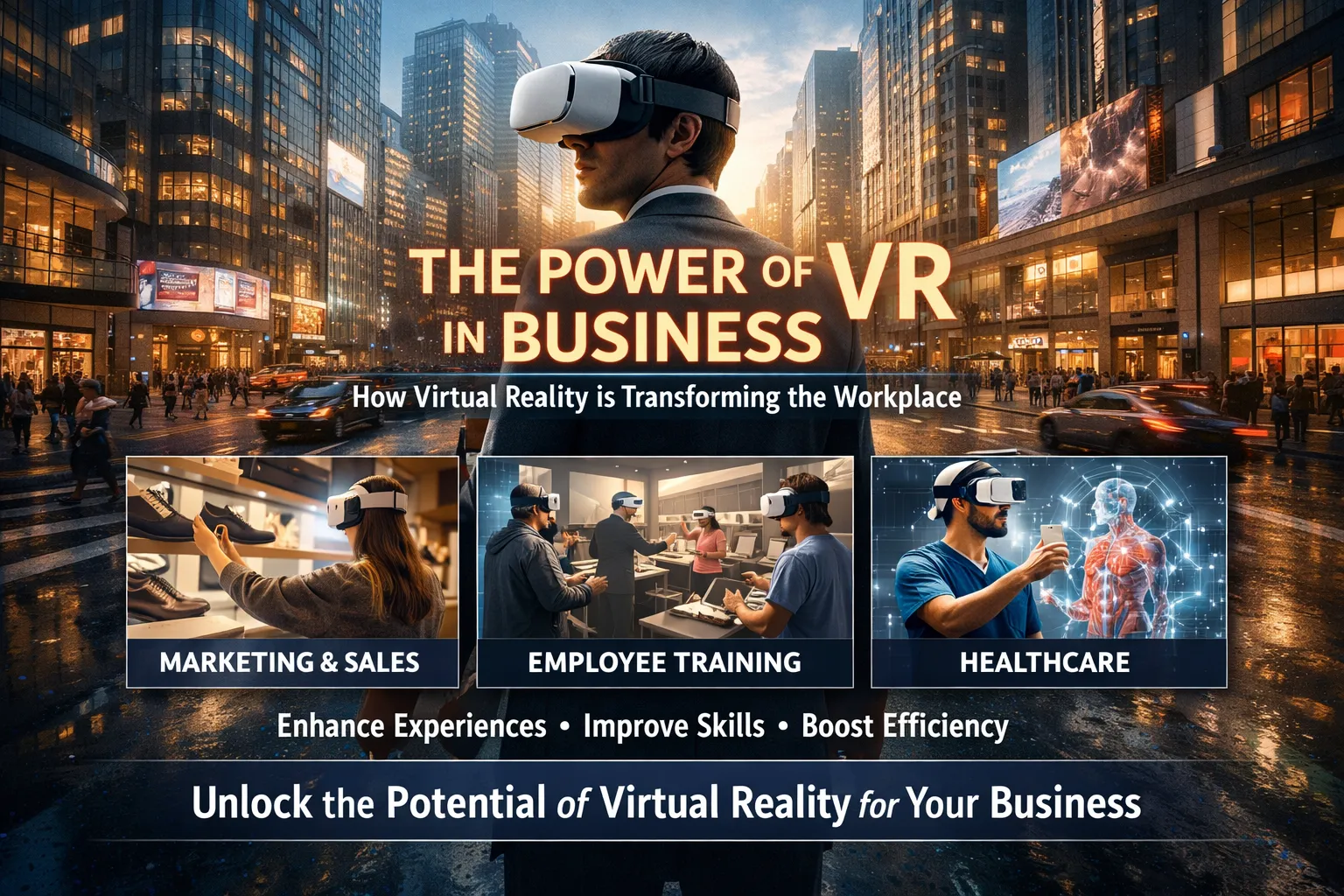
Imagine walking into a conference room, putting on a headset, and suddenly finding yourself standing in the middle of a bustling city, surrounded by towering skyscrapers and the sounds of traffic. This is not a scene from a science fiction movie, but a real-life example of how virtual reality (VR) is being used in business today. As you explore this virtual world, you start to realize the endless possibilities that VR offers for companies looking to innovate and stay ahead of the curve. You may be wondering how VR can be applied to your own business, and what benefits it can bring to your operations. In this article, we will explore the various ways that VR is being used in business, from marketing and sales to employee training and healthcare, and provide you with practical insights and examples to help you get started.
As you read on, you will discover how VR can help you enhance customer experiences, improve employee skills, and increase efficiency in various aspects of your business. You will learn about the latest advancements in VR technology and how they are being applied in different industries. By the end of this article, you will have a clear understanding of how VR can be a valuable tool for your business, and what steps you can take to start leveraging its potential.
Introduction to Virtual Reality in Business
Virtual reality, or VR, refers to a computer-generated simulation of a three-dimensional environment that can be experienced and interacted with in a seemingly real or physical way. The concept of VR has been around for decades, but it wasn’t until the 1990s that the first VR headsets were developed. However, these early headsets were expensive, cumbersome, and limited in their capabilities. It wasn’t until the launch of the Oculus Rift in 2016 that VR started to gain mainstream attention and become more accessible to consumers and businesses.
Today, VR is being used in a wide range of industries, from entertainment and education to healthcare and architecture. In the business world, VR is being used to enhance customer experiences, improve employee training, and increase efficiency in various aspects of operations. According to a report by SuperData Research, the global VR market is expected to reach $62.1 billion by 2025, with the majority of this growth coming from the business sector. As VR technology continues to evolve and improve, we can expect to see even more innovative applications of VR in business.
One of the key advantages of VR is its ability to provide an immersive and engaging experience that can simulate real-world scenarios and environments. This makes it an ideal tool for training and education, as well as for marketing and sales. For example, Walmart is using VR to train its employees on how to handle difficult customer situations, while Coca-Cola is using VR to create immersive brand experiences for its customers. As VR technology continues to advance, we can expect to see even more innovative applications of VR in business.
Virtual Reality Applications in Marketing and Sales
VR is being used in marketing and sales to create immersive and engaging experiences that can help to build brand awareness and drive sales. One of the most common applications of VR in marketing is the creation of immersive product demonstrations. For example, Toyota is using VR to give customers a virtual tour of its cars, allowing them to explore the vehicle’s features and capabilities in a fully immersive environment. Similarly, IKEA is using VR to allow customers to see how furniture would look in their own homes before making a purchase.
Another application of VR in marketing is the creation of virtual showrooms. These allow customers to browse and interact with products in a virtual environment, giving them a more immersive and engaging experience than traditional online shopping. For example, Tommy Hilfiger is using VR to create virtual showrooms for its fashion brand, allowing customers to browse and purchase products in a fully immersive environment. Additionally, VR can be used to create personalized customer experiences, such as virtual try-on and virtual styling, which can help to increase customer engagement and loyalty.
According to a report by Forrester, 62% of consumers are more likely to engage with a brand that offers immersive experiences, such as VR. This highlights the potential of VR to drive customer engagement and loyalty, and to create new and innovative marketing and sales strategies. As VR technology continues to evolve, we can expect to see even more innovative applications of VR in marketing and sales.
Virtual Reality in Employee Training and Development
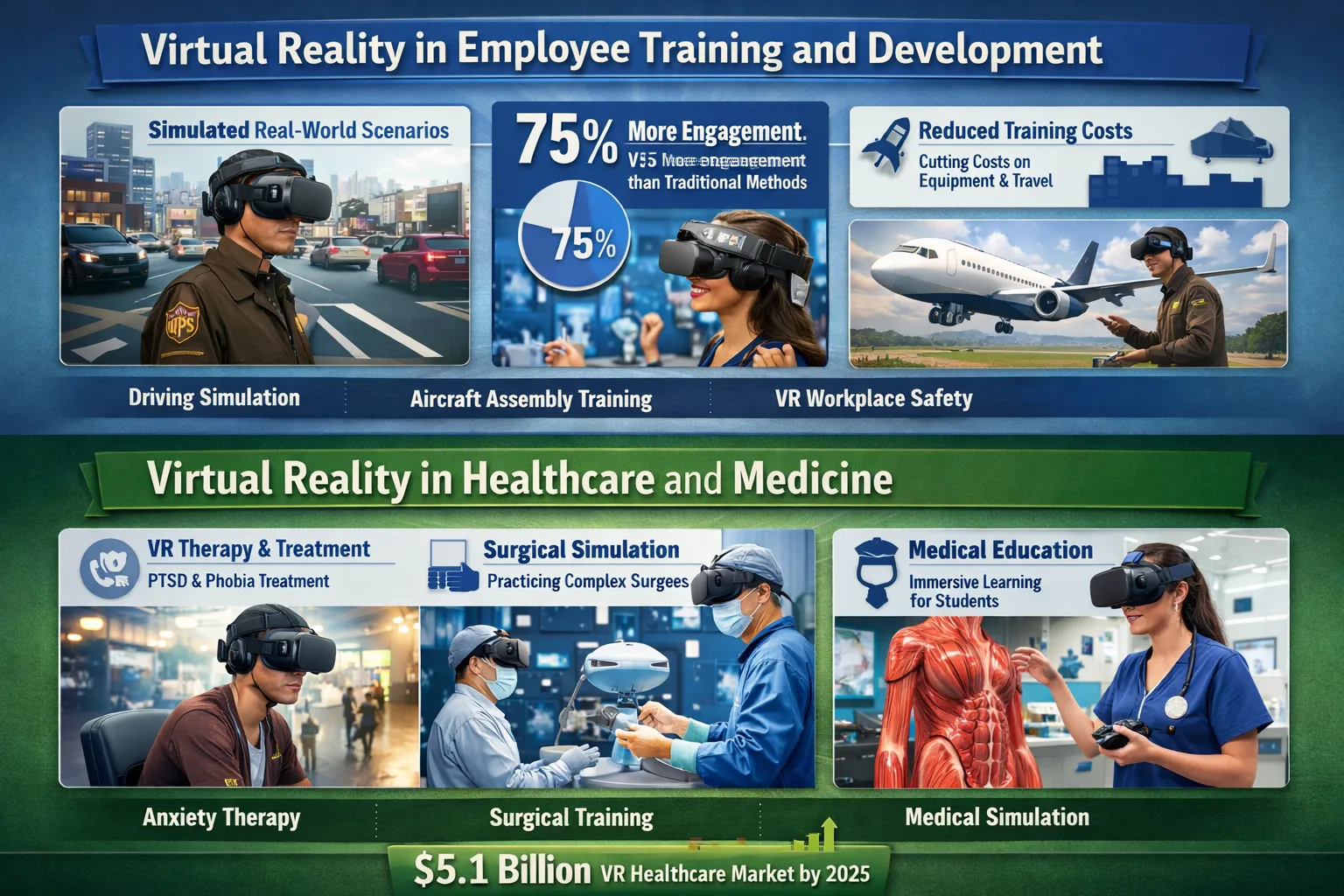
VR is being used in employee training and development to create immersive and engaging experiences that can help to improve knowledge retention and reduce training costs. One of the key advantages of VR in training is its ability to simulate real-world scenarios and environments, allowing employees to practice and learn in a safe and controlled environment. For example, UPS is using VR to train its drivers on how to handle difficult driving situations, such as navigating through heavy traffic or inclement weather.
Another advantage of VR in training is its ability to increase employee engagement and participation. Traditional training methods, such as classroom-based instruction, can be dry and boring, leading to low levels of engagement and participation. VR, on the other hand, provides an immersive and interactive experience that can help to increase employee engagement and motivation. According to a report by Accenture, employees who use VR in training are 75% more likely to report feeling engaged and motivated than those who use traditional training methods.
Additionally, VR can help to reduce training costs by reducing the need for physical equipment and travel. For example, Boeing is using VR to train its employees on how to assemble aircraft, reducing the need for physical prototypes and travel to training facilities. Overall, VR has the potential to revolutionize the way that employees are trained and developed, providing a more immersive, engaging, and cost-effective experience.
Virtual Reality in Healthcare and Medicine
VR is being used in healthcare and medicine to create immersive and interactive experiences that can help to improve patient outcomes and reduce costs. One of the most common applications of VR in healthcare is therapy and treatment. For example, the University of California, Los Angeles (UCLA) is using VR to treat patients with anxiety disorders, such as PTSD and phobias. Patients are immersed in a virtual environment that simulates the source of their anxiety, allowing them to confront and overcome their fears in a safe and controlled environment.
Another application of VR in healthcare is surgical simulation. This allows surgeons to practice and train on complex procedures in a virtual environment, reducing the risk of errors and improving patient outcomes. For example, the University of California, San Francisco (UCSF) is using VR to train surgeons on how to perform complex surgical procedures, such as brain and spinal surgery. Additionally, VR can be used in medical education to create immersive and interactive experiences that can help to improve knowledge retention and understanding.
According to a report by Goldman Sachs, the global VR market in healthcare is expected to reach $5.1 billion by 2025, with the majority of this growth coming from the use of VR in therapy and treatment. As VR technology continues to evolve, we can expect to see even more innovative applications of VR in healthcare and medicine, from patient education and engagement to medical research and development.
Virtual Reality in Architecture and Real Estate
VR is being used in architecture and real estate to create immersive and interactive experiences that can help to improve the design and construction process, as well as the way that properties are marketed and sold. One of the most common applications of VR in architecture is virtual property tours. These allow potential buyers to explore and interact with properties in a virtual environment, giving them a more immersive and engaging experience than traditional online listings.
Another application of VR in architecture is architectural visualization. This allows architects and designers to create immersive and interactive models of buildings and spaces, allowing them to visualize and communicate their designs more effectively. For example, Skidmore, Owings & Merrill is using VR to create immersive and interactive models of its buildings, allowing architects and designers to explore and interact with the design in a fully immersive environment.
Additionally, VR can be used in design collaboration, allowing architects, designers, and engineers to work together in a virtual environment, sharing and collaborating on designs in real-time. According to a report by CBRE, the use of VR in architecture and real estate can help to reduce design and construction costs by up to 20%, while also improving the overall quality and efficiency of the design and construction process.
The Future of Virtual Reality in Business
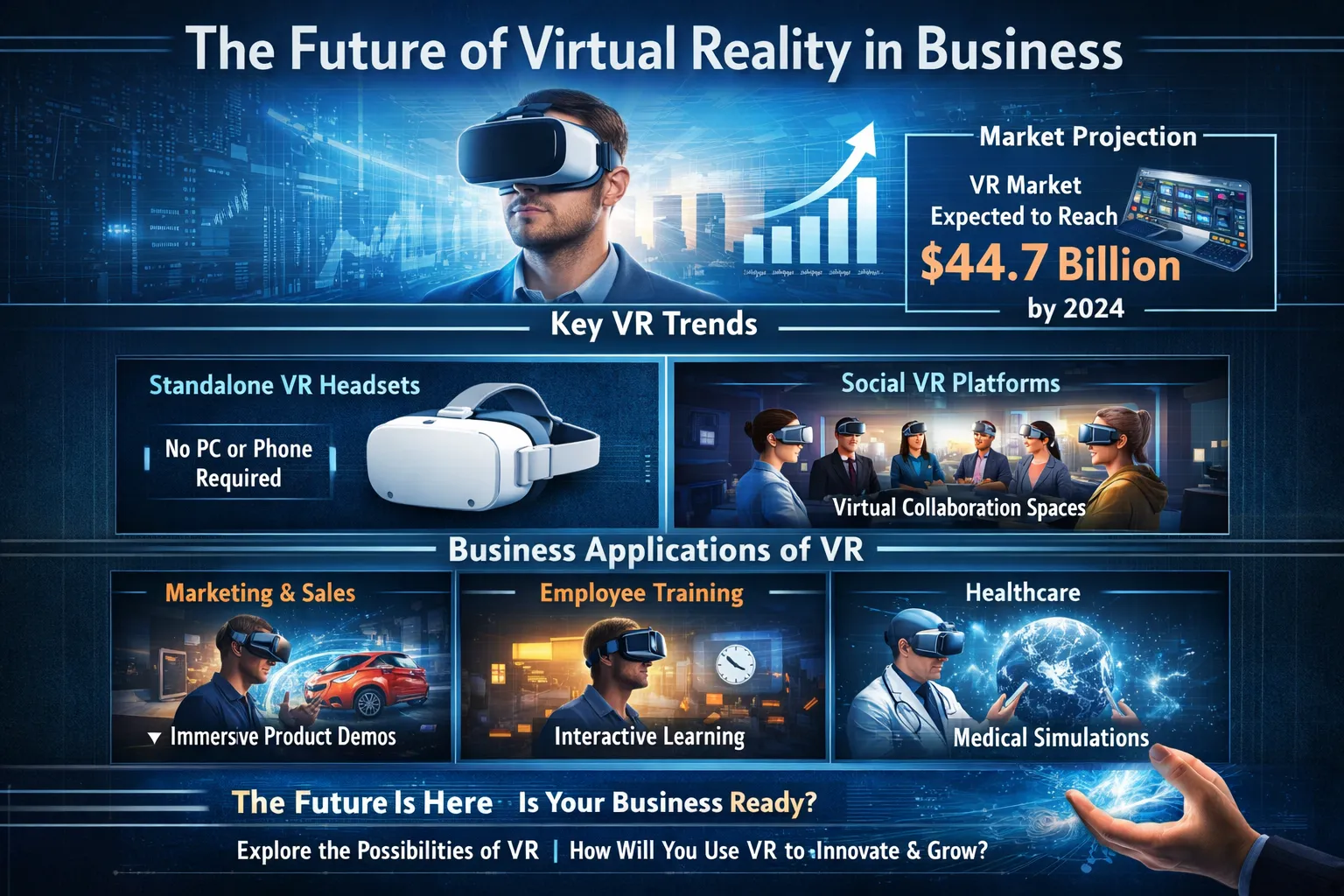
As VR technology continues to evolve and improve, we can expect to see even more innovative applications of VR in business. One of the key areas of advancement is in the development of standalone VR headsets, which do not require a computer or phone to operate. These headsets are expected to become more widely available and affordable in the coming years, making VR more accessible to businesses and consumers.
Another area of advancement is in the development of social VR platforms, which allow multiple users to interact and collaborate in a virtual environment. These platforms have the potential to revolutionize the way that businesses communicate and collaborate, allowing for more immersive and engaging experiences. For example, Facebook is developing a social VR platform called Oculus Rooms, which allows users to interact and socialize in a virtual environment.
According to a report by International Data Corporation (IDC), the global VR market is expected to reach $44.7 billion by 2024, with the majority of this growth coming from the business sector. As VR technology continues to evolve and improve, we can expect to see even more innovative applications of VR in business, from marketing and sales to employee training and healthcare. The future of VR in business is exciting and full of possibilities, and it will be interesting to see how businesses adapt and innovate in the coming years.
Key Takeaways
In conclusion, virtual reality is a powerful tool that can be used in a wide range of business applications, from marketing and sales to employee training and healthcare. By providing immersive and interactive experiences, VR can help to increase customer engagement, improve employee skills, and reduce costs. As VR technology continues to evolve and improve, we can expect to see even more innovative applications of VR in business.
So, what’s the next step for your business? How can you start leveraging the power of VR to drive innovation and growth? The answer is to start exploring the possibilities of VR and how it can be applied to your specific business needs. Whether it’s creating immersive product demonstrations, training employees, or improving customer experiences, VR has the potential to revolutionize the way that your business operates. What will you do with this powerful technology?
Frequently Asked Questions
What is virtual reality?
Virtual reality is a computer-generated simulation of a three-dimensional environment
How is VR used in business?
VR is used in business for marketing, sales, training, and other applications