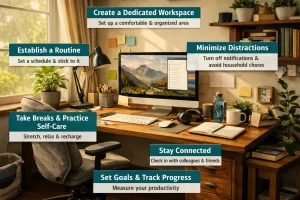
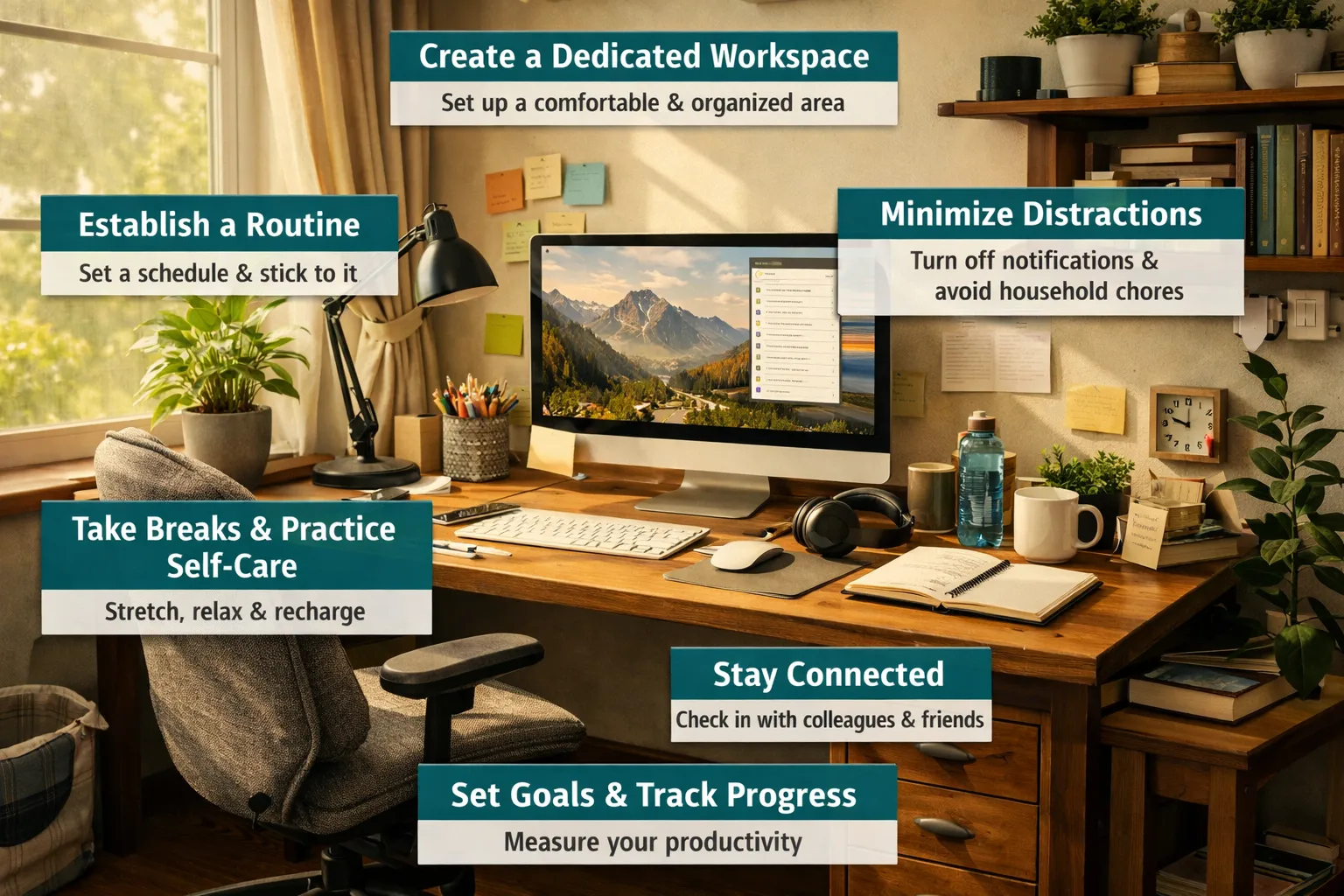
As you sit at your desk, surrounded by the comforts of your own home, you might find yourself struggling to stay focused on the task at hand. The flexibility of working from home can be a blessing, but it can also be a curse, as the lines between work and personal life become blurred. You might find yourself getting distracted by the laundry, the dishes, or the temptation to take a nap. But what if you could create a workspace that is both comfortable and productive? What if you could develop habits and strategies that would help you stay focused and motivated, even when you’re working from home?
The key to success lies in creating a dedicated workspace, establishing a routine and schedule, minimizing distractions and interruptions, taking breaks and practicing self-care, staying connected with colleagues and friends, and measuring productivity and setting goals. By following these steps, you can turn your home into a productive and efficient workspace, and achieve your goals without feeling overwhelmed or distracted.
Creating a Dedicated Workspace
A dedicated workspace is essential for staying focused and productive when working from home. This means designating a specific area of your home as your workspace, and keeping it organized and clutter-free. You should invest in ergonomic furniture, such as a comfortable chair and a desk that is at the right height, to prevent back and neck strain. A good chair can make a big difference in your productivity, as it will allow you to sit comfortably for long periods of time without feeling fatigued. Additionally, consider using a noise machine or playing calming music in the background to create a peaceful atmosphere.
Minimal distractions are also crucial for a productive workspace. This means turning off the TV, putting your phone on silent mode, and closing any unnecessary tabs on your computer. You should also consider using a website blocker, such as Freedom or SelfControl, to block social media and other distracting websites during certain hours of the day. By minimizing distractions, you can stay focused on your work and avoid procrastination. For example, a study by the University of California, Irvine found that the average person checks their email or social media every 3 minutes, which can be a significant distraction. By creating a dedicated workspace and minimizing distractions, you can avoid this trap and stay focused on your work.
Another important aspect of a dedicated workspace is good lighting. Natural light is ideal, but if this is not possible, consider using a high-quality desk lamp to illuminate your workspace. Good lighting can help reduce eye strain and improve your mood, making it easier to stay focused and productive. Additionally, consider using plants or artwork to decorate your workspace, as these can help create a peaceful and calming atmosphere. By creating a dedicated workspace that is comfortable, organized, and free from distractions, you can stay focused and productive, even when working from home.
Establishing a Routine and Schedule
Establishing a routine and schedule is essential for staying focused and productive when working from home. This means creating a schedule for your workday, including specific times for working, taking breaks, and exercising. You should also establish a daily routine, such as waking up at the same time every day, eating a healthy breakfast, and getting some fresh air. A routine can help you stay on track and avoid procrastination, as it provides a sense of structure and accountability.
Time management is also critical for staying focused and productive. This means prioritizing your tasks, breaking them down into smaller chunks, and using a timer to keep yourself on track. You should also avoid multitasking, as this can be a significant distraction and reduce your productivity. Instead, focus on one task at a time, and give it your undivided attention. For example, the Pomodoro Technique involves working in focused 25-minute increments, followed by a 5-minute break. This can help you stay focused and avoid burnout.
Break times are also essential for staying focused and productive. This means taking regular breaks throughout the day to stretch, move around, and rest your eyes. You should also use this time to do something enjoyable, such as reading a book, taking a walk, or practicing yoga. Break times can help you recharge and refocus, making it easier to stay motivated and productive. For example, a study by the University of Illinois found that taking regular breaks can improve productivity by up to 30%. By establishing a routine and schedule, and using time management techniques, you can stay focused and productive, even when working from home.
Minimizing Distractions and Interruptions
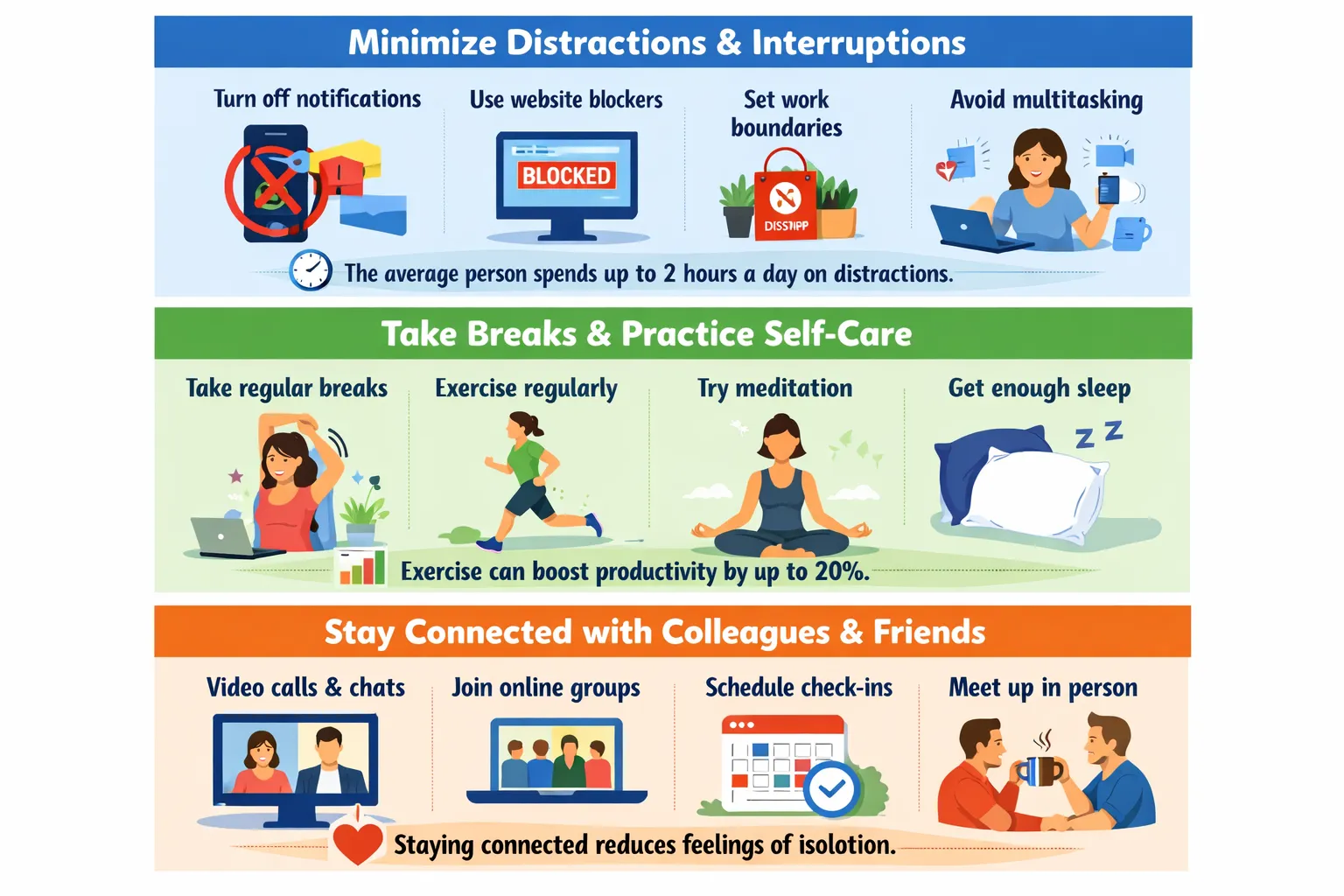
Minimizing distractions and interruptions is essential for staying focused and productive when working from home. This means turning off notifications on your phone, closing unnecessary tabs on your computer, and avoiding social media during work hours. You should also consider using a website blocker, such as Freedom or SelfControl, to block distracting websites during certain hours of the day. By minimizing distractions, you can stay focused on your work and avoid procrastination.
Setting boundaries is also critical for minimizing distractions and interruptions. This means communicating your work hours and boundaries to your family and friends, and establishing a clear distinction between work and personal time. You should also consider setting up a separate workspace, such as a home office, to create a physical boundary between work and personal space. By setting boundaries, you can avoid interruptions and stay focused on your work.
Another important aspect of minimizing distractions and interruptions is avoiding multitasking. This means focusing on one task at a time, and giving it your undivided attention. You should also avoid checking email or social media during work hours, as these can be significant distractions. Instead, schedule specific times to check your email or social media, and stick to those times. By minimizing distractions and interruptions, you can stay focused and productive, even when working from home. For example, a study by the University of California, Irvine found that the average person spends up to 2 hours per day on distractions, which can be a significant drain on productivity.
Taking Breaks and Practicing Self-Care
Taking breaks and practicing self-care is essential for staying focused and productive when working from home. This means taking regular breaks throughout the day to stretch, move around, and rest your eyes. You should also use this time to do something enjoyable, such as reading a book, taking a walk, or practicing yoga. Break times can help you recharge and refocus, making it easier to stay motivated and productive.
Exercise and meditation are also critical for staying focused and productive. Regular exercise can help improve your mood, reduce stress, and increase your energy levels. Meditation can also help reduce stress and improve your focus, making it easier to stay motivated and productive. You should consider scheduling time for exercise and meditation into your daily routine, such as first thing in the morning or during your lunch break. For example, a study by the University of Illinois found that regular exercise can improve productivity by up to 20%.
Practicing self-care is also essential for staying focused and productive. This means taking care of your physical and emotional needs, such as getting enough sleep, eating a healthy diet, and staying hydrated. You should also consider scheduling time for self-care into your daily routine, such as taking a relaxing bath or getting a massage. By taking breaks and practicing self-care, you can stay focused and productive, even when working from home. For example, a study by the American Psychological Association found that employees who practice self-care are more productive, have better work-life balance, and are more likely to stay with their current employer.
Staying Connected with Colleagues and Friends
Staying connected with colleagues and friends is essential for staying focused and productive when working from home. This means using video conferencing tools, such as Zoom or Skype, to stay in touch with colleagues and friends. You should also consider joining online communities or forums related to your industry, to stay connected with others who share similar interests and goals. By staying connected, you can avoid feelings of isolation and stay motivated and productive.
Instant messaging and social media can also be useful tools for staying connected with colleagues and friends. You should consider using instant messaging apps, such as Slack or Microsoft Teams, to stay in touch with colleagues and friends. You should also consider joining social media groups related to your industry, to stay connected with others who share similar interests and goals. By staying connected, you can stay motivated and productive, even when working from home.
Another important aspect of staying connected is scheduling regular check-ins with colleagues and friends. This means scheduling regular video calls or phone calls to stay in touch and catch up on each other’s progress. You should also consider scheduling regular in-person meetings, such as coffee dates or lunches, to stay connected and build relationships. By staying connected, you can avoid feelings of isolation and stay motivated and productive. For example, a study by the Harvard Business Review found that employees who stay connected with colleagues and friends are more productive, have better work-life balance, and are more likely to stay with their current employer.
Measuring Productivity and Setting Goals
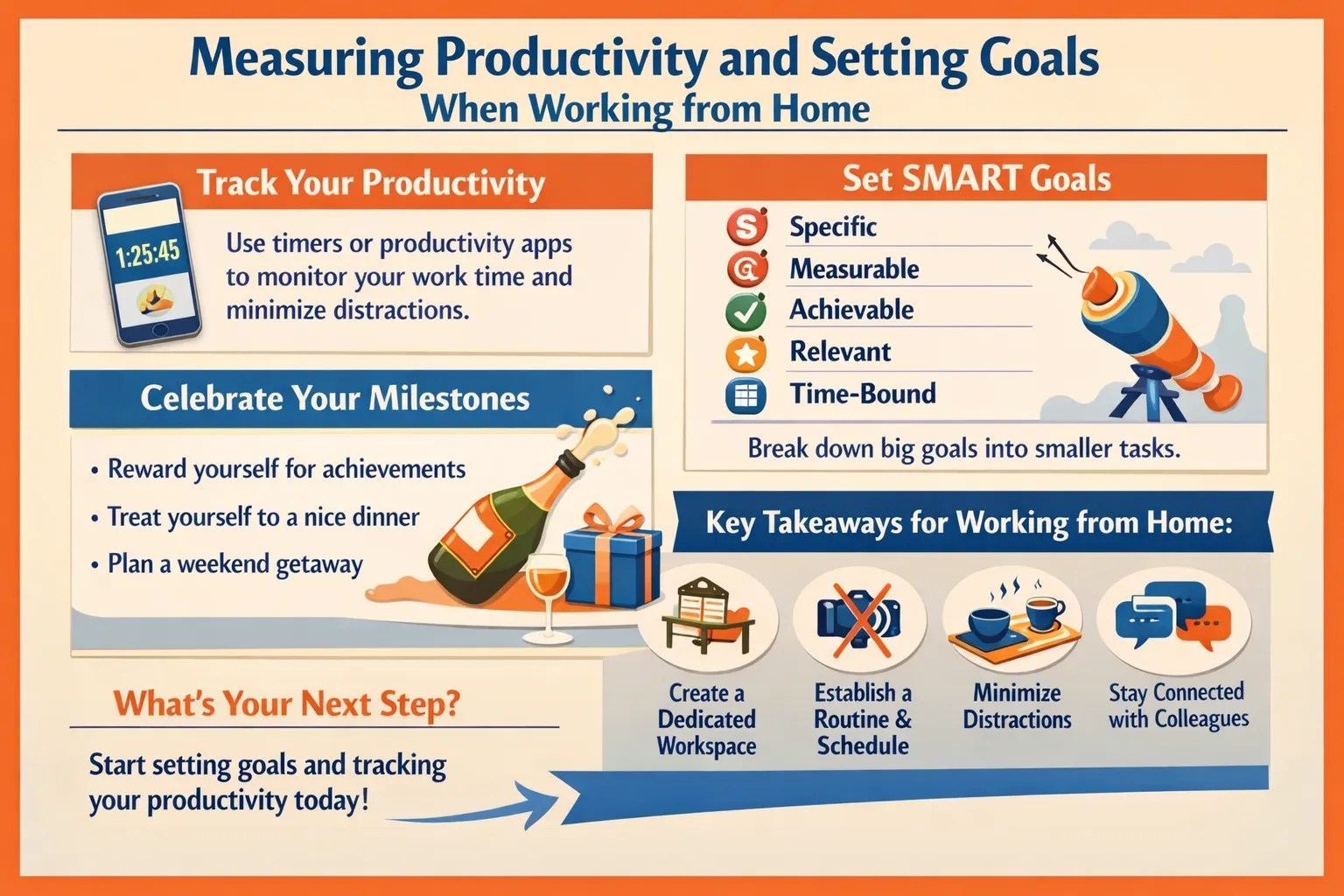
Measuring productivity and setting goals is essential for staying focused and productive when working from home. This means tracking your productivity, such as using a timer or a productivity app, to see how much time you spend on tasks and how much time you waste on distractions. You should also consider setting specific, measurable, achievable, relevant, and time-bound (SMART) goals, to help you stay motivated and focused.
Setting goals is also critical for staying focused and productive. This means setting specific, measurable, achievable, relevant, and time-bound (SMART) goals, to help you stay motivated and focused. You should also consider breaking down large goals into smaller, manageable tasks, to make them feel less overwhelming and more achievable. By setting goals and tracking your productivity, you can stay motivated and focused, even when working from home.
Celebrating milestones is also essential for staying motivated and productive. This means recognizing and celebrating your achievements, no matter how small they may seem. You should also consider treating yourself to something special, such as a nice dinner or a weekend getaway, to reward yourself for your hard work. By celebrating milestones, you can stay motivated and focused, and avoid feelings of burnout and exhaustion. For example, a study by the University of California, Berkeley found that employees who celebrate milestones are more productive, have better work-life balance, and are more likely to stay with their current employer.
Key Takeaways
In conclusion, staying focused and productive when working from home requires a combination of strategies and techniques. By creating a dedicated workspace, establishing a routine and schedule, minimizing distractions and interruptions, taking breaks and practicing self-care, staying connected with colleagues and friends, and measuring productivity and setting goals, you can stay motivated and focused, even when working from home. Remember to stay flexible and adapt to changing circumstances, and don’t be afraid to try new things and experiment with different techniques until you find what works best for you.
So, what’s the next step for you? Will you start by creating a dedicated workspace, or by establishing a routine and schedule? Whatever you choose, remember that staying focused and productive when working from home is a journey, not a destination. It takes time, effort, and practice, but the rewards are well worth it. By following these strategies and techniques, you can achieve your goals and enjoy the freedom and flexibility of working from home.
Frequently Asked Questions
How can I stay motivated while working from home?
Set clear goals and track your progress to stay motivated
What are some common distractions while working from home?
Common distractions include social media, email, and household chores