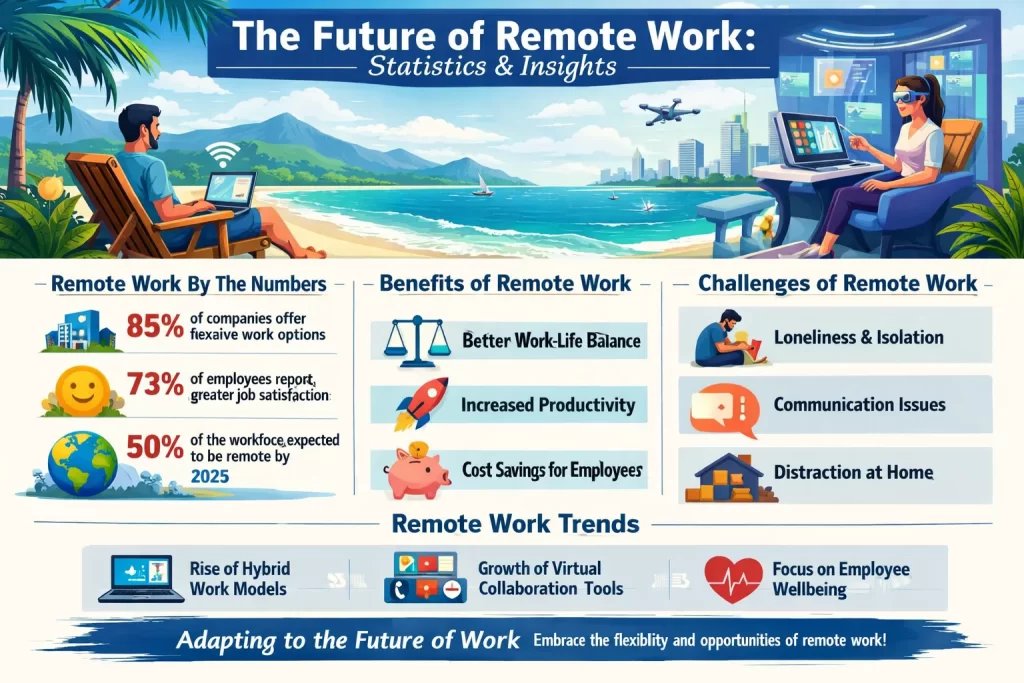
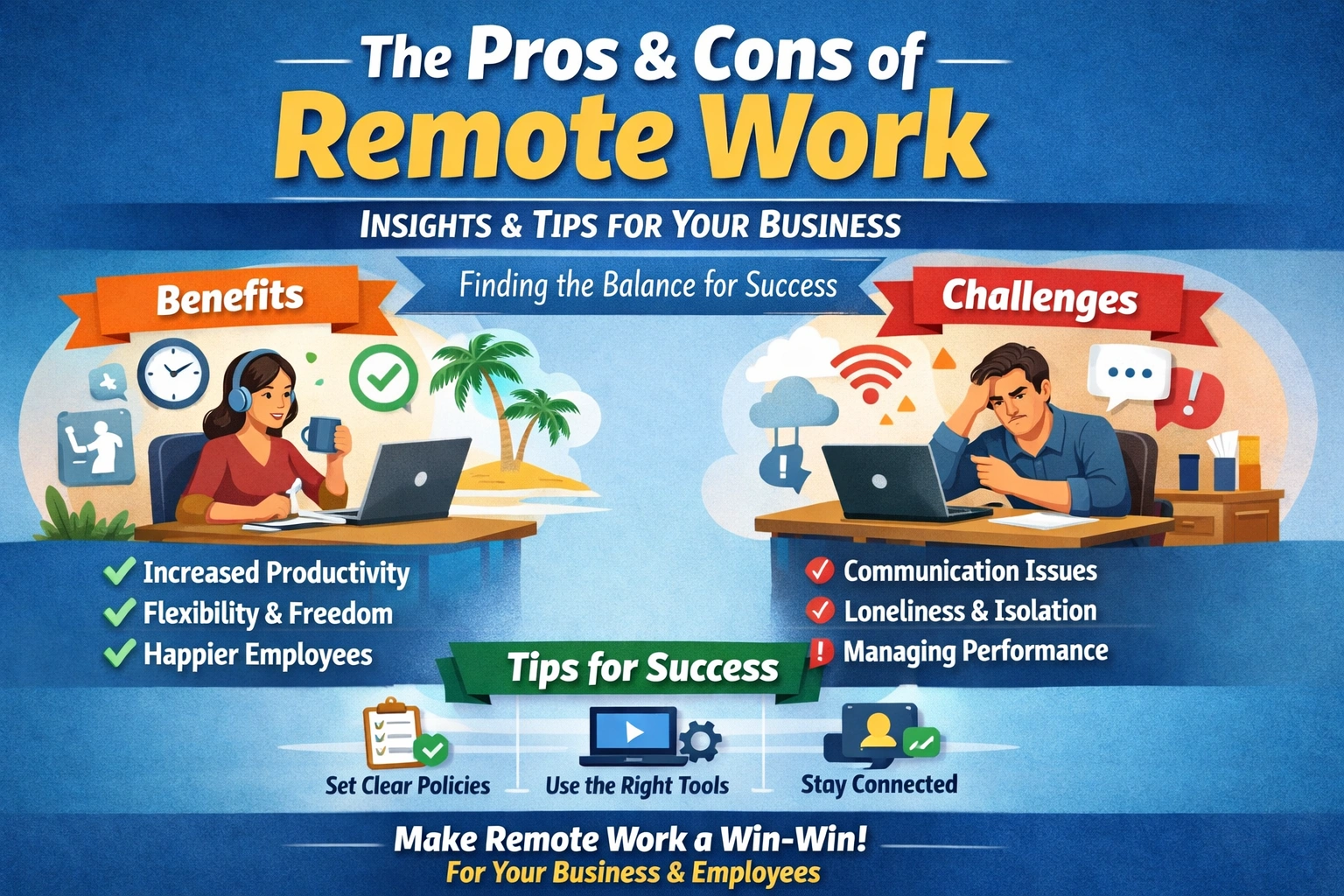
As you consider the future of your business, you’re probably weighing the pros and cons of remote work. I think it’s an exciting opportunity, but also a significant challenge. You’re not alone – many businesses are struggling to decide whether to adopt remote work arrangements. The good news is that, with the right approach, remote work can be a win-win for both your business and your employees. In this article, I’ll share my insights on the benefits and challenges of remote work, and provide you with practical advice on how to make it work for your business.
By the end of this article, you’ll have a clear understanding of the pros and cons of remote work, and be able to make an informed decision about whether it’s right for your business. You’ll also learn how to implement remote work arrangements that benefit both your business and your employees. So, let’s get started and explore the world of remote work.
Introduction to Remote Work
So, what is remote work? I think it’s fair to say that remote work, also known as telecommuting, is an arrangement where employees work from outside the traditional office environment. This can include working from home, a coffee shop, or even a co-working space. With the advancement of technology, remote work has become more accessible and convenient than ever. According to a survey by Gallup, 43% of employed adults in the United States are working remotely at least some of the time.
Current statistics show that remote work is on the rise. A study by Upwork found that 63% of companies have remote workers, and this number is expected to grow in the coming years. I think this trend is driven by the benefits of remote work, which include increased flexibility, reduced commuting time, and improved work-life balance. For example, a company like Amazon has a large remote workforce, with many employees working from home or from one of their many satellite offices.
As a business owner, you’re probably wondering how remote work can benefit your business. I think it’s essential to consider the current state of remote work and how it can be implemented in your organization. With the right tools and strategies, remote work can be a successful arrangement for both your business and your employees. For instance, a company like IBM has a well-established remote work program, which allows employees to work from anywhere in the world.
Benefits of Remote Work for Businesses
I think one of the most significant benefits of remote work for businesses is cost savings. When employees work remotely, you can save on office space, utilities, and other overhead costs. For example, a company like Reddit has a remote workforce, which allows them to save on office space and other expenses. According to a study by Global Workplace Analytics, employers can save an average of $11,000 per year per remote worker.
Another benefit of remote work for businesses is increased productivity. When employees are able to work from home or a quiet space, they can often focus better and be more productive. I think this is because they’re able to avoid the distractions of a traditional office environment, such as meetings and watercooler conversations. For instance, a study by Stanford University found that remote workers were 13% more productive than their office-based counterparts.
In addition to cost savings and increased productivity, remote work can also provide businesses with access to a wider talent pool. When you’re not limited to hiring employees who live in a specific geographic area, you can attract the best talent from all over the world. I think this is a significant advantage, especially for businesses that are looking to fill specialized or hard-to-fill positions. For example, a company like Microsoft has a global remote workforce, which allows them to attract top talent from all over the world.
Benefits of Remote Work for Employees
I think one of the most significant benefits of remote work for employees is flexibility. When you’re able to work from home or a remote location, you can often create a schedule that works better for you and your family. For example, a working parent may be able to take care of their children during the day and work in the evenings, which can be a huge advantage. According to a survey by FlexJobs, 85% of remote workers say that they’re more productive when they work from home.
Another benefit of remote work for employees is work-life balance. When you’re not commuting to an office every day, you can often have more time for personal activities, such as exercise, hobbies, or spending time with family and friends. I think this can lead to a happier, healthier workforce, which can be a significant advantage for businesses. For instance, a study by Harvard Business Review found that remote workers were more likely to exercise regularly and eat healthy foods.
In addition to flexibility and work-life balance, remote work can also provide employees with a better quality of life. When you’re able to work from a remote location, you can often avoid the stress and expense of commuting, which can be a huge advantage. I think this is especially true for employees who live in areas with heavy traffic or long commute times. For example, a company like Dell has a remote work program, which allows employees to work from home and avoid the commute.
Challenges of Remote Work for Businesses
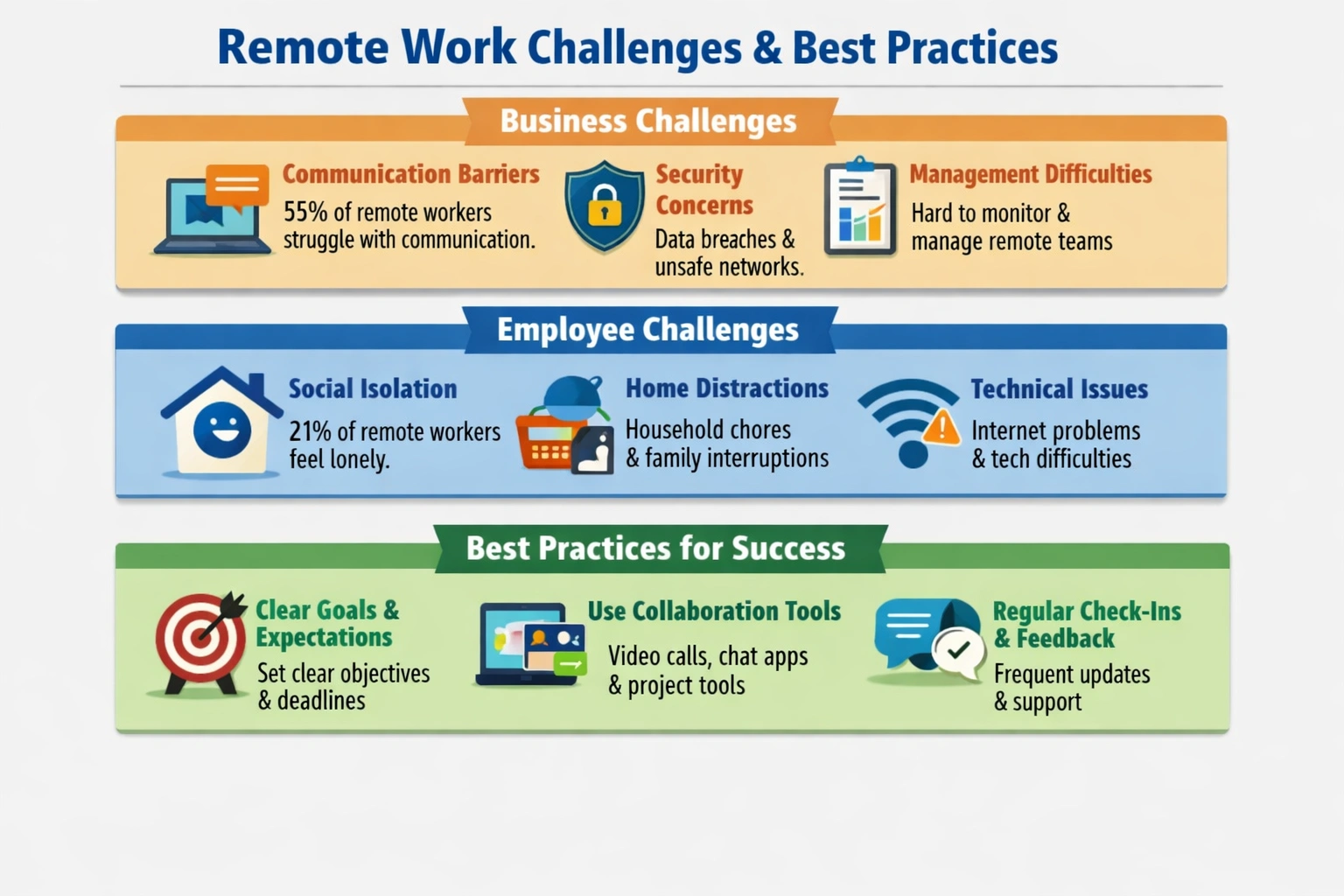
I think one of the most significant challenges of remote work for businesses is communication barriers. When employees are working remotely, it can be difficult to communicate effectively, especially if you’re not using the right tools and strategies. For example, a company like Yahoo! had to recall its remote workers due to communication and collaboration issues. According to a survey by Wakefield Research, 55% of remote workers say that they struggle with communication and collaboration.
Another challenge of remote work for businesses is security concerns. When employees are working remotely, they may be using personal devices or public Wi-Fi networks, which can be a security risk. I think this is a significant concern, especially for businesses that handle sensitive or confidential information. For instance, a company like IBM has a robust security program in place to protect its remote workers and data.
In addition to communication barriers and security concerns, remote work can also provide businesses with management challenges. When employees are working remotely, it can be difficult to manage them effectively, especially if you’re not using the right tools and strategies. I think this is a significant challenge, especially for businesses that are new to remote work. For example, a company like Amazon has a well-established remote work program, which includes regular check-ins and performance monitoring.
Challenges of Remote Work for Employees
I think one of the most significant challenges of remote work for employees is social isolation. When you’re working from home or a remote location, you can often feel disconnected from your colleagues and the rest of the world. For example, a study by Buffer found that 21% of remote workers struggle with loneliness. According to a survey by Gallup, remote workers are more likely to feel isolated and disconnected from their colleagues.
Another challenge of remote work for employees is distractions at home. When you’re working from home, it can be easy to get distracted by personal tasks, such as laundry or cleaning, or by family members and friends. I think this can be a significant challenge, especially for employees who are new to remote work. For instance, a company like Reddit has a remote work program, which includes tips and strategies for staying focused and productive while working from home.
In addition to social isolation and distractions at home, remote work can also provide employees with technical challenges. When you’re working remotely, you may encounter technical issues, such as internet connectivity problems or software compatibility issues. I think this is a significant challenge, especially for employees who are not tech-savvy. For example, a company like Microsoft has a robust technical support program in place to help its remote workers with technical issues.
Best Practices for Successful Remote Work
I think one of the most important best practices for successful remote work is setting clear goals and expectations. When employees are working remotely, it’s essential to establish clear goals and expectations, including deadlines and deliverables. For example, a company like Amazon has a well-established remote work program, which includes regular check-ins and performance monitoring. According to a survey by Gallup, remote workers who have clear goals and expectations are more likely to be engaged and productive.
Another best practice for successful remote work is using collaboration tools. When employees are working remotely, it’s essential to use collaboration tools, such as video conferencing software, instant messaging apps, and project management tools. I think this can help to facilitate communication and collaboration, and ensure that everyone is on the same page. For instance, a company like IBM has a robust collaboration platform in place, which includes tools such as Slack and Trello.
In addition to setting clear goals and using collaboration tools, remote work can also benefit from regular check-ins and feedback. When employees are working remotely, it’s essential to provide regular check-ins and feedback, including performance monitoring and coaching. I think this can help to ensure that employees are on track and motivated, and that any issues or concerns are addressed promptly. For example, a company like Dell has a remote work program, which includes regular check-ins and feedback from managers and colleagues.
Key Takeaways
As you consider the pros and cons of remote work, I think it’s essential to remember that it’s not a one-size-fits-all solution. Every business and employee is unique, and what works for one may not work for another. However, with the right approach and tools, remote work can be a successful arrangement for both businesses and employees. So, what’s the next step for your business? Will you adopt remote work arrangements, or stick with traditional office-based work? I think it’s worth considering the benefits and challenges of remote work, and exploring how it can work for your business.
Ultimately, the key to successful remote work is finding a balance between flexibility and structure, and using the right tools and strategies to facilitate communication and collaboration. I think this requires a willingness to experiment and adapt, and to be open to new ideas and approaches. So, what do you think? Are you ready to give remote work a try, or do you have concerns and questions? I think it’s worth exploring the possibilities and finding a solution that works for your business and employees.
Frequently Asked Questions
What is remote work?
Remote work is a work arrangement where employees work outside of a traditional office environment
What are the benefits of remote work?
Benefits of remote work include flexibility, cost savings, and increased productivity