Have you ever found yourself struggling to calculate percentages, whether it’s figuring out the tip at a restaurant or understanding the interest rate on your savings account? You’re not alone – I think many of us have been there at some point. But the good news is that calculating percentages is actually quite straightforward once you understand the basics. In this article, I’ll walk you through the step-by-step process of calculating percentages, including how to calculate percentage increase and decrease, and provide you with practical examples and tips to help you master this essential math skill. By the end of this article, you’ll be able to confidently calculate percentages and apply them to real-world situations.
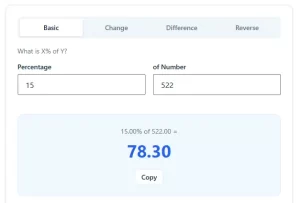
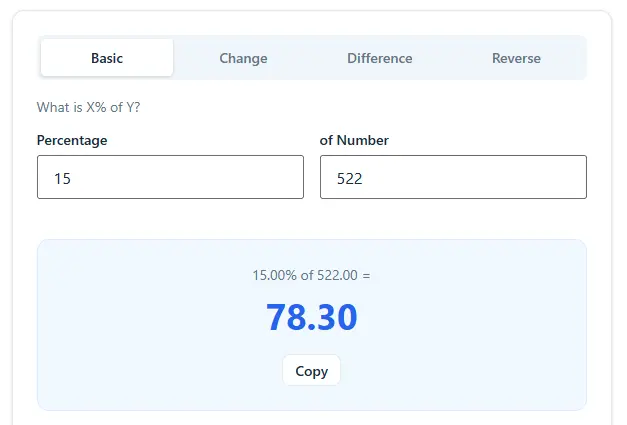
try our own online percentage calculator here : https://www.lankawebsites.com/tools/financial-tools/percentage-calculator/
I believe that understanding how to calculate percentages is a fundamental skill that can benefit you in many areas of your life, from personal finance to academic and professional pursuits. So, let’s get started and explore the world of percentage calculation together. You’ll learn how to calculate percentages, how to apply them to different scenarios, and how to avoid common mistakes that can trip you up. Whether you’re looking to improve your math skills or simply want to feel more confident when working with percentages, this article is for you.
Introduction to Percentage Calculation
A percentage is simply a way of expressing a value as a fraction of 100. I think it’s helpful to think of percentages as a proportion of a whole, where the whole is represented by 100%. For example, if you have a discount of 20% on a purchase, that means you’re getting 20% of the original price off. To calculate a percentage, you need to know the original value and the percentage you want to calculate. The formula for calculating a percentage is: (part/whole) x 100.
The importance of percentage calculation cannot be overstated. I believe that understanding how to calculate percentages is essential in many areas of life, from finance and business to science and statistics. For instance, if you’re investing in the stock market, you need to understand how to calculate the percentage return on your investment. Similarly, if you’re a student, you need to understand how to calculate percentages to solve problems in math and science. In fact, percentage calculation is used in so many different fields that it’s hard to imagine a scenario where it wouldn’t be useful.
To illustrate the concept of percentage calculation, let’s consider a simple example. Suppose you have a savings account that earns an annual interest rate of 5%. If you deposit $1,000 into your account, how much interest will you earn in a year? To calculate the interest, you can use the formula: (principal x rate) / 100. In this case, the principal is $1,000 and the rate is 5%, so the interest would be ($1,000 x 5) / 100 = $50. This means that at the end of the year, your savings account will have a balance of $1,050.
How to Calculate Percentage Increase
Calculating percentage increase is a common task in many areas of life, from finance to statistics. I think it’s essential to understand how to calculate percentage increase to make informed decisions. The formula for calculating percentage increase is: ((new value – old value) / old value) x 100. For example, suppose you have a salary of $50,000 and you receive a raise of $10,000. To calculate the percentage increase in your salary, you would use the formula: (($10,000 / $50,000) x 100) = 20%. This means that your salary has increased by 20%.
To illustrate this concept further, let’s consider another example. Suppose you have a stock portfolio that is worth $10,000 and its value increases to $12,000. To calculate the percentage increase in the value of your portfolio, you would use the formula: (($12,000 – $10,000) / $10,000) x 100 = 20%. This means that the value of your portfolio has increased by 20%.
I believe that calculating percentage increase is a valuable skill that can help you make informed decisions in many areas of life. For instance, if you’re considering investing in a particular stock, you need to understand how to calculate the percentage return on your investment to determine whether it’s a good investment. Similarly, if you’re a business owner, you need to understand how to calculate percentage increase to determine whether your business is growing or declining.
How to Calculate Percentage Decrease
Calculating percentage decrease is similar to calculating percentage increase, but it involves subtracting the new value from the old value instead of subtracting the old value from the new value. I think it’s essential to understand how to calculate percentage decrease to make informed decisions. The formula for calculating percentage decrease is: ((old value – new value) / old value) x 100. For example, suppose you have a savings account that has a balance of $1,000 and you withdraw $200. To calculate the percentage decrease in your balance, you would use the formula: (($1,000 – $200) / $1,000) x 100 = 20%. This means that your balance has decreased by 20%.
To illustrate this concept further, let’s consider another example. Suppose you have a stock portfolio that is worth $10,000 and its value decreases to $8,000. To calculate the percentage decrease in the value of your portfolio, you would use the formula: (($10,000 – $8,000) / $10,000) x 100 = 20%. This means that the value of your portfolio has decreased by 20%.
I believe that calculating percentage decrease is a valuable skill that can help you make informed decisions in many areas of life. For instance, if you’re considering selling a particular stock, you need to understand how to calculate the percentage decrease in its value to determine whether it’s a good time to sell. Similarly, if you’re a business owner, you need to understand how to calculate percentage decrease to determine whether your business is experiencing a decline in sales or revenue.
Real-World Applications of Percentage Calculation
Percentage calculation has many real-world applications, from finance to statistics. I think it’s essential to understand how to calculate percentages to make informed decisions in many areas of life. For example, in finance, percentage calculation is used to calculate interest rates, investment returns, and credit card fees. In statistics, percentage calculation is used to calculate probabilities, confidence intervals, and margins of error.
In finance, percentage calculation is used to calculate the interest rate on a loan or credit card. For instance, if you have a credit card with an annual interest rate of 20%, you need to understand how to calculate the interest charge on your balance to determine how much you’ll pay in interest over time. Similarly, if you’re investing in a mutual fund, you need to understand how to calculate the percentage return on your investment to determine whether it’s a good investment.
In statistics, percentage calculation is used to calculate probabilities and confidence intervals. For example, suppose you’re conducting a survey and you want to calculate the percentage of respondents who prefer a particular product. To calculate the percentage, you would use the formula: (number of respondents who prefer the product / total number of respondents) x 100. This would give you the percentage of respondents who prefer the product.
Common Mistakes to Avoid in Percentage Calculation
There are several common mistakes to avoid when calculating percentages. I think it’s essential to be aware of these mistakes to ensure that you’re calculating percentages accurately. One common mistake is to forget to divide by 100 when calculating a percentage. For example, if you’re calculating the percentage increase in a value, you need to remember to divide by 100 to get the correct percentage.
Another common mistake is to confuse percentage increase with percentage decrease. For instance, if you’re calculating the percentage change in a value, you need to make sure that you’re using the correct formula. If the value has increased, you should use the formula for percentage increase, but if the value has decreased, you should use the formula for percentage decrease.
To avoid mistakes in percentage calculation, I believe that it’s essential to double-check your calculations and to use a calculator or spreadsheet to verify your results. You should also make sure that you’re using the correct formula for the type of percentage calculation you’re doing. By being aware of these common mistakes and taking steps to avoid them, you can ensure that you’re calculating percentages accurately and making informed decisions.
Practice Exercises and Tips for Mastering Percentage Calculation
To master percentage calculation, I think it’s essential to practice regularly and to use a variety of exercises and examples. One way to practice is to use online resources, such as calculators and quizzes, to test your skills and identify areas where you need to improve. You can also use real-world examples, such as calculating the tip at a restaurant or the interest rate on a loan, to practice calculating percentages in different contexts.
Another way to practice is to use worksheets or worksheets with percentage calculation problems. You can find these worksheets online or create your own using a spreadsheet or word processing program. By practicing regularly and using a variety of exercises and examples, you can build your skills and confidence in calculating percentages.
I believe that mastering percentage calculation takes time and practice, but it’s a valuable skill that can benefit you in many areas of life. By being patient, persistent, and practicing regularly, you can become proficient in calculating percentages and make informed decisions in many areas of life. So, don’t be afraid to practice and make mistakes – it’s all part of the learning process.
Key Takeaways
In conclusion, calculating percentages is a valuable skill that can benefit you in many areas of life, from finance to statistics. I think it’s essential to understand how to calculate percentages to make informed decisions and to avoid common mistakes that can trip you up. By practicing regularly and using a variety of exercises and examples, you can master percentage calculation and become more confident in your ability to calculate percentages.
So, what’s the next step for you? Will you start practicing percentage calculation today and become more confident in your ability to calculate percentages? I believe that with practice and patience, you can master percentage calculation and make informed decisions in many areas of life. Remember, calculating percentages is a skill that takes time and practice to develop, but it’s a valuable skill that can benefit you in many ways.
Frequently Asked Questions
What is the formula for calculating percentage?
The formula for calculating percentage is (part/whole) x 100
How do I calculate percentage increase?
To calculate percentage increase, use the formula ((new value – old value) / old value) x 100