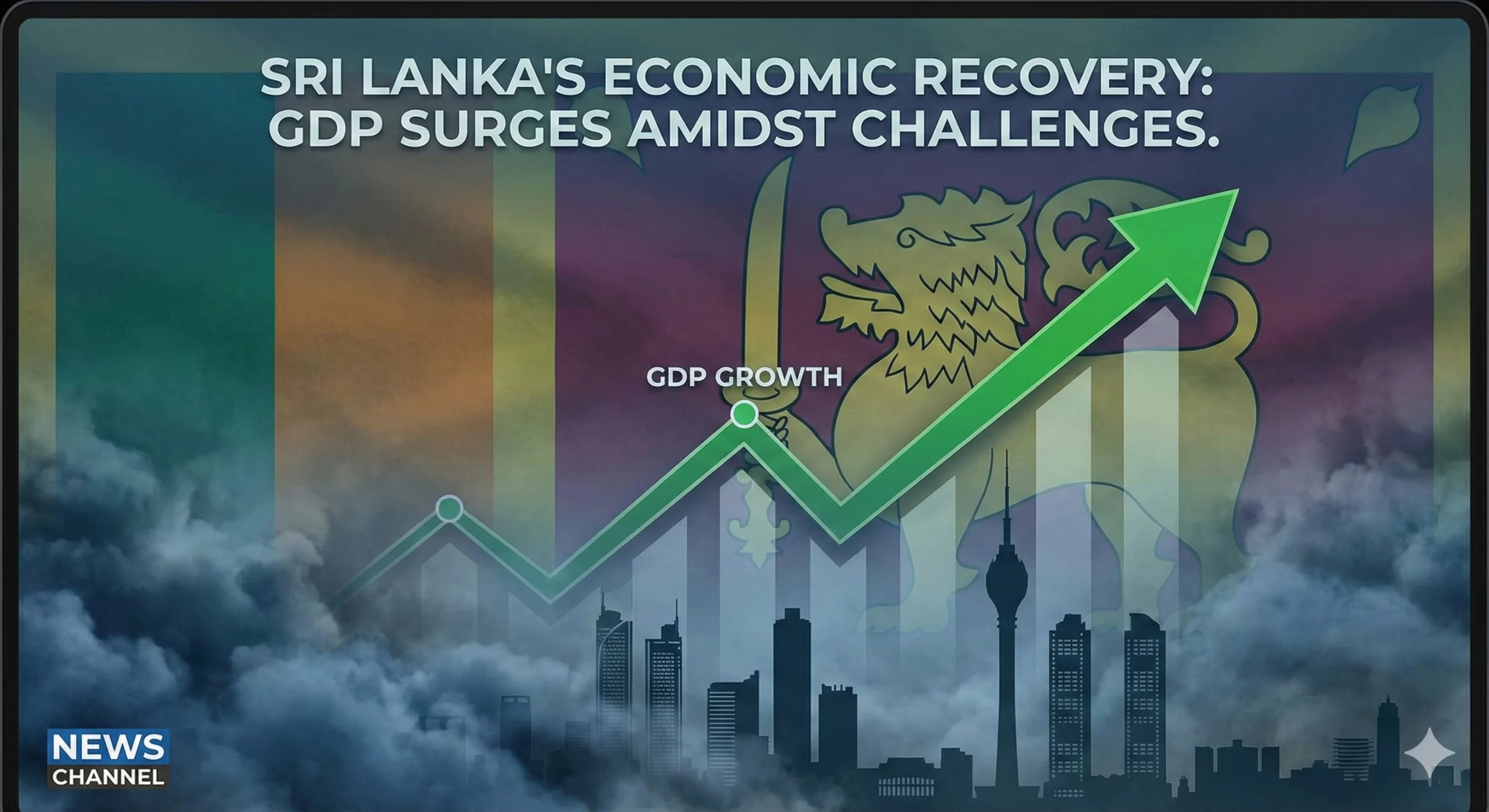
Sri Lanka’s economy surged 5.4% year-on-year in the third quarter of 2025, delivering its most vigorous expansion since the devastating 2022 financial crisis that triggered sovereign default and widespread hardship. According to the Department of Census and Statistics, this impressive growth was predominantly powered by the services sector, which accounted for approximately 60% of the momentum through robust remittance inflows reaching $7.5 billion annually and IT/BPO exports climbing to $1.2 billion. Industry contributed significantly with a 6.2% rise, as apparel factories in key zones like Katunayake and Biyagama resumed full operations following initial disruptions from monsoon flooding earlier in the year. Construction rebounded sharply, fueled by public infrastructure projects and private real estate developments in Colombo and its suburbs, while tourism showed promising signs of revival with hotel occupancy rates climbing back toward 70% in popular southern destinations.
For everyday Sri Lankans, these macroeconomic gains translate into tangible improvements at the household level. Rice prices, a staple barometer of affordability, have stabilized around Rs200 per kilogram in major markets, providing much-needed relief to families still contending with an inflation rate hovering at 5.8%. Youth unemployment, a persistent sore point that exceeded 25% during the crisis years, has dipped to 19.5%, opening doors for graduates in urban centers where call centers and software houses are hiring aggressively. Small and medium enterprises (SMEs), which constitute 52% of GDP and employ over 7 million people, report improved access to bank credit, with loan approvals up 12% quarter-on-quarter, enabling restocking and expansion amid stabilizing supply chains.
However, international observers like the World Bank caution that this rebound remains “strong but incomplete,” with poverty rates lingering 10 percentage points above pre-crisis levels and food insecurity affecting 22% of households, particularly in the cyclone-ravaged Eastern Province. Agriculture, the lifeline for 4.5 million rural workers, managed only a modest 2.1% growth due to erratic monsoons that damaged paddy fields in critical rice bowls such as Anuradhapura and Polonnaruwa. Central Bank data reveals foreign reserves bolstered to $5.2 billion, anchoring the rupee at around Rs295 to the US dollar, yet minimum wage earners at Rs14,500 per month continue to struggle with living costs estimated at Rs25,000 for a family of four in urban areas.
President Anura Kumara Dissanayake’s administration has responded with a multifaceted strategy, targeting a 16% revenue-to-GDP ratio through enhanced digital tax collection systems, streamlined property levies, and stricter enforcement of the 18% VAT regime. These measures aim to pare public debt down to 96.8% of GDP, creating fiscal headroom for expanded social spending. Foreign direct investment (FDI) has risen 15%, with approvals concentrating in special economic zones (SEZs) like those in Hambantota, projected to generate 30,000 new jobs in apparel, logistics, and light manufacturing. Initiatives such as public-facing growth dashboards—launched by the Ministry of Finance—promote transparency, addressing long-standing public mistrust stemming from opaque data handling during previous administrations.
Women entrepreneurs, representing 35% of SME participation, stand to benefit from targeted grants and training programs, though advocates call for accelerated rollout to match male counterparts. The interplay of these factors highlights a delicate balance: urban dynamism versus rural stagnation, short-term stimulus versus long-term structural reforms.
In conclusion, Sri Lanka’s 5.4% growth represents a beacon of hope after years of turmoil, but its longevity depends on bridging urban-rural divides, fortifying agriculture against climate volatility, and ensuring equitable distribution of gains. Without deliberate policies prioritizing inclusivity and resilience, this surge risks evaporating into a mirage, leaving vulnerable communities behind once again. Policymakers must seize this moment to build a foundation for shared prosperity that benefits every corner of society.
References:
https://www.reuters.com/world/asia-pacific/sri-lankan-economy-grew-54-third-quarter-2025-2025-12-15/
https://money.usnews.com/investing/news/articles/2025-12-15/sri-lankan-economy-grew-5-4-in-third-quarter-of-2025
https://www.worldbank.org/en/news/press-release/2025/10/07/sri-lanka-s-economic-recovery-remains-incomplete-as-key-challenges-re
https://www.cbsl.gov.lk/en/sri-lanka-economy-snapshot
https://economynext.com/sri-lanka-revenue-to-reach-16-pct-of-gdp-in-2025-president-in-budget-speech-247247/
https://www.worldbank.org/en/news/press-release/2025/12/12/the-world-bank-group-statement-on-sri-lanka-following-cyclone-ditwah