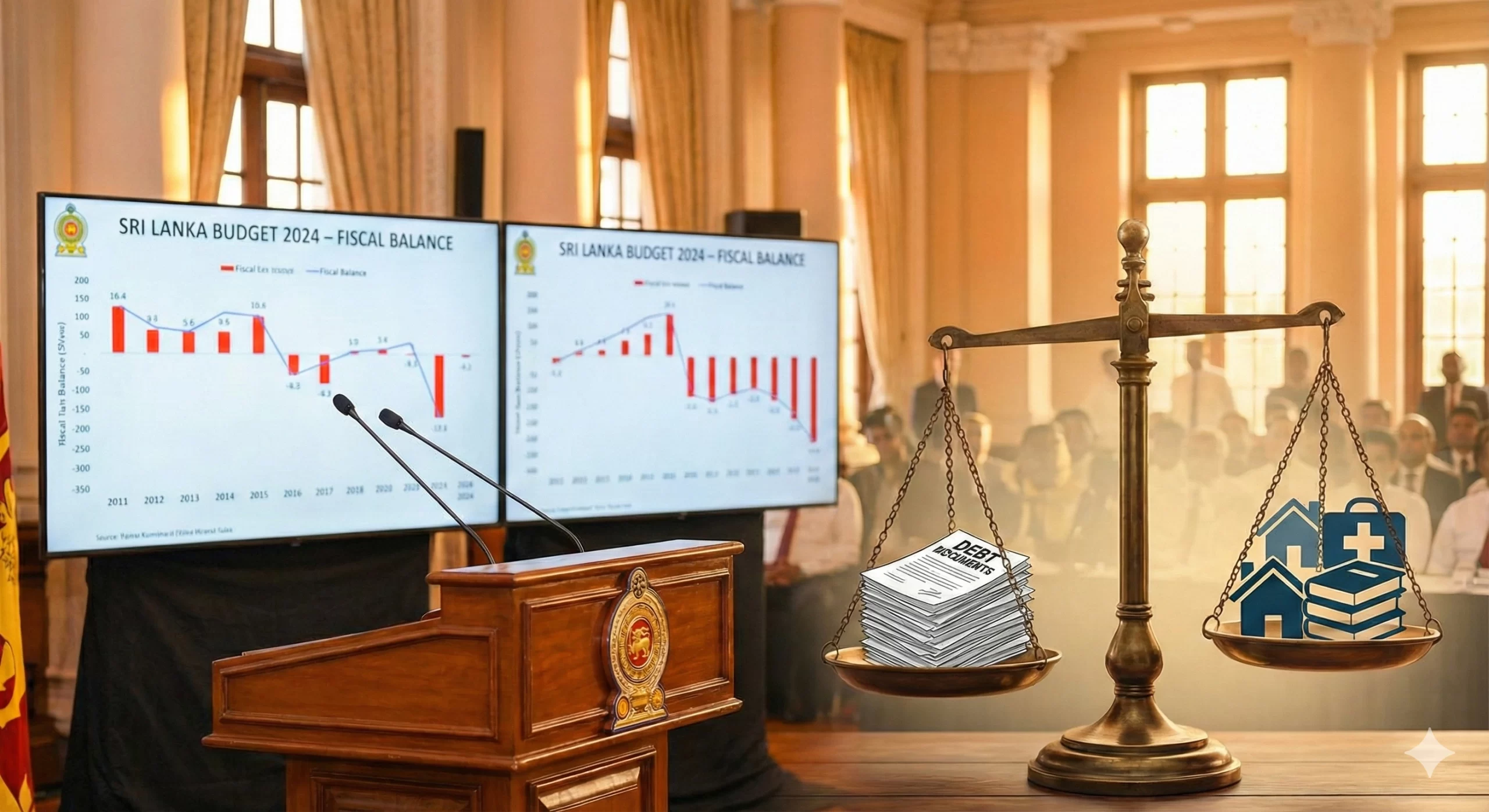
President Anura Kumara Dissanayake unveiled Budget 2026 with an ambitious projection of government revenue reaching 16% of GDP, equivalent to Rs3.2 trillion, a significant leap from 14.5% in 2024 and a cornerstone for reducing public debt below 97% of GDP. This fiscal roadmap, presented amid 5.4% quarterly growth, leverages digital tax platforms for real-time compliance monitoring, progressive property levies on high-value urban assets, and rigorous 18% VAT enforcement across e-commerce and informal sectors. Debt servicing burdens, which consumed 40% of revenues last year, are slated to ease to 35%, unlocking Rs500 billion for priority areas like healthcare and education.
Households stand at the epicenter of this strategy. While enhanced e-filing systems promise faster refunds—potentially within 48 hours for compliant taxpayers—the pass-through effects of VAT hikes could add 2% to consumer price inflation, particularly impacting essentials like cooking oil and medicines. To counter this, the Samurdhi welfare program expands to 2 million beneficiaries, delivering Rs10,000 monthly cash transfers tailored for cyclone-affected families in vulnerable districts. Health allocations surge 12%, funding 500 new rural clinics with telemedicine capabilities, while education receives a 10% boost for digital classrooms in under-served Northern schools.
IMF-aligned reforms introduce measured pension adjustments but exempt 4 million smallholder farmers from broader contributions, preserving rural stability. Emerging revenue streams like carbon taxes on high-emission industries align with Asian Development Bank (ADB) green financing, channeling funds into mangrove restoration and solar microgrids for 100,000 off-grid homes. Urban middle-class households, facing a potential 5% squeeze on disposable incomes from luxury vehicle and property taxes, benefit from progressive income brackets that shield the bottom 60% of earners.
The budget’s diversification efforts reduce aid dependence by 20%, fostering economic sovereignty through export incentives for tea and apparel. Public spending portals, integrated with Aadhaar-like national IDs, enable real-time tracking, a direct response to post-2022 Aragalaya demands for accountability. Economists from the Institute of Policy Studies commend the prudent balance but emphasize the need for gender-sensitive budgeting, as women-headed households comprise 25% of welfare recipients.
Critics highlight risks: if revenue shortfalls occur due to evasion or global slowdowns, social spending could face cuts, exacerbating inequality. Success stories from neighboring Bangladesh, where digital revenue tools boosted collections 25%, offer a blueprint, provided implementation prioritizes capacity building in provincial tax offices.
In conclusion, Budget 2026 masterfully intertwines fiscal discipline with social safeguards, positioning Sri Lanka for debt sustainability without sacrificing household welfare. Its triumph hinges on equitable execution—progressive taxation, transparent oversight, and inclusive growth measures—that transforms macroeconomic targets into lived improvements for every family, averting reform fatigue and securing long-term societal harmony.
References:
https://economynext.com/sri-lanka-revenue-to-reach-16-pct-of-gdp-in-2025-president-in-budget-speech-247247/
https://www.reuters.com/world/asia-pacific/sri-lanka-set-regain-economic-output-lost-crisis-dissanayake-says-budget-speech-2025-
https://www.reuters.com/world/asia-pacific/sri-lankan-economy-grew-54-third-quarter-2025-2025-12-15/
https://www.cbsl.gov.lk/en/sri-lanka-economy-snapshot