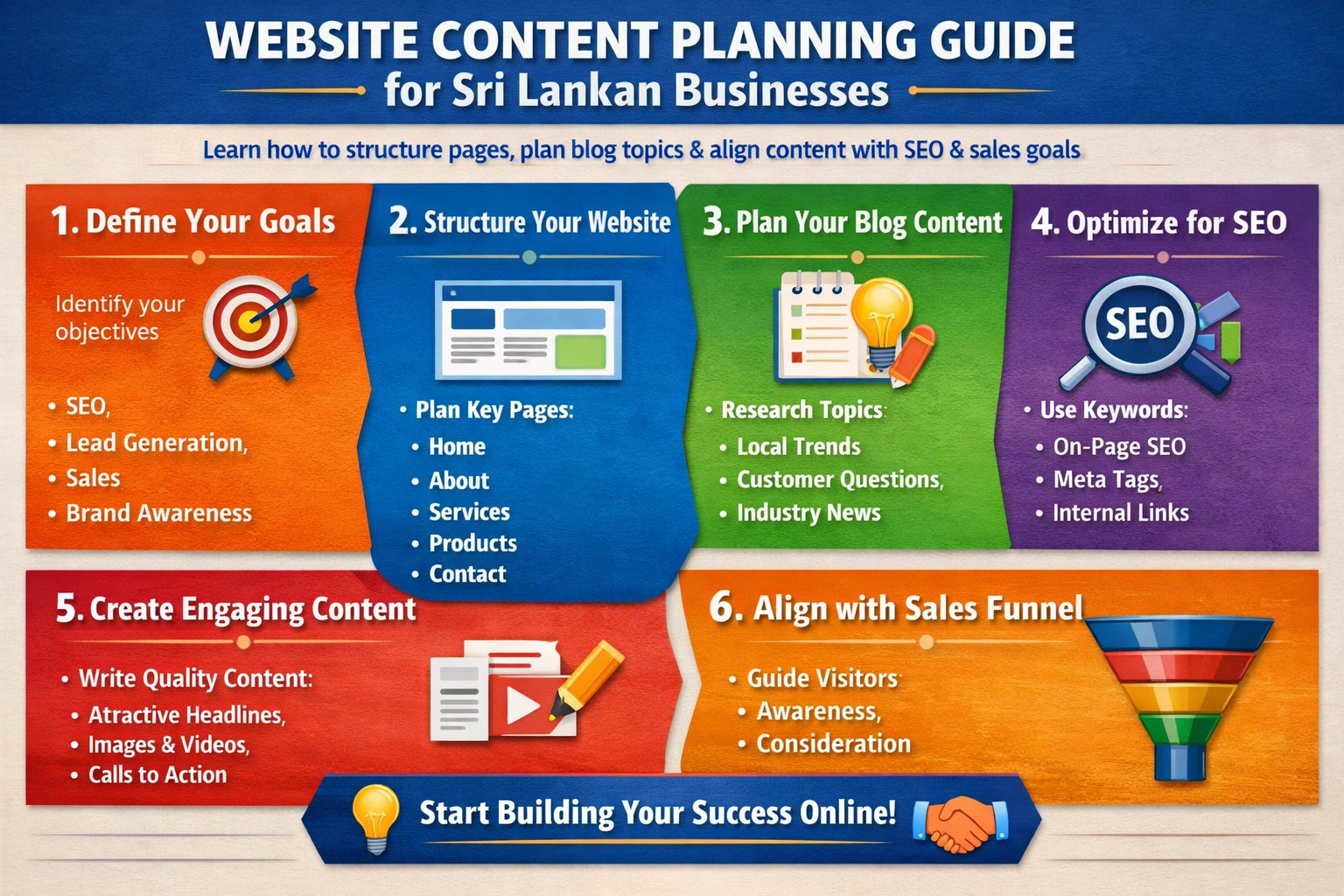
Website Content Planning Guide for Sri Lankan Businesses
Strong web design fails without strong content. For Sri Lankan businesses, clear, persuasive copy and a well‑planned content structure are often the difference between a “pretty brochure site” and a website that actually generates leads and sales. A structured approach to content planning ensures every page has a job to do.joomlasrilanka
Step 1: Define Website Goals and Buyer Journeys
Content must be driven by goals: leads, bookings, online sales or brand credibility. Start by mapping your ideal customer journey—from first discovery to final conversion.
Questions to answer:
- What should visitors do on the first visit (call, WhatsApp, download, subscribe)?
- What information do they need before they trust you (pricing, portfolio, reviews)?
- What objections do you need to overcome (cost, reliability, speed, support)?
This helps you decide which pages are essential and what each page must communicate.joomlasrilanka
Step 2: Decide on Core Pages and Support Pages
Most Sri Lankan SMEs need a similar core structure, with room for industry-specific sections.
Typical core pages:
- Home
- Services (with detailed child pages)
- About (team, story, mission)
- Portfolio / Case Studies
- Blog / Insights
- Contact (with WhatsApp, phone, map, form)
Support pages:
- Pricing or “How we work”
- FAQs
- Industry pages (e.g., “web design for hotels”, “web design for exporters”)
- Location pages (e.g., “web design company in Gampaha”)
Planning this architecture in advance avoids duplicated content and confusing navigation.joomlasrilanka
Step 3: Research Keywords and Questions
Use a mix of tools (keyword planners, auto‑suggest, “People Also Ask”) to find how Sri Lankans phrase their questions. Then map those keywords to your planned pages.
Examples:
- Service page: “ecommerce website design sri lanka”, “online store developers”
- Blog post: “how much does a website cost in sri lanka”, “best payment gateways in sri lanka”
- FAQ: “how long does it take to build a website”
Focus on long‑tail terms and question formats that match local search habits.joomlasrilanka
Step 4: Create Content Outlines Before Writing
Instead of writing from a blank page, create outlines for each key page. This ensures consistency and makes it easier to delegate writing or translate later.
A typical service page outline:
- H1: Main service + location
- Intro: Benefit‑driven overview (what problem you solve)
- Section: Who this service is for
- Section: Process (step by step)
- Section: Features and benefits
- Section: Case studies or testimonials
- Section: FAQs
- CTA block: “Request a free quote” or “WhatsApp us now”
Clear outlines produce better copy and make page design smoother.joomlasrilanka
Step 5: Balance English, Sinhala and Tamil Content
In Sri Lanka, language strategy is crucial. Many users search in English but prefer to read key information in Sinhala or Tamil, depending on the audience.
Options:
- Fully bilingual site (language toggle in main navigation).
- English primary with simplified Sinhala/Tamil summary pages.
- Sinhala/Tamil blog posts for very local topics (e.g., regional services).
Your language mix should match your actual customers, not assumptions.joomlasrilanka
Step 6: Align Content With Design and SEO
Content, design and SEO must be planned together, not in isolation. For example, if your Home page needs three key CTAs, design should accommodate three clear blocks with space for headlines and supporting text.
Checklist:
- One primary CTA per page (call, WhatsApp, form, quote).
- SEO titles and meta descriptions written for each page.
- Internal links connecting related pages and blog posts.
- Clear visual hierarchy: headings, subheadings, bullet lists and highlighted key points.
Working with a web design company in Sri Lanka like Mobiz International – Web Design Company in Sri Lanka ensures your content plan, UX and technical SEO all support each other instead of competing for space.joomlasrilanka
Step 7: Plan an Ongoing Content Calendar
A website is not “done” at launch. You need ongoing content to target new keywords, answer new questions and support campaigns.
Simple quarterly plan:
- 1–2 in‑depth service/industry pages.
- 2–4 blog posts answering high‑intent questions.
- 1–2 case studies or success stories.
Tie everything to your sales cycle, seasonal peaks and Google Trends insights.joomlasrilanka
Suggested references (non‑Sri Lankan agency sources)
- General content strategy and UX blogs discussing information architecture
- Google Search Essentials and documentation about helpful content