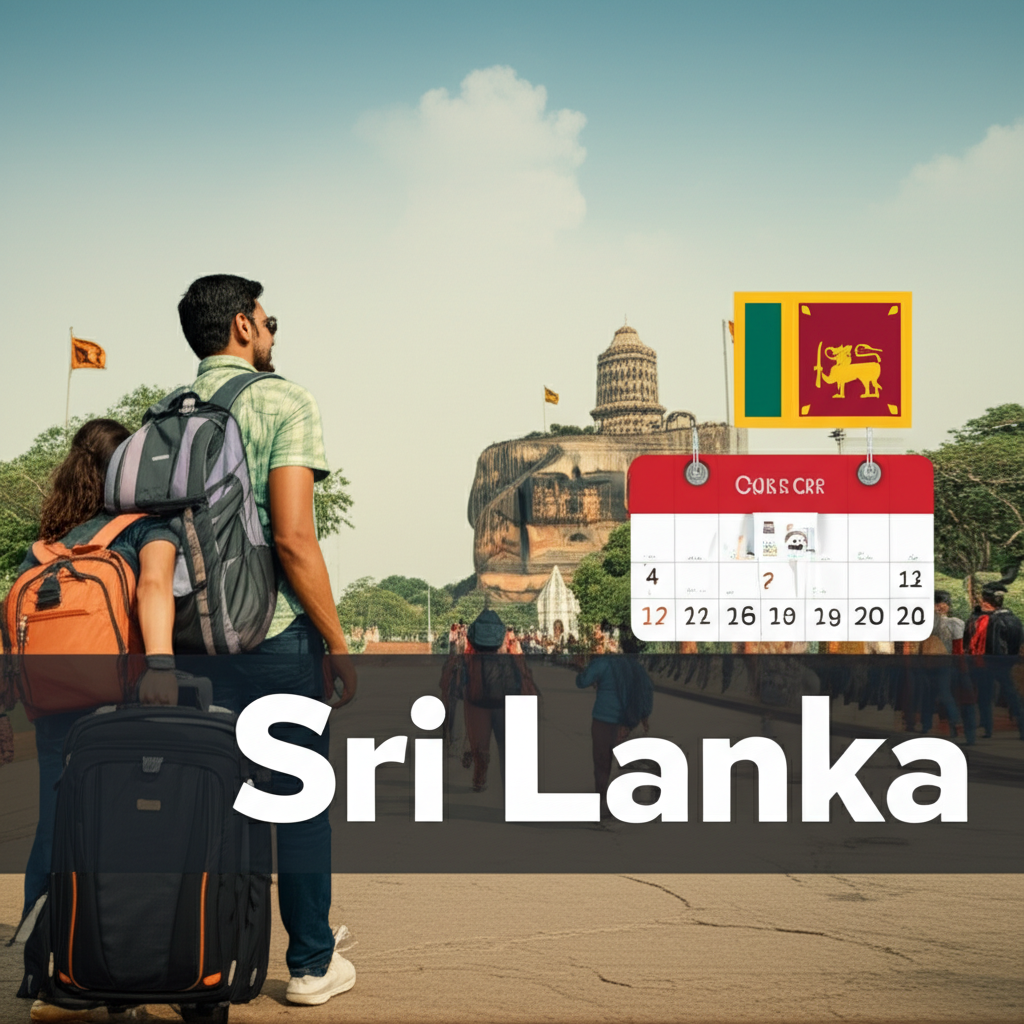
Introduction to Sri Lanka’s Transformative Free Visa Scheme
Sri Lanka is set to revolutionize its tourism landscape with a landmark free visa initiative targeting the first quarter of 2026. This policy will waive Electronic Travel Authorization (ETA) fees for short-stay tourists from 40 key countries, building on existing exemptions for seven Asian nations like China, India, Indonesia, Japan, Malaysia, Russia, and Thailand.[1][2][3] Pending final parliamentary approval and gazette notification, the scheme aims to simplify entry, recover from recent natural disasters like Cyclone Ditwah, and propel visitor arrivals toward a ambitious target of at least 3 million in 2026.[2][3][7]
For Sri Lankan hospitality businesses in Colombo, Galle, and Kandy, this means a surge in bookings from long-haul markets in Europe, North America, the Gulf, and beyond. Local tour operators in cultural hubs like Sigiriya and tea estates of Nuwara Eliya stand to benefit immensely, as fee-free access removes a key barrier for spontaneous trips to the island’s pristine beaches and ancient heritage sites.[1][2]
Background and Evolution of the Policy
The free visa scheme traces its roots to earlier efforts to revive tourism post-economic challenges and weather disruptions. Initially announced in August 2024 for 35 countries, it faced delays before cabinet approval in July 2025 added 33 more nations to the existing seven, totaling 40.[2][3] Foreign Minister Vijith Herath confirmed implementation in Q1 2026, addressing gazette delays while emphasizing tourism recovery.[3]
This expansion addresses the impacts of Cyclone Ditwah in late November 2025, which temporarily disrupted access to hill country gems like Nuwara Eliya and Kandy. Roads have since reopened, and arrivals are rebounding, with 2025 projections at 2.1-2.2 million visitors—slightly below the 2.3 million goal due to cancellations.[2] Industry leaders, including Sri Lanka Tourism Promotion Bureau Chairman Buddika Hewawasam, hail it as a timely boost, especially for peak European holiday seasons post-December.[2]
Eligible Countries and What It Means for Travelers
The 40 countries include powerhouses like the UK, USA, Canada, Australia, Germany, France, Italy, Spain, Netherlands, Belgium, Switzerland, Austria, Sweden, Finland, Denmark, Norway, Poland, Czech Republic, New Zealand, Japan, China, India, Russia, South Korea, UAE, Saudi Arabia, Qatar, Oman, Bahrain, Kuwait, Türkiye, Pakistan, Kazakhstan, Belarus, Israel, Iran, Nepal, and Indonesia.[2][6] Note that the seven Asian countries already enjoy ongoing free ETAs until further notice.[4][5][8]
- Short-stay focus: Up to 30 days single-entry, extendable in Colombo for a fee—perfect for beach hopping in Mirissa or wildlife safaris in Yala.
- ETA still required: Online application at eta.gov.lk remains mandatory, but the standard $50 fee drops to zero for eligible passports.[1][5]
- Exclusions: Not for work, long-term stays, or certain nationalities under alerts (e.g., Cameroon, Nigeria).[8]
Sri Lankan readers in the hospitality sector should prepare for diverse visitors eager to explore Ayurvedic retreats in Bentota or street food scenes in Pettah Market, Colombo.
Expected Economic and Cultural Impacts on Sri Lanka
Tourism contributes over 5% to Sri Lanka’s GDP, employing millions in hotels, gem markets of Ratnapura, and spice gardens of Matale. The scheme could push 2026 arrivals to 3 million, generating billions in foreign exchange for local economies.[7] Hotels in southern Galle, already recovering from cyclone effects, report optimism: “This will boost tourism,” noted a Galle hotel manager.[2]
Culturally, expect a renaissance in experiences like Kandy’s Esala Perahera festival or whale-watching in Trincomalee. For businesses, it’s a call to enhance sustainability—think eco-lodges in Sinharaja Rainforest or farm-to-table dining with Kandyan cuisine. Sri Lankan artisans in mask-making villages near Ambalangoda could see renewed demand from fee-free Gulf and European tourists.
Key Benefits for Local Stakeholders
- Hospitality surge: Beach resorts in Unawatuna and luxury trains like the Colombo-Kandy scenic route anticipate 20-30% booking increases.
- Rural empowerment: Tea pluckers in Ella and fishermen in Kalkudah benefit from more adventure seekers.
- Infrastructure push: Airports like Bandaranaike International and Mattala will handle higher volumes, spurring jobs.
Challenges and Preparations Ahead
While promising, the policy hinges on swift parliamentary nods, with travelers advised to check eta.gov.lk for updates.[1][3] Past delays highlight the need for robust implementation. Sri Lanka’s Immigration Department must streamline online ETAs to avoid backlogs, especially during monsoon peaks.
Locally, challenges include over-tourism risks at Sigiriya Rock Fortress (1.5 million annual visitors) and ensuring equitable benefits for Eastern Province communities post-conflict recovery. The Tourism Authority plans awareness campaigns for sustainable practices, protecting UNESCO sites like the Ancient City of Polonnaruwa.[2]
Tips for Sri Lankan Businesses and Travelers
For guesthouses in Hikkaduwa or tuk-tuk operators in Negombo:
- Upskill staff in multilingual service for US, UK, and UAE guests.
- Promote packages bundling free visa perks with cultural immersion, like cooking classes with hoppers and curry.
- Monitor weather: Post-cyclone, southern and western coasts remain idyllic.
International visitors: Apply for free ETA early via official portals; double-entry options enhance flexibility for island circuits from Jaffna to Galle.[8]
Why This Matters for Sri Lanka’s Future
This free visa scheme positions Sri Lanka as Asia’s most accessible paradise, rivaling Bali or Phuket while preserving its unique blend of Buddhist stupas, colonial forts in Trincomalee, and surf breaks in Arugam Bay. For Sri Lankans, it’s an economic lifeline fostering pride in our 8,000km coastline and 22 million population’s hospitality. As 2026 dawns, expect vibrant markets, fuller trains to Badulla, and a tourism renaissance that honors our heritage.
(Word count: 1024)
References:
- Sri Lanka visa-free entry for 40 countries from 2026 – Travel Buddy[1]
- Sri Lanka to expand visa-free access to 40 markets from January 2026 – TTG Asia[2]
- Sri Lanka to implement free visa scheme in first quarter of 2026 – EconomyNext[3]
- A Free Visa Regime Is Implemented – SLHC[4]
- Extending free visa for seven nationals – Immigration.gov.lk[5]
- 40 Countries Now Enjoy Sri Lanka Visa-Free Travel – Passport Index[6]
- Sri Lanka eyes minimum 3mn tourists in 2026 – Daily Mirror[7]
- Sri Lanka ETA Official Site[8]