Sri Lanka’s Coconut Export Triumph: Crossing the USD 1 Billion Mark
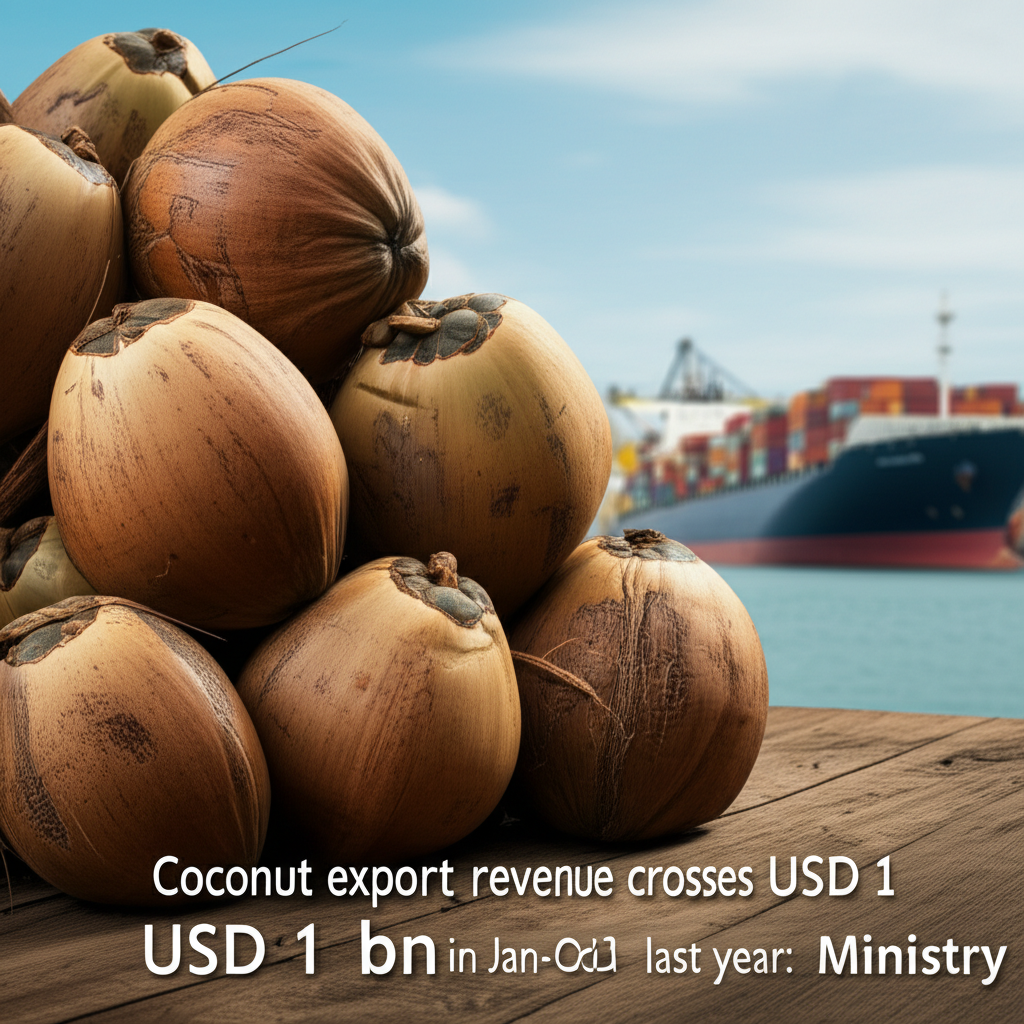
In a historic achievement for Sri Lanka’s agricultural sector, coconut and coconut-based product exports surged past USD 1 billion for the first time, reaching USD 1.0339 billion from January to October 2025. This milestone, announced by the Export Development Board (EDB) and highlighted by the Ministry of Industries, represents a staggering 43.83% growth compared to the same period in 2024. For an island nation where coconuts are more than a crop—they’re a cultural cornerstone—this boom underscores the power of value addition and global demand in revitalizing the economy.
Coconuts have long been woven into the fabric of Sri Lankan life, from the sun-kissed plantations of the Coconut Triangle in the North Central Province to the bustling markets of Kurunegala and Gampaha. This export success not only boosts foreign exchange reserves but also supports over 1 million smallholder farmers who rely on the crop for their livelihoods. As Deputy Minister Chathuranga Abeysinghe noted, the shift from raw exports to high-value products like liquid coconut milk and virgin coconut oil has been pivotal.
The Driving Forces Behind the Record-Breaking Revenue
The secret to this explosive growth lies in strategic diversification. Rather than shipping out raw coconuts, Sri Lankan exporters have focused on processed goods that command premium prices worldwide. Key products fueling the surge include:
- Virgin Coconut Oil (VCO): Prized for its health benefits, exports of VCO and related kernel products jumped by up to 48.2% in August 2025 alone.
- Liquid Coconut Milk and Coconut Cream: These dairy alternatives saw increases of 29.38% and 93.32% respectively in the same month, catering to vegan trends in Europe and North America.
- Desiccated Coconut (DC): A staple in baking, its exports rose 34.6% in the first eight months of 2025.
- Coco Peat and Activated Carbon: From coconut shells and husks, these eco-friendly products grew by 27.6% and 23.05%, finding use in horticulture and water purification globally.
EDB data reveals that coconut-based products now account for 7.2% of Sri Lanka’s total exports, a testament to their rising prominence. In August 2025, sector earnings spiked 42% year-on-year, with coconut kernel products leading at 48.2%, fiber products at 27.6%, and shell products at 43.93%. This performance aligns with broader export trends, where Sri Lanka’s total earnings hit USD 11.6 billion in January-August 2025.
Regional Hotspots and Local Impact
The Coconut Triangle—spanning Kurunegala, Puttalam, and Gampaha districts—remains the heart of production, but the “Northern Coconut Triangle” initiative is expanding cultivation northward. The government plans to add 36,000 hectares of new plantations, including 16,000 in the Northern Province, revitalizing post-conflict areas like Jaffna and Kilinochchi. Here, coconut farming isn’t just economic—it’s a symbol of resilience, providing jobs and income to communities rebuilding after decades of challenges.
Businesses in Negombo and seed processing hubs in Madampe have scaled up, with companies like those in the Ceylon Coconut Processors Association investing in modern facilities. Farmers in Dedigama and Wennappuwa report better farmgate prices, though challenges like aging trees persist.
Global Demand Meets Sri Lankan Innovation
Sri Lanka’s coconuts are riding a wave of international trends. Health-conscious consumers in the US, EU, and East Asia crave plant-based alternatives, boosting demand for VCO and coconut milk. Sustainability-focused markets love coco peat as a peat moss substitute in soilless gardening, while activated carbon from shells meets industrial needs.
Exporters credit long-term branding efforts, with Sri Lankan products certified under EU organic standards and halal labels gaining trust. The post-pandemic recovery amplified orders starting in 2022, positioning the island as a reliable supplier amid supply chain disruptions elsewhere.
Government Strategies and Public Support
The Ministry of Industry and Entrepreneurship Development, alongside the Ministry of Plantation, has championed this shift. Initiatives include reducing domestic waste—urged by Deputy Minister Abeysinghe in early 2025—to prioritize exports. Public campaigns popularized the “coconut story,” encouraging efficient use of the fruit in everyday Sri Lankan cuisine, from pol sambol to kiribath.
Looking ahead, the ambitious target is USD 2.5 billion by 2030. This hinges on the Northern Coconut Triangle and replanting drives to combat low yields from old trees affected by drought and pests.
Challenges on the Horizon: Sustainability Concerns
Despite the euphoria, experts caution about vulnerabilities. Coconut productivity lags due to aging plantations—many over 60 years old—in key areas like the Western and North Western Provinces. Erratic monsoons, fertilizer shortages, and labor migration to urban centers like Colombo exacerbate issues. Without aggressive replanting and irrigation upgrades, processing plants in Ja-Ela and Peliyagoda could face raw material shortages, potentially forcing imports that erode profits.
Industry voices stress upstream support for smallholders, who cultivate 80% of the 400,000 hectares under coconuts. Programs like the Coconut Development Authority’s (CDA) high-yield hybrid seedlings offer hope, but scaling them province-wide is crucial.
What This Means for Sri Lanka’s Economy and Farmers
This USD 1 billion milestone injects vital forex into an economy recovering from recent crises, funding imports and stabilizing the rupee. For readers in Kandy or Galle, it means more opportunities in agro-processing startups. Coconut shells now power bioenergy plants in Puttalam, creating circular economy models.
Cultural relevance runs deep: The coconut tree, or “kalpavriksha” (tree of life), features in Sinhala and Tamil festivals, from Thai Pongal harvests in Batticaloa to Avurudu games in Matara. Export success honors this heritage while propelling modernity.
In summary, Sri Lanka’s coconut export boom is a blend of policy, innovation, and global timing. Sustaining it requires nurturing the land and its people—from Jaffna’s replanted groves to export warehouses in Colombo Port.
References
- China.org.cn: Sri Lanka logs record coconut export earnings in 2025
- EconomyNext: Sri Lanka’s coconut export revenue crosses USD 1 bn
- Sri Lanka Business: Export Earnings hit US$ 11.6 Bn in January – August 2025
- Lanka News Web: Sri Lanka Billion-Dollar Coconut Boom
- LankaTalks: Coconut export earnings top historic USD 1Bn milestone
- NAMPA: Sri Lanka logs record coconut export earnings in 2025