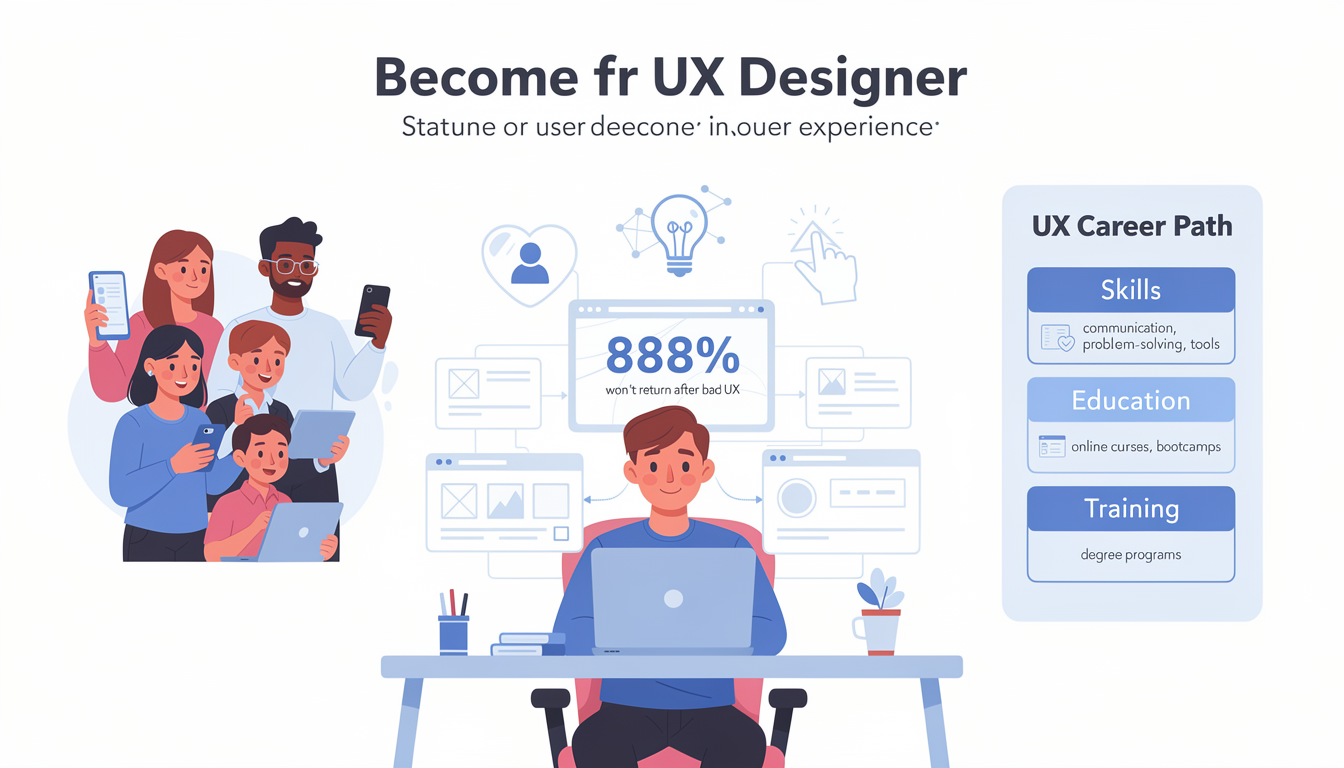
A staggering 88% of online users are less likely to return to a website after a bad user experience, according to a study by Adobe. This statistic highlights the significance of user experience (UX) design in creating engaging and user-friendly digital products. As you consider a career in UX design, you’re likely wondering what it takes to succeed in this field. You’re about to discover the essential skills, education, and training required to become a UX designer, as well as the various career paths and job roles available.
Throughout this article, you’ll gain a deeper understanding of the UX design process, from user-centered design to design thinking and human-computer interaction. You’ll learn about the skills required for UX design, including communication, problem-solving, and design tools. You’ll also explore the various education and training options available, including online courses, bootcamps, and degree programs. By the end of this article, you’ll be equipped with the knowledge and insights needed to start your journey as a UX designer.
What is UX Design
UX design is a user-centered approach to creating digital products that are intuitive, easy to use, and provide a positive experience for users. It involves a deep understanding of human behavior, needs, and motivations, as well as the ability to design solutions that meet those needs. UX design is a multidisciplinary field that draws on principles from psychology, sociology, computer science, and design. According to Don Norman, a pioneer in the field of UX design, “User experience encompasses all aspects of the end-user’s interaction with the company, its services, and its products.”
The UX design process typically involves several stages, including user research, wireframing, prototyping, and usability testing. User research involves gathering data about users, their behaviors, and their needs, while wireframing and prototyping involve creating visual representations of the product and testing its usability. Design thinking is a key aspect of UX design, as it involves empathizing with users, defining their problems, ideating solutions, prototyping, and testing. For example, Amazon uses design thinking to create user-centered products, such as its voice assistant, Alexa, which is designed to provide a seamless and intuitive user experience.
Human-computer interaction (HCI) is another critical aspect of UX design, as it involves understanding how users interact with digital products and designing interfaces that are intuitive and easy to use. According to a study by Nielsen Norman Group, the average user spends only 10-20 seconds on a website before deciding whether to stay or leave, highlighting the importance of creating a positive user experience from the outset.
Skills Required for UX Design
To become a successful UX designer, you’ll need to possess a range of skills, including communication, problem-solving, and design skills. Communication skills are essential, as you’ll need to work closely with stakeholders, developers, and other team members to ensure that your design solutions meet their needs and expectations. According to a survey by UX Collective, 71% of UX designers consider communication skills to be the most important skill for UX designers.
Problem-solving skills are also critical, as you’ll need to analyze complex problems and design solutions that meet the needs of users. This involves being able to think creatively, develop innovative solutions, and test and refine your designs. Design tools, such as Sketch, Figma, and Adobe XD, are also essential, as they enable you to create visual representations of your designs and test their usability.
In addition to these skills, you’ll also need to have a solid understanding of user research methods, such as user interviews, surveys, and usability testing. You’ll need to be able to analyze data, identify patterns, and draw insights that inform your design decisions. For example, Google uses user research to inform its design decisions, such as the development of its search algorithm, which is designed to provide users with relevant and accurate search results.
UX Design Education and Training
There are various education and training options available for those interested in pursuing a career in UX design. Online courses, such as those offered by Udemy and Coursera, provide a flexible and affordable way to learn the fundamentals of UX design. These courses typically cover topics such as user research, wireframing, and prototyping, and may include hands-on projects and exercises to help you apply your knowledge.
Bootcamps, such as those offered by General Assembly and Designlab, provide an intensive and immersive learning experience, where you can learn from experienced instructors and work on real-world projects. Degree programs, such as those offered by Stanford University and Carnegie Mellon University, provide a more comprehensive education in UX design, covering topics such as human-computer interaction, design thinking, and user research.
According to a survey by UX Designers, 60% of UX designers have a degree in design or a related field, while 21% have a degree in computer science or a related field. However, it’s worth noting that many UX designers are self-taught, and have learned through online courses, bootcamps, and on-the-job training. For example, Apple has a robust UX design team, which is responsible for creating user-centered products, such as the iPhone and MacBook.
UX Design Career Paths and Job Roles

There are various career paths and job roles available in UX design, ranging from junior UX designer to senior UX designer and UX design manager. Junior UX designers typically work on small-scale projects, such as designing a mobile app or website, and may be responsible for conducting user research, creating wireframes and prototypes, and testing usability.
Senior UX designers, on the other hand, typically work on larger-scale projects, such as designing a complex software system or a suite of digital products. They may be responsible for leading design teams, developing design strategies, and working closely with stakeholders to ensure that design solutions meet their needs and expectations. According to a survey by Glassdoor, the average salary for a senior UX designer is $114,000 per year.
UX design managers oversee the UX design process, from user research to design implementation, and may be responsible for managing design teams, developing design strategies, and working closely with stakeholders to ensure that design solutions meet their needs and expectations. For example, Microsoft has a UX design team that is responsible for creating user-centered products, such as Windows and Office, and works closely with stakeholders to ensure that design solutions meet their needs and expectations.
Building a UX Design Portfolio
A strong portfolio is essential for any UX designer, as it provides a showcase of your skills, experience, and achievements. Your portfolio should include case studies of your design projects, including user research, wireframes, prototypes, and usability testing. It should also include design projects that demonstrate your skills and experience, such as designing a mobile app or website.
User research is a critical aspect of UX design, and your portfolio should include examples of user research methods, such as user interviews, surveys, and usability testing. According to a survey by UX Designers, 80% of UX designers consider a strong portfolio to be essential for getting hired. For example, Dropbox has a UX design team that creates user-centered products, such as its cloud storage service, and has a strong portfolio that showcases its design process and solutions.
When building your portfolio, it’s essential to focus on quality over quantity, and to include only your best work. You should also tailor your portfolio to the specific job or industry you’re applying to, and use language and terminology that is relevant to the field. For example, if you’re applying for a job as a UX designer at a tech company, you should include examples of your experience with design tools such as Sketch and Figma.
Staying Up-to-Date in the UX Design Field
The UX design field is constantly evolving, with new technologies, tools, and methodologies emerging all the time. To stay up-to-date, you’ll need to attend industry conferences, such as UX Week and Design Thinking Conference, where you can learn from experienced UX designers and stay current with the latest trends and best practices.
Design blogs, such as Smashing Magazine and UX Collective, provide a wealth of information on UX design, including tutorials, case studies, and industry news. Online communities, such as Reddit’s r/userexperience and UX Designers, provide a platform for UX designers to connect, share knowledge, and learn from each other.
According to a survey by UX Designers, 70% of UX designers consider staying up-to-date with industry trends and best practices to be essential for success in the field. For example, Facebook has a UX design team that stays up-to-date with the latest trends and best practices, and uses this knowledge to create user-centered products, such as its social media platform and messaging app.
Key Takeaways
In conclusion, becoming a UX designer requires a range of skills, education, and training. You’ll need to possess a deep understanding of user-centered design, design thinking, and human-computer interaction, as well as strong communication, problem-solving, and design skills. You’ll also need to stay up-to-date with the latest trends and best practices in the field, and continually develop your skills and knowledge to remain competitive.
As you consider a career in UX design, remember that it’s a field that is constantly evolving, and that requires a passion for creating user-centered products that provide a positive experience for users. With the right skills, education, and training, you can succeed in this field and create products that make a real difference in people’s lives. So, what’s the first step you’ll take to start your journey as a UX designer?
Frequently Asked Questions
What is the average salary of a UX designer?
The average salary of a UX designer varies by location and experience, but it can range from $80,000 to over $110,000 per year
Do I need a degree to become a UX designer?
While a degree can be helpful, it is not always necessary to become a UX designer. Many successful UX designers are self-taught or have learned through online courses and bootcamps