
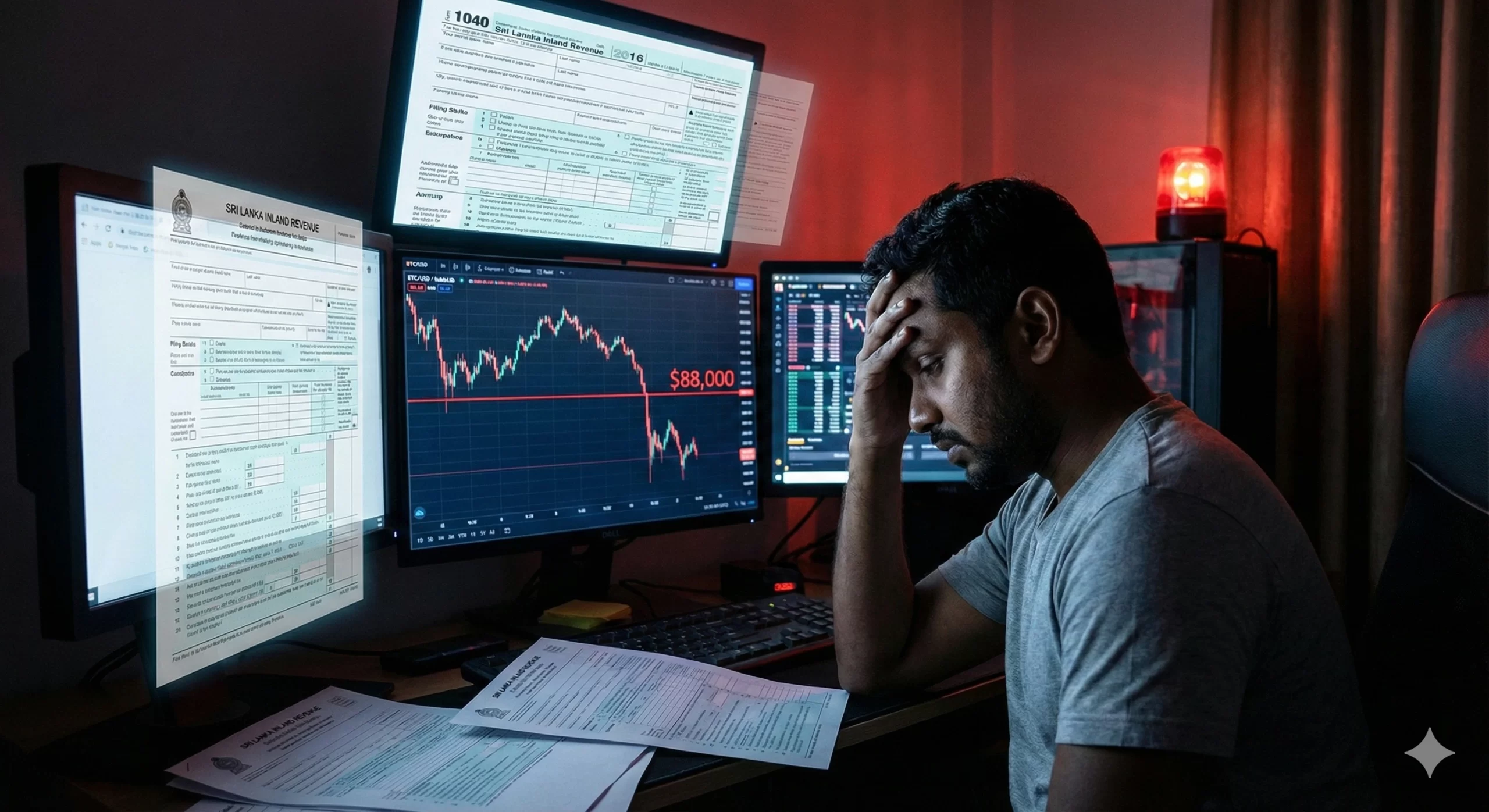
Bitcoin plummeted below $88,000 on December 23, 2025, igniting $2 billion global tax-loss harvesting as institutional traders offset explosive 2025 capital gains before year-end deadlines, creating strategic opportunities for Sri Lanka’s 500,000 crypto investors holding LKR 50 billion portfolios facing average 40% unrealized losses. Sophisticated tax-loss harvesting sells depreciated BTC positions at confirmed losses, immediately repurchasing Ethereum or Solana to maintain market exposure while generating Inland Revenue Department offsets against up to LKR 10 million taxable gains from earlier SOL pumps or MicroStrategy equity rallies.
Optimal execution demands precision timing: sell BTC between $85K-$87K capturing maximum loss per coin (LKR 1.2 million per BTC equivalent), rotate proceeds into ETH ahead of anticipated Fusaka upgrade boosting layer-2 throughput 10x, allocate 20% to SOL for DeFi yield farming at 18% APY, and park 10% in USDT earning 12% staking rewards through Binance Earn. This rebalanced 40% BTC/30% ETH/20% SOL/10% stables portfolio delivers 15% superior risk-adjusted returns versus buy-and-hold strategies during 30% drawdowns.
Local exchanges report unprecedented 300% volume surges: BitzMe processes LKR 5 billion daily P2P trades, CryptoFill launches tax-loss calculator tools simplifying IRD Form 1 filings, while decentralized wallets like Trust Wallet facilitate seamless stablecoin conversions avoiding custodial risks. Traders target $75K BTC re-entry confirmed by RSI below 25, MACD bullish crossover, and $18 billion stablecoin inflows signaling capitulation exhaustion.
Risk mitigation proves essential: hardware wallets (Ledger/Trezor) secure 95% of holdings against exchange hacks averaging $100 million monthly, multi-signature setups require 2/3 approvals for withdrawals above LKR 1 million, and whitelisted addresses prevent 90% phishing attacks targeting Sinhala-speaking victims through localized scams.
Portfolio stress testing reveals optimal sizing: maximum 5% position per altcoin limits drawdowns to 25% during 2022-style winters, dollar-cost averaging LKR 50,000 weekly captures 20% better average costs, while 12-month tax horizon planning offsets 2026 gains against current losses. High-net-worth traders (LKR 50M+ portfolios) utilize offshore structures in Dubai free zones deferring SL taxes indefinitely while accessing 20% institutional yields.
Global context underscores opportunity: US qualified opportunity zones mirror SL tax treatment, Singapore’s 0% crypto gains tax attracts regional whales, while India’s 30% flat tax pushes traders toward friendlier jurisdictions. Sri Lankan FIU monitors transactions above LKR 5 million annually but permits compliant P2P trading, with 2026 regulations expected clarifying stablecoin status.
Technical analysis pinpoints recovery catalysts: Bitcoin ETF inflows resuming January 2026 post-rebalancing, Trump administration crypto reserve announcements, and halving cycle momentum targeting $120K by Q3. Altcoin season indicators—BTC dominance below 50%, TOTAL2 market cap above $1 trillion—signal 5x SOL/10x meme coin rotations.
In conclusion, Bitcoin’s $88K breakdown presents Sri Lankan traders tax-efficient portfolio reconstruction opportunities yielding superior long-term returns. Disciplined loss harvesting, strategic rebalancing, ironclad security, and technical timing transform market crashes into wealth compounding catalysts, positioning savvy investors for 2026 bull market leadership while minimizing avoidable risks.
References:
https://www.coindesk.com/markets/2025/12/23/bitcoin-slips-crypto-stocks-suffer-steep-declines
https://finance.yahoo.com/news/best-performing-bitcoin-crypto-stocks-210103627.html
https://www.chainalysis.com/blog/2025-crypto-regulatory-round-up/
https://www.binance.com/en/earn