Why remittances matter for Sri Lankans and what to look for in a transfer
For many Sri Lankan families, money sent from the UAE, Italy, the UK, Australia and New Zealand is a lifeline that pays for food, rent, school fees and medical bills. Personal remittances to Sri Lanka are worth over USD 6–7 billion a year, making them one of the country’s largest sources of foreign exchange and a key support for the balance of payments and the rupee.[1][2][3][7] In some years, remittances have exceeded 8% of GDP, highlighting their importance not just to households but to the wider economy.[4]
Because these inflows are so critical, choosing the right transfer method matters. When comparing providers from the UAE/Italy/UK/Australia/NZ, Sri Lankans should focus on a few core factors:
- Fees – Check both the upfront transfer fee and any receiving charges in Sri Lanka.
- Exchange rate margin – Many services add a hidden markup to the FX rate instead of (or on top of) a visible fee; a “zero-fee” offer can still be expensive if the rate is poor.
- Speed – Options range from near-instant transfers to several business days, which matters in emergencies.
- Reliability – Look for established, regulated brands with a track record of successful deliveries to Sri Lanka.
- Payout options – Choose based on how your family prefers to receive funds.
Typical pricing models you will see include:
- Flat fees – A fixed charge per transfer, better for sending larger amounts.
- Percentage fees – A share of the amount sent, which can be costly for big transfers but reasonable for small amounts.
- Hidden FX markups – A weaker exchange rate than the mid-market rate; this is where many providers make most of their profit.
In Sri Lanka, recipients commonly get money via:
- Bank account credit – Direct to a local LKR account or a PFCA/FCBU foreign currency account, which helps the country’s official FX inflows.[8]
- Cash pickup – Collecting rupees at partner banks or agents.
- Mobile wallet – Receiving funds into digital wallets linked to local payment systems.
Safety is crucial. Use only licensed banks and money transfer operators in the sending country and in Sri Lanka. The Central Bank of Sri Lanka regulates inward remittances and encourages workers to use formal channels rather than informal systems, to protect customers and support the official economy.[1][3][8] Before sending, verify that the provider is authorised and complies with Central Bank rules on foreign currency and anti–money laundering controls.[8]
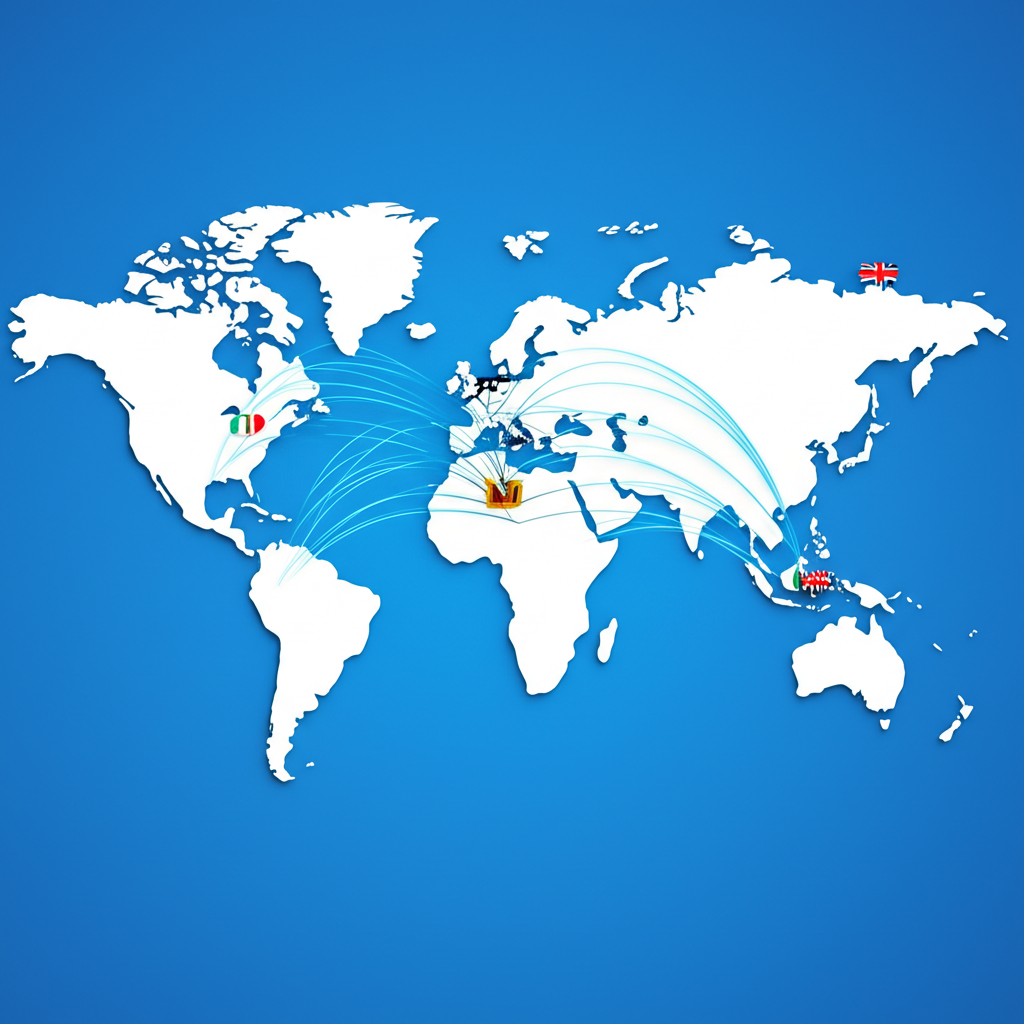
Best low-fee ways to receive money in Sri Lanka from UAE
For Sri Lankans working in the UAE, the cheapest ways to receive money at home are usually online money transfer apps and specialist remittance providers, rather than traditional banks or cash agents.[2][4][8]
Popular channels from UAE to Sri Lanka
- Exchange houses & partner banks – UAE exchange houses (like UAE Exchange, Al Ansari, Lulu, etc.) pay out via Sri Lankan partner banks such as Commercial Bank, Sampath, HNB and People’s Bank for cash pickup or direct account credit.[1][4]
- Bank-to-bank SWIFT transfers – Sending directly from a UAE bank to a Sri Lankan bank is convenient but usually has higher fees and weaker FX rates.[2][4]
- Online money transfer apps – Providers such as Wise and Remitly let you fund transfers from a UAE account or card and pay out to LKR bank accounts at close-to-market rates with transparent, low fees.[4][7][8]
UAE exchange houses: pros & cons
- Pros:
- Wide branch network across UAE and Sri Lanka; ideal for cash pickup recipients without bank accounts.[1][3]
- Same-day or near-instant credit to major Sri Lankan banks through established partnerships.[1][3]
- Cons:
- Fees plus an FX margin on the AED–LKR rate; World Bank data shows a total average cost around 2–3% of the principal for the UAE–Sri Lanka corridor.[3]
- Cash collection may mean queues and travel costs for family in Sri Lanka.
Why online providers are often cheaper
- Comparison tools (LeoCompare, RemitFinder, TopMoneyCompare) show that online apps frequently beat banks and agents on both fees and exchange rates for UAE–Sri Lanka transfers.[1][2][4][5]
- RemitFinder notes that banks usually offer worse FX plus high foreign exchange fees, while online FX companies combine better rates with lower or zero transfer fees.[4]
- Wise and similar providers use the mid-market rate with a transparent fee, avoiding the “hidden” margin that traditional agents build into their rate.[4][8]
Optimising transfers from UAE
- Send in AED, avoid double conversion – When funding from the UAE, choose a provider that directly converts AED to LKR. Converting to USD first and then to LKR can add two FX margins.[2][4]
- Watch the AED/LKR rate – Comparison sites recommend checking current AED–LKR rates and recent ranges before sending, as small moves can significantly affect your family’s rupee amount.[1][2][4]
- Choose low-fee methods – World Bank data for this corridor shows that online transfers via internet or apps tend to have lower total costs than cash-agent or bank-branch methods.[3]
Example: salary remittance from Dubai
Assume a worker in Dubai sends AED 2,000 to a Sri Lankan LKR account:
- Traditional bank or agent:
- Indicative total cost around 2.5% (≈ AED 50), combining a fixed fee and FX margin in the UAE–Sri Lanka corridor.[3]
- Effective AED–LKR rate slightly below market, so the family receives fewer rupees.
- Online provider/app:
- Comparison tools show specialist apps often charge lower fees with more competitive AED–LKR rates, cutting the effective cost versus banks.[1][2][4][8]
- On AED 2,000, that difference can mean several thousand extra LKR reaching your Sri Lankan bank account.
Cheapest options to receive money from Italy and the UK
For Sri Lankans with family in Italy and the UK, the lowest-cost routes usually combine **European/UK instant payment rails** with **specialised remittance partners** in Sri Lanka rather than direct SWIFT bank transfers.
Common routes from Italy and the UK
Senders in Italy and the UK typically use:
- Bank transfers – SEPA credit transfers in the EU and Faster Payments in the UK to fund remittance providers or multi‑currency accounts, which then pay out to Sri Lanka in LKR.[3]
- Post office and over‑the‑counter services – Italian post office partners and UK agents can send to Sri Lankan bank accounts or cash pickup locations via remittance networks.[4][5]
- Online remittance apps – Services like Wise, Remitly, Xoom, ACE and others allow card, bank, or wallet funding with payout as bank deposit or cash pickup in Sri Lanka.[1][3][4][5][7]
- Card‑to‑bank transfers – Many apps accept debit/credit cards from Italy/UK and deposit to Sri Lankan bank accounts or cash-out partners.[3][4]
SEPA, Faster Payments and Sri Lankan partners
In Europe, senders can move EUR cheaply via SEPA transfers to remittance providers or multi‑currency accounts, which then settle locally to Sri Lankan banks, bypassing expensive SWIFT fees.[1][2][3] In the UK, Faster Payments lets senders instantly fund services like Wise or UK‑based FX brokers that then convert and pay out to Sri Lanka.[2][3][6]
Fees, FX rates and when to keep EUR/GBP
Specialised remittance apps often use rates close to the mid‑market rate and charge transparent, relatively low fees; some providers advertise that fees get cheaper for larger amounts.[1][2][3] Banks and traditional agents may charge higher fixed fees plus wider margins on EUR→LKR and GBP→LKR, which increases total cost for frequent small transfers.[1][2] If your Sri Lankan bank offers a PFCA (Personal Foreign Currency Account), it can sometimes be cheaper to receive and hold funds in EUR/GBP and convert to LKR later when rates are favourable, instead of converting immediately at a poor retail rate. (This depends on individual bank spreads and account terms.)
Receiving options in Sri Lanka
- Local LKR bank accounts – Most remittance partners credit LKR accounts at major Sri Lankan banks; some, like Sampath’s e‑Remittance service, support over‑the‑counter payments and account credits.[7][8]
- PFCA / foreign currency accounts – Where allowed, remitters can send EUR/GBP into these accounts to hold or convert later, potentially reducing FX losses.
- Cash pickup – Networks such as Remitly, Xoom, ACE and others offer cash pickup through Sri Lankan bank branches and agents, often within minutes for an extra fee.[4][5][7][8]
Tips to minimise total cost
- Use providers that advertise or compare on the mid‑market rate and show all fees up front (comparison tools highlight best EUR→LKR and GBP→LKR deals and promotions).[1][2]
- Send larger, less frequent transfers to dilute fixed fees and access lower percentage pricing tiers.[1][2][3]
- Check **promotional offers** for EU and UK–Sri Lanka corridors, as many services give better intro rates or fee discounts on the first €1,000/£1,000 or during campaigns.[1][2][4]
- Compare at least 3–4 services (apps, brokers, and banks) before each large transfer, since rates and offers change daily.[1][2]
Receiving money cheaply from Australia and New Zealand
Australia and New Zealand are major new destinations for Sri Lankan students and skilled workers, and remittances from these corridors have grown steadily over the past decade.[1] Most funds are sent home monthly to support families, pay tuition, or build savings in Sri Lanka.
The main ways to receive money from Australia and New Zealand are:
- Bank-to-bank transfers: Senders use banks like ANZ, Commonwealth Bank or NZ banks to remit directly to Sri Lankan bank accounts (HNB, Seylan, etc.). These are convenient but often have higher fees and weaker LKR rates than specialist services.[2][6][8]
- Online money transfer providers: Services such as Wise, Xe, OFX and Revolut let you fund transfers from an Australian or New Zealand account or card and pay out to an LKR bank account in Sri Lanka, usually with lower total cost than banks.[2][3][4][10]
- Dedicated South Asia remittance services: Regional remitters focused on South Asian corridors often offer competitive fees and extensive cash-pickup networks, and are listed and compared on platforms like the World Bank Remittance Prices database.[1][5]
When AUD or NZD are sent to Sri Lanka, they are converted to LKR using the provider’s exchange rate. Sri Lankan banks publish daily LKR rates for AUD/NZD, and these can differ from international mid‑market rates.[7][8][9] The World Bank and providers like Wise show how much a provider’s rate sits below the market reference rate, making the exchange rate margin a key part of the real cost of a transfer, not just the visible fee.[1][2]
For students and temporary workers, the most cost‑effective strategy is usually:
- Use low‑fee digital platforms with transparent mid‑market or near‑mid‑market rates and clearly displayed fees.[2][3][4]
- Plan small, regular transfers (e.g., monthly living expenses) if the provider has low or percentage‑based fees and good FX, which helps with budgeting and exchange‑rate volatility.
- Use larger, less frequent transfers when fixed fees are high but FX rates are strong, such as for tuition or rent lump sums.
- Always compare the total LKR received and percentage cost across providers before sending, using comparison tools where possible.[1][5]
Worked example (Australia): For a transfer of 1,000 AUD to Sri Lanka, Wise shows that a customer whose recipient gets about 206,824–207,114 LKR pays a total transfer cost of around 7–9 AUD, while a major Australian bank can deliver closer to 194,024–199,248 LKR with a total cost above 45 AUD because of a weaker FX rate and additional markup.[2] World Bank data for the Australia–Sri Lanka corridor indicates average total costs (fees plus FX margin) around 4% of the amount sent, with some providers significantly cheaper than others.[1] Similar patterns apply from New Zealand: providers that use or approach the mid‑market NZD/LKR rate and disclose all fees upfront generally deliver substantially more rupees to family in Sri Lanka than traditional banks charging wider FX spreads and higher flat fees.[3][9][10]

Smart tips, safety checks and a step-by-step receiving checklist
Remittances are a lifeline for many Sri Lankan families, so it is important to receive money safely, through formal banking channels, which now bring in billions of dollars to the country each year.[4][6] Use the checklist below to protect every rupee.
Quick checklist before accepting a remittance
- Verify the sender: Confirm the sender’s full name, country, and the exact amount sent using a call or message on a known number, not via unknown social media accounts.
- Check the channel: Make sure the transfer is coming through a licensed bank, money transfer operator, or fintech service that pays out in Sri Lanka via authorised dealers regulated by the Central Bank.[3][8]
- Confirm payout type: Decide whether you want cash pickup, direct credit to a rupee account, or to a Personal Foreign Currency Account (PFCA) before the sender initiates the transfer.
- Know the fees and rate: Ask the sender for a screenshot or receipt showing transfer fee, exchange rate, and any receiving charges so you know the net amount expected.
- Match name and ID: Ensure the receiver name on the transfer matches the NIC/passport you will use to collect the money.
Opening and using a PFCA in Sri Lanka
- Eligibility: Sri Lankan citizens and certain residents (including those temporarily abroad) can open foreign currency accounts with authorised dealers such as licensed commercial banks.[3]
- How to open: Visit a bank branch with NIC/passport, proof of address, and (if asked) proof of foreign income; request a PFCA or similar foreign currency account as permitted by current regulations.[3][8]
- Using the account: Your family can receive remittances in USD/EUR/GBP etc. directly into the PFCA and hold them in foreign currency instead of immediate conversion.[3]
- Conversion rules: Foreign currency brought into Sri Lanka or earned abroad generally has a limited retention period before it must be converted to LKR or credited to a foreign currency account, so using a PFCA helps you stay compliant while keeping funds in foreign currency.[3]
Avoiding scams and informal channels
- Red flags: Offers on social media or messaging apps promising “no fee, best rate, cash at home” through individuals or unregistered agents are high risk and often illegal.[3][8]
- Check licensing: Only use banks and money transfer services that clearly display their licence and partner bank in Sri Lanka.
- Never hand over cash or ID: Do not give your NIC, ATM card, or PIN to unofficial middlemen who claim they will “manage” the transfer.
- Stick to formal channels: Sri Lanka’s record remittance inflows rely on money coming through the official banking system; using hawala or other informal methods can expose you to fraud and regulatory issues.[4][6]
Timing and planning for better net value
- Watch FX trends: Families can monitor exchange rate movements (e.g., LKR vs AED, EUR, GBP, AUD, NZD) and ask senders to transfer when the rupee is slightly weaker, to receive more LKR.
- Match transfers to expenses: Plan larger transfers around tuition, medical bills, or loan payments so funds are converted only when needed, reducing repeated conversion costs.
- Minimise cash handling: Whenever possible, receive money directly into bank accounts (LKR or PFCA) and pay big expenses digitally to reduce theft risk and cash-counting errors.[3][8]
Printable step-by-step receiving flow (Sri Lanka side)
- Sender abroad chooses a regulated provider and enters your full name, country, bank/PFCA details or cash pickup option, and amount.
- Sender confirms fees and FX rate, pays for the transfer, and shares the reference number or MTCN with you.
- You verify the details (channel, amount, payout type) with the sender using a trusted contact method.
- Wait for SMS/app/bank alert that funds are ready for pickup or have been credited to your account.
- For cash pickup: go to the specified outlet with your NIC/passport and reference number; check that the amount and receipt match what the sender shared.
- For bank/PFCA credit: log in to online banking or update your passbook to confirm the exact foreign currency or LKR amount received.
- Store receipts and confirmations safely, and report any suspicious delays or mismatches to the bank and, if needed, the Central Bank or relevant authorities.[3][8]