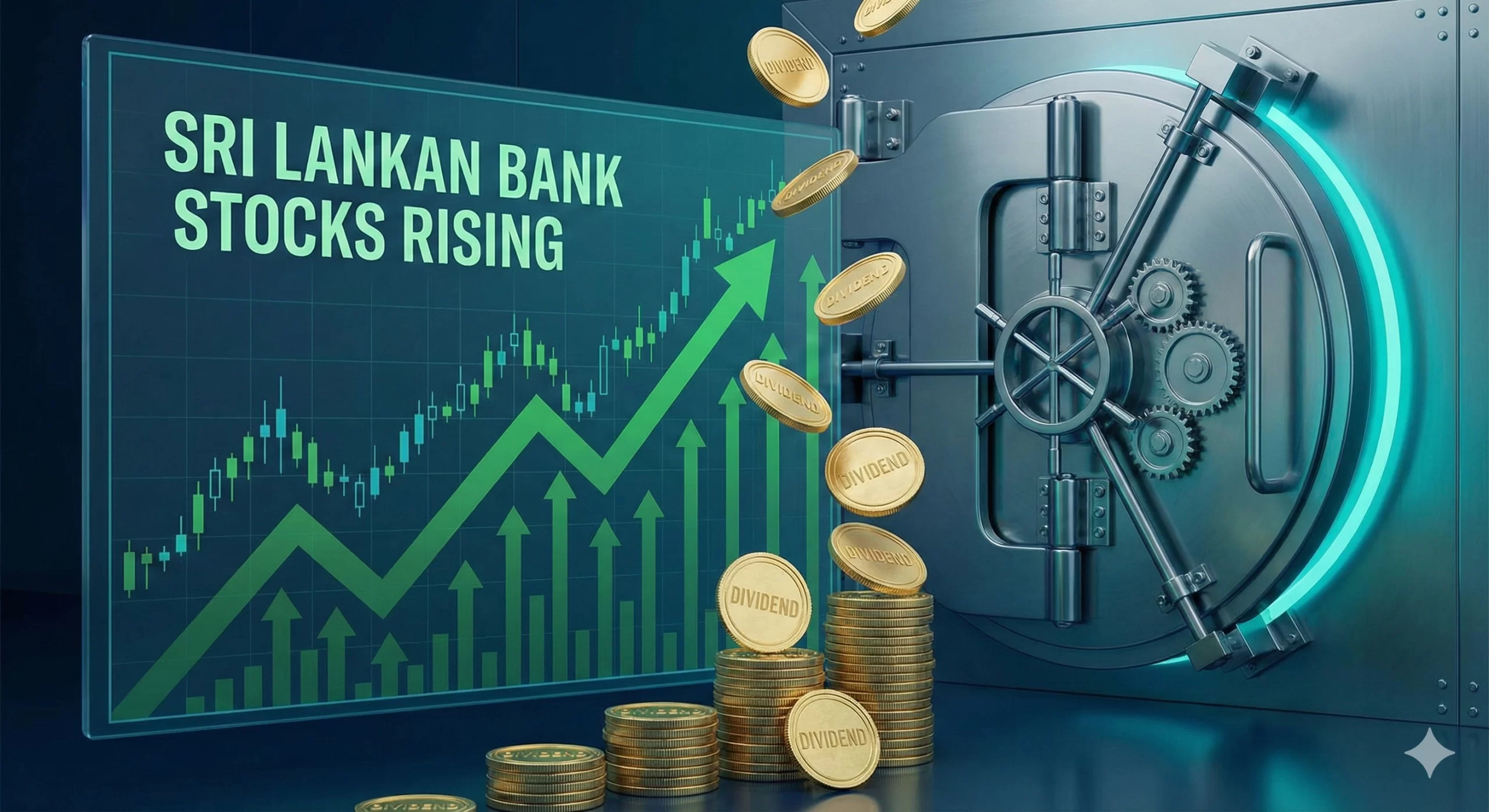
Sri Lanka’s banking sector projects earnings per share growth exceeding 5% in 2026 following the Strategic Services Company Limited (SSCL) removal from balance sheets, unlocking Rs20 billion in retained earnings available for shareholder dividends and business expansion. Commercial Bank, Hatton National Bank, and Sampath Bank lead the recovery with forecasted return on equity climbing 12-15%, as non-performing loan ratios decline from 6.8% to 4.2% amid sustained 5.4% GDP expansion and improving borrower cash flows. Shareholders positioned for average Rs15 per share dividends representing 25% increases, while conservative savers benefit from fixed deposit rates stabilizing at attractive 9.5% levels as systemic liquidity improves significantly.
The SSCL cleanup—transferring Rs150 billion legacy loans to a specialized asset management company—frees core capital previously trapped in provisioning, enabling Rs100 billion fresh lending to small and medium enterprises at competitive 11% rates versus 18% crisis-era peaks. This credit expansion fuels 15% annual SME loan portfolio growth, directly supporting 50,000 businesses restocking inventories and hiring additional staff amid stabilizing supply chains. Digital banking penetration reaches 65% of customers, with mobile apps processing 70% of transactions and cutting operational costs by 30%, further bolstering profitability margins.
Central Bank’s macroprudential easing measures prove pivotal: core capital adequacy ratios reduced from 12.5% to 10.5%, provisioning requirements relaxed for performing loans, and liquidity coverage ratios adjusted to free Rs50 billion for consumer lending. Retail borrowers access auto loans at 10.5%, housing mortgages at 11.2%, and credit cards with 2% monthly rewards—consumer offerings that drove 20% deposit growth in Q4 2025. Corporate relationship managers target apparel exporters securing EU sustainability contracts, offering trade finance at LIBOR+2.5% spreads.
Risk management remains paramount amid global interest rate volatility and domestic election uncertainties. Banks maintain Rs300 billion liquidity coverage ratios exceeding Basel III requirements, while stress tests simulate 10% rupee depreciation scenarios confirming capital adequacy above 11%. Advanced analytics platforms deployed across top five banks monitor 98% of transactions in real-time, flagging suspicious patterns before escalation to the Financial Intelligence Unit.
Shareholder value creation accelerates through strategic buybacks and special dividends: Commercial Bank allocates Rs5 billion for repurchases at Rs85/share, HNB targets 8% payout ratio increases. Minority investors gain from enhanced corporate governance—independent board majorities, quarterly earnings calls, ESG disclosures—meeting Colombo Stock Exchange sustainability listing criteria.
Customer-centric innovations differentiate leaders: Sampath Bank’s AI credit scoring approves 80% instant loans under Rs5 million, People’s Bank launches remittance-linked savings at 10.5% for 2 million Middle East workers. Wealth management arms introduce Shariah-compliant funds yielding 11%, capturing Islamic finance growth.
Comparative regional analysis positions Sri Lanka favorably: Bangladesh banks average 8% ROE versus local 12% projections, India’s NPA resolution lags at 5.5% versus local 4.2%. Domestic digital transformation—Rs10 billion fintech investments—positions sector for 20% transaction growth through 2028.
In conclusion, SSCL removal catalyzes banking sector renaissance delivering superior shareholder returns, expanded SME credit, and innovative consumer products. Robust risk frameworks and digital leadership ensure sustainable profitability benefits all stakeholders—investors gaining dividends, businesses accessing growth capital, families securing competitive savings—fortifying Sri Lanka’s financial stability for the decade ahead.
References:
https://www.themorning.lk/articles/u7YK1aD0lXx17RBMam5i
https://www.cbsl.gov.lk/en/sri-lanka-economy-snapshot
https://www.bcg.com/sri-lanka-banking-top-updates
https://www.cse.lk/pages/market-data/market-statistics