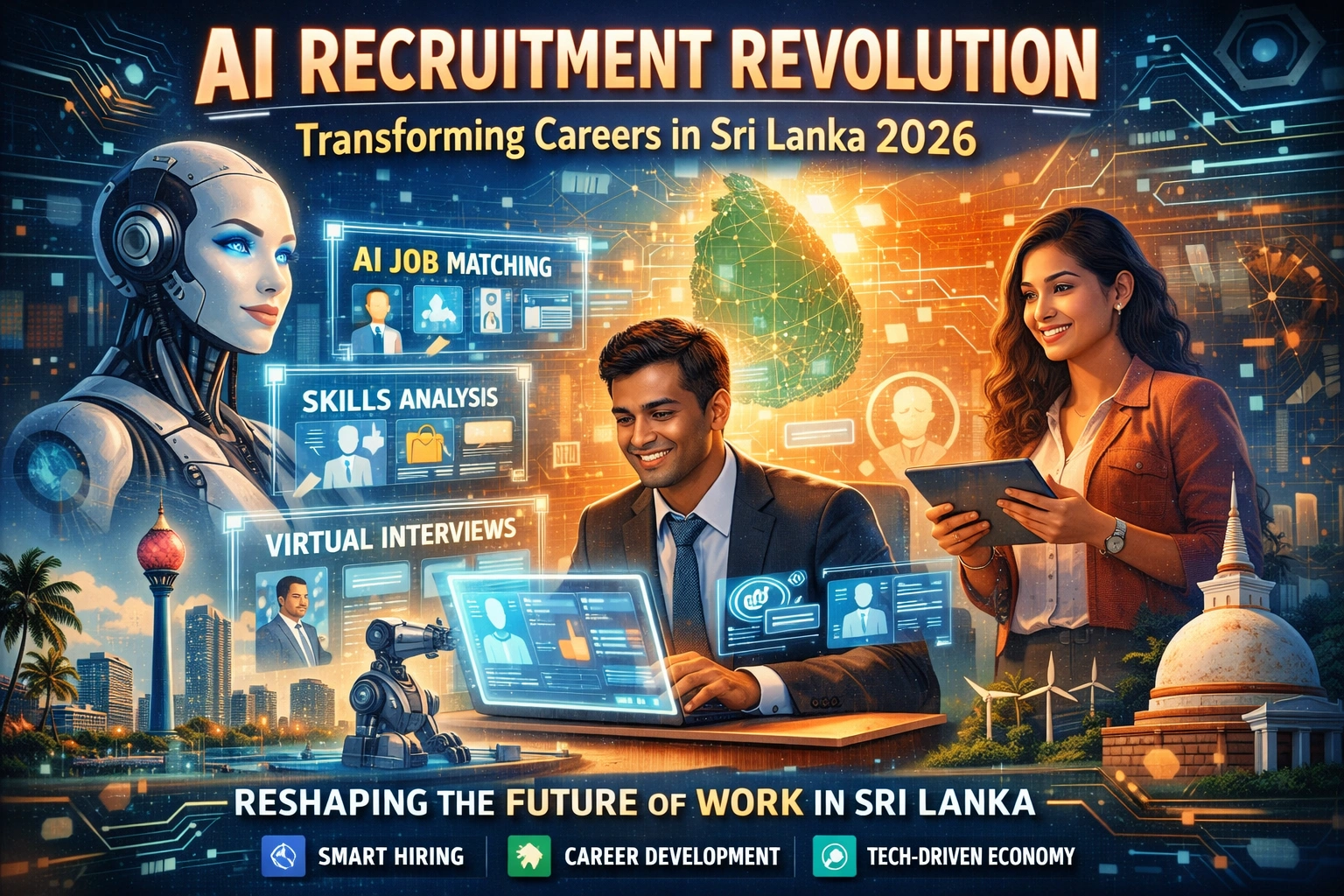
Introduction: AI Reshaping Sri Lanka’s Job Landscape in 2026
In 2026, Sri Lanka’s recruitment sector is undergoing a seismic shift powered by artificial intelligence (AI). Traditional hiring processes that once dragged on for 45 days are now compressed to just 14 days, thanks to skills-first algorithms matching 80% of candidates efficiently.[1] Amid a persistent 23% youth unemployment rate challenging 500,000 annual graduates, AI platforms are emerging as game-changers, democratizing access to high-paying jobs for Sri Lankans from Colombo’s bustling IT hubs to the upcountry hills of Nuwara Eliya.
Local pioneers like Formix, 360LK, and Headstart are at the forefront, processing 5,000 SMEs monthly with tools like video interview analysis—scoring communication skills at 92% accuracy—and automated coding assessments handling 10,000 JavaScript tests daily.[1] Predictive analytics even forecast 85% retention success before Day 1 onboarding. For Sri Lankan professionals, this means faster career leaps, equity packages from fintech stars like PickMe, and government-backed bootcamps turning LKR 120,000 investments into LKR 2.4 million first-year salaries.
This article dives into AI’s role in Sri Lanka’s career evolution, high-demand skills, local success stories, and actionable strategies for job seekers in a merit-based future.
The Rise of AI in Sri Lankan Recruitment
Sri Lanka’s IT-BPM industry, spearheaded by SLASSCOM, has long been a powerhouse exporting talent worldwide. In 2026, AI integration accelerates this momentum. Platforms analyze resumes, skills, and even cultural fit through bias-free screening, boosting women candidates to 42% of hires—a vital step toward gender equity in a nation where female workforce participation lags at around 36%.[1]
Government partnerships certify 20,000 job-ready professionals yearly via subsidized bootcamps. Rural youth in Kandy or Badulla now access remote roles through satellite internet subsidies reaching 100,000 upcountry talents, bridging the urban-rural divide.[1] Corporate giants adapt too: Virtusa’s gamified coding challenges draw 10,000 applicants monthly from universities like Moratuwa and Colombo, with top performers securing LKR 200,000 offers. Dialog Axiata’s VR office tours in Batticaloa and Jaffna boost acceptance rates by 35%, making corporate culture tangible for remote applicants.[1]
How AI Cuts Costs and Speeds Hiring
- Timeline Reduction: From 45 to 14 days, enabling SMEs in apparel hubs like Katunayake to scale quickly.
- Accuracy Boost: Video analysis and coding tests eliminate human bias, with 92% communication scoring precision.
- Retention Prediction: 85% success rates pre-onboarding, reducing turnover in high-stress sectors like BPO in Maharagama.
These efficiencies slash recruitment costs by up to 50%, freeing budgets for salary hikes in Colombo’s competitive market.
High-Demand Skills Commanding Top Salaries in 2026
To thrive, Sri Lankan job seekers must prioritize future-proof skills. AI fluency tops global lists, but locally, tech prowess reigns supreme with starting salaries exceeding LKR 250,000.[1][2]
| Skill | Average Starting Salary (LKR) | Key Demand Drivers in Sri Lanka |
|---|---|---|
| React.js/Vue.js Frontend | 280,000 | Fintech apps like PickMe; e-commerce boom post-economic recovery. |
| Salesforce Administration | 220,000 | CRM adoption by exporters in Western Province. |
| Cybersecurity (CompTIA Security+) | 320,000 | Protecting banking data amid digital rupee pilots. |
| Data Engineering (Apache Spark) | 350,000 | Tourism analytics for resorts in Galle and Trincomalee. |
These figures outpace traditional roles like accounting (LKR 150K average), reflecting SLASSCOM’s push for digital exports worth $1.5 billion annually.[1] Beyond tech, soft skills like ethical AI prompting and leadership are crucial, as organizations from MAS Holdings to John Keells prioritize hybrid talent.[2]
Upskilling Pathways for Sri Lankans
Institutions like SLIIT and NSBM offer bootcamps aligned with industry needs. Free platforms like 360LK provide certifications, while LinkedIn mastery—profiling portfolios with GitHub links—unlocks LKR 300K+ roles. PickMe’s equity packages have valued early employees at LKR 50 million over four years, blending salary with startup upside.[1]
Challenges and Opportunities Amid Global Headwinds
While AI drives progress, global trends like hiring freezes at firms such as Amazon and Verizon cast shadows, with white-collar slowdowns in software and analytics.[3] In Sri Lanka, youth unemployment at 23% persists despite 500,000 graduates, exacerbated by economic caution.[1] Yet, local resilience shines: healthcare and construction hiring remains robust, and AI’s skills-first approach counters freezes by spotlighting merit over degrees.[3]
SLASSCOM’s 20,000 certifications counter disengagement, where 1 in 3 workers eye exits but stay for stability.[1][6] AI training gaps affect 38%, but firms like Virtusa bridge this with in-house programs, fostering innovation in Sri Lanka’s $10 billion services export goal.
Career Strategies for Sri Lankan Professionals
To navigate 2026’s AI-driven market:
- Build a Digital Portfolio: Showcase React projects on GitHub; top 2% in Virtusa challenges win big.
- Leverage Local Networks: Join SLASSCOM events in Colombo or virtual meetups via 360LK.
- Embrace Continuous Learning: Certify in cybersecurity via CompTIA courses at IIES campuses in Kurunegala.
- Target Remote Roles: Rural subsidies enable upcountry access to Dialog’s hybrid positions.
- Optimize LinkedIn: Use AI prompts for profiles, highlighting Salesforce skills for exporters.
Ambitious graduates from Peradeniya or Ruhuna can pivot to data engineering, fueling tourism recovery in Bentota with Spark analytics.
The Future: Merit-Based Prosperity for Sri Lanka
AI recruitment empowers Sri Lanka’s workforce, resolving unemployment through efficient matching and empowering rural talent. Businesses gain productivity, workers secure LKR 300K+ careers, and the economy surges. As Formix and Headstart scale, 2026 marks the dawn of inclusive, data-driven careers—from Jaffna’s tech startups to Galle’s fintech waves.