Internal data from Sri Lanka’s leading internet service providers reveals a surprising truth: the fastest, most reliable fiber connections are not concentrated along the popular southern coastline. Many expats and digital nomads arrive dreaming of working from a beachfront villa in Weligama or Galle, only to be confronted with infrastructure that prioritizes tourism over professional stability. The popular vision of expat life in Sri Lanka is often more of a marketing fantasy than a sustainable reality for those who need to stay connected.
Choosing your home base here isn’t about finding the most Instagrammable beach. It’s a calculated decision based on a practical framework balancing infrastructure, community, and lifestyle costs. After years of consulting with expats on the ground, I’ve seen that while the south coast is perfect for a holiday, it often falls short for productive, long-term living. For that, you need to look at places like the well-appointed suburbs of Colombo or the cooler, culturally rich city of Kandy, which consistently outperform on the metrics that actually matter.
Forget the generic lists. This breakdown moves beyond the tourist trail to match specific, field-tested locations to your personal and professional priorities. You’ll get an honest assessment of each area, ensuring you find a home that supports your work and lifestyle, not just your social media feed.
Why Sri Lanka is a Paradise for Expats and Digital Nomads
Many people still view Sri Lanka as a raw, untamed travel destination—fantastic for a holiday, but not a practical base for a working professional. The conventional wisdom suggests the infrastructure just isn’t there. That assumption is about a decade out of date. While you can certainly find rustic solitude, the country now offers a potent combination of low costs, high quality of life, and a surprisingly robust remote work ecosystem.
Let’s talk numbers. Your monthly budget can realistically sit between $1,000 and $1,500 for a comfortable lifestyle. That’s not just surviving; that’s thriving. This financial freedom unlocks a life that is simply out of reach for most in the West. Imagine swapping your cramped city apartment for a villa with a pool near the beach for a fraction of the cost. The value proposition isn’t just about saving money; it’s about fundamentally upgrading your daily existence with incredible food, rich history, and genuinely welcoming people.
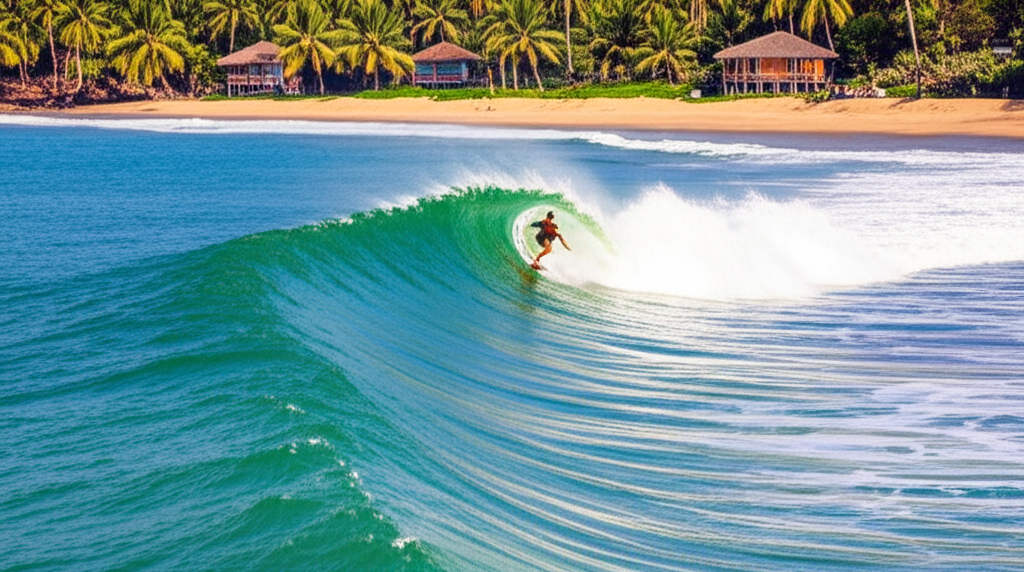
The island’s sheer diversity is another major draw. You are not locked into one type of environment. You can spend a month mastering the surf breaks in a southern hub like Weligama or Hiriketiya, then escape the heat by taking a scenic train ride to the cool, tea-covered hills of Ella. This variety prevents the monotony that can set in when you stay in one place for too long.
Most critically, the digital nomad infrastructure is no longer a hopeful dream. A network of coliving and coworking spaces has blossomed along the south coast, particularly in towns like Weligama, Ahangama, and Arugam Bay. These aren’t just cafes with spotty Wi-Fi. We’re talking about dedicated facilities with fiber-optic internet and built-in communities. For example, you can find nomad-focused accommodation with coworking facilities for as little as $45 per night. Sri Lanka offers a rare opportunity: the chance to build a career while living an adventure.
Colombo: The Bustling Urban Hub for Career Expats
Let’s get one thing straight: the popular image of expat life in Sri Lanka—working from a beach cafe in Weligama with sand between your toes—is a fantastic reality for many. But for the career-minded professional or a family prioritizing top-tier education, that vision falls apart quickly. The conventional wisdom that dismisses Colombo as a mere transit point is a disservice. For a certain type of expat, this city isn’t just an option; it’s the only one that makes sense.
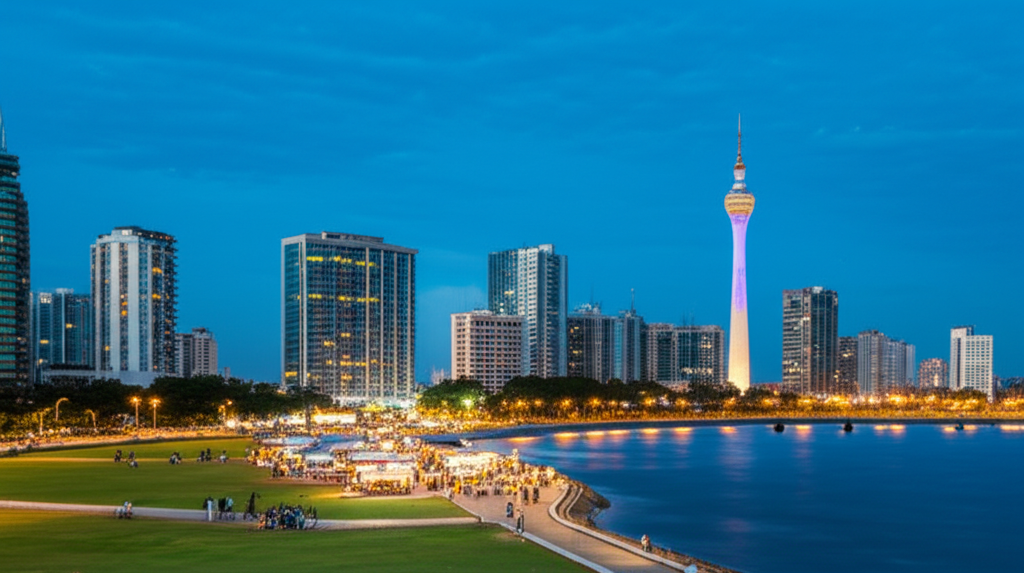
Colombo is where the country’s economic heart beats. This means unparalleled access to amenities the southern surf towns simply cannot offer. We’re talking about a genuine urban infrastructure: world-class healthcare at facilities like Asiri Health, major shopping at modern malls like One Galle Face, and a sophisticated dining scene with rooftop bars overlooking the Laccadive Sea. For families, the presence of respected institutions like The British School in Colombo or the Overseas School of Colombo is a non-negotiable advantage. You trade the morning surf for a reliable high-speed fiber connection and a network of fellow professionals.
Of course, this comes with trade-offs. The cost of living is significantly higher than the sub-$1,500 monthly budgets often quoted for coastal towns. Be prepared for relentless traffic and a pace of life that can feel jarring after the tranquility of the hill country. This is a city that works, with all the beautiful chaos that implies.
Neighborhood Spotlight: City Center vs. Coastal Suburb
Your experience in Colombo will be defined by your address. For upscale, central living, Cinnamon Gardens (Colombo 7) is the classic choice. Think leafy boulevards, colonial-era mansions, embassies, and proximity to cultural hubs. It’s polished, secure, and expensive. For those who want city access without sacrificing the sea, Dehiwala-Mount Lavinia offers a compelling compromise. It’s a grittier, more residential area just south of the city center, but it provides a proper beach, a more local feel, and a slightly lower cost of living, all within a 30-minute commute to the central business district.
Galle & The South Coast: Beach Bliss and Bohemian Vibes
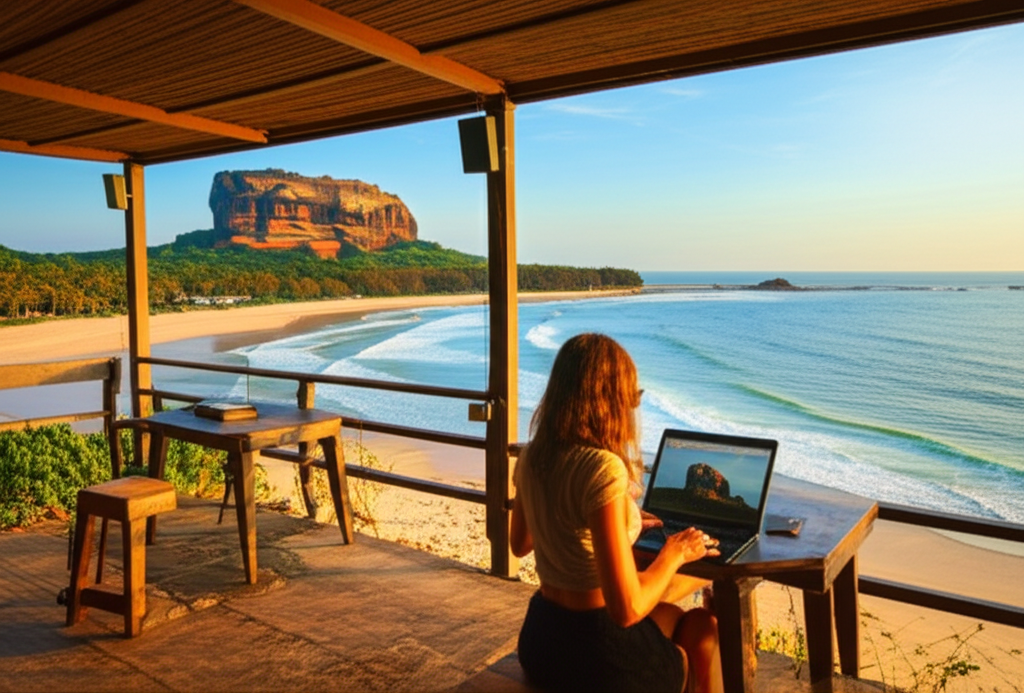
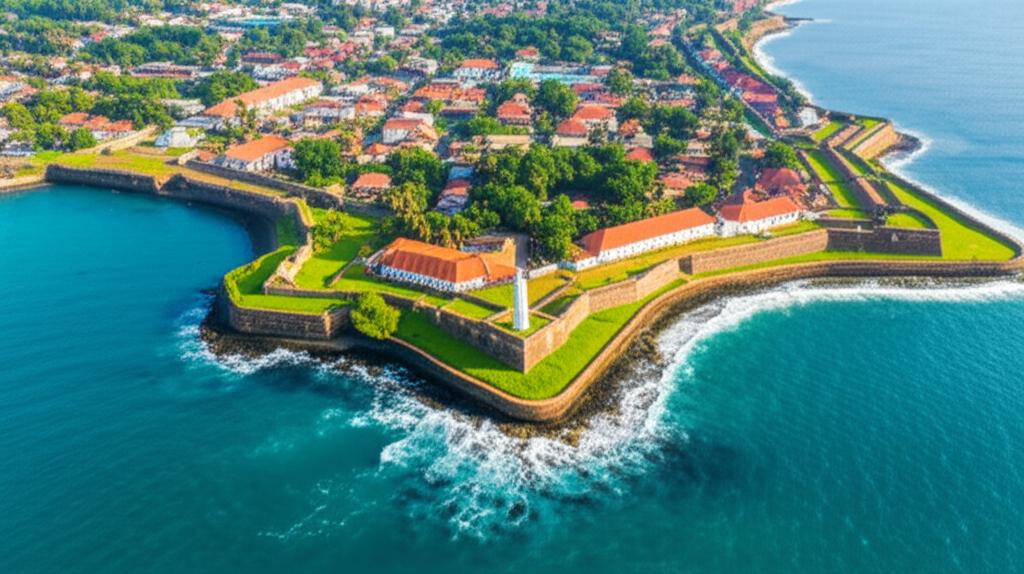
And this is where things get practical. Many guides paint Sri Lanka’s south coast as a sun-drenched playground for transient backpackers. That’s an outdated picture. The reality is that this coastline, anchored by the magnificent Galle Fort, has matured into the island’s undisputed hub for location-independent professionals. It’s a place where you can build a business, not just a tan. Forget the notion that beach life means unplugging; here, it means plugging in differently.
The New “Office” is a Beachside Café
The stretch from Galle down to Hiriketiya is less a single destination and more a constellation of vibrant micro-communities. Best for:
Digital nomads seeking community and infrastructure
Surfers of all levels
Yoga and wellness enthusiasts
Boutique entrepreneurs and cafe owners
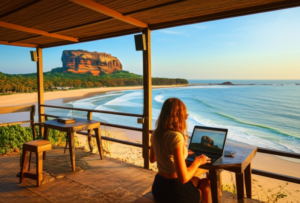
Weligama, as noted by sources like The Digital Nomad Asia, buzzes with energy, its beach cafes and lively nightlife drawing a younger crowd. Just down the road, Ahangama offers a slightly more grown-up, settled vibe with its emerging creative shops and quieter surf breaks at Kabalana Beach. The community is the real draw. You’re not just another tourist; you’re joining a well-established network of expats who have already figured out the best SIM cards, scooter rentals, and visa agents. The infrastructure has followed, with dedicated co-working spaces offering the reliable fiber-optic internet you can’t always count on in a standard rental.
The Cost of Paradise
Living here doesn’t require a trust fund. Many nomads live comfortably on a budget of $1,000–$1,500 per month. Your lifestyle dictates the cost. You could grab a local rice and curry for a couple of dollars or splurge at a chic Galle Fort restaurant. Accommodation is just as flexible. For instance, a dedicated digital nomad spot like Nomads Colive in Koggala might offer a room and coworking access for around $45 per night. Be mindful of the trade-offs, though. The peak season from December to March brings crowds and higher prices. And while internet in the main hubs is generally solid, venturing off the beaten path can mean your Zoom call quality takes a nosedive. The key is to base yourself in a town like Weligama or Hiriketiya and make day trips from there.
Kandy & The Hill Country: A Cool Escape into Nature and Culture
Speaking of which, the popular narrative for Sri Lankan nomad life is almost exclusively written in sea salt and surf wax. The south coast gets the limelight, and for many, it’s the perfect fit. But this has created a pervasive myth: that to be a successful remote worker here, you must be based by the beach. My experience points to a different truth. For a certain kind of expat, the real soul of the island isn’t on the coast at all; it’s found by heading inland and up.
The Hill Country is Sri Lanka’s temperate, green heart. This is where you trade oppressive humidity for cool, misty mornings and the sound of crashing waves for the quiet rustle of tea leaves. It’s a natural home for writers, hikers, and anyone whose productivity is fueled by tranquility rather than a packed social calendar. The lifestyle revolves around nature and a slower, more contemplative rhythm. Your days might involve long walks through emerald tea plantations, cozy evenings with a book, and taking what is arguably one of the world’s most scenic train rides from Kandy to Ella.
Your Main Bases in the Hills
Each hub offers a distinct personality:
Kandy: As the region’s cultural capital and gateway city, it’s a bustling center with more urban conveniences. It’s a practical starting point and home to the revered Temple of the Sacred Tooth Relic.
Ella: This is the most established hub for independent travelers and nomads. It has a relaxed, mountain-town vibe with incredible hiking (like Ella Rock and Little Adam’s Peak) and a solid collection of cafes that cater to the laptop crowd.
Nuwara Eliya: Dubbed ‘Little England’, its colonial-era bungalows, manicured gardens, and chilly air feel worlds away from the coast. It’s serene, bordering on sleepy—perfect for deep focus.
Let’s be direct about the trade-offs. You won’t find the plug-and-play coworking infrastructure of Weligama. Your “office” is more likely to be a guesthouse balcony with a stunning view, powered by a 4G mobile hotspot you occasionally have to reposition for a better signal. A big grocery run might require a trip into Kandy. But for those who find the constant buzz of a surf town draining, this perceived isolation is precisely the main attraction. It’s a conscious choice for deep work and a genuine connection with nature.
Arugam Bay & The East Coast: The Laid-Back Surfer’s Frontier
Most guides on Sri Lanka will point you squarely at the south coast, and for good reason. But here’s a secret the seasoned crowd knows: when the Yala monsoon drenches the south from April to October, the island’s pulse doesn’t stop. It migrates. The entire surf and digital nomad scene pivots to the East Coast, with Arugam Bay as its undisputed capital.
Forget the polished aesthetic of Hiriketiya’s brunch spots. This is a different beast entirely. Arugam Bay—or ‘A-Bay’—is a frontier town built on a singular passion: surfing. The vibe is decidedly more rustic, a sand-in-your-toes, beer-at-a-beach-shack kind of place. The main draw is a collection of world-class right-hand point breaks, with the legendary Main Point right in town. This isn’t the gentle beginner wave of Weligama; this is a place for those who are serious about their craft and want to be part of a community that truly lives and breathes surf culture.
Living here requires a trade-off. While the south boasts established coliving spaces with fiber-optic internet often costing upwards of $1,000 a month, the East is still catching up. Infrastructure is more basic, and Wi-Fi can be a game of chance outside of a few dedicated spots. Yet, what you lose in convenience, you gain in authenticity. You’re trading a slick coworking desk for a hammock, a packed lineup for empty waves at dawn, and a transient crowd for a tight-knit community of surfers and pioneers who’ve chosen waves over wealth. If your priority is an unvarnished, adventurous life ruled by the tides, the East Coast isn’t just an alternative; it’s the only real choice.
Beyond the Postcard: Your Perfect Sri Lankan Base
Many guides present a simple choice: the energetic coast or the bustling capital. This perspective overlooks the real key to finding your place here. The most critical decision isn’t choosing between Galle and Weligama, but defining your non-negotiables first. Is it fiber internet for uninterrupted work calls, or walkability to a quiet surf break? Your ideal Sri Lankan base is found not by following the crowd, but by matching a location’s distinct character—its pace, community, and infrastructure—to your personal and professional rhythm.
Before you book a flight, map your ideal week: how much time is for deep work versus exploration? Let that answer guide your first destination. We’d love to hear your thoughts—share your favorite Sri Lankan spot or ask a question in the comments below!
Frequently Asked Questions
What is the average cost of living for an expat in Sri Lanka?
The cost of living is highly affordable. A single expat can live comfortably on $800 – $1,500 USD per month, depending on the location and lifestyle. Colombo is the most expensive, while coastal towns and the hill country are more budget-friendly.
Is Sri Lanka safe for expats and digital nomads?
Yes, Sri Lanka is generally considered safe for expats and tourists. Standard precautions should be taken, especially in crowded areas. The local people are known for their hospitality and friendliness towards foreigners.
What is the visa situation for digital nomads in Sri Lanka?
Currently, most digital nomads use the 30-day tourist visa (ETA), which can be extended up to 270 days. The Sri Lankan government has announced plans for a dedicated 'digital nomad visa' to attract remote workers, so it's best to check the latest official updates.
Facebook
X
LinkedIn
WhatsApp
lwsadmin
Daily News Digest
Get the top stories delivered to your inbox every morning. No spam, ever.
In the world of Australian immigration, “Schedule 3” is a term that strikes fear into the hearts of onshore applicants. For many Sri Lankans who travel to Australia on a
The journey from Sri Lanka to Australia is paved with good intentions but often derailed by small, avoidable errors. In 2026, the Australian Department of Home Affairs (DoHA) has moved
One of the biggest hurdles for Sri Lankan professionals moving to Australia is “Credential Recognition.” You may be a senior engineer in Colombo or a lead developer in Kandy, but
For many Sri Lankans, the journey to Australia isn’t just about a career—it’s about reuniting with a loved one. Whether you have married an Australian citizen, are in a long-term