Navigating the 2026 Australian Visa Landscape for Sri Lankans
As Australia implements its new migration strategy, the visa landscape in 2026 will present distinct challenges for Sri Lankan applicants. A proactive approach and a clear understanding of the evolving requirements are crucial for navigating this more complex environment successfully.
Increased Scrutiny: Assessment Level 2 Risks
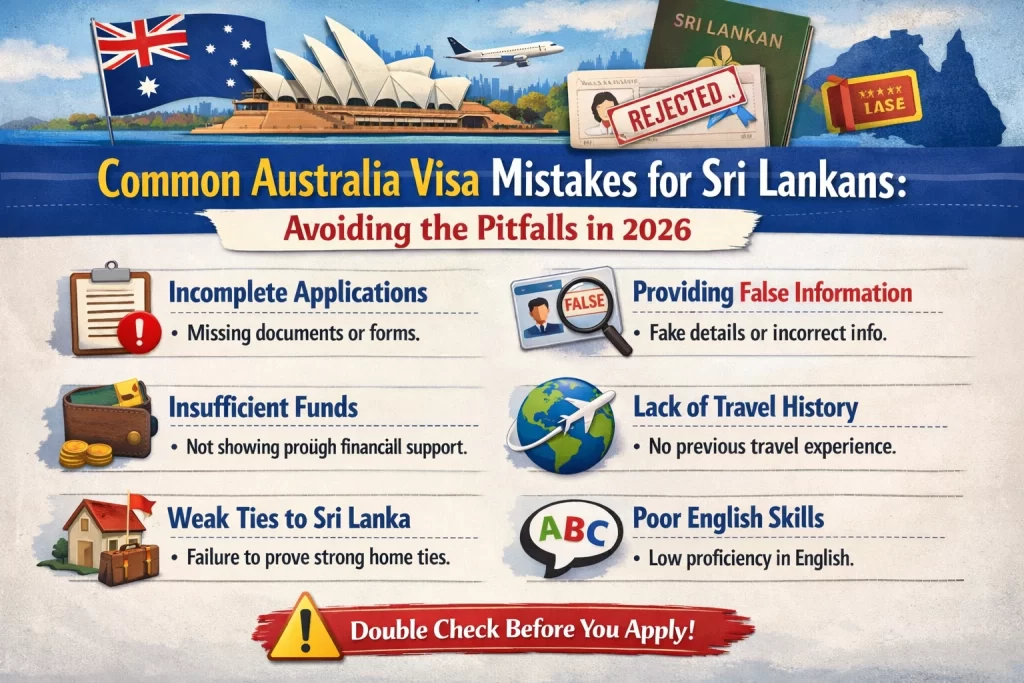
For many visa subclasses, particularly student visas, Sri Lanka’s placement in a higher-risk category (Assessment Level 2) means applications will undergo intense scrutiny. Australian immigration authorities will demand more substantial proof of financial capacity, genuine temporary entrant criteria, and strong ties to your home country. Vague or poorly documented applications face a significantly higher chance of refusal. Preparing comprehensive, verifiable evidence is no longer just recommended—it is essential.
Navigating New Partner Visa Pitfalls
The pathway for partners is set to become more demanding. A major change involves a move towards a “sponsor-first” model, where the Australian partner may need to be approved as a sponsor before a visa application can even be lodged. This front-loads the assessment process, adding potential delays. Furthermore, expect an even greater emphasis on proving the genuineness of your relationship with extensive, consistent evidence from the very beginning of your journey together.
Shifting Employer Sponsorship Pathways
The familiar TSS (Subclass 482) visa is being replaced by the new three-tiered Skills in Demand visa. This system categorises applicants into Specialist, Core, and Essential Skills streams, each with different salary thresholds, processing times, and pathways to permanent residency. For Sri Lankan professionals, this means securing sponsorship will depend heavily on your occupation’s classification and your ability to meet higher salary benchmarks. Employers will also face stricter labour market testing, making sponsorship a more calculated business decision.

Understanding Assessment Level 2: Higher Risks for Student Visas
As of 2026, Sri Lanka’s classification under Australia’s student visa framework has been elevated to Assessment Level 2. This is not a ban, but a significant policy shift that signals increased scrutiny from the Department of Home Affairs. This change reflects the Australian government’s analysis of immigration risk factors, including visa compliance and the integrity of applications from a particular country.
For Sri Lankan students, this move from a lower-risk level has direct and immediate consequences. The core of the change is a much higher evidentiary burden. While previously some students might have only needed to declare their financial capacity, Level 2 requires concrete proof. You must provide clear, verifiable evidence of sufficient funds to cover your tuition, travel, and living expenses for at least the first 12 months of your stay.
The spotlight is also intensified on the Genuine Student (GS) test. Your application must now present an exceptionally strong case that your primary intention is to study. You will need to convincingly articulate:
- Why you have chosen Australia over other countries.
- Your reasons for selecting a specific education provider and course.
- How the course directly relates to your past education and future career plans.
- Your personal circumstances and incentives to return to Sri Lanka upon completion of your studies.
Essentially, Assessment Level 2 means there is less room for error. Applications will face more rigorous checks, potentially leading to longer processing times and a higher rate of refusal for submissions that are incomplete, poorly justified, or fail to meet the stricter financial and genuine student criteria. Meticulous preparation is no longer just recommended—it is essential for success.
Partner Visa Pitfalls: Increased Scrutiny on Relationships
While the partner visa remains a primary pathway to residency, the 2026 changes introduce a far more challenging landscape for Sri Lankan applicants. With the country’s classification under a higher immigration risk level, the Department of Home Affairs will apply intense scrutiny to all relationship-based applications to combat fraud. Proving your relationship is “genuine and continuing” now requires a higher standard of evidence than ever before.
The focus has shifted from merely submitting documents to demonstrating a deeply integrated life together. Applicants can expect a meticulous review of their shared history across several key areas:
- Financial Interdependence: A simple joint bank account is no longer sufficient. Case officers will look for a consistent history of shared financial responsibilities, such as joint loans, shared utility bills, and evidence of significant joint purchases.
- Social Recognition: You must prove your relationship is known and accepted by friends and family. This includes providing photos from various events over time, joint travel history, and detailed statements from third parties that can withstand verification.
- Shared Household: Evidence of cohabitation will be critically examined. Beyond a joint lease agreement, you’ll need to demonstrate a shared domestic life through mail addressed to both partners, division of household chores, and other domestic arrangements.
- Nature of Commitment: Your long-term commitment will be assessed through your knowledge of each other’s personal circumstances, family backgrounds, and future plans. Any inconsistencies in interviews or written statements can be a major red flag.
For genuine couples, this means meticulous and early preparation is crucial. The burden of proof rests entirely on the applicant, and failure to provide comprehensive, consistent evidence can lead to a visa refusal and a lengthy appeals process.
Employer Sponsorship: The New ‘Skills in Demand’ Visa
A significant change impacting skilled Sri Lankans is the replacement of the Temporary Skill Shortage (TSS) Subclass 482 visa. By 2026, the new ‘Skills in Demand’ (SID) visa will be fully implemented, restructuring how Australia sources sponsored workers. This new visa introduces a three-tiered system designed to be more flexible and targeted.
- Specialist Skills Pathway: This stream is for highly-paid professionals, targeting top talent with an annual salary over a high threshold (e.g., $135,000 AUD). It promises streamlined processing for those in high-demand, high-wage fields.
- Core Skills Pathway: This will be the most common pathway for skilled migrants. Occupations on this list will be determined by what Australia identifies as ‘core’ to its needs. This list will be more dynamic than previous ones, meaning Sri Lankan professionals must stay updated on which skills are in demand.
- Essential Skills Pathway: This is a more regulated stream for lower-paid workers in crucial sectors like aged care and disability support. It will have stronger protections for workers and is still under development.
For applicants, the SID visa brings positive changes. It offers a clearer pathway to permanent residency, giving workers more certainty about their future. A major improvement is increased job mobility. Visa holders will have up to 180 days to find a new sponsor if they leave their job, a significant increase from the previous 60-day limit. This gives workers more power and reduces the risk of exploitation.
To prepare, Sri Lankans should focus on aligning their qualifications and experience with the occupations likely to appear on the new Core Skills list.