Have you ever found yourself dreaming of moving to Canada, only to feel overwhelmed by the complex immigration process? I think many of us have been there, wondering how to increase our chances of getting an invitation. As someone who’s worked with numerous individuals going through this process, I’ve seen firsthand the impact that understanding the Comprehensive Ranking System (CRS) can have on one’s application.
You’re likely aware that the CRS is a points-based system used to assess and rank candidates in the Express Entry pool. But what you might not know is that there are specific strategies you can use to maximize your CRS points and improve your chances of receiving an invitation. By understanding these strategies, you can take control of your application and increase your likelihood of success.
So, what sets successful applicants apart from those who are unsuccessful? I think it often comes down to a deep understanding of the CRS and how to effectively showcase your skills and experience. By sharing practical insights and real-world examples, I hope to help you gain a better understanding of the system and how to maximize your points.
As we explore the ins and outs of the CRS, you’ll learn how to identify areas for improvement in your application and develop a personalized plan to boost your points. You’ll also discover how to showcase your skills and experience in the most effective way possible, giving you the best chance of receiving an invitation to apply for permanent residence in Canada.
Introduction to Canada Comprehensive Ranking System
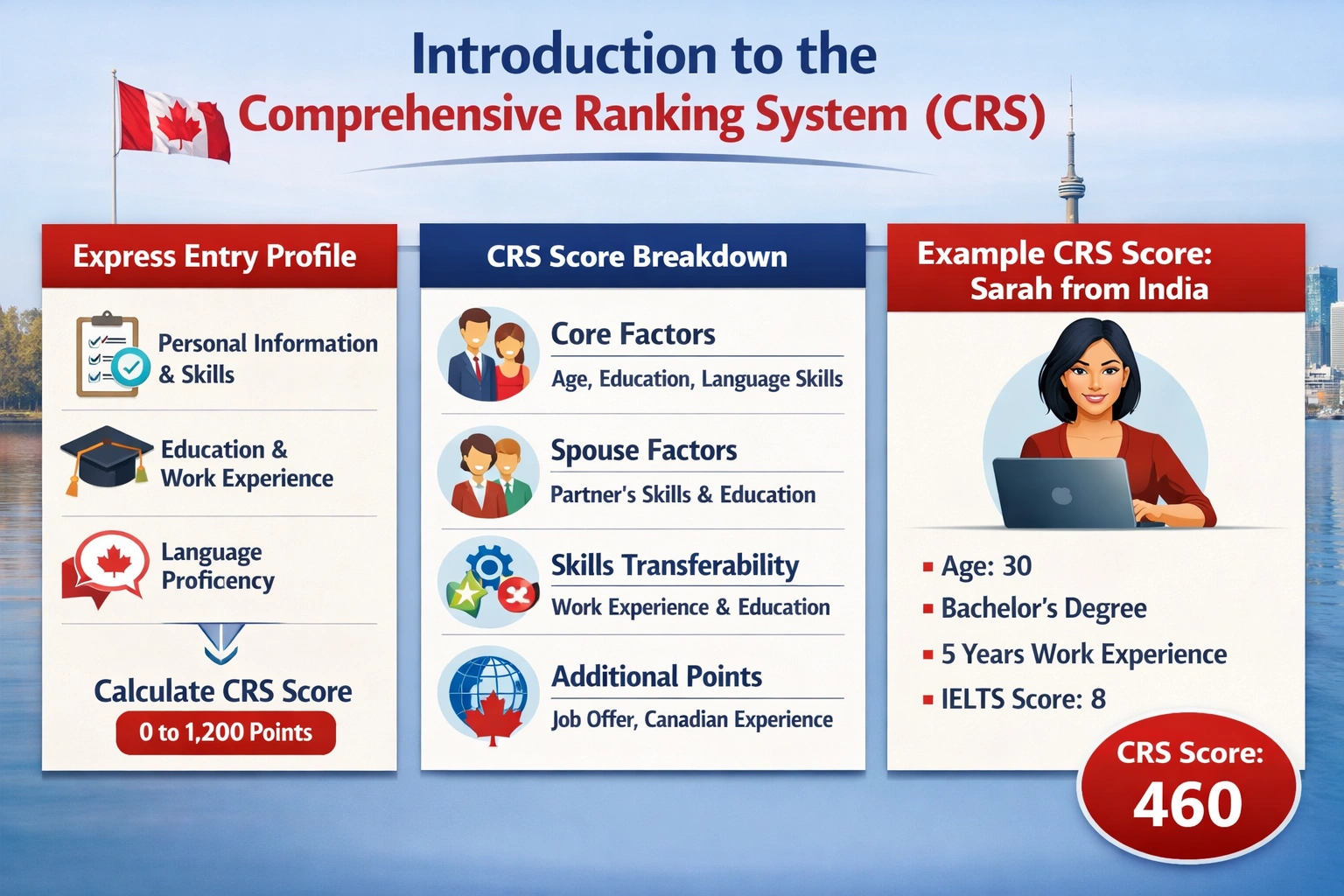
I think the Comprehensive Ranking System (CRS) is one of the most critical components of Canada’s immigration process. So, what exactly is the CRS? In simple terms, the CRS is a points-based system used to evaluate and rank candidates who have expressed interest in immigrating to Canada through the Express Entry program. The system assesses candidates based on various factors, such as age, education, work experience, language proficiency, and adaptability, among others.
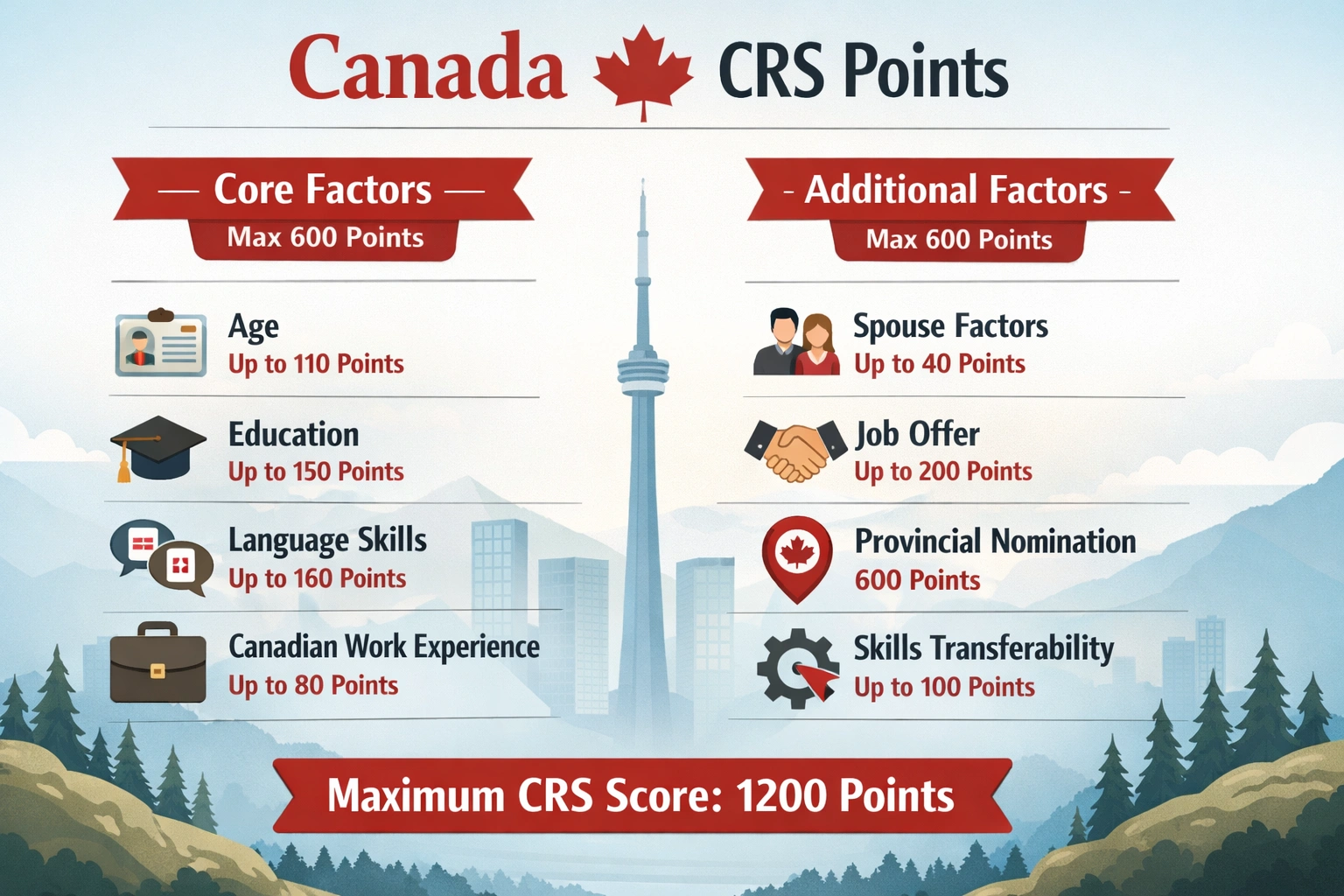
The CRS process is quite straightforward. When you create an Express Entry profile, you’re asked to provide detailed information about your background, skills, and experience. This information is then used to calculate your CRS score, which can range from 0 to 1,200 points. The higher your score, the better your chances of receiving an Invitation to Apply (ITA) for permanent residence in Canada. For instance, let’s consider the case of Sarah, a 30-year-old software engineer from India. She has a bachelor’s degree, 5 years of work experience, and an IELTS score of 8. Her CRS score would likely be quite high, possibly above 450 points, making her a competitive candidate for an ITA.
Understanding the CRS Calculation
When calculating your CRS score, you can earn points in several categories, including core human capital factors, such as age, education, and language proficiency, as well as spouse or common-law partner factors, if applicable. You can also earn points for skills transferability, which takes into account your work experience, education, and language proficiency. For example, if you have a degree in a field related to your work experience, you may earn additional points for skills transferability. Can you imagine how much of a difference a few extra points could make in your overall CRS score?
As someone who has helped numerous individuals with their Express Entry applications, I think it’s essential to understand the CRS process and how to maximize your score. By focusing on the factors that matter most, such as language proficiency, work experience, and education, you can significantly improve your chances of receiving an ITA. In the next section, we’ll dive into the specifics of how to boost your CRS score and increase your chances of immigrating to Canada.
Understanding CRS Points and Their Importance
Let’s shift gears for a moment. I think one of the most significant aspects of the Canada immigration process is understanding how Comprehensive Ranking System (CRS) points are calculated and their significance. You see, CRS points are essentially a score that determines your eligibility for a Canada invitation. The points are calculated based on various factors such as age, language proficiency, education, work experience, and adaptability.
I’ve worked with numerous clients who have struggled to maximize their CRS points, and I can tell you that it’s not just about meeting the minimum requirements. For instance, a 30-year-old applicant with a bachelor’s degree, fluent English, and 3 years of work experience in a skilled occupation can score around 450-470 points. However, if this same applicant has a master’s degree, 5 years of work experience, and a job offer in Canada, their score can jump to over 600 points. This significant difference in points can be the deciding factor in receiving an invitation to apply for permanent residence.
So, how are CRS points calculated? The system allocates points for each of the factors I mentioned earlier. For example, language proficiency is worth up to 260 points for a couple, while education can score up to 230 points. Work experience is also a significant factor, with up to 150 points available for 6 years or more of experience. I think it’s interesting to note that the Canadian government also considers adaptability factors, such as having a spouse or common-law partner with language proficiency or education, which can add up to 40 points to your score.
Now, I know what you’re thinking: what’s the significance of these points? Well, the answer is simple: the higher your CRS score, the better your chances of receiving an invitation to apply for permanent residence. For instance, in the latest Express Entry draw, the minimum CRS score required was 462 points. If your score is below this threshold, you won’t be invited to apply, no matter how qualified you are. That’s why I always advise my clients to focus on maximizing their CRS points, whether it’s by improving their language skills, gaining more work experience, or pursuing further education.
Factors Affecting CRS Points and How to Improve Them
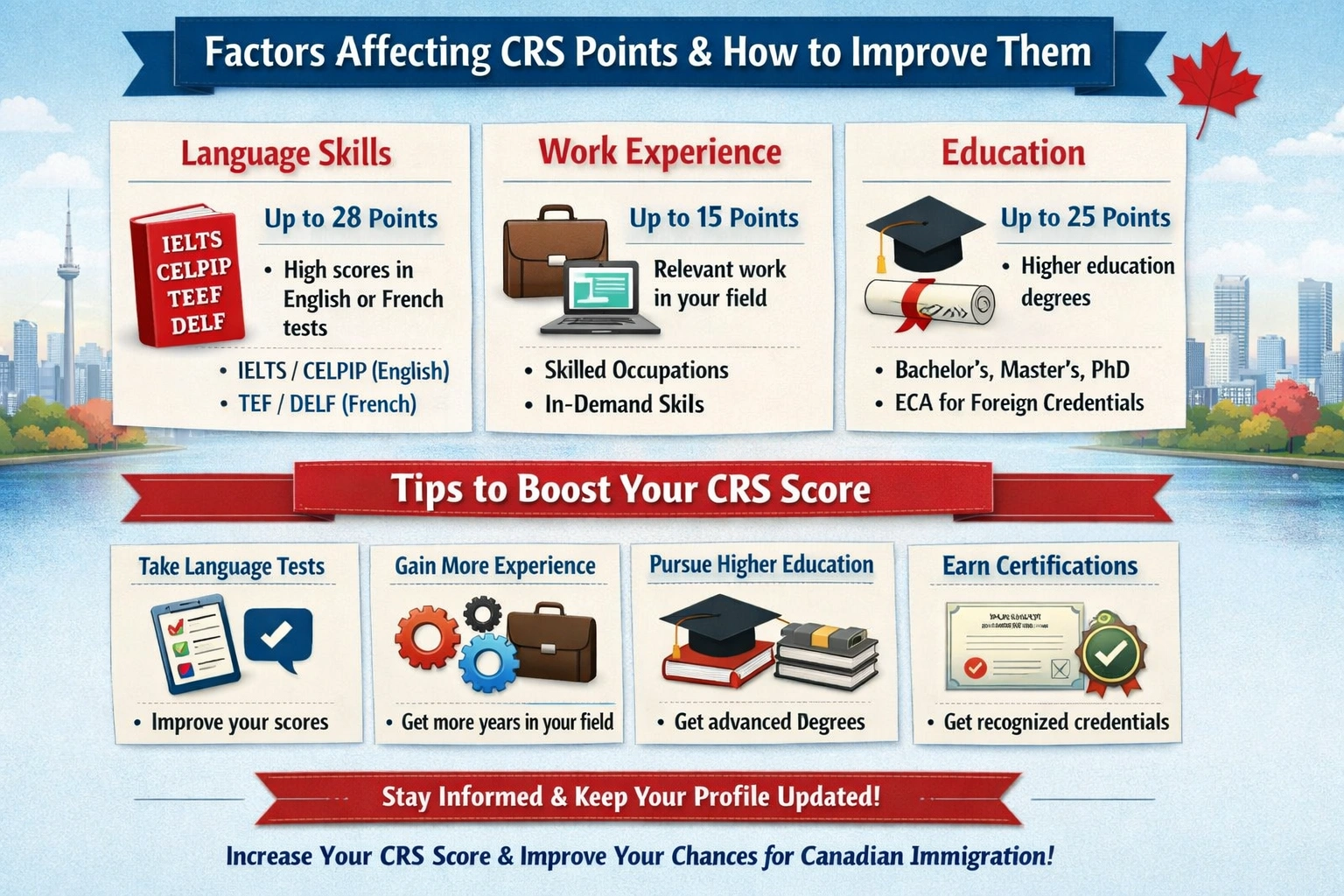
But wait — there’s more to consider. I think one of the most significant factors that affect your CRS points is your language skills. You see, the Canadian government uses a points-based system to evaluate your proficiency in English or French, with a maximum of 28 points available for language skills. To maximize your points, you’ll need to take a language proficiency test, such as IELTS or CELPIP for English, or TEF or DELF for French. For instance, if you score a band 8 in IELTS, you can get up to 22 points for your first language, and up to 6 points for your second language.
Another factor that affects your CRS points is your work experience. I think this is where many people can gain an edge, as the Canadian government values candidates with relevant work experience. You can get up to 15 points for your work experience, depending on the number of years you’ve worked in your field. For example, if you have 3 years of work experience in a skilled occupation, you can get 11 points. But what if you’ve worked in multiple fields? You can still get points for each field, as long as you have at least 1 year of experience in each one. Let’s say you’ve worked as a software engineer for 2 years and as a data analyst for 1 year — you can get points for both occupations.
Now, let’s talk about education. I think this is an area where many people can improve their CRS points. The Canadian government awards points for your level of education, with a maximum of 25 points available. For instance, if you have a bachelor’s degree, you can get up to 15 points. But if you have a master’s or PhD, you can get up to 23 points. And here’s the thing: you can get points for multiple degrees, as long as they’re from different institutions. For example, if you have a bachelor’s degree from a Canadian university and a master’s degree from a foreign university, you can get points for both degrees.
So, how can you improve your CRS points? You can start by taking language proficiency tests, gaining more work experience, or pursuing higher education. You can also consider getting an Educational Credential Assessment (ECA) report, which can help you get points for your foreign education. I think it’s also essential to keep your profile up-to-date, as the Canadian government regularly updates its occupation list and points system. By staying informed and taking proactive steps, you can increase your chances of getting an invitation to apply for permanent residence in Canada.
Maximizing CRS Points with Relevant Work Experience
Let’s shift gears for a moment. I think one of the most significant factors in maximizing your CRS points is having relevant work experience. You see, the Canadian government wants to ensure that the people they’re inviting to immigrate have the skills and experience needed to contribute to the country’s economy. So, if you have work experience in a field that’s in high demand, you’re already ahead of the game. For instance, if you’re a software engineer with 5 years of experience, you can expect to score high points for your work experience.
Now, I know what you’re thinking – what about skills? Skills are also a significant factor in maximizing your CRS points. The Canadian government uses a points system called the National Occupational Classification (NOC) to evaluate the skills and experience of applicants. If you have skills that are in high demand, such as proficiency in a particular programming language or experience with a specific software, you can claim points for those skills. For example, if you’re a data scientist with experience working with machine learning algorithms, you can claim points for that skill.
In addition to work experience and skills, certifications can also play a significant role in maximizing your CRS points. If you have a certification in a specific field, such as a Chartered Professional Accountant (CPA) designation, you can claim points for that certification. I think it’s essential to note that the Canadian government recognizes certain certifications as being equivalent to a Canadian degree or diploma, so it’s worth checking to see if your certification is recognized.
For example, let’s say you’re a registered nurse with 3 years of experience and a certification in critical care nursing. You can claim points for your work experience, skills, and certification, which can significantly boost your CRS score. You can also use online resources, such as the NOC website, to get an idea of how your skills and experience align with the Canadian job market. By doing so, you can tailor your application to highlight your strengths and increase your chances of getting an invitation to apply for permanent residence.
The Role of Language Proficiency in CRS Points
Let’s shift gears for a moment. I think one of the most significant factors in the Comprehensive Ranking System (CRS) points is language proficiency. You see, language skills play a massive role in determining your eligibility for a Canadian visa. I’ve seen many applicants struggle with this aspect, and I believe it’s essential to understand the ins and outs of language proficiency tests.
When it comes to language skills, you’ll need to take a standardized test to demonstrate your proficiency in English or French. The most common tests are the International English Language Testing System (IELTS) and the Test d’évaluation de français (TEF). I’ve found that many applicants opt for IELTS, but TEF is also widely accepted. You can choose to take either test, depending on your language of preference. For instance, if you’re applying under the Federal Skilled Worker Program, you’ll need to score at least 6.0 in each of the four IELTS components: reading, writing, listening, and speaking.
I think a good example to illustrate this is the case of a friend who applied for a Canadian visa last year. She had excellent educational credentials and work experience, but her language skills were lacking. She scored 5.5 in the writing component of the IELTS test, which significantly impacted her CRS points. She had to retake the test to improve her score, which delayed her application process. This experience taught me that language proficiency is not just a minor aspect of the application process; it’s a make-or-break factor. You can avoid this mistake by preparing thoroughly for the language proficiency test and aiming for a high score.
In my opinion, practicing consistently is key to achieving a good score in language proficiency tests. You can start by taking online practice tests, enrolling in a language course, or even practicing with a language exchange partner. The more you practice, the more confident you’ll become in your language skills. And, as a result, you’ll be able to demonstrate your proficiency more effectively in the test. So, don’t underestimate the importance of language skills in the CRS points system – it’s an area where you can gain a competitive edge over other applicants.
Strategies to Improve CRS Points and Increase Chances of Invitation
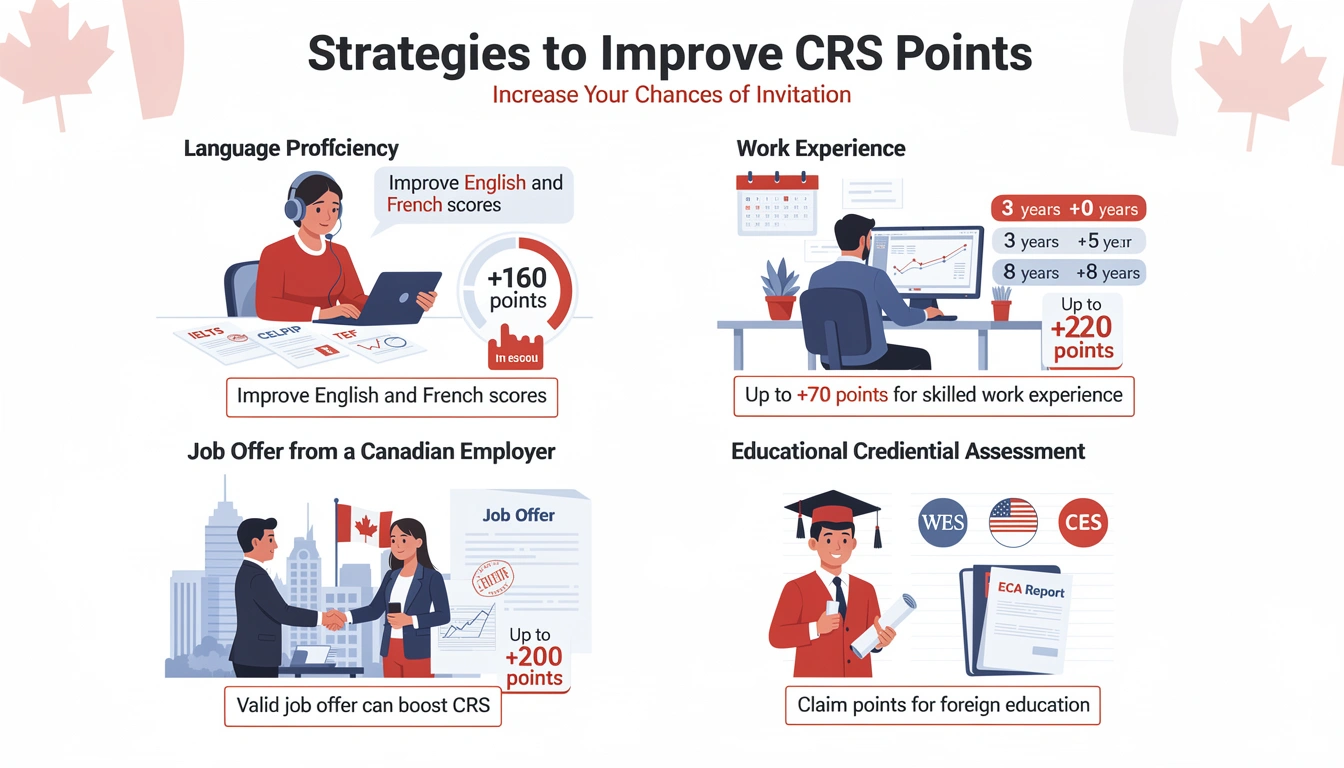
I think one of the most effective ways to boost your CRS points is by improving your language proficiency. You can take language tests like IELTS or CELPIP to assess your English skills, and TEF or DELF for French. For instance, if you score a high band in IELTS, you can earn up to 160 points for your first language and 20 points for your second language. I’ve seen many candidates increase their chances of invitation by focusing on language skills.
Another strategy is to gain more work experience. The more years of experience you have, the higher your CRS points will be. You can earn up to 70 points for having 5 or more years of work experience in a skilled occupation. Let’s take the example of a software engineer who has 8 years of experience. They can claim points for their work experience and also get points for their education, which can significantly increase their overall CRS score. You can also consider taking a course or getting a certification to enhance your skills and increase your points.
Getting a job offer from a Canadian employer can also significantly improve your CRS points. You can earn up to 200 points for a valid job offer, which can almost guarantee an invitation to apply for permanent residence. For example, if you have a master’s degree and 3 years of work experience, you can still get an invitation with a job offer, even if your CRS score is not very high. I think this is a great option for those who have a strong profile but are struggling to get an invitation.
Finally, I think you should also consider getting an Educational Credential Assessment (ECA) report. An ECA report can help you claim points for your foreign education, which can be a significant boost to your CRS score. You can get an ECA report from a recognized organization like Comparative Education Service or World Education Services. For instance, if you have a degree from a foreign university, you can get an ECA report to claim points for your education, which can increase your chances of getting an invitation.
Unlock Your Canadian Dreams
I think the key to successfully securing a Canada invitation lies in understanding how to maximize your Comprehensive Ranking System (CRS) points. By focusing on improving your language skills, gaining relevant work experience, and pursuing higher education, you can significantly boost your CRS score. So, what’s holding you back from starting your Canada immigration journey by maximizing your CRS points today?
Frequently Asked Questions
What is the Comprehensive Ranking System?
The Comprehensive Ranking System is a points-based system used to evaluate and select candidates for Canadian immigration
How are CRS points calculated?
CRS points are calculated based on factors such as language skills, work experience, education, and other relevant criteria