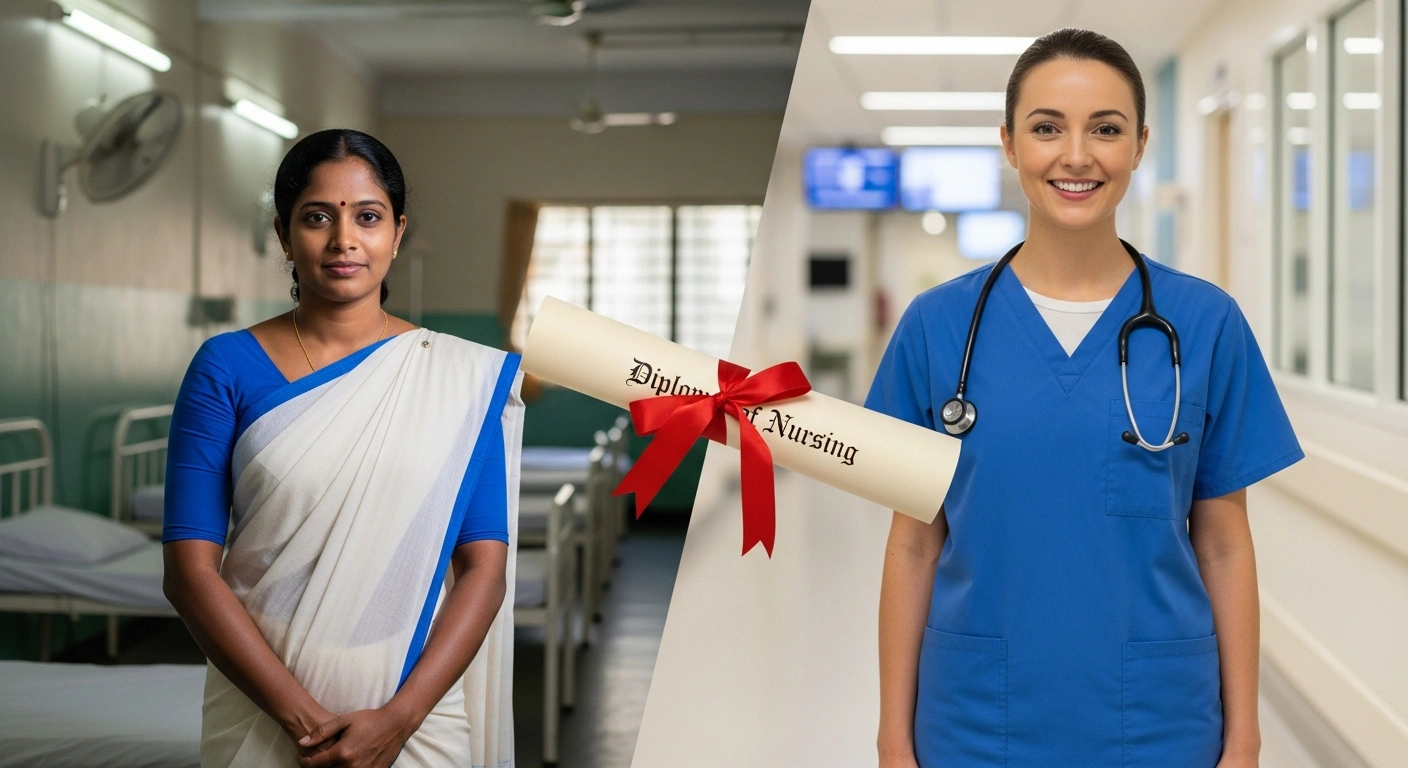
In Sri Lanka, if you are a nurse, you are the backbone of the hospital. You have handled dengue outbreaks, managed overcrowded wards in government hospitals, and developed skills that are second to none. Naturally, when you look at Canada and see the headlines screaming “NURSE SHORTAGE,” you think the path is clear. You assume you will land at Pearson Airport, show your degree, and start your shift.
I need to be honest with you: it does not work that way. In fact, for many internationally educated nurses (IENs), the process of becoming a Registered Nurse (RN) in Canada is one of the most frustrating, expensive, and time-consuming journeys of their lives.
But—and this is a big “but”—it is possible. And once you cross that finish line, the rewards are immense. We are talking about salaries that start at $75,000+ a year, strong unions, and incredible respect. This guide explains the maze of accreditation so you don’t get lost in it.
The Gatekeeper: NNAS (National Nursing Assessment Service)
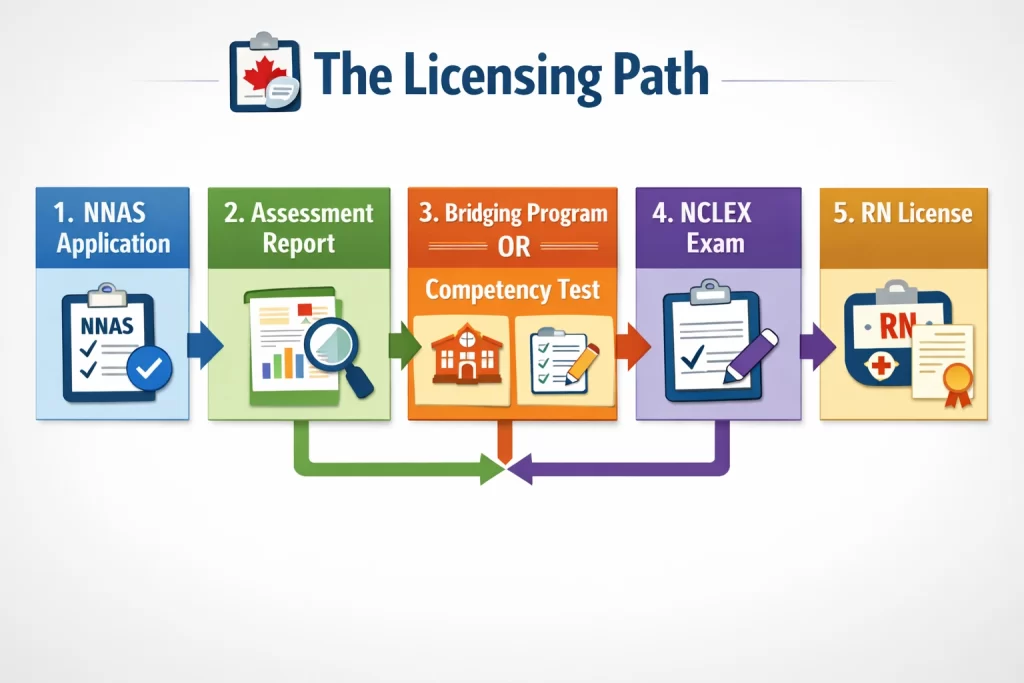
Before you can apply to a provincial nursing board, you must go through the NNAS. Think of them as the bouncer at the club.
You cannot just send them your transcript. You need to arrange for the Sri Lanka Medical Council (SLMC) and your nursing school to send documents directly to NNAS. You cannot touch these papers.
The Trap: Sri Lankan bureaucracy is slow. Documents get lost. Signatures are missed.
The Cost: The application fee is roughly $650 USD, plus the cost of couriering documents from Colombo.
The Verdict: After months of waiting, NNAS will issue a report comparing your education to Canadian standards. Most Sri Lankan diplomas (and even some degrees) come back as “Somewhat Comparable” or “Not Comparable.” Do not panic. This is standard.
The Provincial Hurdles: CNO, BCCNM, etc.
Once you have your NNAS report, you apply to the province where you want to live. For most Sri Lankans, this is Ontario (College of Nurses of Ontario – CNO) or BC (BCCNM).
The “Competency” Gap
The regulator will likely say you have gaps in your education, specifically in areas like:
• Ethics and Law: Canadian medical law is very different regarding patient privacy and consent.
• Mental Health: The Canadian curriculum emphasizes mental health nursing more than many South Asian programs.
• Soft Skills: Communication styles with doctors and patients.
The Solution: Bridging Programs
This is where most IENs end up. A “Bridging Program” is a college course designed specifically to fill these gaps.
Duration: Anywhere from 1 to 2 years.
Cost: It can be expensive ($10,000+), but OSAP (student loans) is often available if you are a Permanent Resident.
Expert Tip: Completing a bridging program at a reputable college (like George Brown or York University) is the golden ticket. It not only qualifies you for the licensing exam (NCLEX-RN) but also gives you “Canadian Experience” through clinical placements.
The “Survival Job”: Becoming a PSW
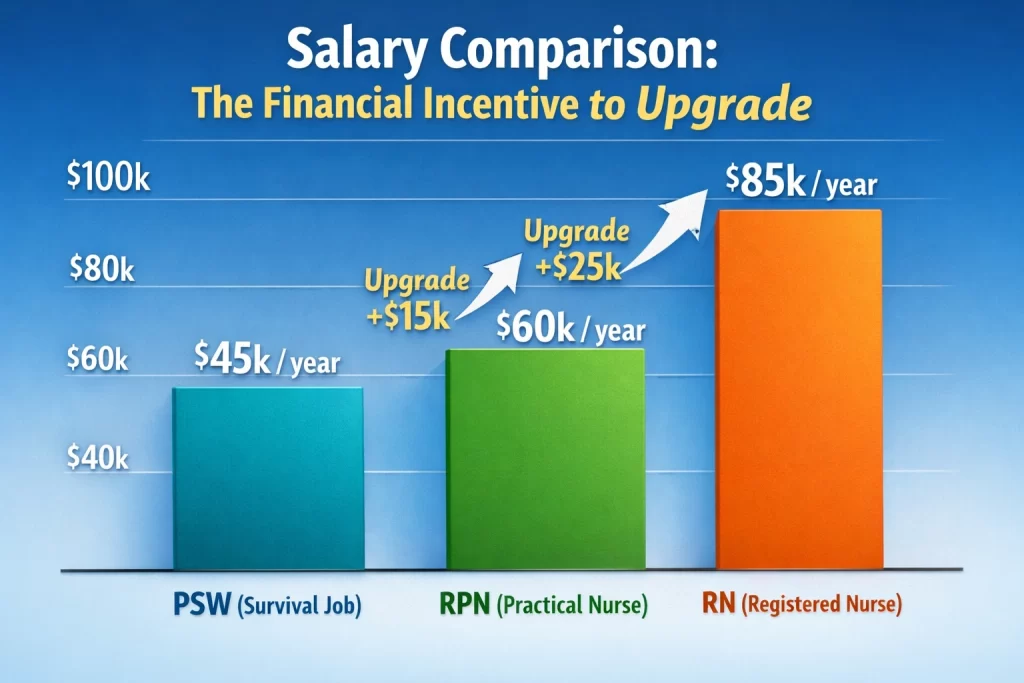
So, what do you do while you wait 2 years to become a nurse? You work as a Personal Support Worker (PSW).
Many long-term care homes will hire IENs as PSWs. The scope of work is different—you are helping with bathing, feeding, and basic care, not administering meds or IVs.
The Wage: It pays significantly less than nursing (around $22-$26/hour), but it puts food on the table and gets your foot in the door of the healthcare system.
The New “Fast Track” (2024 Updates)
Because the nurse shortage is so severe, provinces are finally loosening the rules.
Ontario’s SPEP Program: The Supervised Practice Experience Partnership allows eligible nurses to get their license by working under supervision rather than going back to school. This is a game-changer.
Nova Scotia’s Fast Track: Nova Scotia recently expedited the process for nurses from certain countries (including Philippines and India—check current status for Sri Lanka) to get licensed in weeks, not years.
Conclusion
If you are a nurse in Sri Lanka planning to move here, bring your patience along with your stethoscope. Prepare for a timeline of 12 to 24 months before you are fully licensed.
Don’t be discouraged by the “Not Comparable” report. It is just the first step in a well-worn path. Thousands of Sri Lankan nurses have walked it before you, and today they are head nurses in Toronto ERs and Vancouver ICUs. The country needs you; it just needs you to jump through a few hoops first.
References
- National Nursing Assessment Service (NNAS). (2025). Application Handbook.
- College of Nurses of Ontario (CNO). (2025). Internationally Educated Nurses Guide.
- CARE Centre for Internationally Educated Nurses. (2025). Bridging Programs and Support.
- Government of Ontario. (2025). Nursing Strategy and SPEP Program.
- British Columbia College of Nurses and Midwives. (2025). Registration for IENs.