Moving from the tropical warmth of Colombo or Kandy to a Canadian January can feel like landing on a different planet. One day you are complaining about the humidity and 28°C heat; the next, the air hurts your face and the sun sets at 4:30 PM.
The anxiety is real. Most Sri Lankans arrive with a suitcase full of “winter clothes” bought in Pettah or Odel that, frankly, aren’t built for a wind chill of -30°C. But here is the secret that every long-term immigrant eventually learns: winter isn’t about suffering. It’s about strategy.
You don’t need to hibernate for five months. With the right gear, a few adjustments to your home, and a shift in mindset, you can actually enjoy the season. This guide cuts through the noise and tells you exactly how to adapt your tropical body to the Great White North.
The Art of Layering (And Why Jeans Are Your Enemy)
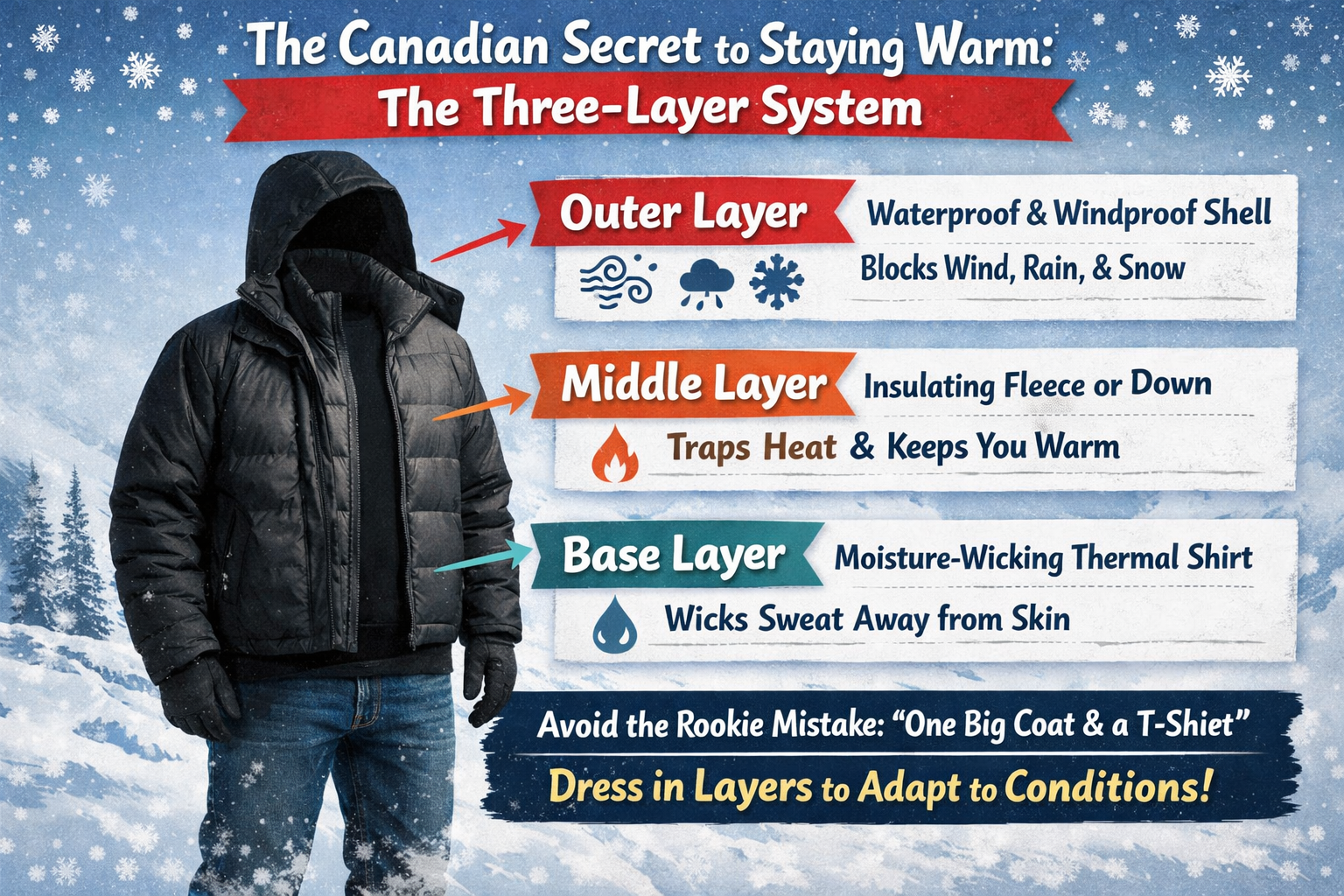
The biggest mistake new arrivals make is buying one massive, heavy coat and wearing a T-shirt underneath. This leaves you sweating on the subway and freezing on the street. The Canadian secret is the three-layer system.
1. The Base Layer (The Wick)
This touches your skin. Its only job is to move sweat away from your body so you stay dry.
The Golden Rule: Never wear cotton next to your skin in winter. Cotton absorbs moisture and holds it against your body, which acts like a cold compress.
What to buy: Merino wool or synthetic “thermal” underwear (often called long johns). Brands like Uniqlo (Heattech) or Marks are affordable go-tos.
2. The Mid-Layer (The Insulation)
This layer traps your body heat. Think of it as the “warm air” trap.
What to buy: A fleece sweater, a wool jumper, or a thin down vest. You can add or remove this layer depending on if you are sitting in a lecture hall or waiting for a bus.
3. The Outer Layer (The Shell)
This protects you from wind, snow, and rain.
What to buy: A parka or shell jacket that is windproof and waterproof. Look for a “temperature rating” on the tag—aim for -20°C or lower if you are in Ontario or the Prairies. A hood with faux fur isn’t just for fashion; the fur breaks the wind and creates a pocket of warm air around your face.
Your Body Chemistry: Vitamin D and Dry Skin
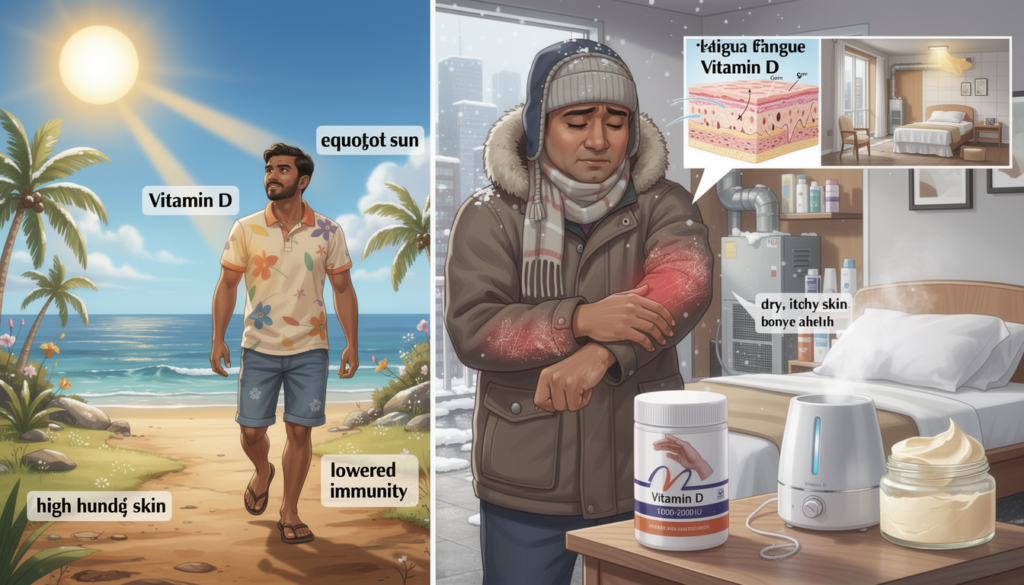
Coming from Sri Lanka, your body is used to intense equatorial sun and high humidity. Canada offers neither in January. This biological shock requires two specific adjustments.
The “Sunshine Vitamin”
In Canada, the sun is too weak in winter to produce Vitamin D naturally in your skin. This is doubly true for people with darker skin tones, as melanin acts as a natural sunblock, requiring even more sun exposure to generate the same amount of Vitamin D as someone with lighter skin.
Deficiency leads to fatigue, bone pain, and a lowered immune system—often mistaken for “just being tired.”
The fix: Speak to your doctor, but most pharmacists recommend a daily Vitamin D supplement (typically 1,000–2,000 IU) for South Asian immigrants during winter months.
Fighting the Itch
Canadian heating systems dry out the air inside your home aggressively. You might wake up with a sore throat, nosebleeds, or skin that feels like sandpaper. This is a far cry from the humid air of Galle.
- Get a Humidifier: Run a cool-mist humidifier in your bedroom at night. It helps you sleep better and keeps your sinuses healthy.
- Switch Lotions: That light moisturizer you used in Colombo won’t cut it. Switch to heavy creams (tubs, not pumps) or body butters immediately after showering to lock in moisture.
Getting Around: The “Penguin Walk” and Black Ice
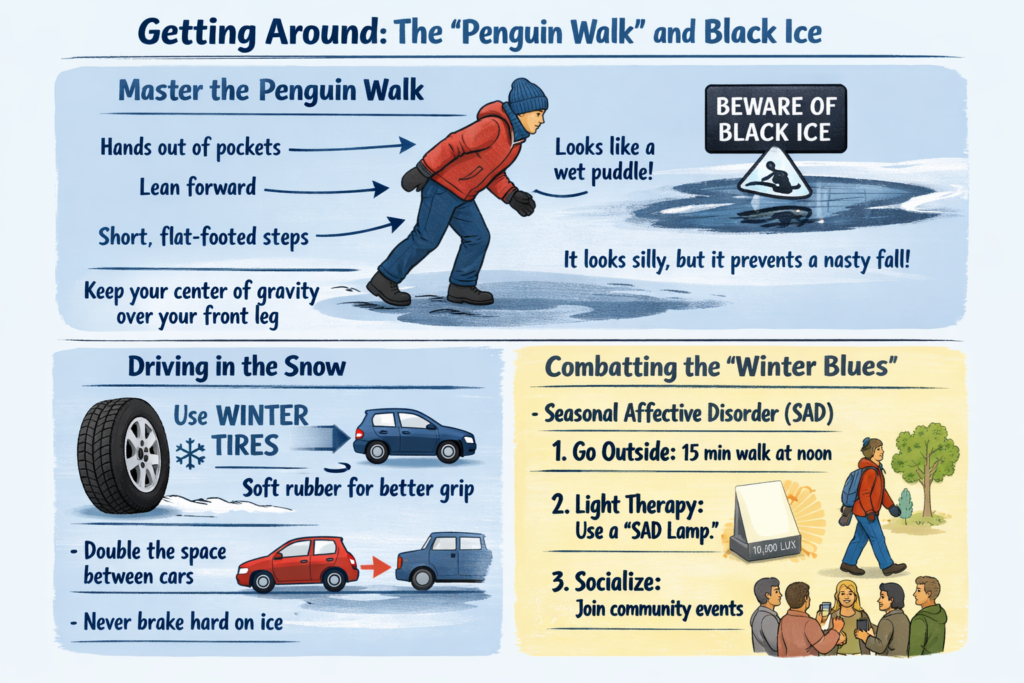
Walking on snow is easy; walking on ice is dangerous. You will inevitably encounter “black ice”—a thin, invisible layer of ice on the pavement that looks like a wet puddle.
Master the Penguin Walk
When you suspect it’s slippery, forget your normal confident stride.
Do this instead: Keep your hands out of your pockets (for balance), lean your torso slightly forward, and take short, flat-footed steps. It looks silly, but it keeps your center of gravity over your front leg, preventing a nasty fall.
Driving in the Snow
If you plan to drive, you must understand that all-season tires are a lie in Canada. Below 7°C, the rubber in normal tires hardens and loses grip.
The solution: Install dedicated winter tires. They have a snowflake symbol on the sidewall and are made of softer rubber that grips ice. In Quebec and parts of BC, they are mandatory by law, but they are essential for safety everywhere. Leave double the space between you and the car in front, and never brake hard on ice.
Combatting the “Winter Blues”
Seasonal Affective Disorder (SAD) is a type of depression related to changes in seasons. It hits many newcomers who aren’t used to the sun setting before they even leave the office.
If you feel persistently low, lethargic, or crave heavy carbs constantly, you might be experiencing this.
Proactive steps:
1. Go outside: Even a 15-minute walk at noon helps.
2. Light Therapy: Buy a “SAD lamp” (10,000 lux) and sit by it for 20 minutes in the morning. It tricks your brain into thinking the sun has risen properly.
3. Socialize: Don’t isolate yourself. Sri Lankan communities in Toronto and Vancouver often hold indoor gatherings, potlucks, and cricket watch parties during winter. Community is a powerful antidepressant.
Conclusion
Surviving a Canadian winter is a rite of passage. The first one will be tough, mostly because you are learning the ropes. But by your second year, you won’t just be surviving; you’ll be checking the forecast, grabbing your thermal mug, and heading out to the skating rink.
Remember, there is no such thing as bad weather, only bad clothing. Invest in yourself, protect your health, and you might find that the quiet beauty of a snowy morning is something you actually look forward to.
References
- RBC Royal Bank. (2025). How to dress for Canadian winter: Tips for newcomers.
- Government of Canada. (2025). Vitamin D and Your Health.
- Transport Canada. (2025). Winter Driving: Safety Tips and Regulations.
- Mayo Clinic. (2023). Humidifiers: Ease skin, breathing symptoms.
- Kids Help Phone. (2025). Seasonal affective disorder: What it is & how to cope.