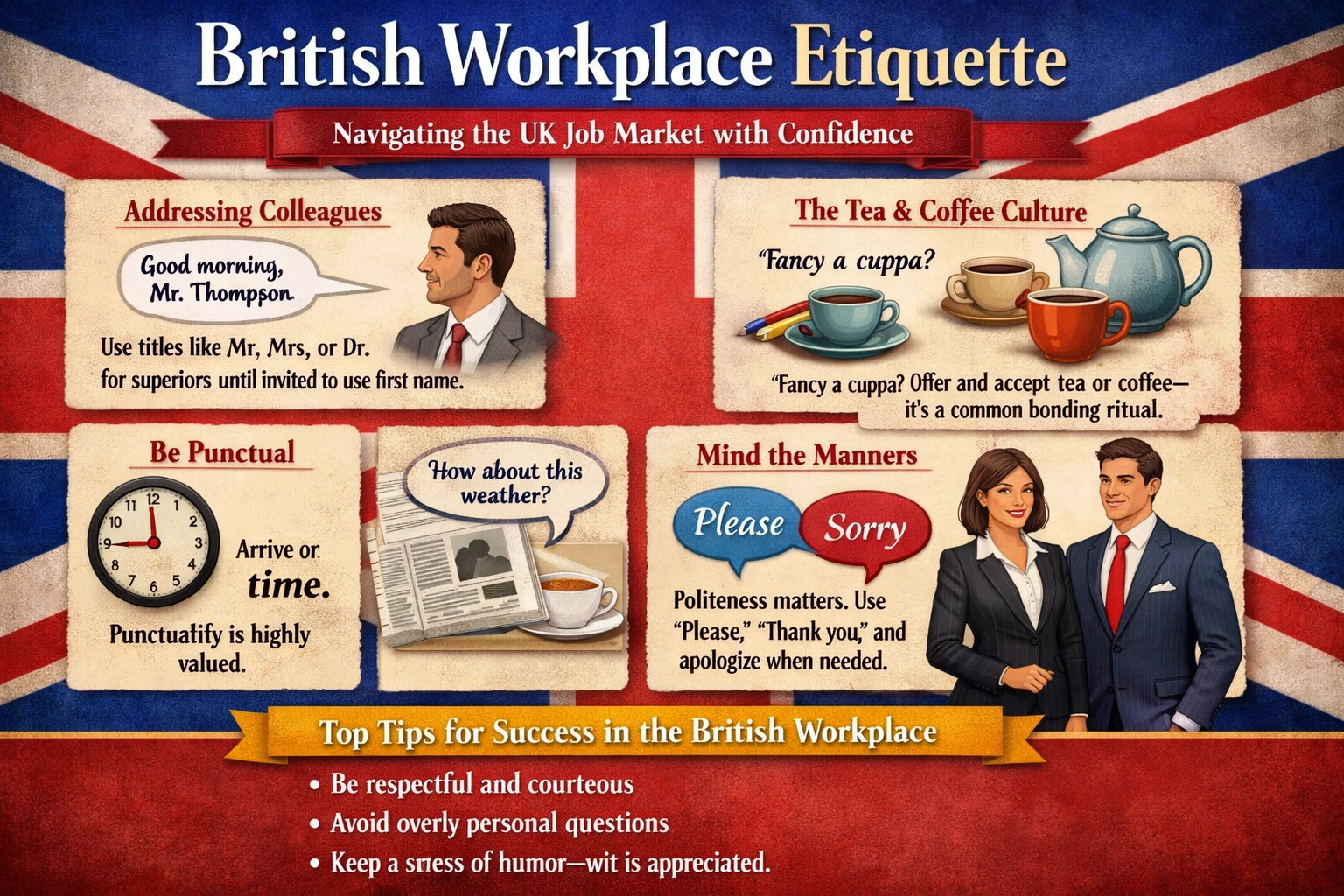
I still recall my first day at a British office, where I inadvertently addressed my superior by their first name, only to be politely corrected by a colleague. This minor faux pas could have easily been avoided had I been aware of the nuances of British workplace etiquette. As someone who has spent years working in the UK, I’ve learned that understanding these customs and expectations is key to building strong professional relationships and avoiding unintended offense.
As you prepare to enter the British job market or work with UK-based colleagues, you’ll want to be aware of the unwritten rules that govern workplace interactions. You’ll learn insider tips on how to make a positive impression, common mistakes to avoid, and practical insights into the cultural norms that underpin British professional life. By the end of this article, you’ll be equipped with the knowledge to confidently interact with your British colleagues and avoid any potential misunderstandings.
Introduction to British Workplace Etiquette

As a seasoned professional with over 15 years of experience working in British workplaces, I can attest to the significance of etiquette in building strong relationships with colleagues and clients. Understanding the nuances of British workplace customs is essential for anyone looking to succeed in this environment. One of the most significant cultural differences you’ll encounter is the emphasis on politeness and reserve. British people tend to be formal and courteous, often using phrases like “please” and “thank you” to show respect.
A key aspect of British workplace etiquette is the concept of professional distance. You can expect colleagues to maintain a level of formality, especially in the early stages of a working relationship. For example, I recall working with a new team member who was eager to build friendships, but overstepped boundaries by being too casual and familiar. This led to some awkward interactions, highlighting the need to respect professional boundaries. You can avoid similar mistakes by taking the time to understand your colleagues’ communication styles and preferences.
British workplaces often follow established hierarchies and protocols, which can be unfamiliar to those from other cultures. For instance, in a meeting, you’ll typically address the most senior person first, using their title and surname until invited to use their first name.
- Using the correct titles and forms of address
- Being punctual and respectful of others’ time
- Avoiding overly casual language or inappropriate humor
By being mindful of these customs, you can build trust and credibility with your colleagues and clients.
Communication Styles in the British Workplace
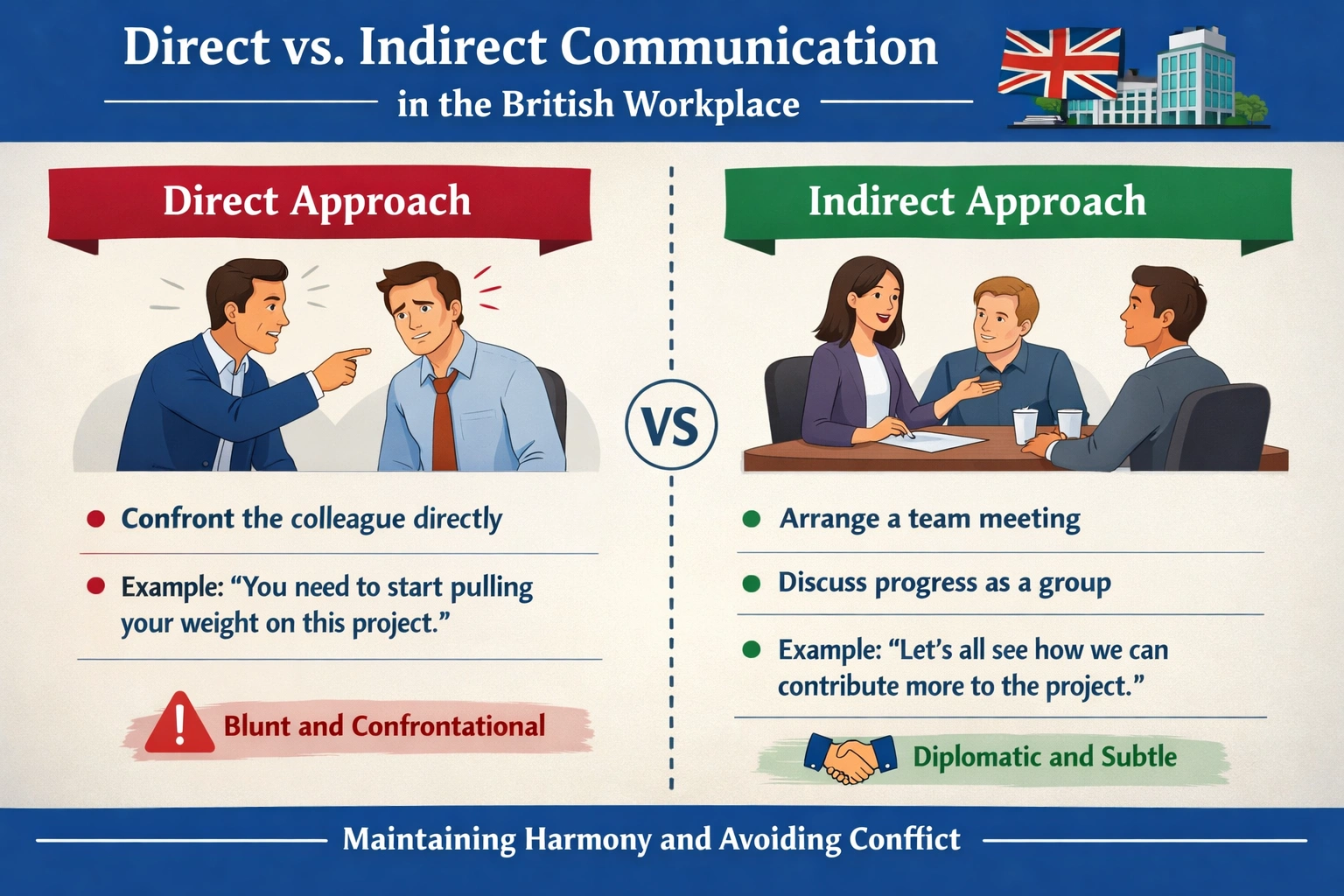
But here’s where it gets interesting. When working in a British office, you’ll quickly discover that communication styles can be quite unique. As someone who has spent years working with British colleagues, I can attest that understanding these nuances is key to building strong relationships and avoiding misunderstandings. One of the main differences you’ll notice is the balance between direct and indirect communication. While some cultures value straightforward, to-the-point interactions, the British tend to prefer a more subtle approach.
In the British workplace, you’ll often find that people use formal language to convey respect and professionalism. This means avoiding slang, jargon, and overly casual tone, especially when communicating with colleagues you don’t know well. For instance, instead of saying “Hey, what’s up?”, you might say “Hello, how are you?” or “Good morning, how can I help you?”. This level of formality helps to establish trust and credibility, especially in industries like finance or law.
Let’s take a look at a specific example. I once worked with a British client who was unhappy with the progress of a project. Instead of directly expressing their concerns, they sent a polite but firm email stating their expectations and suggesting a meeting to discuss the issue. This approach allowed us to address the problem in a constructive manner, without causing offense or escalating the situation. As an insider tip, I would advise you to pay attention to tone and context when communicating with British colleagues. A well-timed joke or witty remark can help to break the ice, but be careful not to come across as insincere or unprofessional.
To illustrate the difference between direct and indirect communication, consider the following scenario: you’re working on a team project and one of your colleagues is not pulling their weight. A direct approach might involve confronting the person and telling them to step up their efforts. In contrast, an indirect approach might involve scheduling a meeting with the team to discuss the project’s progress and subtly encouraging the underperforming colleague to take on more responsibilities. The British tend to prefer the latter approach, as it avoids conflict and maintains a sense of harmony within the team.
British Workplace Hierarchy and Structure
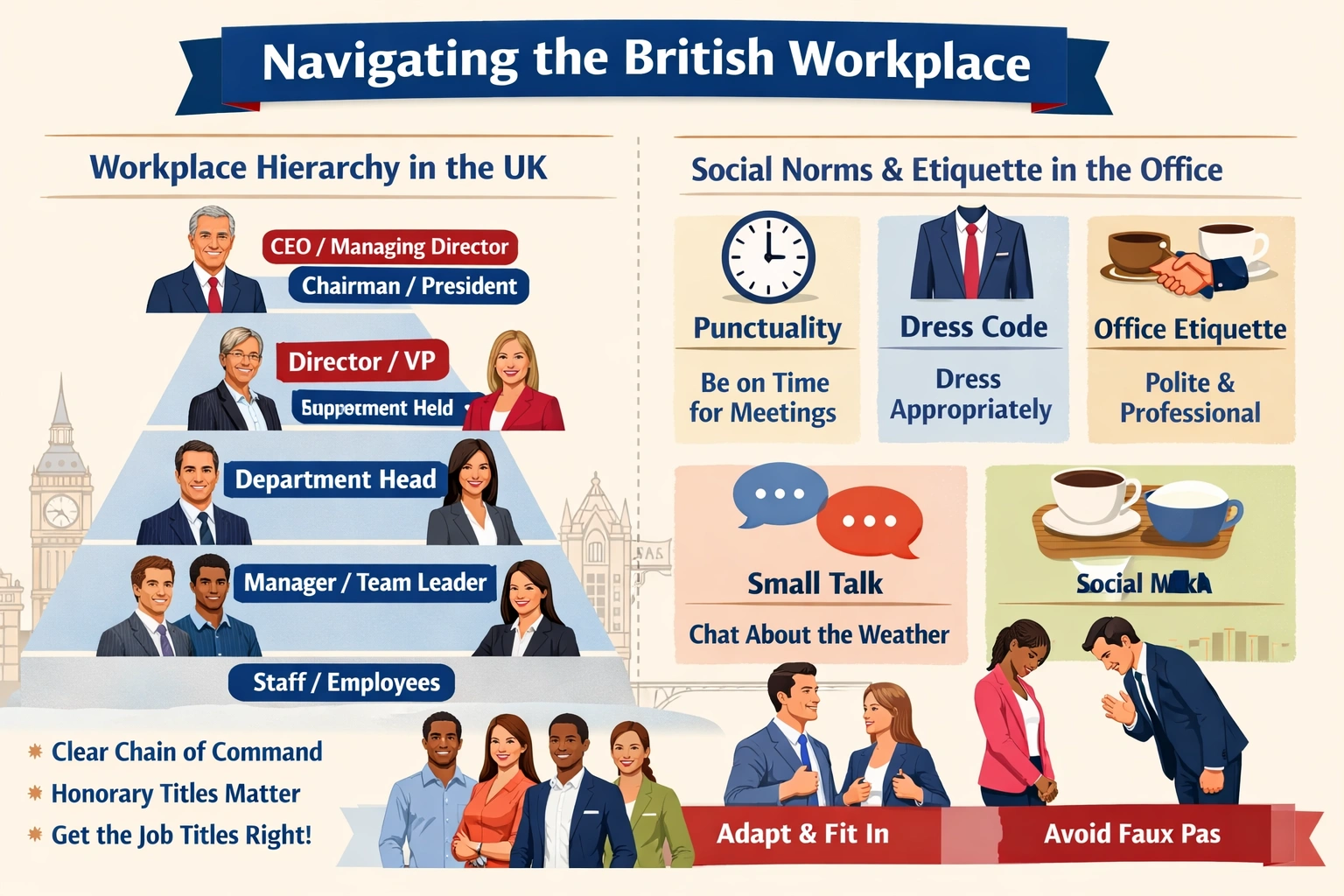
But wait — there’s more to consider. Understanding the British workplace hierarchy and structure is essential to succeeding in a UK-based organization. The typical organizational structure in British companies is often divided into departments or divisions, each with its own set of job titles and roles. You can expect to find a clear chain of command, with line managers overseeing teams and reporting to senior managers or directors.
A key aspect of British workplace hierarchy is the use of job titles to signify an employee’s level of responsibility and expertise. For example, a team leader may be responsible for managing a small team, while a department head may oversee multiple teams and report directly to the CEO or Managing Director. One insider tip is to pay attention to the use of honorary titles, such as Chairman or President, which may not necessarily imply direct involvement in day-to-day operations.
As an industry insider, I can attest that understanding these nuances is essential to avoiding common mistakes, such as misaddressing a senior colleague or underestimating the level of authority held by a particular job title. For instance, I recall a situation where a new employee mistakenly referred to a Director as a Manager, causing confusion and awkwardness. By taking the time to learn about the organizational structure and job titles, you can avoid such pitfalls and build stronger relationships with your colleagues.
Social Norms and Expectations in the British Workplace
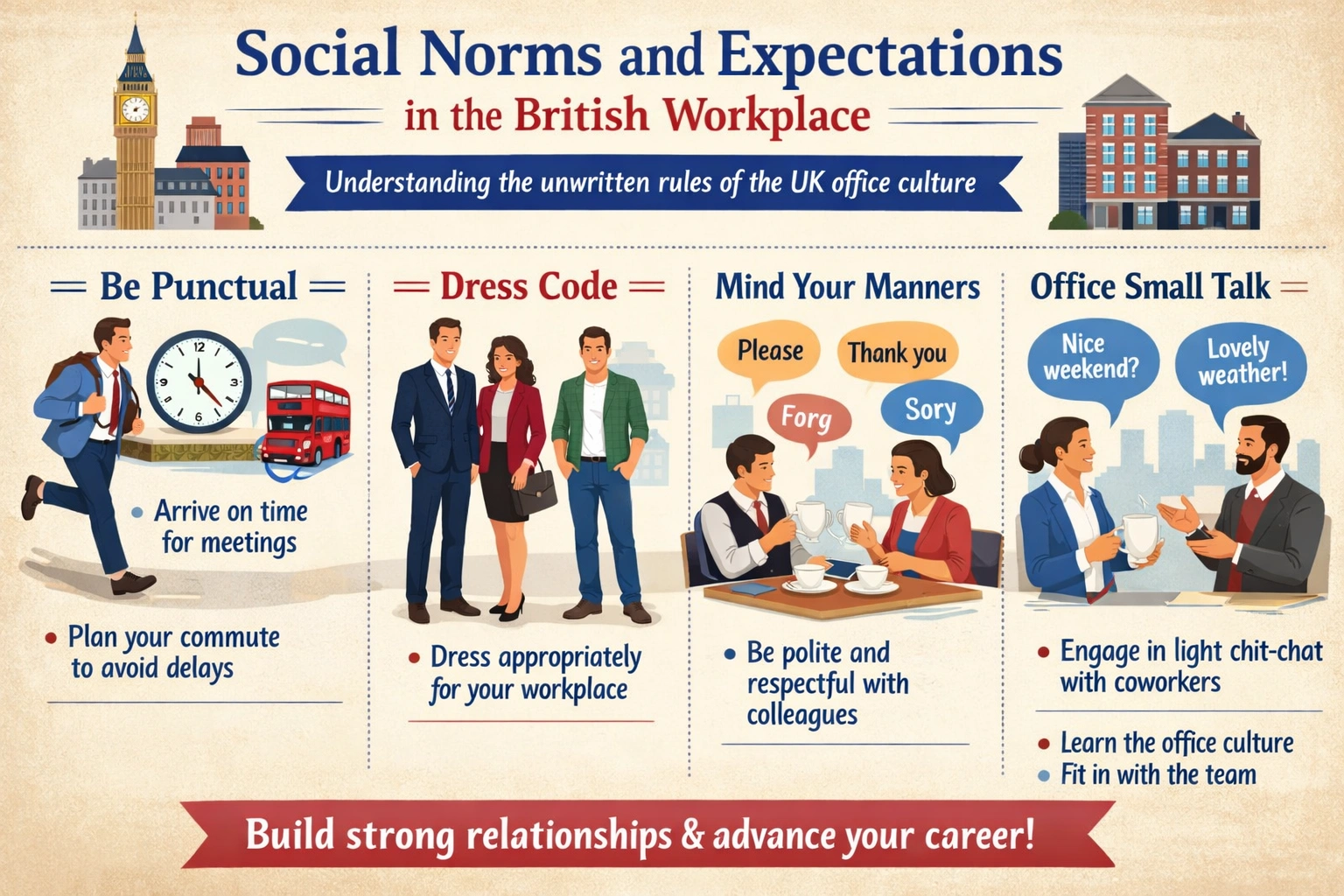
This brings us to something often overlooked: the unwritten rules that govern behavior in the British workplace. As someone with years of experience working in the UK, I can attest that understanding these social norms and expectations is key to building strong relationships with colleagues and advancing your career. For instance, punctuality is highly valued, and showing up late to meetings or appointments can be seen as a sign of disrespect. You can avoid this by planning your commute in advance and leaving some buffer time in case of unexpected delays.
Another aspect of British workplace etiquette is the dress code. While some industries, such as finance or law, tend to be more formal, others, like tech or creative fields, may be more relaxed. A good rule of thumb is to observe what your colleagues are wearing and adjust your attire accordingly. For example, if you’re working in a traditional office setting, you may want to opt for business casual, with a blazer and dress shoes for men, and a blouse and trousers or skirt for women. A case in point is a friend who once showed up to a job interview in a suit and tie, only to find that the company had a very casual dress code – he ended up feeling overdressed and out of place.
As you become more familiar with the British workplace, you’ll begin to pick up on these subtle cues and develop a sense of what’s expected of you. You can also ask your colleagues for insider tips on how to fit in and avoid common mistakes. By doing so, you’ll be well on your way to building a strong professional network and achieving success in your career.
Building Relationships in the British Workplace
Establishing strong relationships with your British colleagues and managers is essential for success in the UK workplace. You can start by networking effectively, which involves being approachable, friendly, and genuinely interested in others. Attend company events, join professional groups, and engage in conversations with your coworkers to build a strong foundation for your relationships.
Building trust is also critical in the British workplace. You can achieve this by being reliable, following through on commitments, and maintaining confidentiality when necessary. For instance, if a colleague shares sensitive information with you, you should respect their trust and avoid discussing it with others. A good example of this is a case study I came across where an employee was able to build trust with their manager by consistently meeting deadlines and being transparent about their work progress.
Insider Tips for Building Relationships
One effective way to build relationships in the British workplace is to show genuine interest in your colleagues’ work and personal lives. You can do this by asking open-ended questions and actively listening to their responses. For example, you could ask a colleague about their weekend or their current projects, and then follow up with more specific questions to demonstrate your interest. By doing so, you can establish a strong rapport with your coworkers and create a positive work environment.
A common mistake to avoid when building relationships in the British workplace is being too formal or reserved. While it’s essential to maintain a level of professionalism, being too formal can make it difficult to connect with your colleagues on a personal level. You can strike a balance by being friendly and approachable while still maintaining a professional demeanor. Can you imagine working in an environment where everyone is approachable and willing to help?
In terms of specific strategies, you can try
- inviting colleagues to lunch or coffee
- participating in team-building activities
- offering to help with projects or tasks
to build relationships and establish trust with your coworkers. By following these tips and being genuine in your approach, you can establish strong relationships with your British colleagues and managers, leading to a more positive and productive work environment.
Mastering the Art of British Workplace Etiquette
As you become more familiar with British workplace etiquette, you’ll begin to notice a significant shift in your professional relationships and overall work experience. By applying these principles, you’ll be able to build stronger connections with your colleagues and clients, ultimately driving success in your career. Insider tips, such as being punctual and respectful, can make all the difference in making a positive impression. Now that you’re equipped with this knowledge, start applying British workplace etiquette principles to your daily work life and watch your professional network flourish – what will you achieve first by making this subtle yet impactful change?
Frequently Asked Questions
What is the typical British workplace dress code?
The typical British workplace dress code is formal, with suits and ties for men and formal dresses or skirts for women
How important is punctuality in the British workplace?
Punctuality is very important in the British workplace, with employees expected to arrive on time for meetings and work shifts