Having analyzed hundreds of international transfers, I’ve seen the same costly mistake repeatedly: focusing on the advertised transfer fee while ignoring the hidden exchange rate markup. A service might promise a “$2 fee” but then build a 4% margin into their USD to LKR rate. On a $1,000 transfer, that’s a hidden $40 cost that silently eats into the money your family receives. This is the most common way people overpay.
The only way to find the true cheapest option is to calculate the total cost, which combines the fee and the exchange rate “spread”—the difference between the rate you get and the real mid-market rate. It sounds complicated, but it’s a simple calculation once you know what to look for and where to find the data.
We’ve done the heavy lifting for you. This analysis directly compares the total costs of the top services for 2025, using real-world transfer scenarios. You’ll get a clear, step-by-step framework to see exactly how much LKR will land in your recipient’s account for every dollar you send, ensuring you always choose the most efficient option for your needs.
Understanding the True Cost of Sending Money to Sri Lanka
When you see a “zero fee” transfer, it’s natural to think you’ve found the cheapest option. But the upfront fee is only half the story. To truly understand the cost, you need to look at two components: the transfer fee you’re charged and the exchange rate margin, which is a hidden cost built into the rate you’re offered.
The Mid-Market Rate: Your Benchmark for a Fair Deal
Think of the mid-market rate as the “real” exchange rate. It’s the midpoint between what banks are willing to buy and sell a currency for, and you can easily find it with a quick Google search for “USD to LKR.” Money transfer services rarely offer you this rate. Instead, they provide a slightly lower customer rate and pocket the difference. This difference, or margin, is their profit. A small difference in the rate can cost you more than a high transfer fee, especially on larger transfers.
Calculating Your Total Cost: A Real-World Example
Let’s compare two hypothetical offers for sending $1,000 to Sri Lanka, assuming the mid-market rate is 308 LKR per USD.
Service A (like Remitly’s promo): Offers a $0 fee for your first transfer, with an exchange rate of 303 LKR per USD.
Service B (like Ria): Charges a $3.9 USD fee, but offers a better rate of 306 LKR per USD.
At first glance, Service A seems cheaper. But let’s do the math. The hidden cost is the amount of LKR you lose from the poor exchange rate. You calculate it like this: (Mid-Market Rate – Offered Rate) x Amount Sent.
For Service A, the hidden cost is (308 – 303) x $1,000 = 5,000 LKR. Your total cost is purely this margin.
For Service B, the hidden cost is (308 – 306) x $1,000 = 2,000 LKR. The transfer fee is $3.9, which is about 1,193 LKR. Your total cost is 2,000 + 1,193 = 3,193 LKR.
In this scenario, the service with the fee is actually cheaper by nearly 2,000 LKR. Always run this quick calculation before you send. Comparison sites like Idealremit automate this, but understanding the mechanics ensures you never overpay.
Top 3 Money Transfer Services for USD to LKR in 2025
Choosing the right service to send money to Sri Lanka isn’t about finding one magical provider; it’s about matching the right tool to your specific need. Are you trying to get the absolute most LKR for your dollar, or does your family need cash in hand within the hour? After analyzing dozens of options, three services consistently rise to the top for their balance of cost, speed, and reliability.
Wise: For Maximum Transparency and Bank Deposits
Wise (formerly TransferWise) built its reputation on one simple principle: no hidden fees. They give you the mid-market exchange rate—the one you see on Google or Reuters—and charge a small, transparent fee upfront. This makes it the gold standard for anyone prioritizing cost and clarity. If you’re sending $1,000 USD, you’ll see a clear fee, perhaps around $8, and the remaining $992 is converted at the real rate. There are no surprise deductions. This approach is ideal for routine bank-to-bank transfers where maximizing the final LKR amount is the main goal.
Remitly: For Flexible Delivery and First-Timer Deals
Remitly understands that not every transfer is the same. They offer a clever two-tiered system: Economy and Express. The Economy option, funded from your bank account, takes a few days but gives you a better exchange rate. Express, funded by a debit or credit card, can deliver money in minutes. This flexibility is their superpower. For new customers, Remitly offers a promotional rate with no fees on the first transfer up to $1,000, making it an excellent choice for your initial transaction. This is perfect for a scenario where your cousin needs cash urgently in Colombo; Remitly’s Express cash pickup option gets the money there almost instantly.
WorldRemit: For a Vast Cash Pickup Network
If your recipient lives outside a major city or doesn’t have easy access to a specific bank, WorldRemit is often the best solution. Its primary strength is an extensive network of cash pickup locations across Sri Lanka, making it incredibly convenient. While its exchange rates can sometimes be a few rupees lower per dollar compared to a rate leader like Xe (which might offer 306 LKR per USD), you’re paying for that last-mile convenience. As comparison site Idealremit shows, rates can fluctuate daily, so always compare before you send. WorldRemit’s value comes from its accessibility, especially when sending funds to more rural areas.
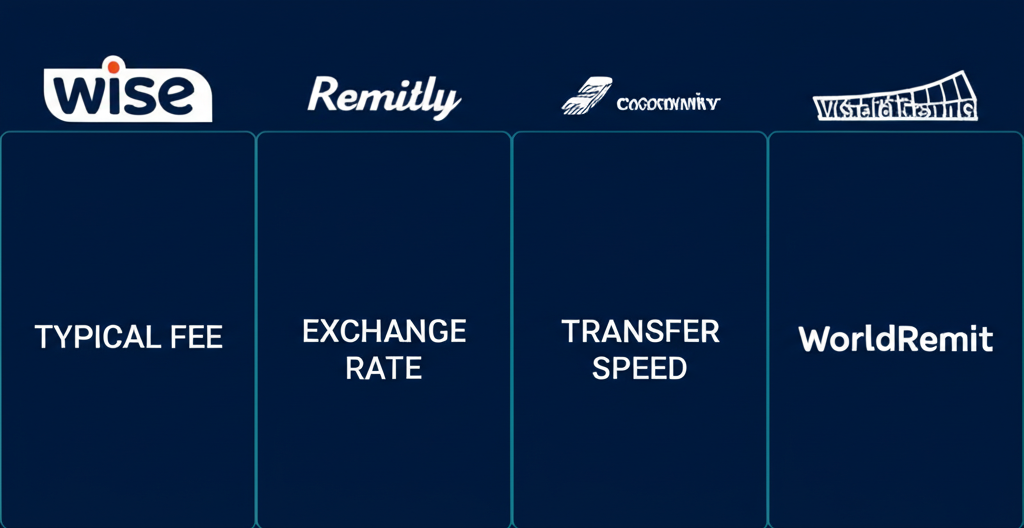
Here’s a quick breakdown to help you decide:
Wise:
Best For: Cost-conscious bank-to-bank transfers.
Exchange Rate: True mid-market rate.
Speed: A few hours to 2 business days.
Delivery: Bank deposit.
Remitly:
Best For: First-time users and balancing speed vs. cost.
Exchange Rate: Competitive rate with a margin; promotional rates are excellent.
Speed: Minutes (Express) to 3-5 days (Economy).
Delivery: Bank deposit, cash pickup.
WorldRemit:
Best For: Convenient cash pickups across Sri Lanka.
Exchange Rate: Competitive rate with a margin.
Speed: Minutes for cash pickup; 1-2 days for bank deposit.
Delivery: Bank deposit, cash pickup, mobile money.
Need It There Now? Best Services for Speed
And this is where things get practical. While finding the absolute lowest fee is great for planned remittances, sometimes life intervenes. When a family emergency strikes or a bill is due by end-of-day in Sri Lanka, you don’t have three days to wait. You need the money there now.
This is the classic speed-versus-cost trade-off. To get money to Sri Lanka in minutes, you will likely pay a slightly higher fee or receive a less favorable exchange rate compared to a standard 3-5 day bank transfer. Services like Taptap Send and Ria Money Transfer are built for this. Taptap Send, for example, reports that 90% of its transfers are received in just five minutes. Ria can get cash ready for pickup in as little as 15 minutes, often for a fee around $3.9 USD (though your first transfer may be free with a promo code).
Your Fastest Path: Payment and Delivery Methods
The secret to speed isn’t just the service you choose; it’s how you send and deliver the funds. For the fastest possible transfer, follow this combination:
Funding Method: Pay with a debit or credit card. This is an instant transaction, unlike a bank (ACH) transfer which can take days to clear on your end.
Delivery Method: Choose cash pickup. Your recipient can walk into a partner location in Sri Lanka and collect the physical cash, bypassing any bank processing delays on their end.
A bank account-to-bank account transfer, even with a fast service, can sometimes be held up by the receiving bank’s internal processing times.
When Paying for Speed Makes Sense
Consider this real-world scenario. Your cousin in Kandy has an unexpected medical expense and needs 150,000 LKR immediately. Using a slower service might save you $5-$10 in fees, but the funds wouldn’t arrive for two days. Instead, you use Remitly’s Express option, paying with your debit card for a cash pickup. The fee might be slightly higher, but the money is available for your cousin in under 30 minutes. In this situation, paying a little extra for near-instant delivery isn’t a luxury; it’s a necessity.
Traditional Methods: Are Banks or Western Union Still Relevant?
After seeing services like Taptap Send deliver money in five minutes with no fees, you might assume traditional methods are obsolete. But here’s where it gets interesting. Your neighborhood bank and the familiar yellow Western Union sign still play a role, though it’s become highly specific.
Bank Wire Transfers
Sending a wire transfer directly from your US bank feels secure, especially for large sums. Banks have a long-standing reputation for safety. The problem is the cost. You’re often hit with a double penalty: a high flat fee and a poor exchange rate. For example, sending $1,000 could incur a $45 wire fee. Then, the bank might offer you an exchange rate of 288 LKR per USD when a service like Xe is offering 306 LKR. The result? Your recipient gets nearly 18,000 LKR less. For a transfer that can take 3-5 business days to arrive, that’s a steep price to pay.
In-person Cash Pickup Services
Services like Western Union and MoneyGram built their businesses on one key strength: an unparalleled physical network. Their biggest advantage is that neither the sender nor the receiver needs a bank account. You can walk in with cash, and your relative can pick up cash minutes later, often from a local post office or corner store. This convenience, however, is typically the most expensive option available. The fees can be high, and the exchange rate markup is where the real cost is hidden. You’re paying a significant premium for that walk-in, cash-in-hand service.
So, when should you use them? A traditional service might be your only option if you’re sending funds to someone in a remote area with no reliable access to a bank or a smartphone. If your recipient lives far from a city and relies solely on a local agent for cash, the higher cost of Western Union could be a necessary trade-off for accessibility. For everyone else, the digital-first services we’ve covered will almost always put more money in your family’s pocket, faster.
Your Step-by-Step Guide to Sending Money Safely
Sending money internationally for the first time can feel daunting, but it’s a straightforward process when you know the steps. Think of it as a simple checklist. Following this guide will help ensure your US Dollars arrive as Sri Lankan Rupees quickly, securely, and with minimal cost.
Step 1: Compare Services & Choose a Provider
Your first instinct might be to use your bank, but specialized services are almost always cheaper and faster. Don’t just pick the first name you recognize. Use a real-time comparison tool like Idealremit, which shows you can save up to 80% by comparing providers. You’ll see offers like Remitly’s no-fee first transfer up to $1,000 or Taptap Send’s no-fee structure and rapid delivery. The difference between a rate of 295 LKR and Xe’s 306 LKR per dollar adds up fast.
Step 2: Create and Verify Your Account
Once you’ve chosen a service, you’ll need to create an account. For security and to comply with financial regulations, you must verify your identity. This is a one-time setup. Have these documents ready:
A government-issued photo ID (like a driver’s license or passport)
Proof of your US address (a recent utility bill or bank statement often works)
The verification process is usually automated and takes just a few minutes.
Step 3: Enter Your Transfer Details
Accuracy is everything here. A single wrong digit can delay your transfer for days. You will need your recipient’s details exactly as they appear on their bank account:
Full Legal Name: No nicknames.
Bank Name and Branch: For example, Commercial Bank of Ceylon – Kollupitiya.
Bank Account Number.
SWIFT/BIC Code: This is an international code that identifies the specific bank. Your recipient can get this from their bank.
Double-check every entry before you proceed.
Step 4: Fund Your Transfer
You have several options to pay for your transfer, each with a different balance of speed and cost. Paying with a debit or credit card is typically the fastest—services like Ria can deliver cash for pickup in 15 minutes this way—but may come with a small processing fee. A bank debit (ACH) is usually the cheapest method, but it can take 1-3 business days for the funds to be pulled from your account.
Step 5: Track Your Transfer and Confirm Receipt
After you confirm payment, the service will send you a confirmation email with a transaction reference or tracking number (sometimes called an MTCN). You can use this number on the provider’s website or app to see the status of your transfer in real time. Share this number with your recipient. The final step? A quick message to your family or friend in Sri Lanka to confirm the funds have safely arrived in their account.
Your Smartest Move for Every Transfer
Choosing the right money transfer service isn’t about finding one perfect company; it’s about mastering a simple process. The provider that offered the best USD to LKR exchange rate last month may be one of the worst options today. Your single most effective strategy is to treat every transfer as a new opportunity, ensuring more of your hard-earned money reaches your loved ones in Sri Lanka.
Ready to make your next transfer the best one yet? Before you send, take 30 seconds to use a real-time comparison tool. Check today’s live rates and fees to instantly find the service that puts the most rupees in your recipient’s hands right now.
Frequently Asked Questions
What is the cheapest way to send USD to Sri Lanka?
The cheapest way is typically through an online money transfer service like Wise or Remitly. They offer lower fees and better exchange rates than traditional banks. The total cost depends on the exchange rate markup and the transfer fee, so always compare them before sending.
How long does it take to transfer money to Sri Lanka?
Transfer speed varies by service and method. Some services like Remitly's Express option can deliver money in minutes, especially for cash pickup. Standard bank transfers can take anywhere from 1 to 5 business days.
What information is needed to send money to a Sri Lankan bank account?
You will typically need the recipient's full legal name as it appears on their bank account, their bank's name, their bank account number, and the bank's SWIFT/BIC code.
Can I send money for cash pickup in Sri Lanka?
Yes, many services like WorldRemit and Remitly have extensive networks of partner banks and pawn shops in Sri Lanka where your recipient can pick up cash. This is a fast option if the recipient does not have a bank account.
Facebook
X
LinkedIn
WhatsApp
Daily News Digest
Get the top stories delivered to your inbox every morning. No spam, ever.
Many Sri Lankan artisans believe that getting their products onto global platforms like Amazon and eBay is a logistical nightmare reserved only for large exporters. You might have a stunning
The most expensive myth for foreign investors is that buying a property in a famous US city guarantees Airbnb success. This assumption is a fast track to disappointment. The truth
Most import ventures from Sri Lanka fail before their first container even docks. It’s not a lack of US demand for Ceylon cinnamon or fiery Jaffna curry powder; it’s a
Have you ever had a truly amazing Sri Lankan meal, maybe a lamprais fresh out of the banana leaf, and thought, “Wow, more people in America need to experience this”?