Picture this: You step off a bustling street in Los Angeles, the city’s noise instantly replaced by the low hum of chanting and the scent of sandalwood. You expected a space of austere silence, a place reserved only for solemn, solitary meditation. This is the enduring image of a Buddhist temple—a quiet, monastic retreat sealed off from the world.
That picture is fundamentally incomplete. Having spent years participating in and observing these urban sanghas, I can tell you the reality is often far more vibrant and deeply social. These are not just meditation halls; they are living community centers. Think of lively potlucks after a Dharma talk, boisterous Lunar New Year celebrations, and practical discussions on applying concepts like the Eightfold Path to your demanding career. The quiet contemplation is there, but it is nested within a deeply human, and sometimes wonderfully noisy, social fabric.
This article will guide you past the gilded doors and intimidating stereotypes. We will explore how different temples—from a Vietnamese Pure Land center in Houston to a Tibetan Vajrayana gompa in New York—function as vital hubs for connection. You will learn not just what to expect, but how to find your place within them.
Why Urban Centers are Hubs for American Buddhism
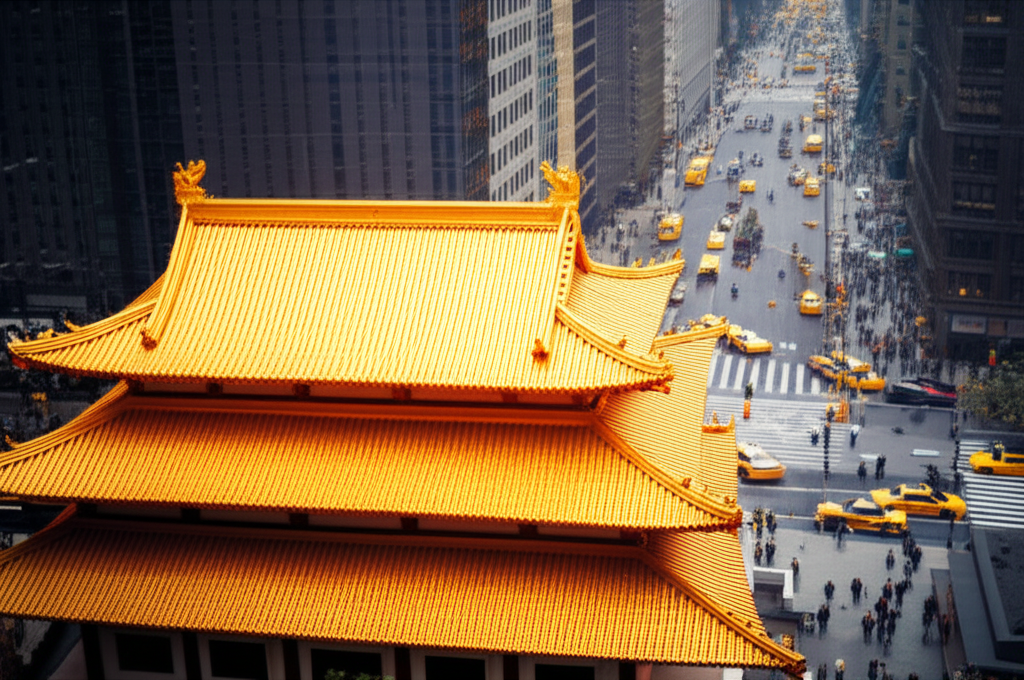
There’s a persistent image of Buddhism in the American mind: a silent monastery perched on a remote mountaintop. It’s a peaceful, romantic notion. It’s also largely incorrect. The real story of American Buddhism is overwhelmingly urban. From the very beginning, the practice found its footing not in serene isolation, but within the vibrant, often chaotic, density of major cities.
History shows us this clearly. The first Buddhist temples on American soil weren’t built in the countryside; they were established by Chinese and Japanese immigrant communities in port cities like San Francisco and Honolulu, as documented in the Journal of Global Buddhism. These temples were essential anchors, offering spiritual guidance and preserving cultural identity for people building new lives. This urban foundation was set long before mindfulness became a corporate buzzword.
Today, that urban connection is stronger than ever, but for different reasons. The very stressors of city living—the constant noise, the professional pressure, the feeling of anonymity—create a powerful demand for what Buddhist practice offers. A weekly session of vipassanā (insight meditation) at a local center becomes a necessary tool for managing anxiety, not a spiritual luxury. These temples provide a genuine sanctuary, a quiet space to simply breathe amidst the concrete and sirens.
This dual role is what makes urban temples so dynamic. Consider a place like the Watt Thai Temple in Los Angeles. On one hand, it’s a profound cultural hub for the Thai diaspora, hosting traditional festivals. On the other, it welcomes a diverse stream of Angelenos seeking instruction in meditation. Sociologist Dr. Ann Gleig has written about this convergence, where the so-called “two Buddhisms” (heritage and convert) meet and create something uniquely American. The city acts as the crucible, a place where a Tibetan Rinpoche might share a stage with a Zen Roshi, fostering a dialogue that would be rare anywhere else. It’s in these urban centers, where a third of all U.S. Buddhists live according to Pew Research, that the future of American Buddhism is being shaped.
Navigating Your First Visit: Etiquette and Offerings
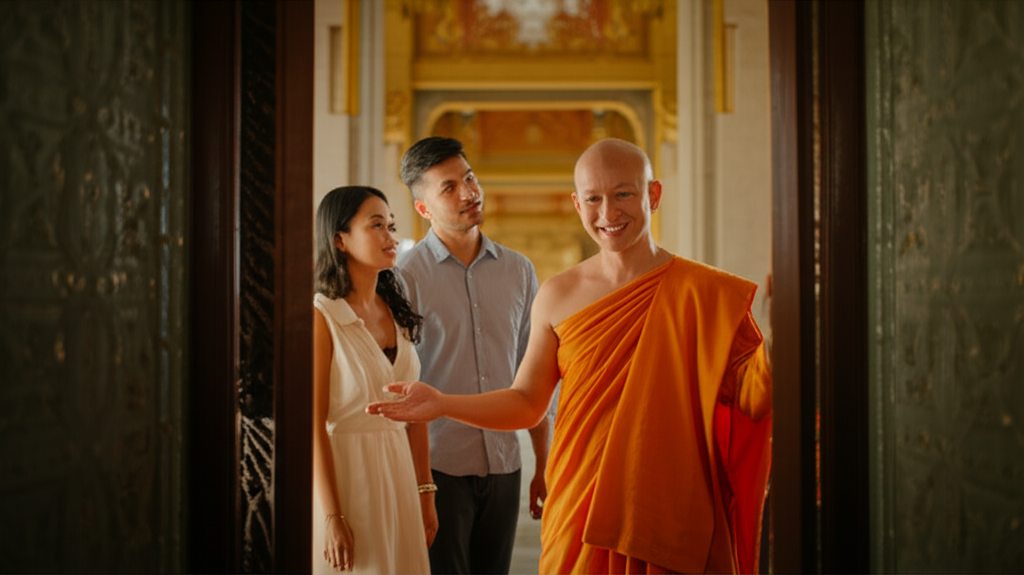
Let’s shift gears for a moment. There’s a lingering idea that you must arrive at a Buddhist temple with a deep understanding of its customs, as if there’s a test at the door. The truth is, the biggest misstep isn’t bowing incorrectly; it’s letting that anxiety keep you from walking in. Remember, centers are full of people who were once first-timers. In fact, Pew Research Center data shows that 27% of American Buddhists are converts, so these communities are well-practiced in welcoming new faces.
The basics of etiquette are rooted in simple respect. You’ll almost always be asked to remove your shoes upon entering, so wear socks you’re comfortable in. Inside the meditation hall, maintain a quiet demeanor. If you see people bowing, understand it as a gesture of gratitude and respect, not worship. A simple, slight nod of your head is a perfectly acceptable alternative. No one is judging your form. For clothing, think modest and comfortable—something you can sit in for a while without fidgeting. Loose pants or a long skirt are always a good choice.
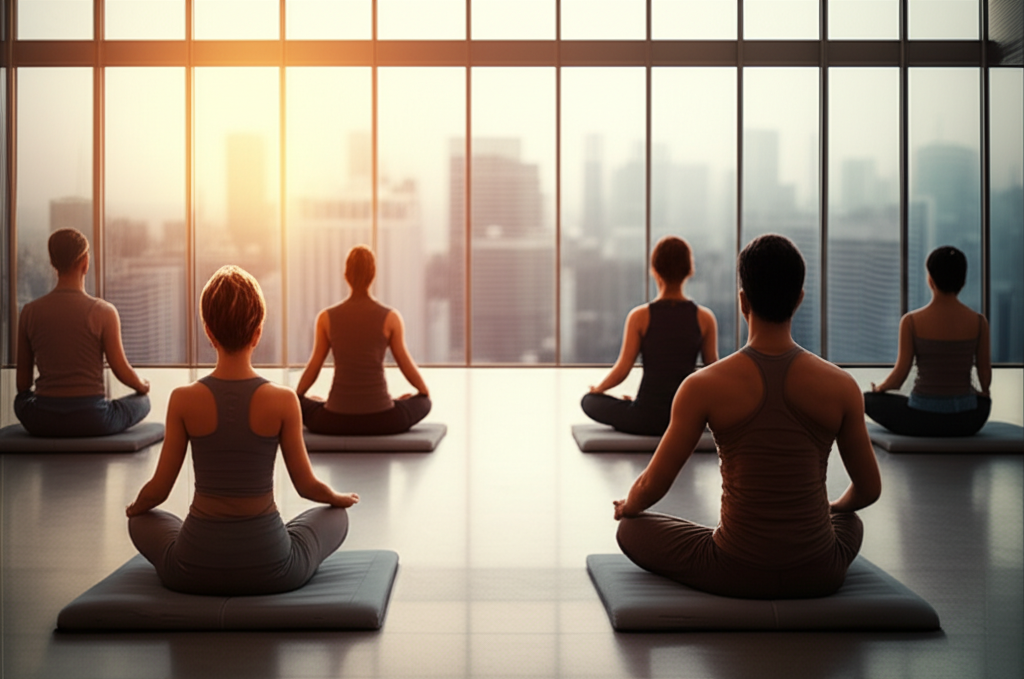
So, what actually happens inside? A typical Sunday service might include a period of guided meditation, some chanting, and a “dharma talk.” The meditation is led, so you just need to listen and follow along. During chanting, feel free to simply observe and absorb the sound. The dharma talk is essentially a lecture or sermon that connects Buddhist teachings to daily life. You might be surprised by how practical and relatable it is.
Beyond the formal service, the most important offering is the community itself, or sangha. This is the network of practitioners who support one another. A study in the Journal of Global Buddhism found that this social connection is a primary reason many Westerners are drawn to these centers. The sangha is where the teachings come alive through shared experience and conversation. Your sincere curiosity is the only real prerequisite for joining in.
Spotlight: Finding Your Sangha in NYC, LA, and SF
Building on that foundation, let’s discard the conventional wisdom that a Buddhist temple is a one-size-fits-all experience. The idea of a silent, incense-filled room with robed monks is only a tiny fraction of the story. A city’s unique energy profoundly shapes its spiritual communities, creating sanghas as diverse as the urban environments they inhabit. You will not find the same vibe in Brooklyn as you will in the San Gabriel Valley.
New York City: The Cultural Hub and the Neighborhood Anchor
In Manhattan, you can find Tibet House US, a cultural center that feels more like a vibrant museum and intellectual salon than a monastery. It focuses on preserving Tibetan culture through art, talks, and courses on philosophy. Contrast this with the Brooklyn Zen Center, a Soto Zen community deeply embedded in its neighborhood. Here, the core practice is silent sitting meditation, or zazen, coupled with a strong emphasis on social action and engaged practice within the city itself. One offers a global cultural perspective; the other provides a local, grounded spiritual home.
Los Angeles: The Grand Campus and the Intimate Vihara
LA’s scale is reflected in its sanghas. Perched in the hills of Hacienda Heights, Hsi Lai Temple is a stunning example of Fo Guang Shan’s Humanistic Buddhism. It’s a sprawling campus with museums, tea houses, and large-scale ceremonies that serve thousands of families, functioning as a major cultural and spiritual hub. In sharp contrast, a small Theravada vihara in a quiet neighborhood might consist of a converted house where a handful of laypeople support a few monks, focusing intently on Pali scripture and insight meditation. One is a destination; the other is a humble refuge.
San Francisco: The Historic Pioneer and the Engaged Community
The Bay Area’s history of counter-culture and social consciousness infuses its Buddhist centers. The San Francisco Zen Center, founded by Shunryu Suzuki, is a cornerstone of American Zen with a rich history. Its three-location model—a city center, a farm, and a mountain monastery—offers a complete path of practice. Then you have Nichiren Buddhist communities, where the practice centers on chanting Nam Myoho Renge Kyo. These groups often have a strong focus on personal transformation and social engagement, reflecting the city’s activist spirit. The path you choose depends on whether you seek quiet contemplation or a more vocal, active form of faith.
More Than a Monastery: Temples as Community Hubs
Here’s the part most people miss. When you picture a Buddhist temple, you probably imagine serene halls, silent meditation, and solemn rituals. That exists, of course. But to stop there is to miss the entire point of how these institutions actually function in American cities. For a significant portion of the community, the temple is less a quiet sanctuary and more a bustling cultural center, a home away from home.
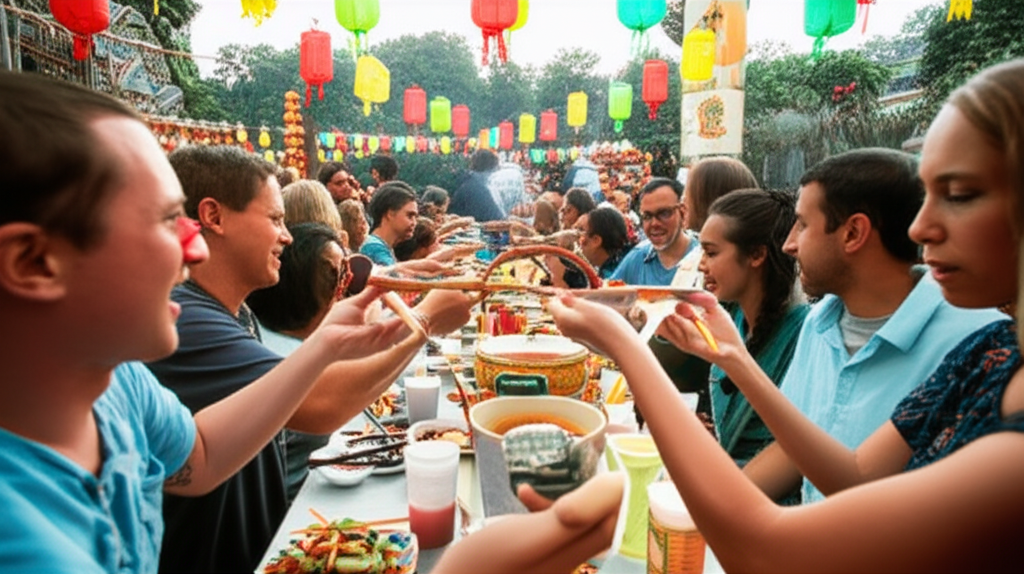
Consider the major cultural celebrations. While Pew Research finds that about a third of Asian American Buddhists attend formal services monthly, a much larger number (54%) participate in events like Lunar New Year. At a place like the International Buddhist Temple in Richmond, BC, or Hsi Lai Temple near Los Angeles, this isn’t a subdued affair. It’s a vibrant public festival with lion dances, lanterns, and food stalls. The same energy surrounds Vesak (Buddha’s Birthday), where families gather for ceremonies, bathe a Buddha statue, and share a communal vegetarian meal. This is where culture and spirituality become inseparable.
The activity extends far beyond holidays. You’ll find a full schedule of classes that have little to do with chanting sutras, including:
Weekend language schools for children to learn their heritage tongue.
Vegetarian cooking workshops sharing traditional recipes.
Instruction in traditional arts like calligraphy or flower arrangement.
Volunteering is another cornerstone—not just for food drives, but for the practical work of maintaining the temple grounds or preparing food for a Sunday potluck. It’s in these shared activities, peeling vegetables side-by-side or setting up for an event, that deep, lasting friendships are formed. This is the living, breathing heart of the community, where spiritual connection is built through shared action and fellowship, not just silent contemplation.
Your Path, Your Practice: Choosing a Temple Community
Many people assume a Buddhist temple is a Buddhist temple. This is the first piece of conventional wisdom to discard. The reality is a spectrum of traditions, cultures, and community styles, often reflecting the deep diversity within American Buddhism itself. Data from the Pew Research Center shows that while two-thirds of U.S. Buddhists are Asian American, a full third are converts. This means you will find centers that are deeply integrated with a specific ethnic community—a Thai Theravada temple in Los Angeles, for instance—and others that are composed primarily of Western converts, like many urban Zen centers. Neither is better; they simply offer different cultural experiences.
Understanding the Traditions
Knowing the basic streams of Buddhism will help you read the map. Most centers in the U.S. fall into one of three main branches, each with a different flavor:
Theravada: The “Way of the Elders,” this tradition emphasizes monastic discipline and a path to individual enlightenment. The focus is often on silent meditation and scriptural study.
Mahayana: The “Great Vehicle,” this branch includes popular schools like Zen, with its focus on seated meditation, and Pure Land, which involves devotional chanting. The guiding ideal is the compassionate Bodhisattva who works to liberate all beings.
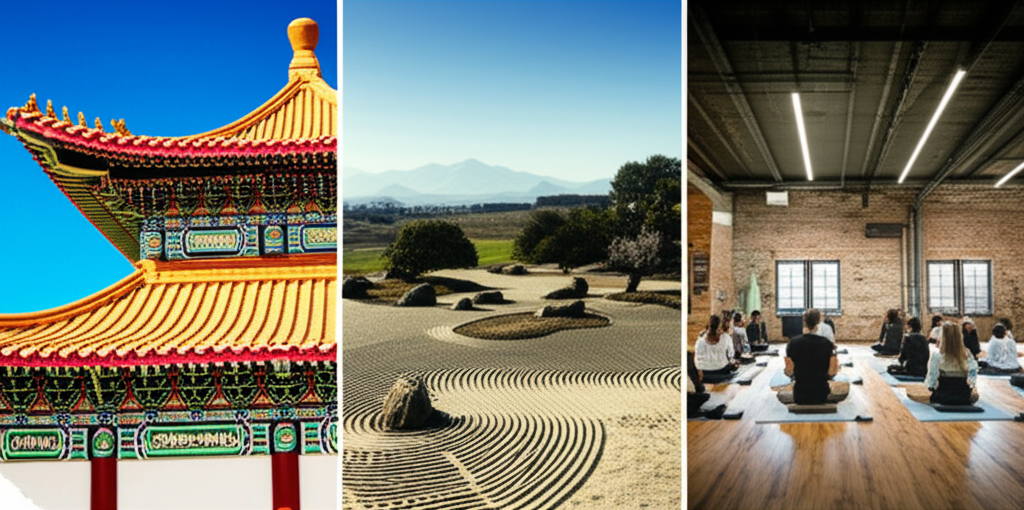
Vajrayana: The “Diamond Vehicle,” most commonly known as Tibetan Buddhism. This path involves intricate visualizations, guru devotion, and complex rituals alongside meditation.
The Search and the ‘Shop-Around’ Phase
Start your search online with excellent resources like the World Buddhist Directory on BuddhaNet or the community listings in Tricycle: The Buddhist Review. But your screen can only take you so far. The most critical step is to visit. Treat it like an open house. Go to a Sunday service, an introductory meditation session, or a public talk. The goal is to feel the atmosphere. One week you might visit a Zen center where the practice is marked by formal silence and stark simplicity. The next, you could find yourself at a Tibetan center filled with vibrant art, communal chanting, and lively discussion. Pay attention to how each environment makes you feel.
Asking the Right Questions
After a few visits, the search moves inward. The doctrine and lineage matter, but the human connection is what sustains a practice. Ask yourself honestly: Do I feel welcome here? Does the teacher’s communication style resonate, or does it feel inaccessible? More than just a place to meditate, you are looking for a spiritual home—a community where you can be challenged, supported, and inspired to grow.
More Than Meditation
It’s a common belief that Buddhist centers are solely for silent meditation, reserved for seasoned practitioners. On the contrary, these urban temples are dynamic hubs of human connection, offering a powerful antidote to modern loneliness. The essential takeaway is not just that these communities exist, but that your participation is what gives them life. Finding your spiritual home is an active process of discovery, not a passive search for perfection. They prove that belonging is a practice, just like mindfulness. Begin your journey today by exploring a local center’s website or attending an introductory session to find the community that resonates with you. The future of urban spirituality is being built not in solitude, but together.
Frequently Asked Questions
Do I have to be a Buddhist to visit a temple?
Absolutely not. Most Buddhist temples and centers in the US are very welcoming to visitors, students, and curious newcomers regardless of their beliefs. Attending a public meditation, an open house, or an introductory talk is a great way to learn more.
Are services at US Buddhist temples in English?
It varies widely. Centers founded by and for a Western audience typically conduct all services in English. Temples that also serve an immigrant community may have services in languages like Thai, Vietnamese, or Tibetan, but they often provide English translations or have specific English-language groups and events.
How much does it cost to attend a Buddhist temple?
Most regular teachings and meditation sessions are offered on the principle of 'dana,' a Pali word for generosity or giving. This means they are free, with an opportunity to make a voluntary donation. Some specific workshops or retreats may have a set fee to cover costs for food, lodging, or visiting teachers.
Facebook
X
LinkedIn
WhatsApp
Daily News Digest
Get the top stories delivered to your inbox every morning. No spam, ever.
Many Sri Lankan artisans believe that getting their products onto global platforms like Amazon and eBay is a logistical nightmare reserved only for large exporters. You might have a stunning
The most expensive myth for foreign investors is that buying a property in a famous US city guarantees Airbnb success. This assumption is a fast track to disappointment. The truth
Most import ventures from Sri Lanka fail before their first container even docks. It’s not a lack of US demand for Ceylon cinnamon or fiery Jaffna curry powder; it’s a
Have you ever had a truly amazing Sri Lankan meal, maybe a lamprais fresh out of the banana leaf, and thought, “Wow, more people in America need to experience this”?