That six-figure salary you worked so hard for? It might not be enough to sponsor your family member for a green card. Many people believe a high income is an automatic approval, but this misconception leads to frustrating denials. The U.S. government cares less about your gross pay and more about how it stacks up against your specific household size according to rigid federal standards.
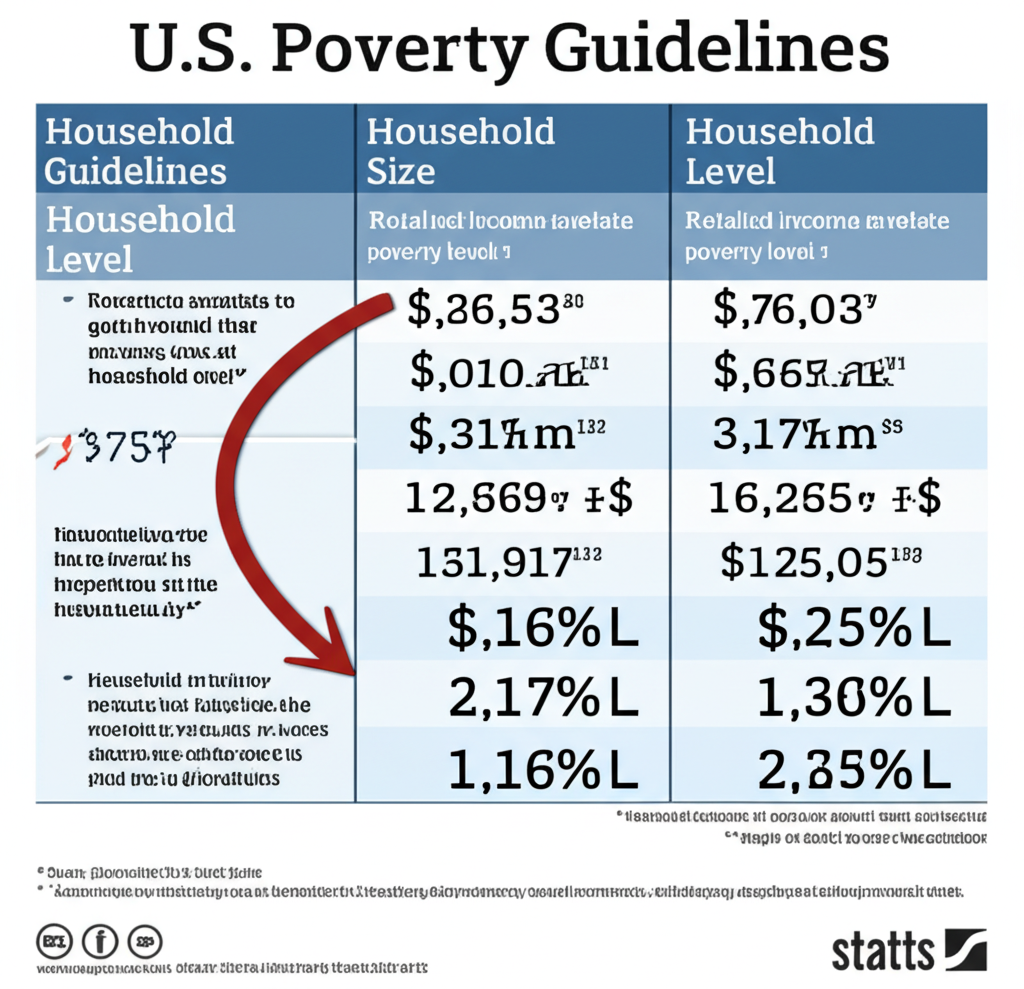
The entire financial evaluation rests on the Form I-864, the Affidavit of Support, a legally binding contract with the government. Your income must exceed 125% of the Federal Poverty Guidelines for your calculated household size—a figure that includes you, your dependents, and the family members you intend to sponsor. This nuance means a single person earning $80,000 can easily qualify, while a sponsor with a family of five earning $120,000 might fall short.
Forget the guesswork. In this article, we will walk through the exact calculations U.S. Citizenship and Immigration Services (USCIS) uses. You will learn how to correctly determine your household size, what counts as qualifying income, and what to do if you don’t meet the threshold, including leveraging assets or finding a joint sponsor.
Understanding the Affidavit of Support (Form I-864)
Many people see Form I-864, the Affidavit of Support, as just another box to check in the mountain of immigration paperwork. This is a dangerous misunderstanding. This document is not a simple form; it is a legally enforceable contract between you (the sponsor) and the U.S. government. By signing it, you are making a serious, long-term financial commitment.
At its core, the affidavit is your promise that the family member you are sponsoring will have adequate financial support and will not become a “public charge.” To prove this, you must demonstrate an annual income of at least 125% of the Federal Poverty Guidelines for your household size (or 100% if you are on active duty in the U.S. military and sponsoring a spouse or child). Your signature also means you agree to repay the government if the immigrant you sponsor uses certain means-tested public benefits.
If you are a U.S. citizen or lawful permanent resident over 18 who has filed a Form I-130, Petition for Alien Relative, you are required to file a Form I-864. This obligation is not temporary. Consider this common scenario: a citizen sponsors his spouse, but they later divorce. The financial responsibility does not end with the divorce. Your duty as a sponsor only terminates when the immigrant either becomes a U.S. citizen or has accumulated 40 qualifying quarters of work under the Social Security Act—roughly 10 years. This contract outlasts marriages, moves, and changing relationships, making it one of the most significant documents you will sign in the entire process.
Meeting the Core Income Requirement: 125% of the Poverty Guidelines
Most people sponsoring a relative assume the financial requirement is a simple pass/fail test based on their salary. You look up a number, and either you make enough, or you don’t. But here’s where it gets interesting. The most common and costly mistake I’ve seen over the years isn’t misreading the income chart; it’s miscalculating the ‘household size’ that determines which income figure applies to you in the first place.
U.S. immigration law requires sponsors to prove they can support the intending immigrant at an income level of at least 125% of the Federal Poverty Guidelines. This is the government’s method for ensuring the sponsored immigrant will not become a “public charge.” There is a notable exception: if you are a member of the U.S. Armed Forces on active duty and you are sponsoring your spouse or child, the requirement is lowered to 100% of the poverty guideline, as established under 8 CFR § 213a.2.
Calculating Your True Household Size
To find your minimum income requirement, you first need to get your household size right. It’s a specific formula that includes more than just you and the person you’re sponsoring. You must count:
Yourself (the sponsor).
Your spouse, if you are married.
Your children under the age of 21, unless they have reached the age of majority and are not claimed as dependents.
Anyone else you claim as a dependent on your most recent federal income tax return.
The principal immigrant you are sponsoring.
Any derivative applicants (the principal immigrant’s spouse and children) who will be immigrating with them.
Any other immigrants you have previously sponsored with a Form I-864 for whom your support obligation has not yet ended.
For example, if you are single with no children and sponsoring your mother, your household size is two. However, if you are married with two children you claim on your taxes and are sponsoring your father, your household size is five (you + your spouse + two children + your father).
Finding the Official Income Thresholds
Once you have your household number, you can find the exact income you need. USCIS publishes the official figures on a specific form: I-864P, Poverty Guidelines for the Affidavit of Support. You can find the most current version on the USCIS website. Do not rely on third-party charts, as these can be outdated. On Form I-864P, simply find your household size in the first column and then look to the right to find the corresponding minimum income requirement for the 48 contiguous states, Alaska, or Hawaii.
What Counts as Income? Documenting Your Financial Stability
Let’s shift gears for a moment. There’s a common belief that if your current paychecks are high enough, you’re all set. Many sponsors think, “I make enough money now, so that’s all that matters.” But U.S. Citizenship and Immigration Services (USCIS) doesn’t start with your current reality; they begin by looking in the rearview mirror.
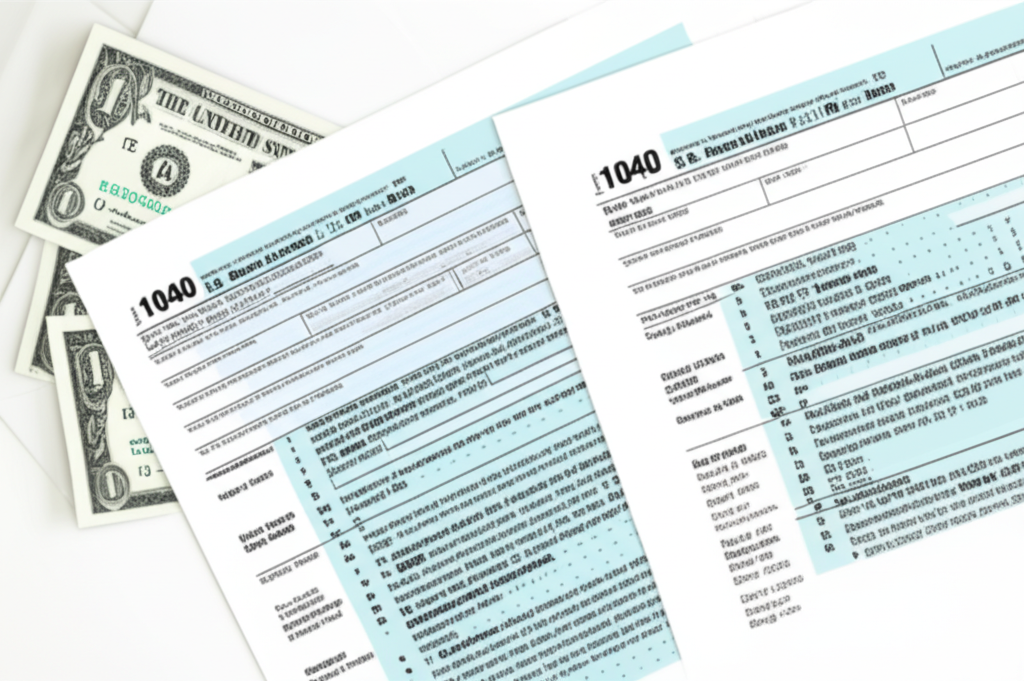
The single most important piece of evidence for your Affidavit of Support is your most recent federal income tax return. USCIS officers will look directly at the Total Income line on your Form 1040. Why? Because it represents a full year of verified earnings, not just a recent snapshot. This figure is their primary baseline for determining if you meet the required threshold, which is typically 125% of the Federal Poverty Guidelines for your household size.
Acceptable Sources of Income
Your Total Income can be composed of more than just a regular salary. USCIS considers a wide range of legal and verifiable sources. These typically include:
Wages, salaries, and tips
Net income from a business or self-employment
Interest, dividends, and rental income
Retirement benefits, Social Security, and pensions
Alimony or child support
The key is that the income must be stable and documented. Irregular, under-the-table payments won’t help your case.
But what if your financial situation has improved dramatically since you last filed taxes? Imagine you filed your return showing an income of $45,000, but you started a new job two months ago that pays $70,000 annually. Your tax return alone won’t reflect this new reality. In this scenario, you must supplement your tax return with strong evidence of your current income. You would include a signed letter from your new employer on company letterhead detailing your position, salary, and start date, along with your most recent pay stubs. This paints a complete and honest picture, showing the adjudicating officer that your prospective annual income is now sufficient to meet your sponsorship obligations.
What If Your Income Isn’t Enough? Using Assets to Qualify
Now, you might be wondering what happens if your tax return shows an income below that 125% poverty guideline. Many people assume this is an immediate dead end, forcing them to find a joint sponsor. That’s a common misconception. The reality is that your income is only part of your financial picture, and U.S. immigration officials recognize this. Your assets can be just as powerful as your paycheck.
If your income falls short, you can use the value of your personal assets to make up the difference. The rule is straightforward: the total net value of your assets must be at least five times the amount of your income shortfall. There’s a significant exception for sponsoring a spouse or minor child of a U.S. citizen; in that case, you only need assets valued at three times the shortfall, a detail outlined in the Code of Federal Regulations (8 CFR § 213a.2).
Let’s make this real. Say the income requirement for your household is $30,000 and your annual income is $24,000. Your shortfall is $6,000. If you are sponsoring your parent, you would need to show assets worth at least $30,000 (5 x $6,000). But if you are a U.S. citizen sponsoring your spouse, you would only need to show $18,000 in assets (3 x $6,000).
What Counts as an Asset?
The key is that these assets must be readily convertible into cash within one year without causing you considerable hardship. Think liquid. The intending immigrant’s assets can also be used, provided they are convertible to cash and the immigrant can move them to the United States. Qualifying assets often include:
Cash in checking or savings accounts
Stocks, bonds, and mutual funds
The net value of your home or other real estate
Documenting these assets is precise work. You can’t just state their value. For real estate, you must provide a recent professional appraisal and proof of any mortgages or liens to establish the actual net equity. For financial accounts, you will need to submit statements that clearly show ownership and value. The government wants to see a clear, verifiable path from the asset to its cash value.
Options When You Can’t Qualify Alone: Joint Sponsors & Household Members
When you see that your income doesn’t meet the financial threshold, it’s easy to think you can just find a well-off relative to “co-sign” and make up the difference. This is a common and costly misconception. The immigration system doesn’t work like a car loan; you can’t simply add someone else’s income to yours. Instead, the government offers two distinct and formal paths: using a joint sponsor or adding a household member’s income.
The Joint Sponsor: A Parallel Obligation
A joint sponsor is not someone who supplements your income. They are a separate individual who agrees to accept full financial responsibility for the immigrant, independent of you, the petitioner. Think of them as a parallel sponsor. To qualify, this person must meet the entire 125% income requirement all on their own, based on their household size plus the immigrant you are sponsoring. For example, if the joint sponsor has a family of three, they must show sufficient income for a household of four (their three plus your sponsored relative).
This person must file their own separate Form I-864, Affidavit of Support, and meet the same core requirements as you: be a U.S. citizen or lawful permanent resident, be at least 18, and reside in the U.S. They are accepting the exact same legally enforceable contract, which lasts until the immigrant becomes a citizen or accrues 40 qualifying quarters of work (roughly 10 years). This is a serious, long-term commitment.
The Household Member: Combining Forces
The only way to combine your income with someone else’s is if that person is a member of your household. This typically includes your spouse, a parent, or an adult child living at the same principal residence. This person doesn’t file a separate I-864. Instead, they complete Form I-864A, Contract Between Sponsor and Household Member. This form is a legal agreement that makes their income and/or assets available to you for the purpose of supporting the immigrant.
For instance, if the 125% poverty guideline for your household size is $30,000 and you only earn $22,000, but your spouse who lives with you earns $15,000, you can use their income. By signing the I-864A, your spouse agrees to be jointly responsible, and you can now show a combined household income of $37,000, meeting the requirement.
Beyond the Bottom Line
A common misconception is that meeting the 125% poverty guideline is a simple pass/fail test. In reality, the Affidavit of Support is a serious, long-term financial contract. Adjudicators are not just checking a box; they are assessing your entire financial picture to gauge its stability and your genuine ability to uphold this promise. The true measure of your application’s strength is not just meeting a minimum number, but convincingly demonstrating your ongoing financial reliability. To ensure your financial story is presented with absolute clarity and positions you for success, have an experienced immigration attorney review your documentation before you submit your petition.
Frequently Asked Questions
How long is the sponsor's financial responsibility under the Affidavit of Support?
The sponsor's obligation lasts until the sponsored immigrant becomes a U.S. citizen, has worked for 40 qualifying quarters in the U.S. (usually 10 years), permanently leaves the U.S., or passes away.
Can the intending immigrant's income be used to meet the financial requirement?
Yes, under certain conditions. The immigrant's income can be included if it will continue from the same source after they obtain lawful permanent resident status. They must also live in the sponsor's household.
What happens if the sponsor's income drops after the green card is approved?
The Affidavit of Support is a binding contract based on your financial situation at the time of filing. Even if your income later drops, you are still legally responsible for supporting the immigrant until the obligation ends. The government can sue you to recover costs if the immigrant receives means-tested public benefits.
Does a joint sponsor have to be a family member?
No. A joint sponsor does not need to be related to the petitioner or the intending immigrant. They must be a U.S. citizen or lawful permanent resident, be at least 18 years old, live in the U.S., and meet the 125% income requirement for their household size independently.
Facebook
X
LinkedIn
WhatsApp
Daily News Digest
Get the top stories delivered to your inbox every morning. No spam, ever.
Many Sri Lankan artisans believe that getting their products onto global platforms like Amazon and eBay is a logistical nightmare reserved only for large exporters. You might have a stunning
The most expensive myth for foreign investors is that buying a property in a famous US city guarantees Airbnb success. This assumption is a fast track to disappointment. The truth
Most import ventures from Sri Lanka fail before their first container even docks. It’s not a lack of US demand for Ceylon cinnamon or fiery Jaffna curry powder; it’s a
Have you ever had a truly amazing Sri Lankan meal, maybe a lamprais fresh out of the banana leaf, and thought, “Wow, more people in America need to experience this”?