Did you know that a significant number of STEM OPT extension denials are not due to a student’s qualifications, but to simple, avoidable errors on the Form I-983 Training Plan? For many Sri Lankan graduates, this document is the final hurdle, yet it’s where a vague job description or a mismatched company E-Verify number can derail a promising career before it even begins. Your degree got you this far; meticulous paperwork gets you the rest of the way.
This guide moves beyond the standard instructions you find on university websites. We will provide a field-tested walkthrough for completing your application, focusing on the sections that U.S. Citizenship and Immigration Services (USCIS) scrutinizes most. You will learn precisely how to articulate your training goals and demonstrate the direct connection between your specific STEM field of study and your proposed employment, a critical step that many applicants overlook.
Consider this your practical playbook for securing the 24-month extension. From assembling your documents in the correct order to understanding your reporting obligations after approval, you will get the actionable steps needed to confidently submit your application and continue your professional journey in the United States.
What is the STEM OPT Extension and Why is it Vital?
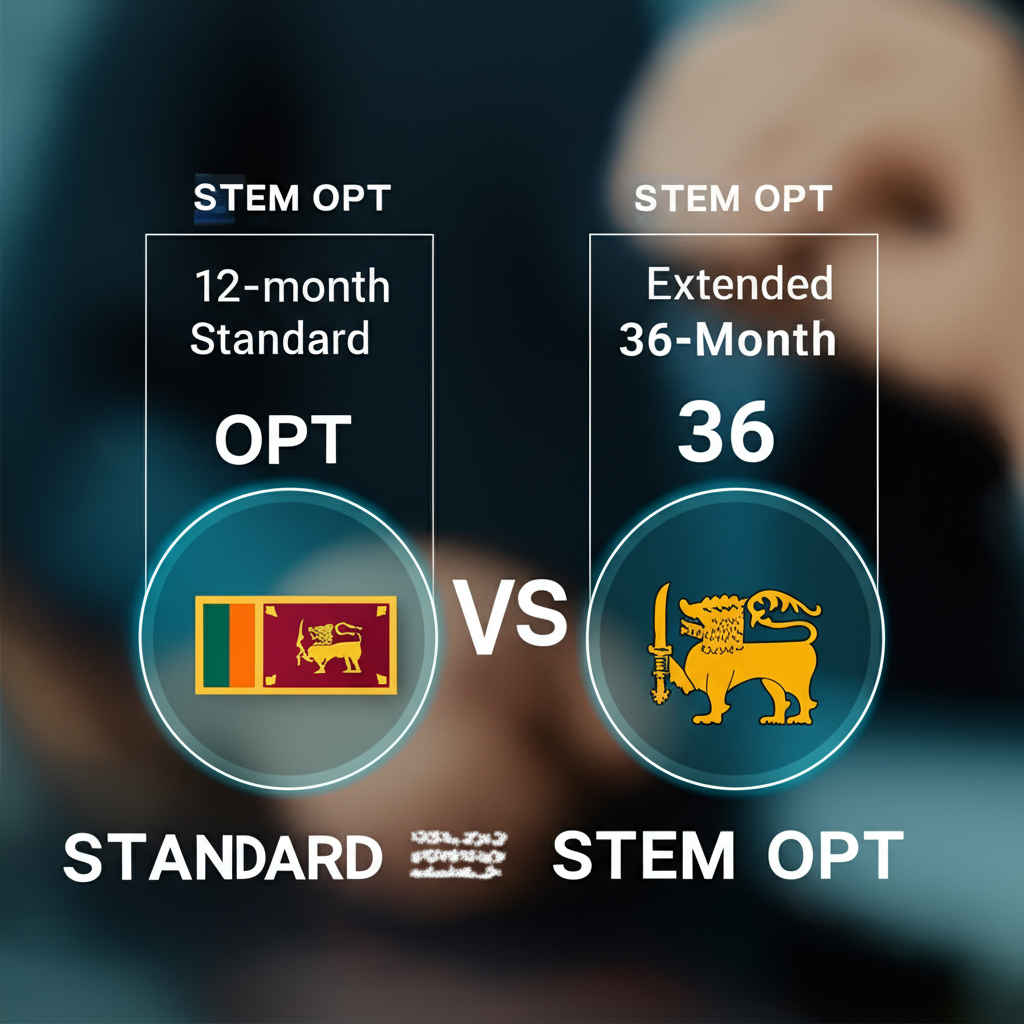
Think of your standard 12-month Optional Practical Training (OPT) as your entry into the U.S. professional world. The STEM OPT extension is your opportunity to build a serious career here. In short, it’s a 24-month extension of your work authorization, available exclusively to graduates with qualifying degrees in Science, Technology, Engineering, and Mathematics. This isn’t just extra time; it’s a strategic advantage that gives you a total of up to 36 months of full-time work experience after graduation. There are no nationality-specific restrictions, making this an accessible pathway for qualified Sri Lankan graduates.
For many Sri Lankan graduates, those additional 24 months are the essential runway needed to launch a long-term career. The standard 12-month OPT often provides only one chance to be selected in the H-1B visa lottery. The STEM OPT extension can give you two, or even three, additional opportunities. This extended period allows you to become an integral part of your company, gain specialized skills that command higher salaries, and build a strong professional network. It transforms your first job from a short-term gig into a foundational career experience.
Putting it into Practice: Kanishka’s Story
Consider Kanishka, a recent graduate from Colombo with a Master’s in Mechanical Engineering from a university in Texas. He lands a great job at an automotive engineering firm. During his initial 12-month OPT, his employer enters him into the H-1B lottery, but he isn’t selected. Instead of facing the prospect of returning home, Kanishka works with his employer to file for the 24-month STEM OPT extension. This gives him two more attempts at the H-1B lottery while he continues to lead a project on electric vehicle battery design. That hands-on experience makes his profile even stronger for future opportunities.
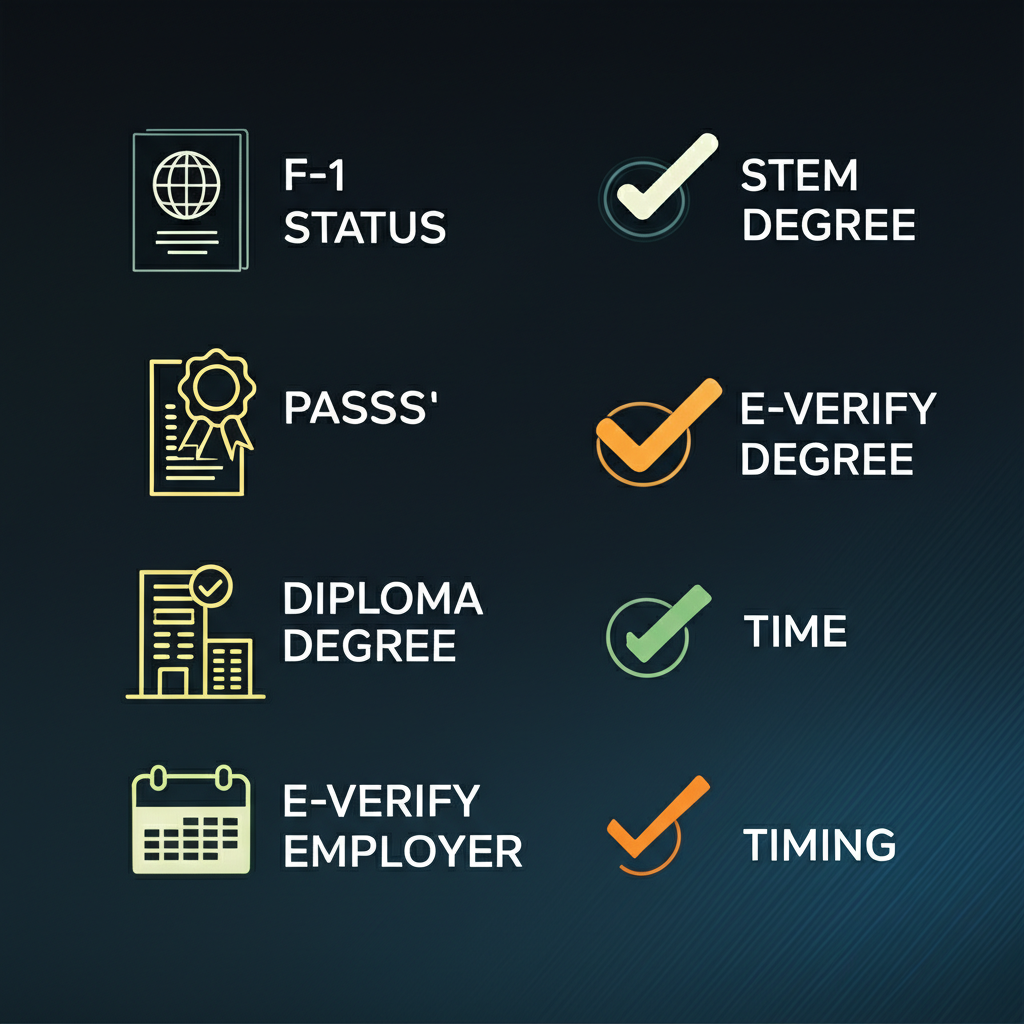
To secure this extension, your path is clear. You must have a job offer from an employer enrolled in E-Verify, the government’s electronic employment eligibility verification system. The job must be paid, for at least 20 hours per week, and be directly related to your STEM degree. Together with your employer, you will complete Form I-983, the Training Plan for STEM OPT Students. This isn’t just paperwork; it’s a formal commitment from your employer to provide structured, mentorship-based training, ensuring your work is a true learning experience and not just a temporary staffing solution at a third-party client site.
Are You Eligible? Key Requirements for Sri Lankan Applicants
You’ve successfully navigated your U.S. degree program and are gaining valuable experience on your initial 12-month OPT. But wait — there’s more to consider before you can unlock that 24-month extension. Securing the STEM OPT extension isn’t automatic. It requires you to meet a specific set of criteria, and missing even one can derail your application. For Sri Lankan graduates, the requirements are the same as for any other F-1 student, so let’s walk through the checklist.
Your Degree and Academic Standing
First, your foundation must be solid. You must be in valid F-1 status and have completed a bachelor’s, master’s, or doctoral degree from a U.S. school that is certified by the Student and Exchange Visitor Program (SEVP). The key detail here isn’t the name of your major, but its Classification of Instructional Programs (CIP) code. This six-digit code, found on your Form I-20, must appear on the official DHS STEM Designated Degree Program List. For example, a degree in “Business Analytics” might sound like a STEM field, but if its CIP code isn’t on that list, it won’t qualify.
Your Employer and Job Offer
Next, your employment must meet strict standards. You need a formal, paid job offer for at least 20 hours per week from an employer who is enrolled in the E-Verify program. This is non-negotiable. Before you get too far in the interview process, ask the hiring manager or HR representative directly: “Is the company enrolled in E-Verify?” The job must also provide a genuine employer-employee relationship, meaning you cannot be assigned to work for a third-party client or customer at their site. Your employer must have the resources and personnel to provide direct training and supervision, which is formalized in the Form I-983 Training Plan you both must complete and sign.
Rules on Previous Extensions
Finally, you need to consider your history with OPT. You cannot have already received a 24-month STEM OPT extension at the same degree level. However, you can qualify for a second extension if you earn a higher-level STEM degree. For instance, if you used a STEM OPT extension after your Master’s in Electrical Engineering, you could apply for another one after completing a Ph.D. in the same field. There’s also a unique provision: you may be able to use a prior, unused STEM degree from a U.S. school (earned within the last 10 years) to qualify for your extension, even if your current OPT is based on a non-STEM degree. If you meet these requirements, you are well-positioned to move forward.
Your Step-by-Step Application Guide: From I-983 to I-765
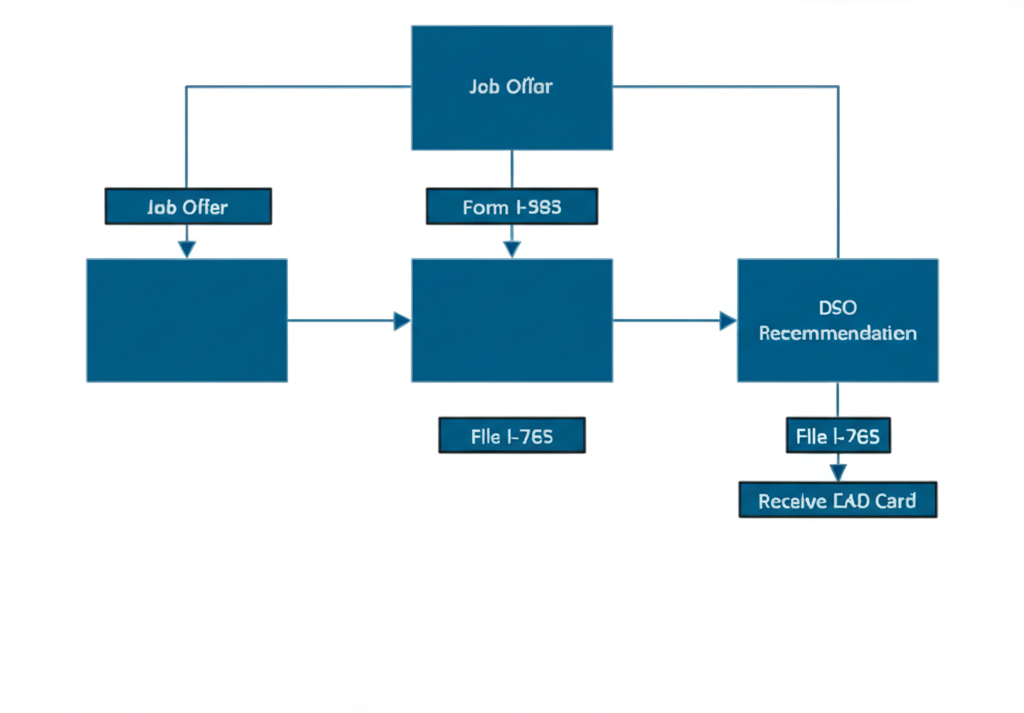
And this is where things get practical. Understanding the rules is one thing; successfully compiling and submitting your application is another. This process is a three-way partnership between you, your employer, and your university’s Designated School Official (DSO). Follow these steps carefully to ensure a smooth application.
Step 1: Secure Your Role and Complete the I-983 Training Plan
Your first move is to secure a paid job offer from an employer enrolled in E-Verify. This is non-negotiable. Once you have the offer, you and your direct supervisor must complete Form I-983, the Training Plan for STEM OPT Students. This isn’t just paperwork; it’s a formal plan detailing your learning objectives and how your job provides practical experience directly related to your STEM degree. For instance, if you’re a Sri Lankan civil engineering graduate working at a construction firm, your I-983 would specify tasks like learning structural analysis software and contributing to site development plans, with concrete goals for your first and second year. The employer must provide a genuine employer-employee relationship and cannot simply assign you to a third-party client’s worksite.
Step 2: Request Your STEM OPT I-20 from Your DSO
With your completed and signed Form I-983 in hand, you will submit it to your university’s DSO. They will review the training plan to ensure it meets all federal requirements. Upon approval, your DSO will endorse your request and issue a brand-new Form I-20. This updated I-20 will show the STEM OPT recommendation on the second page. This document is the cornerstone of your application to the government, so check it for accuracy the moment you receive it.
Step 3: File Form I-765 with USCIS
You have a strict window here. You must file Form I-765, the Application for Employment Authorization, with U.S. Citizenship and Immigration Services (USCIS) within 60 days of the date your DSO issued your new I-20. You can file online, which is generally faster and provides easier tracking, or by mail. When you file, you’ll need a package of supporting documents. Make sure you have everything ready.
Essential Documents Checklist:
A copy of your new I-20 with the STEM OPT recommendation
A copy of your passport identification page
A copy of your F-1 visa stamp
A printed copy of your most recent I-94 record
A copy of your diploma or official transcript showing your STEM degree
Copies of any previous Employment Authorization Documents (EADs)
Maintaining Your Status: Reporting and Compliance on STEM OPT
Getting your STEM OPT EAD card feels like crossing the finish line, but it’s actually the start of a new race. Your F-1 status for the next 24 months depends entirely on meeting specific, non-negotiable reporting requirements. Think of your Designated School Official (DSO) as your compliance partner. Keeping them updated is how you protect your work authorization.
Your Reporting Calendar: Key Deadlines
Set reminders on your phone for these dates. Every six months (at the 6, 12, 18, and 24-month marks), you must submit a Validation Report to your DSO. This is a simple check-in where you confirm your name, address, employer name and address, and employment status are still accurate. Additionally, at the 12-month mark and at the conclusion of your extension, you and your employer must complete the annual self-evaluation sections on your Form I-983 Training Plan and submit them to your DSO. The first evaluation covers your first year, and the final evaluation covers the entire 24-month period.
Life Changes? Report Them Immediately
The U.S. government requires you to report material changes within 10 days. This isn’t a suggestion. If you change jobs, you must submit a new Form I-983 for the new E-Verify employer. If you are laid off, you must report the employment end date. Even moving to a new apartment across town requires you to update your address with your DSO.
Example Scenario: Anjali, a data scientist from Colombo, gets a better offer and decides to leave her job 15 months into her STEM OPT. She must first report her last day of employment at her old company to her DSO. Then, before she can start her new role, she and her new E-Verify employer must complete a brand new Form I-983. She submits this to her DSO, who updates her SEVIS record and issues a new I-20. Only then can she begin working at the new company.
Managing Your Unemployment Clock
During your entire time on OPT, you are permitted a limited number of unemployment days. Students on standard 12-month OPT get 90 days. The STEM OPT extension grants you an additional 60 days, bringing your total allowable unemployment to 150 days over the full 36-month period. This is a cumulative count. If you used 30 days of unemployment during your initial OPT, you only have 120 days left for your 24-month STEM extension. Exceeding this limit is a violation of your status.
After STEM OPT: Long-Term Career Pathways for Sri Lankans
Your 36-month STEM OPT period is more than just work experience; it’s a strategic runway for your long-term career in the United States. The most common next step for Sri Lankan tech professionals is transitioning to the H-1B visa. This requires employer sponsorship and selection in an annual lottery, making your extended OPT window incredibly valuable. With up to three years of work authorization, you get multiple attempts at the H-1B lottery, significantly increasing your chances of selection.
The H-1B and the ‘Cap-Gap’ Bridge
The H-1B is a non-immigrant visa for “specialty occupations,” which perfectly aligns with most STEM fields. If your employer files a petition for you and you are selected in the lottery, a special provision called the ‘cap-gap’ extension can be a lifesaver. It automatically extends your F-1 status and work authorization if your OPT expires between April 1st and September 30th. This prevents any gap in your employment while you wait for your H-1B status to begin on October 1st.
For example, imagine your OPT expires in July. Your company files an H-1B petition in March, and you are selected. The cap-gap provision allows you to continue working seamlessly until your H-1B becomes active in October.
Strategic Planning: The Conversation with Your Employer
Don’t wait until your final year of STEM OPT to discuss your future. You should initiate conversations about H-1B sponsorship with your manager or HR department within your first year of employment. Frame the discussion around your long-term value to the company. Use your performance reviews to demonstrate your contributions and express your desire to continue growing with the team, making sponsorship a logical investment for them.
Exploring Other Avenues
While the H-1B is the primary route, it’s not the only one. For those with exceptional achievements, such as significant research publications or patents, the O-1 visa for individuals with “extraordinary ability” might be an option. Some employers may even be willing to sponsor you directly for an employment-based green card (like the EB-2 or EB-3 categories), though this is a much longer and more complex process. Understanding all your options is key to building a sustainable career path in the U.S.
Chart Your Course Forward
The success of your STEM OPT application hinges on one core principle: treating it like a critical project with an immovable deadline. This means starting the conversation with your employer about the Form I-983 months in advance and gathering your documents methodically, well before the 90-day filing window opens. This proactive approach transforms a complex process into manageable tasks, preventing last-minute scrambles that can jeopardize your status. The journey from a Sri Lankan graduate to a U.S. professional is built on this foundation of meticulous preparation. Your immediate next step in this U.S. career journey is clear. Take it now by downloading our comprehensive STEM OPT document checklist to ensure your application is perfect.
Frequently Asked Questions
When is the best time to apply for the STEM OPT extension?
You can apply up to 90 days before your current post-completion OPT EAD expires, and USCIS must receive your application before your current EAD expires. It is highly recommended to apply as early as possible within this 90-day window.
Can I change employers during my 24-month STEM OPT extension?
Yes, you can change employers. However, the new employer must also be enrolled in E-Verify, and you must submit a new Form I-983 Training Plan to your DSO for the new position within 10 days of starting.
What if my STEM OPT application is denied?
If your application is denied, you will receive a notice from USCIS explaining the reason. You typically have a 60-day grace period after your initial OPT EAD expires or from the date of the denial notice, whichever is later, to depart the U.S., transfer to another school, or change to another visa status. It's crucial to consult an immigration attorney immediately.
Facebook
X
LinkedIn
WhatsApp
Daily News Digest
Get the top stories delivered to your inbox every morning. No spam, ever.
Many Sri Lankan artisans believe that getting their products onto global platforms like Amazon and eBay is a logistical nightmare reserved only for large exporters. You might have a stunning
The most expensive myth for foreign investors is that buying a property in a famous US city guarantees Airbnb success. This assumption is a fast track to disappointment. The truth
Most import ventures from Sri Lanka fail before their first container even docks. It’s not a lack of US demand for Ceylon cinnamon or fiery Jaffna curry powder; it’s a
Have you ever had a truly amazing Sri Lankan meal, maybe a lamprais fresh out of the banana leaf, and thought, “Wow, more people in America need to experience this”?