The federal immigration process can feel like an endless maze of complex forms and discouragingly long waiting lists. You’ve likely spent countless hours researching visas, only to find the options are limited or the competition is immense. It’s a frustrating cycle that leaves many skilled professionals from Sri Lanka questioning if their American dream is even achievable. What if you’re looking in the wrong place?
Beyond the well-trodden federal paths, a different set of opportunities exists at the state level. These programs are not always widely advertised and require a completely different approach to uncover. Certain states, driven by specific economic or demographic needs, have created initiatives to attract foreign talent with targeted incentives, effectively creating a side door for qualified applicants.
This article cuts through the noise to show you exactly which states are actively seeking skilled individuals like you. We will identify the specific programs available—from J-1 physician visa waivers in underserved areas to unique entrepreneur pathways—and outline the practical steps you can take to see if you qualify.
Decoding ‘State Sponsorship’ in the United States
Have you spent hours searching for the American equivalent of Canada’s Provincial Nominee Program (PNP), only to come up empty-handed? It’s a common point of frustration for many skilled professionals from Sri Lanka. You hear about states needing workers, so you assume there must be a direct line for sponsorship. The reality is, the U.S. immigration system operates on a completely different framework.
Unlike in Canada or Australia, U.S. states do not have the authority to directly nominate immigrants for permanent residency, or a ‘green card.’ Immigration is managed almost exclusively at the federal level. A state’s governor cannot simply sign a letter that puts you at the front of the immigration line. This fundamental difference is why your search for a “Texas Sponsorship Program for Sri Lankan Engineers” yields no official results. The program you’re looking for doesn’t exist in that form.
Where States Can Make a Difference
While states cannot sponsor you, they can influence federal immigration processes and create a welcoming environment for skilled workers. Their power is indirect but can be meaningful. Think of states not as sponsors, but as strategic allies in your immigration journey. Their involvement typically falls into three categories:
Physician Visa Waivers: The most direct form of state influence is the Conrad 30 J-1 Visa Waiver program. Every state receives 30 slots per year to recommend that foreign medical graduates on J-1 visas be waived from the two-year home residency requirement if they agree to work in a medically underserved area.
Employer Support: State economic development agencies work to attract and retain businesses. While they don’t sponsor individuals, they may support local companies that rely on H-1B visas to hire foreign talent, making those companies more likely to sponsor workers.
Workforce Development: Many states have programs designed to help new immigrants with job placement, credential recognition, and training after they arrive. These programs support integration, not initial entry.
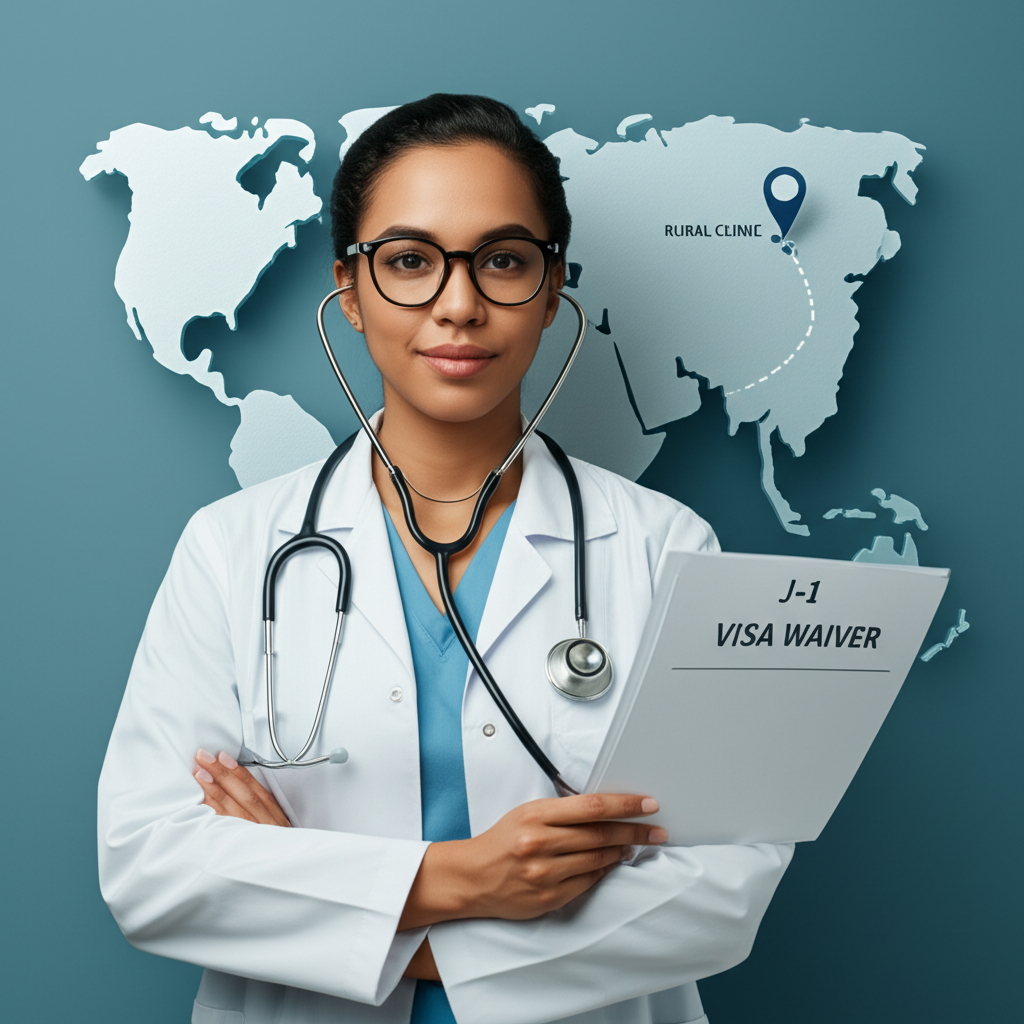
For example, a Sri Lankan doctor finishing her medical residency in Chicago on a J-1 visa could use the Illinois Conrad 30 program. By committing to work for three years in a rural clinic, the state recommends her for a waiver, which allows her to then apply for an H-1B visa and eventually a green card. The state didn’t sponsor her directly, but its program was the essential first step. For applicants from Sri Lanka, the key is to shift your focus from seeking state “sponsorship” to identifying employers in states with high-demand industries and supportive policies.
Top States with High Demand for Skilled Professionals
Sending your resume across the ocean can feel like a guessing game. You’ve polished your credentials, highlighted your experience, but are you targeting the right places? It’s a common frustration for skilled professionals in Sri Lanka; without knowing where your expertise is truly in demand, your efforts can feel scattered and unproductive. The secret isn’t finding a formal state-run program with your name on it, but rather identifying the states with significant labor gaps that only a professional like you can fill.
Speaking of which, the most powerful incentive a state can offer is a thriving job market hungry for talent. When companies can’t find enough local candidates, their willingness to sponsor international professionals through mechanisms like the H-1B visa increases substantially. This economic reality is your most direct path. So, where should you focus your search?
Technology and Software Hubs
For those in IT, software development, and data science, a few states stand out. California’s Silicon Valley remains an epicenter of innovation, but the high cost of living has pushed growth into other areas. Look to Texas, particularly Austin, which has a booming tech scene with a lower barrier to entry. Similarly, Washington, home to giants like Amazon and Microsoft, consistently seeks software engineers. Don’t overlook Virginia’s “Dulles Technology Corridor,” a major hub for data centers, cloud computing, and cybersecurity, driven by its proximity to Washington, D.C.
Engineering and Manufacturing Powerhouses
If your background is in engineering, your opportunities are more specialized by region. Michigan continues to be the heart of the American automotive industry, constantly searching for mechanical and electrical engineers. For those in the energy sector, Texas leads in oil and gas, but it is also rapidly expanding its renewable energy infrastructure. Meanwhile, Arizona has cultivated a robust aerospace and defense industry, creating strong demand for aerospace and systems engineers.
Healthcare Opportunities
The demand for healthcare professionals—doctors, nurses, and medical technicians—is a nationwide issue, but it is especially acute in states with large rural populations. This creates significant opportunities across the Midwest and parts of the South. An experienced physician from Sri Lanka might find that a hospital in a smaller city is far more motivated to facilitate the visa process than one in a saturated metropolitan market.
The Conrad 30 J-1 Visa Waiver: A Direct Pathway for Doctors
For many Sri Lankan doctors who complete their residency or fellowship training in the United States on a J-1 visa, a moment of profound frustration arrives with their graduation. You have invested years, built professional networks, and become part of a community, only to face the mandatory two-year return to your home country. This requirement, a standard condition of the J-1 visa, can feel like a career roadblock just when you are ready to launch. This brings us to something often overlooked: a powerful, state-level program designed specifically for this situation.
The Conrad 30 Waiver program is one of the most direct forms of state sponsorship available to international physicians. It directly addresses the J-1 visa’s two-year home-country physical presence requirement. Under this federal program, each state’s Department of Health can recommend a waiver for up to 30 foreign physicians per fiscal year. In exchange for this valuable sponsorship, the physician must agree to a critical service commitment: working full-time for at least three years in a federally designated Health Professional Shortage Area (HPSA) or Medically Underserved Area (MUA) within that state.
Think of it as a direct trade. The state helps you waive a significant immigration hurdle, and you provide essential medical care to a community that desperately needs it. For example, a Sri Lankan physician finishing a family medicine residency in New Jersey could accept a position at a clinic in rural Kentucky. The Kentucky Department for Public Health could then sponsor their Conrad 30 waiver, allowing them to bypass the two-year return rule and begin practice immediately. This provides a clear, albeit competitive, path to an H-1B visa and, eventually, permanent residency.
While nearly every state participates, some are known for being more accessible or consistently having available slots. States to explore include:
Texas
Illinois
Kentucky
Missouri
Arizona
This program is a prime example of how state-level agencies can play a pivotal role in your immigration journey, offering a tangible solution for physicians ready to serve.
Entrepreneur and Investor Pathways at the State Level
You’ve built a promising company in Sri Lanka, secured early funding, and have your sights set on the US market. Then you hit the wall that is the American immigration system. The H-1B visa lottery feels like a game of chance, and the investment required for federal programs like the EB-5 visa is astronomical for most early-stage founders. It’s a deeply frustrating position, leaving many talented entrepreneurs feeling stuck.
But wait — there’s more to consider. While states cannot create their own immigration visas, some have developed ingenious workarounds to attract and retain global talent. These programs don’t offer direct sponsorship for Sri Lankans, but they create a viable pathway for founders of any nationality.
The Global Entrepreneur in Residence (Global EIR) Hack
Several states with strong university systems, like Massachusetts and Colorado, have embraced the Global Entrepreneur in Residence (Global EIR) model. Here’s how it works: instead of your startup sponsoring you, a partner university does. This is the key. Universities are “cap-exempt” institutions, meaning they can sponsor H-1B visas at any time of year without being subject to the annual lottery.
As a Global EIR, you would work part-time for the university, perhaps mentoring student entrepreneurs or supporting a research lab. This satisfies your visa requirements. The rest of your time is dedicated to building your company, often with support from the university’s ecosystem. It’s a powerful, lower-cost alternative that provides a legitimate foothold in the US. For example, a tech founder from Colombo could partner with a university in Massachusetts, secure a cap-exempt H-1B, and gain immediate access to the Boston tech scene while scaling their business.
Beyond Global EIR programs, many state-level economic development agencies offer resources, grants, and mentorship for immigrant-founded businesses. While they don’t provide a visa, their official support can significantly strengthen your case for other federal visa categories by demonstrating your business’s local impact and potential for job creation. These state-facilitated options are a world away from the multi-million dollar federal investor programs, offering a more realistic path for the determined entrepreneur.
State Resources and Sri Lankan Community Networks
You’ve spent hours searching online, typing in every variation of “state sponsorship for Sri Lankans” and coming up empty. It’s a frustrating process. The truth is, direct state sponsorship for immigrants is a misconception; immigration is managed at the federal level. While a state won’t sponsor your visa, certain states offer the next best thing: a powerful support system to help you settle, find work, and connect with your new community.
Instead of looking for sponsorship, your focus should shift to states with strong integration infrastructure. States like New York, California, and New Jersey have established Offices of New Americans or Immigrant Affairs. These government-run centers are your first stop for practical help. They provide resources for professional license transfers, business registration, and language assistance—the real-world support you need after you arrive. Think of them not as sponsors, but as publicly funded welcome committees.
Tapping into the Community Lifeline
Beyond state programs, your most significant asset will be the established Sri Lankan community. The networks in states with large diaspora populations are incredibly deep. For example, a software engineer moving from Colombo to the San Francisco Bay Area won’t find a state grant with their name on it. But they can connect with Sri Lankan professional groups in Silicon Valley for mentorship, job referrals, and even advice on navigating the local tech culture. These connections are often more valuable than any small financial incentive.
To find these networks, start your search long before you move. Look for:
Cultural Associations: Organizations in places like Staten Island, NY, or across New Jersey that host cultural events and offer a social safety net.
Professional Organizations: Groups for foreign-trained doctors, engineers, or IT specialists that can help with recertification and networking.
University Alumni Groups: Connect with graduates from Sri Lankan universities who have already made the transition.
These communities provide the unwritten rules for success, from career guidance to finding a taste of home. This grassroots support, not a government program, is what truly helps you build a new life in the United States.
Charting Your Course
Staring at a map of 50 states while trying to understand federal immigration law can feel completely overwhelming. It’s easy to get lost in the details, wondering where your skills and aspirations might fit in. The most effective approach isn’t about finding a generic “best” state, but about identifying the state that specifically needs what you have to offer. The key is to match your unique professional background to a state’s targeted economic needs.
Your American dream is unique. To translate state-level opportunities and federal visa requirements into a clear plan, consider consulting with an experienced immigration attorney to create a personalized strategy. By aligning your specific talents with a welcoming state, the path to your future in the United States becomes a tangible possibility.
Frequently Asked Questions
Does the US have a state sponsorship program like Canada's PNP?
No, the United States does not have a direct equivalent to the Canadian Provincial Nominee Program (PNP). US states cannot directly nominate individuals for permanent residency. However, they can influence immigration outcomes through programs like the Conrad 30 J-1 visa waiver for doctors and by supporting employers who sponsor H-1B visas in high-demand fields.
Which US state is best for a Sri Lankan IT professional?
States with major tech hubs are excellent choices. This includes California (Silicon Valley), Texas (Austin), Washington (Seattle), and Virginia (DC metro area). These states have a high concentration of companies that frequently sponsor H-1B visas for skilled tech workers.
What is the Conrad 30 program?
The Conrad 30 Waiver program allows each state to recommend up to 30 J-1 visa foreign medical graduates per year for a waiver of the two-year home residency requirement. In exchange, the physician must agree to work for three years in a federally designated underserved area within that state.
Facebook
X
LinkedIn
WhatsApp
Daily News Digest
Get the top stories delivered to your inbox every morning. No spam, ever.
Many Sri Lankan artisans believe that getting their products onto global platforms like Amazon and eBay is a logistical nightmare reserved only for large exporters. You might have a stunning
The most expensive myth for foreign investors is that buying a property in a famous US city guarantees Airbnb success. This assumption is a fast track to disappointment. The truth
Most import ventures from Sri Lanka fail before their first container even docks. It’s not a lack of US demand for Ceylon cinnamon or fiery Jaffna curry powder; it’s a
Have you ever had a truly amazing Sri Lankan meal, maybe a lamprais fresh out of the banana leaf, and thought, “Wow, more people in America need to experience this”?