The Alarming Statistic: A Deep Dive into the 30% Exodus
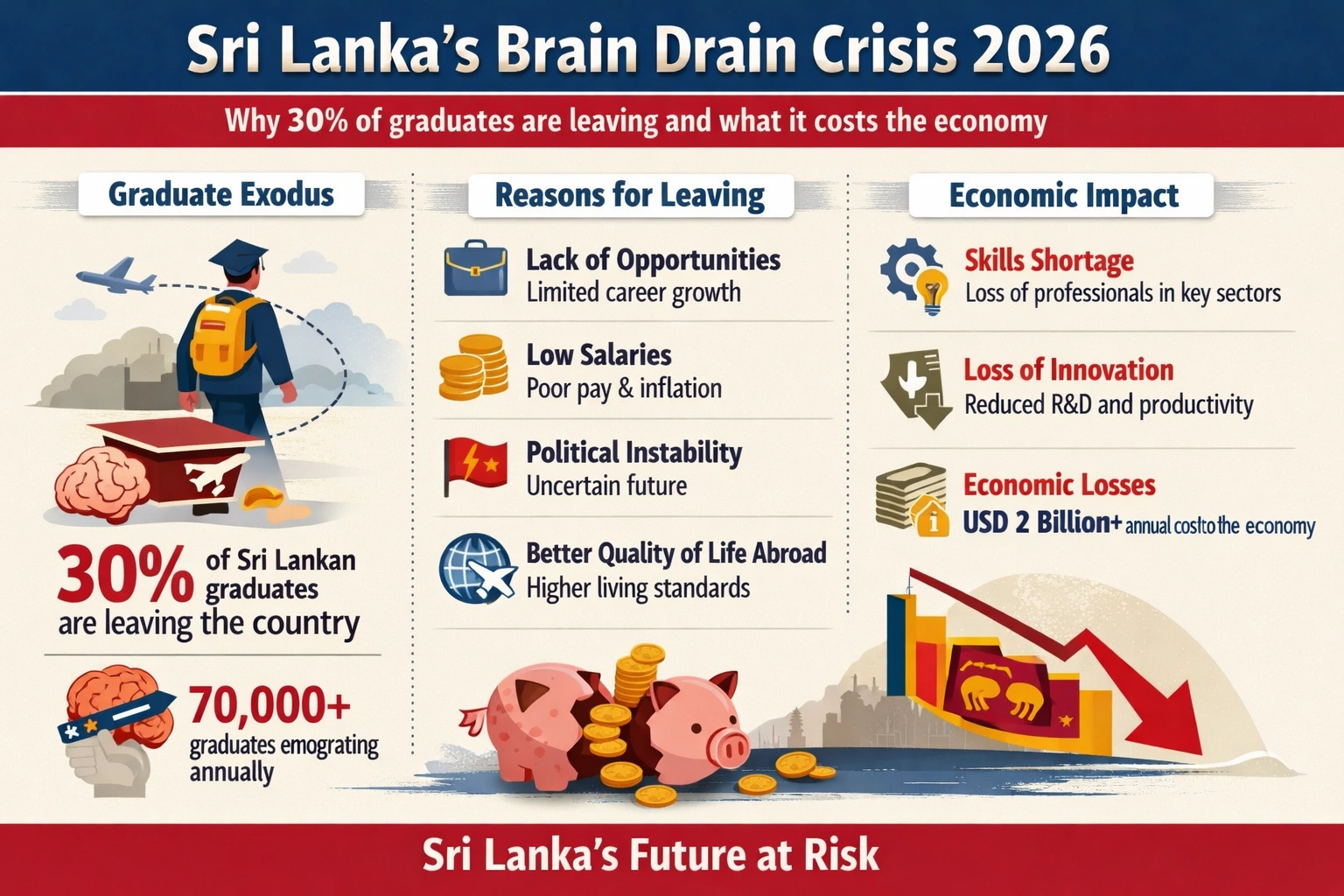
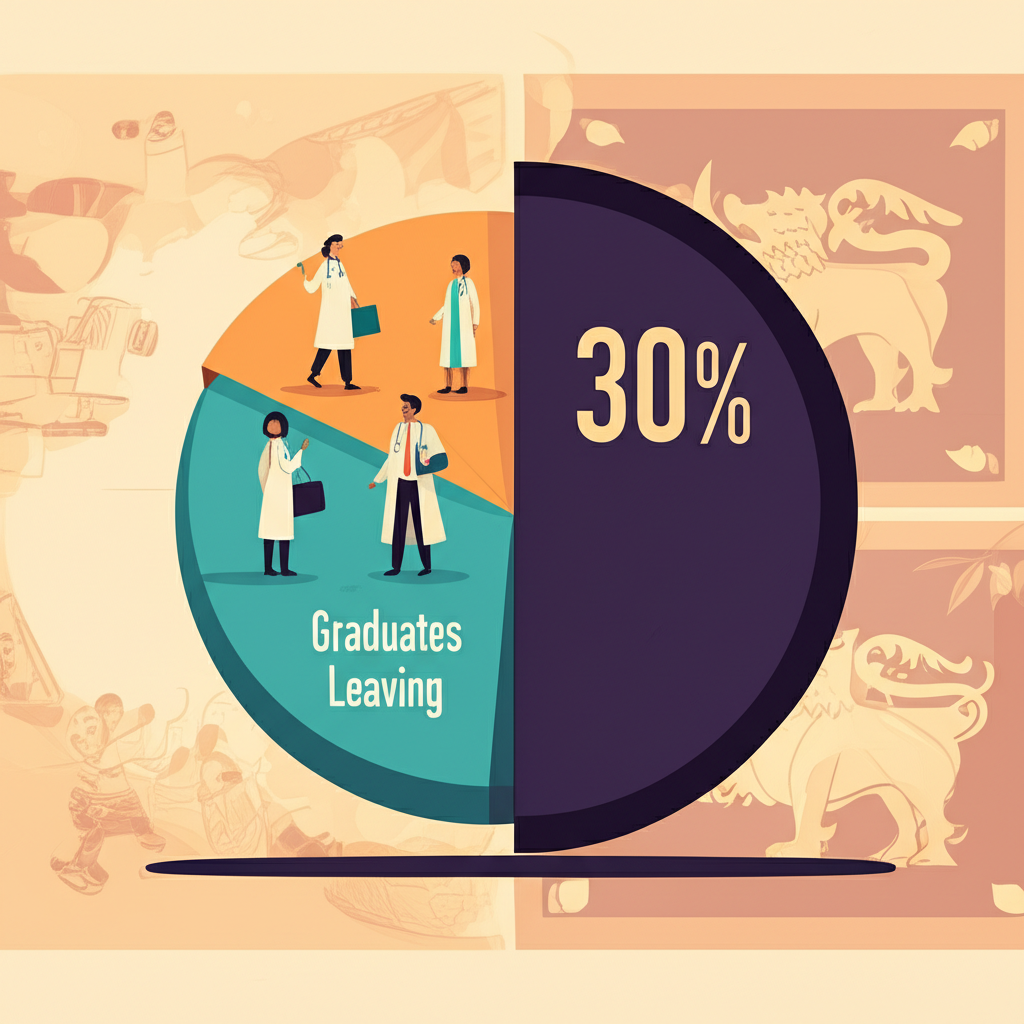
The year 2026 marks a sobering milestone for Sri Lanka: an estimated 30% of all new graduates are now leaving the country within two years of completing their degrees. This is not a mere statistical anomaly; it is a torrent of human capital draining the nation of its most vital resource. The figure represents nearly one in every three young, educated minds—the very individuals tasked with building Sri Lanka’s future—choosing to build their lives elsewhere.
This exodus is not uniform. It is heavily concentrated in sectors critical for national development. The brightest minds from medicine, engineering, information technology, and finance are leading the charge. They are seeking opportunities in countries like Australia, the United Kingdom, Canada, and the Middle East, drawn by the promise of professional growth, economic stability, and a higher quality of life that feels increasingly out of reach at home.
The motivations driving this mass departure are multifaceted, rooted in the deep-seated economic and political crises of recent years. Graduates face a landscape of rampant inflation, limited high-paying job prospects, and a pervasive sense of uncertainty about the future. The dream of a stable, prosperous life in Sri Lanka has, for many, been replaced by a pragmatic decision to seek it abroad. They are not just leaving for a job; they are leaving for hope.
The cost of this brain drain is staggering. Each departing graduate represents a significant loss on the state’s investment in subsidized higher education. More critically, it creates a vacuum of expertise that cripples key industries, stifles innovation, and slows economic recovery. Hospitals are left understaffed, tech companies struggle to find senior talent, and the engine of national progress sputters. This demographic hemorrhage threatens to leave behind an aging population supported by a shrinking workforce, jeopardizing the nation’s long-term economic sustainability.
The Push Factors: Economic Despair and Political Instability
The decision for a young Sri Lankan graduate to leave home in 2026 is rarely born of simple ambition; it is overwhelmingly a reaction to a landscape of dwindling hope. The roots of this exodus are deeply embedded in the twin crises of a shattered economy and a broken political contract, creating a powerful current pushing the nation’s brightest minds towards foreign shores.
Economically, the scars of the 2022 sovereign default and subsequent austerity measures remain painfully visible. While headline inflation has been tamed, the damage to purchasing power and personal savings was profound. Graduates are entering a job market characterized by:
- Stagnant Wages: Professional salaries have failed to keep pace with the soaring cost of living, making a middle-class lifestyle—once a reasonable expectation for a degree holder—feel like an impossible dream.
- Underemployment: There is a severe scarcity of high-skilled roles that match their qualifications, forcing many into jobs that fail to utilize their potential or provide a viable career path.
- High Taxation: Increased income taxes, a necessary pill for economic recovery, have further squeezed disposable income, making it difficult to save, invest, or plan for the future.
Compounding this economic precarity is a deep-seated disillusionment with the nation’s political framework. The energy of the 2022 Aragalaya protests, which once promised systemic change, has given way to a cynical resignation. For many young people, the political system remains plagued by a lack of accountability, persistent corruption, and a culture that seems to reward patronage over merit.
This erosion of trust in public institutions is a critical push factor. Graduates are not just seeking higher salaries; they are seeking stability, predictability, and a meritocratic environment where their skills are valued. When they look ahead, they see an uncertain future at home versus a tangible opportunity for professional and personal growth abroad. For an alarming 30%, the choice has become tragically clear.

The Pull Factors: The Allure of Global Opportunities
While domestic challenges actively push Sri Lanka’s brightest minds to look outward, the magnetic pull of global opportunities is an equally powerful, parallel force. For the 30% of graduates choosing to leave, it is not merely an escape; it is a strategic move towards a future perceived as more prosperous, stable, and professionally rewarding. The international stage offers a compelling value proposition that Sri Lanka’s current environment struggles to match.
At the forefront is the promise of significant economic prosperity. Graduates in high-demand fields like medicine, engineering, and information technology can command salaries multiples higher than what they could earn at home. This financial leap translates directly into a superior standard of living, the ability to support family in Sri Lanka through remittances, and the chance to build substantial long-term savings. In a climate of global economic uncertainty, the allure of financial security is a primary and potent driver.
Beyond the paycheck, the professional landscape abroad presents a vast horizon for career advancement. Developed nations offer access to cutting-edge research, state-of-the-art technology, and transparent, meritocratic career paths. Young professionals see clear pathways for growth, specialization, and continuous learning in dynamic industries that may be nascent or under-resourced in Sri Lanka. The opportunity to contribute to globally significant projects and build an internationally recognized portfolio is an invaluable career asset.
Finally, the appeal extends to a higher overall quality of life. This encompasses tangible benefits like political stability, robust public healthcare, and world-class education systems for their children. It also includes intangible factors such as greater social freedoms, improved work-life balance, and safer communities. This powerful combination of professional growth and personal well-being creates an almost irresistible package, transforming brain drain from a reluctant necessity into an aspirational goal for a generation.

The Economic Tsunami: Quantifying the Cost
The departure of nearly a third of Sri Lanka’s graduates is not just a social phenomenon; it is a direct and devastating blow to the national economy. This exodus represents a staggering drain on the nation’s future, with quantifiable costs that ripple through every sector. The most immediate impact is the loss of public investment in education. With the state investing an estimated LKR 4 to 5 million to educate each graduate in a public university, the annual flight of talent translates into a direct fiscal hemorrhage of billions of rupees—an investment in human capital, vanished overnight.
Beyond this initial loss, the long-term consequences are even more severe. The shrinking pool of high-income professionals delivers a crippling blow to the national tax base. This reduction in revenue directly curtails the government’s ability to fund essential public services like healthcare, infrastructure, and social welfare, creating a vicious cycle of decline. Key sectors are already feeling the strain; the technology industry is losing its innovators, and the healthcare system is bleeding specialists, compromising the quality of care for all citizens.
Economists project that this continuous brain drain is shaving an estimated 1.5% off Sri Lanka’s potential annual GDP growth. This is not a temporary setback but a fundamental barrier to long-term prosperity. The loss of skilled labour stifles innovation, discourages foreign investment, and slows the development of high-value industries. In essence, Sri Lanka is exporting its most valuable asset: its future leaders, creators, and problem-solvers. The cost is not just measured in rupees, but in lost potential and a deferred dream of economic recovery.

The Social Fabric Unravels: Beyond the Balance Sheet
While economic models can quantify the loss in GDP and tax revenue, the most profound cost of Sri Lanka’s brain drain is the one that doesn’t appear on a balance sheet. The departure of nearly a third of the nation’s graduates is not merely a flight of human capital; it is a hollowing out of society itself, leaving behind deep, structural voids that threaten the country’s future stability and identity.
At the heart of this crisis is the fracturing of the family unit and the community. For every young professional who leaves, there is an aging parent left behind, creating a burgeoning “care drain” that strains our social support systems. Neighbourhoods are losing their future leaders, entrepreneurs, and mentors. This exodus erodes the skilled middle class—the very bedrock of social progress and economic stability—weakening the engine room of civil society and domestic innovation.
The phenomenon also fuels a pervasive cycle of pessimism. When the brightest minds see their future elsewhere, it signals a collective loss of faith in the nation’s trajectory. This despair discourages investment, stifles creativity, and demotivates those who remain. The vibrant intellectual and cultural life of the nation dims as potential artists, activists, and thinkers take their talents to foreign shores.
Ultimately, the true cost is measured not in rupees, but in the silent corridors of understaffed hospitals, the delayed justice in overwhelmed courts, and the empty desks in classrooms that have lost their best teachers. Sri Lanka is losing more than its workforce; it is losing its future architects, healers, and dreamers. It is an intangible, generational loss that will be felt long after the economic wounds have healed.

Reversing the Tide: A Roadmap for a ‘Brain Gain’ Future
The exodus of Sri Lanka’s brightest minds is not an irreversible fate but a challenge demanding a bold, multi-faceted response. Transforming the current ‘brain drain’ into a future ‘brain gain’ requires a strategic and sustained national effort, focused on creating an environment where talent not only stays but thrives. The path forward rests on four interconnected pillars:
- Economic Revitalization and Job Creation: The primary driver must be the creation of high-value, meaningful employment. This involves aggressively pivoting towards a knowledge-based economy by incentivizing growth in sectors like information technology, green energy, and advanced manufacturing. Fostering a dynamic startup ecosystem with simplified regulations and access to capital will forge new career pathways, offering graduates compelling reasons to build their futures at home.
- Good Governance and Stability: Talent flees uncertainty. Restoring confidence requires a steadfast commitment to political stability, transparent governance, and the rule of law. A culture of meritocracy must be embedded within both public and private institutions, ensuring that opportunities are awarded based on skill and dedication, not patronage. This foundation of trust is non-negotiable.
- Industry-Aligned Education and R&D: The gap between academia and industry must be closed. This means modernizing university curricula in direct collaboration with business leaders, investing in national research and development (R&D) hubs, and promoting vocational training that equips youth with practical, in-demand skills for tomorrow’s economy.
- Engaging the Global Diaspora: Sri Lanka’s vast diaspora is a powerful, untapped asset. We must create formal channels for knowledge transfer, mentorship programs, and investment opportunities that encourage expatriates to contribute their expertise and capital. Incentives for skilled professionals to return, even for short-term projects, can spark a powerful circulatory flow of talent and innovation.
This roadmap is not merely about stemming an outflow; it is about creating a magnetic pull. By building a stable, innovative, and meritocratic society, Sri Lanka can become a destination of choice for its own talent and a beacon of opportunity in the region.

References
- The Economic Cost of Human Capital Flight: Sri Lanka’s 2026 Outlook – World Bank Group
- Central Bank of Sri Lanka Annual Report 2025 – Chapter 4: Labour Migration and Remittances
- Retaining Talent: A Policy Framework to Address Graduate Emigration – Institute of Policy Studies of Sri Lanka (IPS)
- Push and Pull: Understanding the Drivers of Skilled Migration from Sri Lanka – University of Colombo, Department of Sociology
- Sri Lanka’s Youth Exodus: A Special Report on the Brain Drain Crisis – Reuters
- Migration Statistics of Sri Lankan University Graduates: 2024-2025 – Department of Census and Statistics
- The Impact of Brain Drain on Sri Lanka’s Healthcare and Tech Sectors – Asian Development Bank