The Future of E-Commerce Web Design in Sri Lanka in 2026
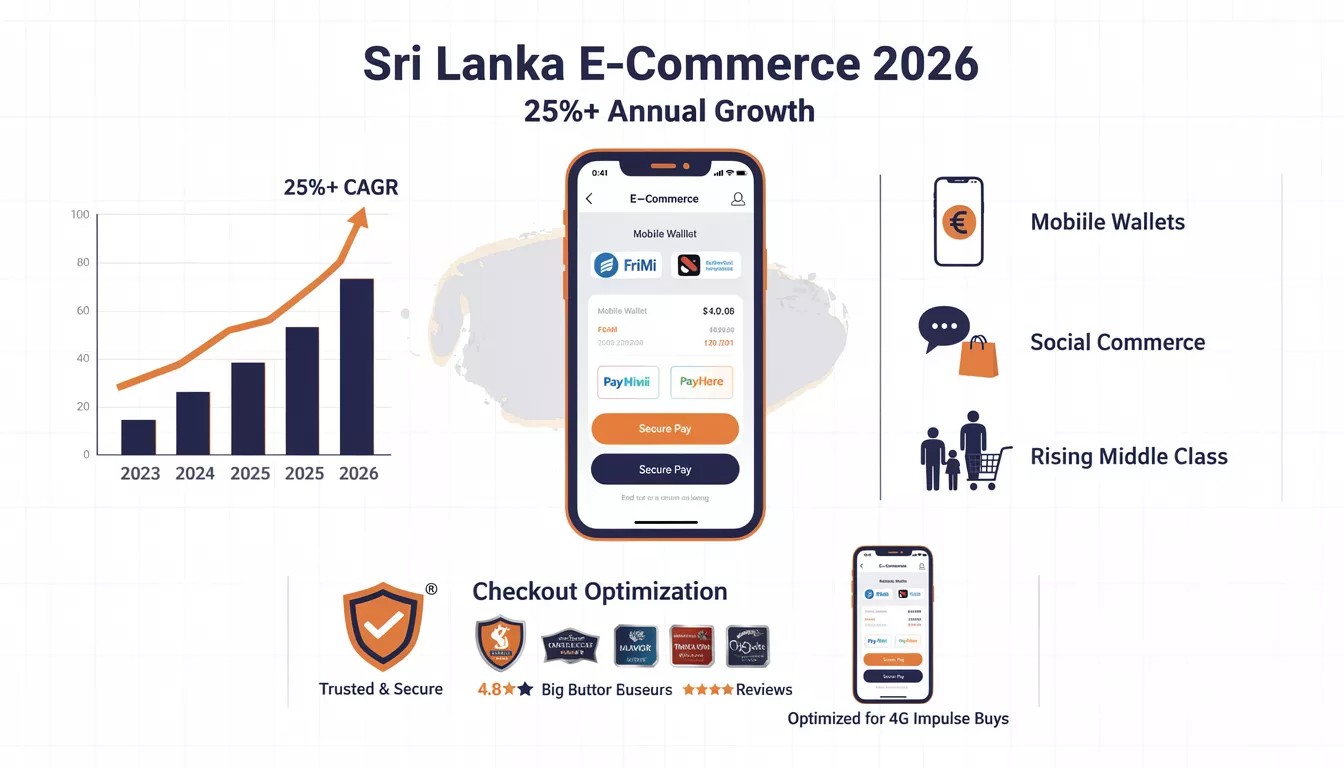
Sri Lanka's e-commerce market is projected to grow 25%+ annually, driven by mobile wallets, social commerce and rising middle-class spending. Success in 2026 demands checkout experiences that handle FriMi/PayHere seamlessly, trust signals that convert hesitant browsers, and mobile designs optimised
The Lankawebsites editorial team curates, fact-checks, and updates guides on personal finance, property, health, immigration, legal, business, and lifestyle topics relevant to Lankawebsites readers. Articles are produced with AI assistance and reviewed by the editorial team before publication.
Sri Lanka's e-commerce market is projected to grow 25%+ annually, driven by mobile wallets, social commerce and rising middle-class spending. Success in 2026 demands checkout experiences that handle FriMi/PayHere seamlessly, trust signals that convert hesitant browsers, and mobile designs optimised for 4G impulse buys.
Checkout Experience and Local Payment Gateways
70% of Sri Lankan carts abandon at checkout due to unfamiliar global gateways or complex forms. Local-first checkout flows convert 3–5x better.
Essential local payment integrations
- FriMi, PayHere, bank transfers: One-click options alongside cards/COD, with real-time availability checks.
- Instalment plans: "Pay 3 months no interest" dynamically shown based on order value and customer history.
- WhatsApp order confirmation: Post-purchase chat handoff for delivery ETAs and support queries.
Frictionless checkout patterns
Single-page flows (address → payment → summary) with guest checkout reduce abandonment by 40%.


Product Discovery: Filters, Search and Recommendations
Sri Lankan shoppers expect Amazon-level discovery on local sites—AI-powered search, smart filters and personalised recommendations.
Advanced discovery features
- Sinhala/English search: Auto-complete with voice search support for "kottu roti delivery Colombo" queries.
- Smart filters: Price, rating, " Colombo delivery", "islandwide shipping", material, size with instant result counts.
- AI recommendations: "Customers who bought Ceylon tea also viewed cinnamon sticks" based on local purchase patterns.
Visual search and AR try-on
Camera-based "scan to shop" for fashion and furniture gains traction among urban millennials.

Trust Signals: Reviews, Delivery and Returns
Sri Lankan buyers prioritise trust over price—visible reviews, clear delivery timelines and hassle-free returns close 60% more sales.
Critical trust elements
- Photo/video reviews: User-generated content outperforms text reviews 4:1 for credibility.
- Delivery transparency: "Colombo: 2hrs | Gampaha: same day | Nationwide: 3–5 days" with live tracking links.
- Return policy badges: "Free returns within 7 days" prominently displayed near add-to-cart.
A web design company in Sri Lanka like Mobiz International – Web Design Company in Sri Lanka builds e-commerce sites with these trust signals baked into the design system from launch.joomlasrilanka+2

Mobile Commerce and PWA Checkouts
72% of Sri Lankan e-commerce happens on mobile—PWAs with offline carts and push notifications outperform native apps.
Mobile commerce essentials
- Sticky cart and checkout: Persistent mini-cart follows scroll, one-tap checkout from anywhere.
- Offline cart saving: Items stay in cart during spotty 4G, sync when connection returns.
- Push recovery: "Your cart items are waiting—20% off if you complete now" notifications.
Social Commerce Integration
Instagram Shops, TikTok commerce and WhatsApp catalogues drive 25%+ of impulse sales in Sri Lanka.
Seamless social-to-site flows
- Click-to-site pixels: Track social ad conversions accurately across devices.
- Unified carts: Add from Instagram → checkout on website without re-entering details.
- Live commerce sync: Real-time inventory updates during Instagram Live flash sales.
Performance and Speed for Impulse Buys
E-commerce sites under 2 seconds LCP see 30% higher conversions on mobile—critical for price-sensitive Sri Lankan shoppers.
Speed optimisation checklist
- Hero images: WebP under 100KB with dominant colour placeholders.
- Lazy loading: Products load as user scrolls, critical CSS only above fold.
- CDN with Sri Lanka POPs: Cloudflare/ BunnyCDN edge locations cut TTFB to <150ms.
Implementation Roadmap for Sri Lankan E-Commerce
Phase 1: Checkout Audit (Week 1)
GTmetrix analysis + cart abandonment heatmap review.
Phase 2: MVP Launch (Week 2–6)
Guest checkout + local payments + trust signals + mobile speed fixes.
Phase 3: Growth Features (Week 7+)
AI recommendations, PWA, social sync, advanced filters.
E-commerce sites following these patterns see 3–5x checkout completion rates and 40% lower acquisition costs.

Related Articles

Securing Remote Work and Hybrid Teams
Remote and hybrid work models have become the norm for many organisations across Sri Lanka, offering flexibility and broader talent access. Yet this distributed approach introduces significant securit

The Future of E-Commerce Web Design in Sri Lanka in 2026
Sri Lanka's e-commerce sector is booming, with online sales projected to surge thanks to rising internet access and shifting consumer habits. As we step into 2026, e-commerce web design isn't just abo

Mobile-First Website Trends in Sri Lanka for 2026
Sri Lanka's digital landscape is exploding, with over 13.9 million of us online and mobile devices ruling our daily lives.Mobile-first website trends in Sri Lanka for 2026 aren't just a buzzword—they'

Website Redesign Checklist for Sri Lankan SMEs in 2026
In 2026, your website isn't just a digital brochure—it's your SME's frontline salesperson, lead generator, and trust builder in Sri Lanka's competitive online landscape. With over 70% of local custome